Bull Shoals Lake Bass Fly Fishing Arkansas
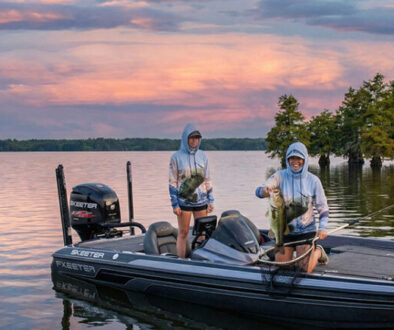
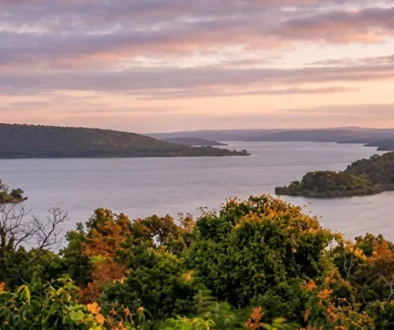
Bull Shoals Lake. That glorious, 45,000-acre beast straddling the Arkansas-Missouri border like a drunk uncle at a family reunion—half in one state, half in the other, and nobody quite sure who invited the stripers. If you are a fly angler who thinks bass fishing means chucking poppers at lily pads while mosquitoes audition for your blood type, welcome to the big leagues. Bull Shoals isn’t your cozy farm pond; it’s a deep, clear, rocky Ozark monster where largemouth bass, smallmouth bass, and spotted bass lurk like they’re plotting world domination.
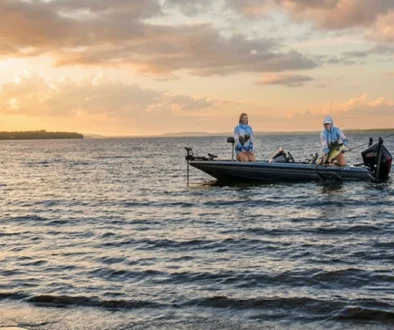
You can certainly try fly fishing here, but you better bring a boat because wading this thing is like trying to cross the Atlantic in flip-flops. But hey, that is half the fun, right? Strap in for a sarcastic stroll through history, conservation drama, and the top 13 flies that might actually work instead of just looking pretty in your box. We will cover prime spots and take a deep look at chasing everything else that swims here besides your dignity after a skunking.
Table of Contents
A Quick History Lesson: From Flood Control to Fish Shangri-La
Picture this: It is the early 1900s, and the White River is flooding like it is auditioning for a disaster movie. Farms wash away, folks lose everything, and Congress finally gets off its collective backside with the Flood Control Act of 1938. Enter the U.S. Army Corps of Engineers, those masters of concrete and bureaucracy.
They eyed Wildcat Shoals first, but the foundation was terrible. So they pivoted to Bull Shoals, named after a shallow, swift spot on the river. The name comes from the French “boill” for big spring, because nothing says “massive dam” like a fancy word for a puddle. Construction kicked off in 1947, post-WWII, and wrapped in 1951.
At the time, the Bull Shoals Dam was the fifth-largest dam in the world. It stands 2,256 feet long and 256 feet tall, holding back enough water to make a small country rethink its real estate choices. President Harry S. Truman himself showed up in 1952 to dedicate it, probably because nothing says “presidential flex” like staring at a giant wall of water while locals cheer.
The lake flooded valleys, relocated cemeteries, and turned a sleepy area into a fishing mecca. Towns like Bull Shoals popped up overnight, thanks to developers who sketched street plans on brown paper bags. Overnight, it went from Newton Flat settlement to a vacation hotspot in north central Arkansas.
The bass moved in like rock stars, turning the place into a legend for tournaments and trophy hunts. Sarcasm aside, it is engineering porn that accidentally created one of the best fisheries in the South. The sheer size of this shoals lake changed the region forever.
Conservation Challenges: Interstate Drama
Bull Shoals Lake isn’t all crystal-clear water and fat bass. It has issues, and they are as entertaining as a family feud at Thanksgiving. The big one involves stripers.
Missouri’s Department of Conservation loves stocking them in the upper lake for sport. However, the Arkansas Game and Fish Commission (AGFC) usually protests because stripers eat everything. This includes baby bass and white bass populations that crash when stripers boom.
It has been a border war for years on the shoals lake. Missouri stocks fish, Arkansas cries foul, numbers tank, and everyone points fingers. One angler on forums even blamed stripers for the decline of other species since the 90s.
Then there is the water level drama. The Corps runs Bull Shoals for flood control and hydropower, so levels fluctuate like a teenager’s mood. Low water exposes rocks, which is good for smallmouth but bad for spawning largemouth.
High water floods timber, which offers great cover but claims many lost lures. Habitat projects help, as AGFC and partners have sunk brush piles and fish attractors since the 80s. But inconsistent spawns mean bass recruitment is hit-or-miss.
Smallmouth and largemouth need stable levels, while spotted bass seem to thrive in the chaos. Add in zebra mussels and occasional algae blooms, and you have challenges. But the fishing remains solid if you practice catch-and-release on black bass.
Top 13 Best Flies for Bull Shoals Bass
Fly fishing bass on Bull Shoals is not about trout sipping dainties. It is about predators smashing bugs like they are at an all-you-can-eat buffet. The lake’s clear water means spooky fish, and the rocky structure calls for weighted flies.
Shad and forage mean baitfish patterns rule the day. Here is a sarcastic top 13 list. These are proven-ish from guides and forums, mostly because bass aren’t picky when hungry.
- Clouser Deep Minnow (chartreuse/white or olive/white) – The GOAT. Strip it fast near points and smallmouth lose their minds.
- Woolly Bugger (black or olive, size 6-10) – Classic. Troll or strip slow in creeks; it catches everything, including your pride.
- Popper (foam deer hair or crease fly, white or chartreuse) – Topwater explosions at dawn/dusk. Nothing says “I’m cool” like a bass detonating your fly.
- Deer Hair Diver – Dives and darts like a panicked shad. This is perfect for clear water smallies.
- Half & Half (variation of Clouser) – Deeper, flashier. Use this for when bass are sulking at 15-25 feet.
- Stealth Bomber (white or natural) – Topwater mouse/frog imitation. Bass think it is dinner; you think you are a hero.
- Cowen Baitfish – Realistic shad pattern. Strip retrieve in schools.
- Blanton Flashtail Whistler – Loud and proud for murky arms after rain.
- Leech Pattern (bunny leech, black/olive) – Slow strip along rocky bottoms; you might get a walleye bonus.
- Crayfish Imitation (rusty or olive Clouser-style) – Bounce on gravel for smallmouth.
- Streamer with Flash (like a flashy bugger) – For spotted bass chasing shad boils.
- Dahlberg Diver – Old-school diver for surface chaos.
- Articulated Streamer (big baitfish) – For trophy largemouth in timber. Because size matters.
Pro tip: Use 7-9 wt rods, sinking or intermediate lines, and leaders tapered to 0X-2X. A boat is required, so sorry to the purists.
Best Locations on the Lake: Where the Bass Actually Hang Out (Not Where Tourists Pose)
With 700 miles of shoreline, finding fish on Bull Shoals can feel overwhelming. You cannot just cast anywhere and expect success. You need to focus on high-percentage areas where bass congregate. The Bull Shoals Dam area is a prime spot, especially for smallmouth bass. The deep water and rocky ledges provide the perfect habitat. Current from power generation also activates the fish here.
The major creek arms like Big North Fork and Beaver Creek offer a different type of structure. Here you will find submerged timber and laydowns that attract largemouth bass. In the spring, these shallow areas warm up first, drawing fish in to spawn. Fly fishing with poppers around wood cover in these creeks is incredibly exciting. Main lake points are another key area. Spotted bass often school up on these long, tapering points to ambush shad. A Clouser Minnow stripped across a point is a deadly fishing technique.
Do not overlook the “Pothole” area near Power site Dam on the upper end of the lake. This section acts more like a river and holds a wide variety of species. It is a great place to target white bass and walleye in addition to black bass. If you are new to the lake, hiring a fishing guide or a guide service is a smart investment. They can show you how to navigate the shoals lake hazards and put you on fish much faster than you could on your own.
Fly Fishing for Other Species: Because Bass Get Boring After 50 Fish
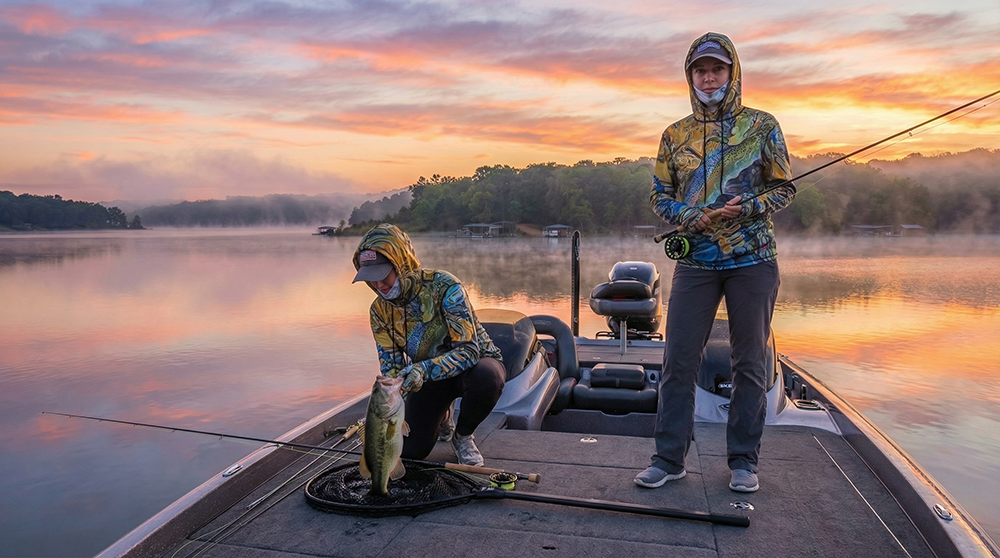
While bass are the main attraction, Bull Shoals Lake is a world-class fishery for many other species. The diversity here is part of what makes it an angler’s paradise. Smallmouth bass are abundant on the rocky banks and fight harder than fish twice their size. They love crayfish patterns and will often jump when hooked. Spotted bass, or “Kentucky bass,” are also plentiful. They tend to school up, so if you catch one, cast back to the same spot immediately.
White bass provide fast-paced action, especially during their spring run. You can find them in the major creeks and the upper river arms. They attack flashy streamers with reckless abandon. Walleye are another prized catch in Bull Shoals. While often targeted with gear and live bait, you can catch them on a fly rod using deep-sinking lines and leech patterns fished slowly along the bottom. The clear waters of the lake also hold populations of crappie, which will take small jigs or streamers near brush.
Below the Bull Shoals Dam, the White River transforms into a legendary trout fishery. This tailwater is famous for massive brown trout and plentiful rainbow trout. If the lake fishing slows down, you can easily switch gears and float the river. The nearby Buffalo River and Crooked Creek also offer excellent wading opportunities for smallmouth. This North Central Arkansas region, often called the Twin Lakes area (referring to Bull Shoals and Norfork Lake), is truly a central hub for freshwater fishing.
Frequently Asked Questions
Do I need a boat to fly fish Bull Shoals Lake?
Yes, having a boat is highly recommended. While there are limited bank access points, the steep, rocky shoreline and massive size of Bull Shoals make wading difficult and inefficient. A boat allows you to reach the prime fishing areas and cover enough water to find active fish.
What is the best time of year for fly fishing on Bull Shoals?
Spring and fall are the peak seasons. From March to May, bass move shallow to spawn, making them accessible to fly anglers. Fall brings cooling water temperatures, and fish feed aggressively to prepare for winter. Summer can be tough as fish move deep, requiring sinking lines and patience.
What fly rod weight should I use?
An 8-weight rod is the standard tool for bass fishing on Shoals Lake. It has the backbone to cast large, wind-resistant flies and fight strong fish. You might step up to a 9-weight for throwing very large streamers or down to a 7-weight for smaller presentations.
Can I hire a guide for fly fishing on Bull Shoals?
Absolutely. There are many professional guides in the area who specialize in fly fishing. A fishing service can provide the boat, gear, and local knowledge needed to have a successful day on the water, especially if you are visiting for the first time.
Are there trout in Bull Shoals Lake?
While Bull Shoals is primarily a warm-water fishery, you can occasionally find brown trout and rainbows in the lake near the dam. However, the primary trout fishery is in the White River tailwater directly below the Shoals Dam, which is world-renowned for its trout population.
Fishing Bull Shoals is an experience that stays with you. The combination of stunning scenery, clean water, and aggressive fish makes it a top destination. Whether you are planning a float trip on the river or a week of exploring the lake’s many arms, this area has something for everyone. From the historic real estate development to the modern conservation battles, Bull Shoals Lake is a complex and rewarding fishery. So grab your 8-weight rod, tie on a Clouser, and get ready for tight lines in the Ozarks. It is time to see what this legendary water has to offer.
Conclusion Bull Shoals Lake Bass Fly Fishing Arkansas
Bull Shoals Lake is sarcastic perfection—beautiful, frustrating, and rewarding. Grab a boat, an 8-wt rod, and some attitude. The bass won’t care if you are sarcastic; they will just eat.
There are plenty of fishing areas to explore, from the dam to the upper river arms. Whether you are after trout fishing in the tailwater or chasing smallmouth on the main lake, Bull Shoals delivers. Guide services can help you shorten the learning curve.
Now go tie some flies and pretend you aren’t jealous of the spin guys with their easy limits. Bull Shoals is waiting to test your skills and your patience. Just watch out for the shoals dam generation schedule and enjoy the Ozarks.