Description
Trust Issues Spey the Hot Lady
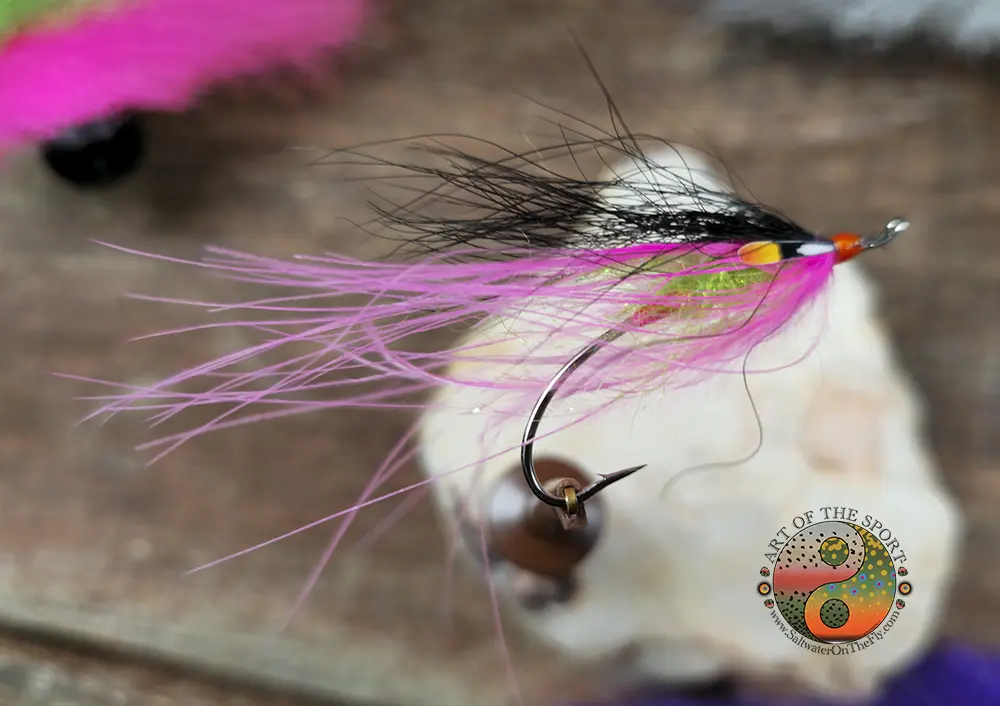
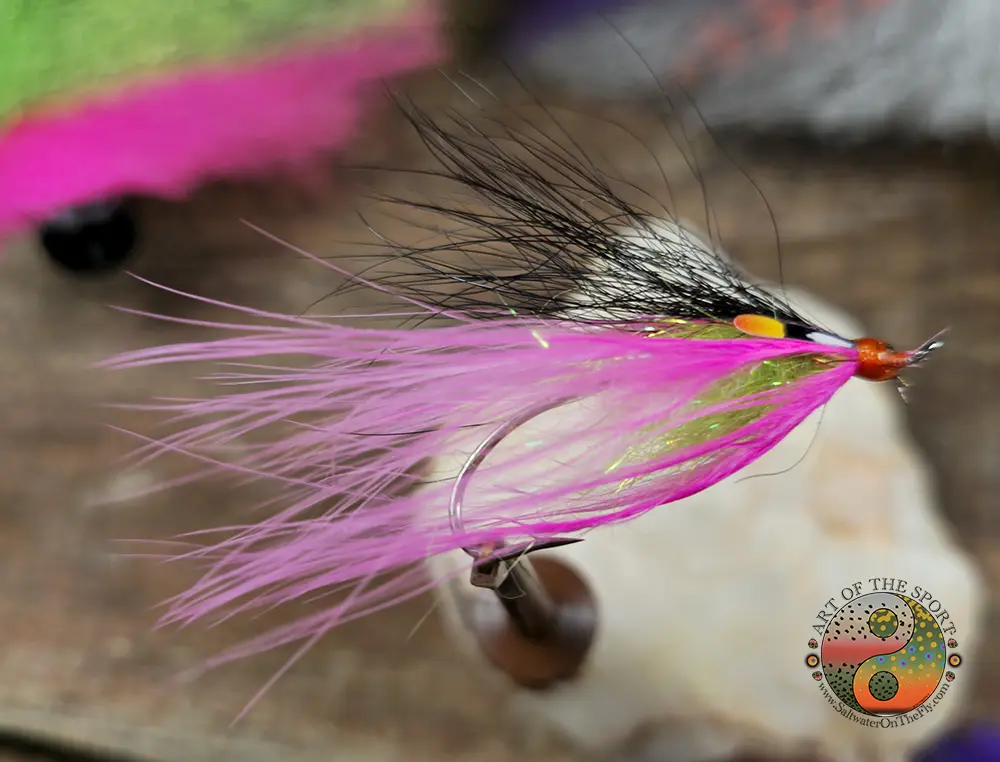
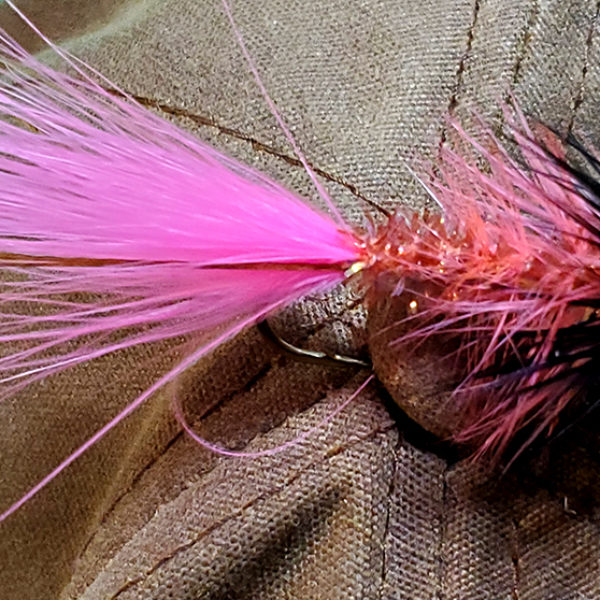
Fly fishing for winter steelhead demands bold, high-visibility patterns that dominate in cold, high water, and the Trust Issues Spey has exploded as a top-producing modern steelhead intruder-style fly across the Pacific Northwest and Northern California. Tied on the proven Alex Jackson 2052 #3 up-eye Spey hook, this deadly winter steelhead fly pattern starts with a screaming Semperfli fluorescent pink floss tag, followed by a wildly mobile body of fluorescent chartreuse Monster Bush Fur dubbing trapped and brushed out inside copper wire for maximum water push and lifelike pulsation on the swing. A long, flowing Whiting Farms bird fur Spey hackle in hot pink adds irresistible undulating movement, while a sleek black bear hair wing keeps the profile low and seductive. Split Semperfli imitation Jungle Cock cheeks deliver that final predatory flash that triggers violent grabs.
Table of Contents
Fly Fishing Trust Issues on California’s Smith River
On California’s crown jewel, the Smith River—widely regarded as the state’s premier wild steelhead fishery—the Trust Issues Spey is absolute fire from December through April. The Smith’s gin-clear emerald water and untouched coastal rainforest setting demand flies that stand out, and this chartreuse and hot pink steelhead fly glows like a beacon against the river’s famous green tint. Swing it on a Skagit head with a 10–12 ft T-11 or T-14 sink tip through legendary runs like Ruby Van Deventer, Panther Flat, Society Hole, Low Divide, or the hallowed Lower Gorge, and prepare for savage pulls from 8–18 lb native winter steelhead. Whether you’re fishing British Columbia’s Skeena system, Oregon’s Deschutes and Sandy, Washington’s Olympic Peninsula rivers, or battling the Smith River permit lottery for a shot at untouched chrome, the Trust Issues Spey fly consistently produces when traditional patterns fail. Add this must-have intruder Spey fly to your winter steelhead fly box and watch confidence (and fish) return fast.
Trust Issues Spey Recipe:
Hook: Alex Jackson 2052 #3
Thread: Semperfli 6/0 Orange Classic Waxed
Tag: Semperfli Fl. Pink Floss
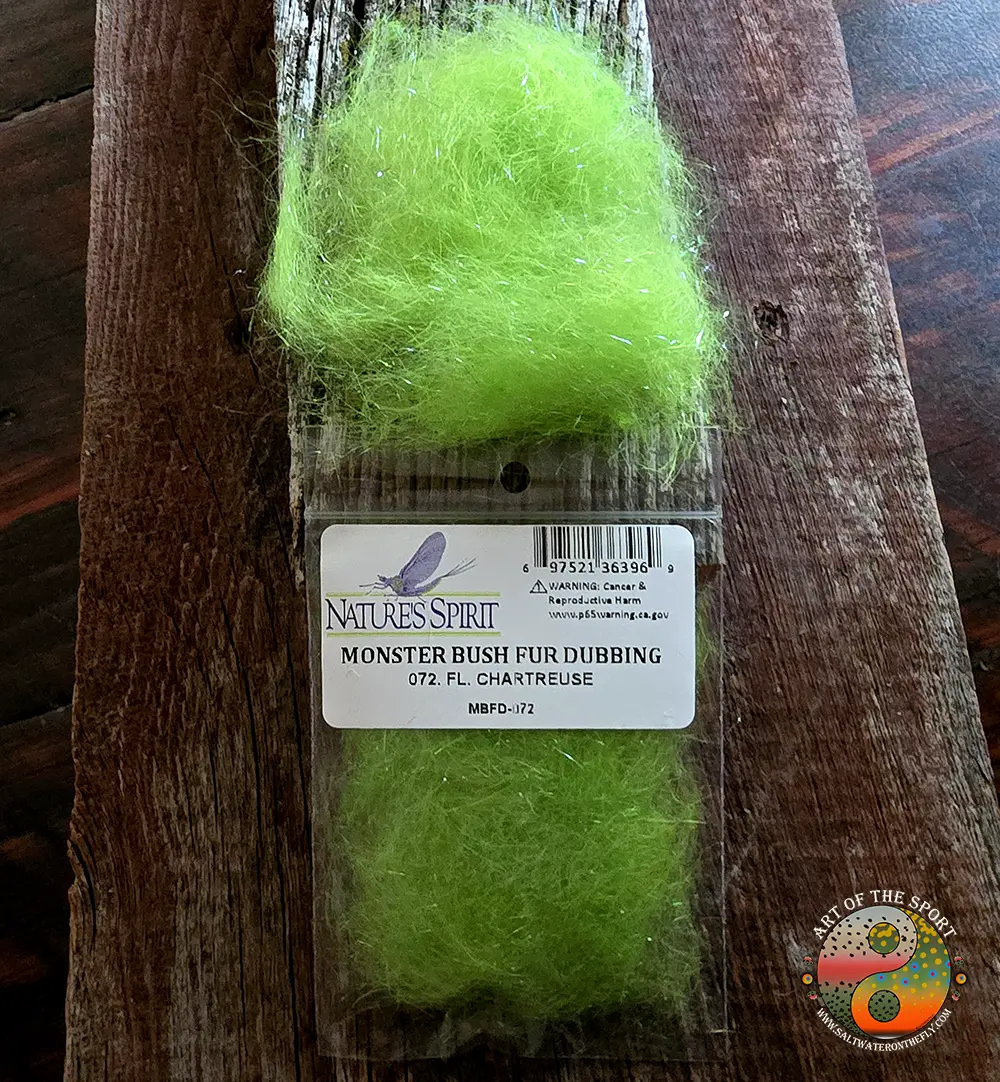
Body: Fl. Chartreuse Monster Bush Fur Dubbing in a Copper Wire Brush
Spey Hackle: Whiting Farms Bird Fur Pink
Hair Wing: Black Bear
Cheeks: Semperfli Imitation Jungle Cock
Swinging Montana’s Yellowstone River
Oh, sweet fancy Moses, bring the Trust Issues Spey to the Yellowstone River in late October or November and watch every over-educated brown trout that’s been laughing at your sober little olive Sculpzillas completely lose its German-engineered mind. This ridiculous hot-pink-and-chartreuse circus freak looks like it escaped from a Key West drag show, yet the second-generation Montana rainbows and those arrogant 24-inch German browns that normally thumb their noses at anything subtler than a Bud Light can will rocket out from under cut banks like you just insulted their mother. Swing that neon abomination on a Scandi or light Skagit through the boulder gardens of Paradise Valley or the soft inside bends around Livingston, or the meaty slots below Yankee Jim Canyon and brace yourself for the most violent, cartilage-crunching eats you’ve ever had outside of a Vegas buffet. The Trust Issues Spey is so loud it should come with a noise ordinance violation, but on the Yellowstone in fall, when the water’s low, clear, and the trout are fat, horny, and full of misplaced aggression, this fly turns sophisticated trout into absolute gutter punks. You’ll feel guilty for about four seconds, right up until that 22-inch brown tries to park itself in your backing and you realize guilt is for people who don’t catch fish.
Swinging flies for Yellowstone cutthroat is the fishing equivalent of sliding into someone’s DMs with a neon clown suit on and still getting the date. These gorgeous, gullible little river pandas have never met a bad decision they didn’t like, and the Trust Issues Spey is basically catnip dipped in Red Bull to them.
Picture this: October or November, the tourists are gone, the elk are bugling, and the Yellowstone is running low and clear through Paradise Valley. You roll up in your Secluded Cutthroat Hoodie (thumb holes deployed, face gaiter up because wind chill is real), rig a 5- or 6-weight Spey or your favorite single-hand 9-foot 6-weight with a 400-grain Scandi or a 300-grain Rage Compact, slap on a 10-foot intermediate poly leader, and knot on the most ridiculous #3 hot-pink-and-chartreuse abomination ever created: the Trust Issues Spey.
Quarter the cast downstream across the soft inside seams, the riffle tails, or those sexy bucket lines right off the cutbanks where the cottonwoods are dumping leaves like confetti. One mend, let the belly roll, and then just hang on while the fly does its epileptic glow-stick dance a foot under the surface. The cutts don’t “sip” this fly—they try to murder it. One second you’re sipping coffee, the next your reel is screaming like you just hooked a shopping-cart wheels and the fish is doing cartwheels across the river trying to figure out what fresh hell it just ate.
Best spots? Anywhere from Mallard’s Rest down to Pine Creek, the side channels around Livingston, or the braids below Yankee Jim when the water’s low enough to wade. If you can find a logjam with depth on the inside bend, just kiss the rod butt because you’re about to get mugged by 14–20 inches of the prettiest, dumbest, most cooperative trout in the Lower 48.
Pro tip: when your buddy who only fishes size-18 sparkle duns starts giving you side-eye for swinging a fly that looks like Paris Hilton’s 2004 wardrobe, just smile, release another buttery cutthroat covered in parr marks and spots, and say, “Sorry man, I didn’t realize we were pretending to be purists today.” Then go land three more while he’s still trying to dry his PMD box off.
Swing loud. The cutthroat are listening—and they’re not judging.
Trust Issues Spey – Full Step-by-Step Tying Instructions
(Alex Jackson 2052 #3 or any quality up-eye Spey hook size 1.5–3)
Materials Recap
- Hook: Alex Jackson 2052 #3 (or Partridge CS10/1, Alec Jackson Heavy Wire, etc.)
- Thread: Semperfli Classic Waxed 6/0 – Fluorescent Orange
- Tag: Semperfli Fluorescent Pink Floss (1 strand)
- Rear body veil (optional but recommended): Hot pink Krinkle Mirror Flash – 4–6 strands
- Body: Fluorescent Chartreuse Monster Bush Fur dubbing + medium copper Ultra Wire brushed out
- Spey Hackle: Whiting Farms Bird Fur – Hot Pink (long, webby section)
- Wing: Natural black bear hair (sparse)
- Cheeks: Semperfli Imitation Jungle Cock – Small or Medium
- Head: Fluorescent Orange thread finished with UV resin (optional)
Step-by-Step Tying Instructions
- Mount the hook Place the Alex Jackson #3 in the vise. If using a blind-eye hook, start the thread just behind the eye and wrap back to the point above the barb. For tube-style conversion, use a short piece of junction tubing or return loop.
- Tag Tie in one strand of Semperfli Fl. Pink Floss at the start of the bend. Wrap 5–6 tight touching turns rearward, then back forward 2–3 turns for a smooth taper. Tie off and trim excess. This hot pink tag is the fish’s first trigger.
- Optional rear flash veil Tie in 4–6 strands of hot pink Krinkle Mirror Flash or Flashabou on the same length as the tag. Fold back so it extends just past the tag. This adds extra flash in clear water (highly recommended on the Smith River).
- Rib Tie in medium copper Ultra Wire at the same point. Let it hang for now.
- Dubbing brush preparation (do this off the vise for best results)
- Cut 6–8″ of copper wire and fold in half to form a loop.
- Place the loop in a dubbing whirl or hold with hemostats.
- Dub Fluorescent Chartreuse Monster Bush Fur heavily into the loop (the more the better).
- Twist tight with the whirl until it forms a dense, spiky bottle brush.
- Brush out aggressively with a dubbing brush or old toothbrush so fibers flare wildly.
- Body Tie the pre-made dubbing brush in by the wire tips right where the tag ends. Advance thread forward to 1/8″ behind the return eye. Wrap the brush forward in tight touching turns (4–5 turns). The copper wire will trap the dubbing and create a segmented, buggy look. Tie off and trim excess wire.
- Spey Hackle Select a long, webby Whiting Bird Fur patch in hot pink. Strip fuzz from the base and tie in by the tip (shiny side facing forward) right at the front of the body. Make 2–3 loose touching wraps rearward, stroking fibers back with each turn. Then spiral the thread forward through the hackle to lock it down. Trim butt.
- Wing Take a small clump of natural black bear hair (about the thickness of a wooden matchstick). Clean out underfur and short hairs. Measure so the tips reach just to the end of the tag or slightly past. Tie in on top of the body with 3–4 firm wraps. Trim butts at a taper and cover with thread wraps for a smooth head.
- Cheeks Select matched left/right Semperfli Imitation Jungle Cock (small or medium). Tie one on each side of the wing base so the “eye” sits just behind the hook eye and the tip reaches halfway down the wing. A tiny drop of Zap-a-Gap or head cement under each cheek keeps them perfectly aligned.
- Head & Finish Build a neat fluorescent orange thread head. Whip finish twice. Coat with Sally Hansen Hard as Nails or UV resin for durability. While the resin is still wet, use a bodkin to pull a few chartreuse dubbing fibers forward over the head for extra bugginess (optional but deadly).
Your Trust Issues Spey is now ready to terrorize winter steelhead from the Smith River to the Bulkley. Fish it on a Skagit head + 10–12 ft of T-11 or T-14, long leader, and slow, deliberate swings. When the water is cold and clear, this fly is pure, unadulterated confidence in feather and fur.
Ultimate Skagit Line Setup Guide for Swinging the Trust Issues Spey
(Perfect for Smith River winter steelhead and all big-water, two-handed swinging)
1. Choose the Right Skagit Head (Grain Window)
Match the head weight to your rod’s Skagit rating (printed on the blank or manual). Common examples:
| Rod Length & Rating | Recommended Skagit Grain Weight |
|---|---|
| 11’6″ – 12’6″ 6/7 wt | 450–510 gr |
| 12’6″ – 13’ 7/8 wt | 510–600 gr |
| 13’–13’9″ 8/9 wt | 600–675 gr |
| 14’+ or heavy 9/10 wt | 700–800+ gr |
Popular heads for Smith River steelhead (7–8 wt rods):
- OPST Commando Smooth: 475–550 gr
- Airflo Skagit Scout: 480–570 gr
- Scientific Anglers Spey Lite Skagit: 480–540 gr
- RIO Skagit Max / Max Short: 550–650 gr
- Airflo Skagit F.I.S.T.: 540–720 gr (great for deeper, heavier tips)
2. Running Line (Shooting Line)
- 0.030″–0.035″ mono running line (OPST Lazar, Airflo Ridge, Varivas) – best shooting distance in cold weather
- Airflo Ridge 2.0 30–40 lb floating (grips better for cold hands)
- RIO GripShooter 35–44 lb (handles best in freezing temps)
3. Sink Tips – The Smith River Arsenal
Smith River winter steelhead hold deep in boulder gardens and heavy runs. Carry a range:
| Tip Type | Length | Grains per foot | Total grains | Best Use on Smith |
|---|---|---|---|---|
| T-8 | 10–12 ft | 8 gr/ft | 80–96 gr | Shallow riffles, softer tails |
| T-11 | 10–12 ft | 11 gr/ft | 110–132 gr | Standard winter depth (most used) |
| T-14 | 10–12 ft | 14 gr/ft | 140–168 gr | Heavy slots, deep gorge runs |
| T-17 / T-20 | 8–10 ft | 17–20 gr/ft | 136–200 gr | Flood water, Low Divide, deepest lies |
| MOWC Intermediate (3–5 ips) | 12–15 ft | – | – | Clear, low water or spooky fish |
Pro tip: Cut tips in 10 ft and 12 ft lengths. A 12 ft tip + 6–8 ft leader = perfect 18–20 ft of total sink, perfect for the Smith’s big runs.
4. Tip-to-Leader Connection
- Loop-to-loop (factory loops) – fastest
- Albright or Slim Beauty knot for stealth
- 3–4 ft of Maxima Ultragreen 12–15 lb as the butt section, then 2–3 ft of 10–12 lb tippet (fluorocarbon for winter)
5. Full Skagit Setup Example for a 13’ 8 wt on the Smith River
- Rod: Echo Swing 8130-4 or Sage X 8136
- Skagit Head: RIO Skagit Max 600 gr
- Running Line: OPST Lazar 40 lb
- Sink Tip: 12 ft of T-11 (132 gr) or 10 ft T-14 (140 gr)
- Leader: 3 ft 15 lb Maxima → 2.5 ft 12 lb fluoro
- Fly: Trust Issues Spey #3
Total head + tip weight ≈ 740 gr – turns over the big Trust Issues effortlessly even in January wind.
6. Quick Reference Cheat Sheet to Tape on Your Reel
Smith River Winter Skagit Wallet
- 600 gr Skagit + 12 ft T-11 → Standard day
- 600 gr Skagit + 10 ft T-14 → Deeper/faster runs
- 600 gr Skagit + 15 ft Intermediate → Low, clear conditions
- Extra spool with 550 gr head + lighter tips for low water March/April
Cast it quartering downstream, mend once or twice, let the Trust Issues sink deep, then hang on. When that Skagit line straightens and the rod loads like a freight train, you’ll know the Smith River just handed you a wild, native chrome missile.
Scandi Line Setup Guide for the Trust Issues Spey
(Ideal for low/clear Smith River conditions – late February through April, summer-run half-pounders, or any time the river drops below 1,000 cfs at Dr. Fine Bridge)
Scandi lines shine when steelhead fishing when you want delicate presentation, long belly control, and surface-to-mid-depth swings. The Trust Issues Spey in #3 still swings beautifully on Scandi because of its mobile bird-fur hackle and light wing, but you’ll fish it higher in the column and with more subtle action.
1. Scandi Head Selection (Match to Rod)
| Rod Length & Line Wt | Recommended Scandi Grain Window | Popular Heads for Smith River |
|---|---|---|
| 12’6″ – 13’ 6/7 wt | 420–480 gr | RIO Scandi 460, SA Scandi Lite 450, OPST 425–475 Smooth |
| 12’6″ – 13’6″ 7/8 wt | 480–540 gr | RIO Scandi 520, Airflo Scandi Long 510–540, Nextcast Zone 510 |
| 13’6″ – 14’ 8/9 wt | 540–600 gr | RIO Scandi 580, Nextcast Winter Authority 55, Guideline 3D+ 37g |
Most Smith River rods are 7 wt or 8 wt → 480–540 gr is the sweet spot.
2. Running Line for Scandi
- 0.025″–0.030″ mono (Airflo Ridge GSP, Varivas Airs, OPST Pure Skagit Lazar 35 lb) – shoots forever
- RIO SlickShooter 35 lb oval mono (cold-weather favorite)
- Avoid coated running lines with Scandi – they create too much friction on long casts.
3. Scandi Poly Leaders & Tips (Smith River Kit)
Carry the full wallet – the Smith can change from gin-clear to slightly tinted in hours.
| Poly Leader Type | Length | Sink Rate | Best Use on Smith |
|---|---|---|---|
| Floating | 10–14 ft | 0 ips | Surface film, skating, summer half-pounders |
| Hover | 10 ft | 0.5 ips | Early spring, very spooky fish |
| Intermediate | 10–14 ft | 1.5–2 ips | Standard clear-water swing (most used) |
| Slow Sink (Type 3) | 10–14 ft | 3 ips | Getting down in deeper buckets |
| Fast Sink (Type 6 or 8) | 10 ft | 6–8 ips | Rare – only when river is up and slightly off-color |
Add 4–6 ft of tippet (10–15 lb fluorocarbon) after the poly leader → total leader length 14–20 ft for classic long-belly feel.
4. Full Scandi Setup Examples for the Smith River
Classic Clear-Water Winter/Spring Setup
- Rod: 12’9″–13’3″ 7 wt (Burkheimer, Winston, Sage ONE, etc.)
- Scandi Head: RIO Scandi 520 gr or Nextcast Zone 510
- Running Line: RIO SlickShooter 35 lb
- Leader: 14 ft Airflo Intermediate Poly + 5 ft 12 lb fluoro
- Fly: Trust Issues Spey #3 → Perfect for long, gliding swings through Ruby Van Deventer, Society Hole, or the tailout of Panther Flat.
Low-Water Summer Half-Pounder Setup
- Rod: 12’6″ 6/7 wt
- Scandi Head: OPST Commando Smooth 425 or SA Scandi Lite 450
- Running Line: Varivas Airs 30 lb
- Leader: 10 ft Airflo Floating Poly + 6 ft 10 lb tippet
- Fly: Trust Issues Spey #3 (or tie it one size smaller on AJ #5) → Grease-line or lightly skate it – half-pounders go berserk.
Quick-Change Scandi Wallet for the Smith
- 520 gr Scandi head on reel
- Spool 1: Floating + Hover + Intermediate polys
- Spool 2: Type 3 + Type 6 (backup for higher water)
Cast upstream at 45°, make one big upstream mend, let the long belly roll out, then track the line slowly across the current. The Trust Issues will pulse and breathe just under the film like a living baitfish – exactly how Smith River wild steelhead want it when the water is low and clear.
Scandi + Trust Issues = pure poetry on a tight line.
Swinging a Trust Issue Spey on the Kootenai River
And if you really want to watch the universe glitch, take that same radioactive Trust Issues Spey few hours north or a few days to the Kootenai River, Montana, where the water’s the color of weak iced tea and the rainbows act like they were raised by piranhas.
The Kootenai below Libby Dam is basically a giant, tailwater aquarium full of 18- to 26-inch footballs that eat streamers like they’re going out of style, and for reasons known only to God and maybe a couple drunk guides, they lose their ever-loving minds over hot pink and chartreuse in March, April, and late October. We’re talking fish that have seen every articulated circus peanut and double bunny in the continental United States, yet the second this ridiculous Spey fly starts pulsing across a seam they charge it like you just keyed their pickup.
Favorite program: 7-weight Spey or switch rod, 480–540 grain Scandi (or a 510 Skagit if it’s blowing 30 mph, which it always is), 10–12 ft of T-8 or T-11, and a short 3–4 ft leader because these fish aren’t leader shy—they’re just impatient. Fish the big walking-speed runs from the dam down through the Kootenai Falls section (before the no-boat zone), the long gravel bars around Troy, or the legendary soft inside bends like “The Refrigerator” and “Area 51.” Cast square or slightly downstream, throw a couple reach mends, let the Trust Issues do the worm-on-a-rave dance, and when the rod rips out of your hands just yell “Yee-haw” because subtlety left this river sometime around 1975 when the dam went in.
Bonus: every third or fourth fish will be a 20+ inch bull trout that hits it like Mike Tyson in his prime. Totally legal on the Kootenai (catch-and-release, single barbless), and yes, they love the pink nightmare even more than the rainbows do.
So yeah, same fly that looks like a crime scene in clear water somehow becomes public enemy #1 in the Kootenai’s murky flow. Montana trout, man—they don’t care about your aesthetic standards. They just want the glow stick. Give it to them and try to keep your reel from spontaneously combusting.
Reviews
There are no reviews yet.