Steelhead & Salmon Flies
Steelhead and Salmon Flies Hook up on the Swing
Classic hairwings, spey flies and egg patterns for the toughest fish in freshwater. These American-tied steelhead and salmon flies cover the patterns that have fooled fish for generations and the bright, modern ties that move fish in cold, high water.
Classic Hairwings
Some flies earn their place over generations. The Skunk and Green Butt Skunk, the Green Butt and Purple Butt Black Bears, the Freight Train, the Golden Comet and the Electric Jackson Purple Spade are slim, easy to cast and deadly when swung through clear water. When fish are holding in walking-speed water, these are the first flies to tie on. You will also find shop favorites like the Green Flash, Plain Jane, Night Walker, Clearwater Walker, Steel Thunder and Autumn Moon Rising.
Spey Flies
Long, flowing hackle that breathes in the slowest current is what a spey fly is built for. Our lineup runs from the classic Purple Peril, Signal Light and Electric Coal Car to the Gary Cooper, Mae West, Sunday Spey, Autumn Day and Pretty in Pink. When you need to be seen, the Chartreuse, Orange and Fl. Pink Butt Chartreuse Screamers and the Trust Issues Spey bring the color.
Leeches, Buggers and Bigger Profiles
When the water is high, cold or off-color, a fish needs to see and feel your fly. That is when to go bigger: the Fluorescent Chartreuse and Fluorescent Purple Steelhead Slammers, the Mae West Trout Intruder, the Bright Purple Grizzly Sugar Momma and the Claret Orange Woolly Bugger all push more water than a slim hairwing. For even more bulk, see Intruders and the Bush Fur Leeches in Streamers.
Egg Patterns
Steelhead and trout follow spawning salmon upriver and eat the loose eggs. When fish will not move to a swung fly, dead-drift the Salmon-Steelie Egg under an indicator through the tailouts and gravel below spawning fish.
Choosing a Steelhead Fly Color
The old rule still holds: dark day, dark fly; bright day, bright fly. Black, purple and blue patterns like the Black Bears and Purple Peril show up as a strong silhouette in low light and stained water. Orange, pink and chartreuse patterns like the Screamers grab attention in clear water and bright sun.
How to Swing a Fly for Steelhead
Cast across and slightly downstream, throw a mend to slow the fly, and let the current swing it across the run. Take a step or two downstream between casts so you cover the whole run. In cold water, slow everything down. Whatever speed you think is slow, cut it in half. Most grabs come as the fly finishes the swing and hangs below you, so keep your rod low and do not set too fast. Let the fish turn and come tight.
Frequently Asked Questions
What is the best steelhead fly? There is no single answer, but every box should have a dark fly like a Green Butt Black Bear for low light, a classic like a Green Butt Skunk for clear water, and an egg for days when fish will not chase.
What is the difference between a hairwing and a spey fly? A hairwing has a stiff wing of hair and a slim profile that swims steady. A spey fly has long, soft hackle that pulses and breathes, even in slow water.
Do these flies work for salmon? Yes. The same swing flies take Atlantic, coho and chinook salmon, and the bright Screamers and pink patterns are especially good on fresh salmon.
Showing all 31 results
-

Autumn Day Spey
$8.85 Select options This product has multiple variants. The options may be chosen on the product page -

Autumn Moon Rising
$6.88 Select options This product has multiple variants. The options may be chosen on the product page -
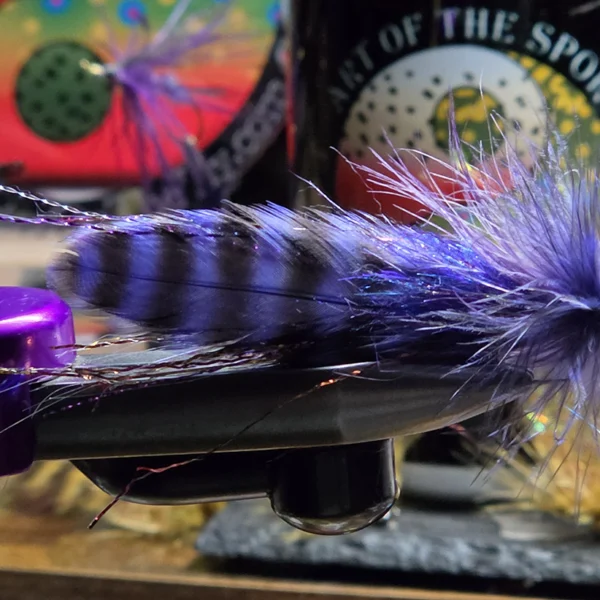
Bright Purple Grizzly Sugar Momma
$5.95 Select options This product has multiple variants. The options may be chosen on the product page -

Chartreuse Screamer Spey
$7.58 Select options This product has multiple variants. The options may be chosen on the product page -

Claret Orange Woolly Bugger
$4.88 Select options This product has multiple variants. The options may be chosen on the product page -


Clearwater Walker
$5.88 Select options This product has multiple variants. The options may be chosen on the product page -

Electric Coal Car Spey
$7.58 Select options This product has multiple variants. The options may be chosen on the product page -

Electric Jackson Purple Spade
$4.88 Select options This product has multiple variants. The options may be chosen on the product page -

Fl. Pink Butt Chartreuse Spey
$7.58 Select options This product has multiple variants. The options may be chosen on the product page -


Fluorescent Chartreuse Steelhead Slammer
$6.88 Select options This product has multiple variants. The options may be chosen on the product page -


Fluorescent Purple Steelhead Slammer
$6.88 Select options This product has multiple variants. The options may be chosen on the product page -

Freight Train
$7.58 Select options This product has multiple variants. The options may be chosen on the product page -

Gary Cooper Spey
$10.85 Select options This product has multiple variants. The options may be chosen on the product page -

Golden Comet
$4.88 Select options This product has multiple variants. The options may be chosen on the product page -

Green Butt Black Bear
$7.58 Select options This product has multiple variants. The options may be chosen on the product page -

Green Butt Skunk
$6.88 Select options This product has multiple variants. The options may be chosen on the product page -

Green Flash
$6.88 Select options This product has multiple variants. The options may be chosen on the product page -

Mae West Spey
$9.85 Select options This product has multiple variants. The options may be chosen on the product page -

Mae West Trout Intruder
$12.85 Select options This product has multiple variants. The options may be chosen on the product page -


Night Walker
Price range: $6.95 through $7.65 Select options This product has multiple variants. The options may be chosen on the product page -

Orange Screamer Spey
$7.58 Select options This product has multiple variants. The options may be chosen on the product page -

Plain Jane
$6.88 Select options This product has multiple variants. The options may be chosen on the product page -

Pretty in Pink Spey
$10.85 Select options This product has multiple variants. The options may be chosen on the product page -


Purple Butt Black Bear
$7.58 Select options This product has multiple variants. The options may be chosen on the product page -

Purple Peril Spey
$7.58 Select options This product has multiple variants. The options may be chosen on the product page -

Salmon-Steelie Egg
$3.96 Select options This product has multiple variants. The options may be chosen on the product page -

Signal Light Spey
$7.58 Select options This product has multiple variants. The options may be chosen on the product page -

Skunk
$6.88 Select options This product has multiple variants. The options may be chosen on the product page -

Steel Thunder
$7.65 Select options This product has multiple variants. The options may be chosen on the product page -

Sunday Spey
$8.85 Select options This product has multiple variants. The options may be chosen on the product page -


Trust Issues Spey
$7.58 Select options This product has multiple variants. The options may be chosen on the product page