Description
Orange Screamer Spey Fly – Fluorescent Orange Steelhead & Atlantic Salmon Pattern
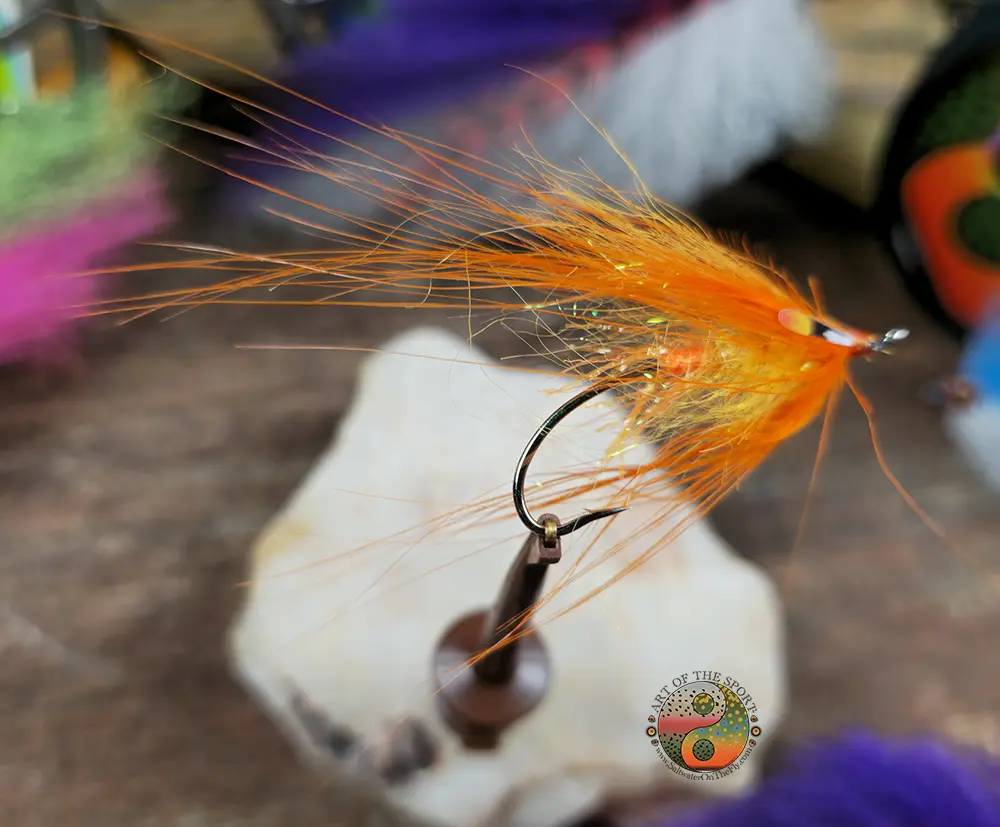
The Orange Screamer Spey is a deadly modern steelhead and Atlantic salmon pattern that combines high-visibility fluorescent orange with proven Spey-style movement, making it one of the top-producing flies for low-light, colored water, or aggressive fish during the fall and winter runs. Tied on an Alex Jackson 2052 nickel up-eye hook with Semperfli 6/0 orange thread, the fly starts with a hot fluorescent orange Ice Straggle butt for added attraction, followed by a brushed-out body of Fluorescent Orange Monster Bush Fur ribbed with silver wire for durability and flash. A long, mobile Whiting Farms Bird Fur hackle in fluorescent orange pulses in the current, while a flowing wing of fluorescent orange bucktail keeps the profile slim yet lively, finished with Semperfli imitation Jungle Cock cheeks for that classic spey look. When fishing the Orange Screamer Spey, swing it on a Skagit or Scandi head with a floating or intermediate tip in classic steelhead runs, especially in glacier-tinted or tannic rivers where the bright color stands out; cast quartering downstream, mend once, let the fly sink, then maintain a steady swing with occasional short twitches of the rod tip to trigger follows from hot fish—many anglers report this fly excels from late October through March on rivers like the Skeena, Deschutes, or Scottish Dee when traditional patterns get ignored.
Swing the Orange Screamer Spey on a Skagit or Scandi line with a floating or intermediate tip through classic steelhead runs and salmon lies. Cast quarter-downstream, mend once, and add subtle rod-tip twitches—this bright steelhead Spey fly triggers aggressive takes from October through March on rivers like the Skeena, Deschutes, and Scottish Dee when fish ignore darker patterns.
Orange Screamer Spey Recipe:
Hook: Alex Jackson 2052 Nickel Up Eye
Thread: Semperfli 6/0 Orange
Butt: Semperfli Fl. Orange Ice Straggle
Body: Fl. Orange Monster Bush Fur Dubbing wrap as a Silver Wire Brush
Hackle: Fl. Orange Whiting Farms Bird Fur
Hair Wing: Fl. Orange Bucktail
Cheeks: Semperfli Imitation Jungle Cock
Fly Fishing the Trask River in Oregon with the Orange Screamer Spey
Nestled in the lush Oregon Coast Range near Tillamook, the Trask River is a premier coastal steelhead fishery renowned for its wild winter runs of chrome-bright sea-run fish averaging 8-12 pounds, with opportunities for double-digit bruisers in tannic, rain-swollen waters. Accessible via Oregon Highway 6 and Trask River Road with abundant bank parking and drift boat launches, the Trask peaks from mid-December through early April, aligning perfectly with the Orange Screamer Spey’s fluorescent glow to cut through low-visibility conditions during frequent Pacific storms. Target classic Spey runs like Loren’s Drift (RM 9) to Cedar Creek Boat Slide (RM 10.9), where gear restrictions often favor fly fishing—rig a 12’6″ 9-weight Spey rod with a Skagit head and heavy sink tip to swing the fly deep into aggressive winter steelhead lies, mending to control the arc and twitching the tip for explosive grabs. Note seasonal closures above the Dam Hole (MP 7) until December 1 and salmon restrictions on forks, but by late November, fresh fish are entering; always check ODFW regs for hatchery clips and Columbia Basin Endorsement requirements. This pristine Tillamook Bay tributary delivers heart-pounding fights amid old-growth forests, making it an ideal late-fall to winter Spey casting haven for Oregon steelhead enthusiasts seeking uncrowded, high-success outings.
Fly Fishing the Deschutes River, Oregon with the Orange Screamer Spey
The Deschutes River in central Oregon is one of the West’s premier summer and fall steelhead destinations, and the fluorescent Orange Screamer Spey has become a cult favorite for swinging up chrome-bright hatchery and wild fish from June through November. While the Deschutes is world-famous for its trout and salmonfly hatch, the lower 100 miles from Warm Springs to the mouth offer excellent steelhead water, especially from mid-July through October when water temperatures drop and fish push in on every freshet.
The Orange Screamer’s screaming fluorescent orange profile absolutely shines in the Deschutes’ classic glacial silt and slight tannic stain—conditions that can make darker traditional patterns disappear. Many local guides now carry it as their go-to “confidence fly” when the river is running 1–3 feet of visibility or during low-light periods at dawn, dusk, or under heavy cloud cover.
Prime Orange Screamer water on the Deschutes
- Warm Springs to Trout Creek (lower canyon): Long, swinging runs like Nena, Pine Tree, and South Junction respond incredibly well to the bright profile.
- Trout Creek to Macks Canyon: Classic bucket-and-tailout water; the fly’s flash and movement trigger hot fish holding in the softer inside seams.
- Maupin area day stretch: Runs below Boxcar Rapids, Oasis, and the White River confluence are perfect for skating or greased-line swinging the Orange Screamer with a floating tip in late September and October.
How to fish it on the Deschutes
Rig a 13–14 ft 7- or 8-weight Spey rod with a Skagit head (450–575 gr) and 10–12 ft of T-8 to T-14 depending on depth and speed. In the warmer months (July–August), many anglers start with an intermediate or MOW light tip and a 4–5 ft leader to keep the fly just under the surface for waking takes. As water cools in September–November, switch to heavier sink tips to dig into the buckets where fish stack. Cast square or slightly quartering downstream, throw a big upstream mend, let the fly sink on a tight line, then let it swing broadside—short 6-inch strips or subtle rod-tip twitches often turn followers into crushers.
The Orange Screamer Spey has accounted for countless Deschutes steelhead the past few seasons, especially on tough, bright days when black-and-blue or purple flies get refused. Tie a few on 1.5–3 inch shanks or tubes, keep one in your box from July through the November closer, and you’ll quickly understand why Deschutes regulars now call it the “Deschutes Desert Sunrise.”
Reviews
There are no reviews yet.