Pickwick Lake Bass Fishing History: Fly Fishing Bass on Pickwick Lake Tennessee
Listen up, you fly-casting rebels and bass-chasing gluttons for punishment who refuse to use standard tackle. Are you sick of hearing conventional anglers brag about heavy largemouths while your 9-weight rod out-fishes their electronics? Welcome to the definitive experience of Fly Fishing Bass on Pickwick Lake Tennessee, where the river rewards the bold and the persistent.
This is no polite trout stream where small fish sip tiny midges from the water’s surface. Pickwick stands as a massive 43,000-acre Tennessee Valley Authority beast that offers some of the best Pickwick Lake bass fishing in the region. Think about 500 miles of shoreline packed with submerged stumps, thick hydrilla mats, rocky ledges, and aggressive bass.
We are targeting smallmouth bass that fight like caffeinated honey badgers and largemouth bass plotting world domination from the dark cypress shadows. You will experience elite Tennessee River fly fishing because nobody needs a bait caster to experience topwater glory. Grab your heaviest rods and prepare for a wild ride on the Tennessee River.
Table of Contents
Named after Charles Dickens’ famous novel, this lake exists because an 1800s postmaster possessed a literary sense of humor. Back in the 1840s, the area served simply as a sleepy riverboat stop along the main Tennessee River. Fast-forward to the Great Depression, and Franklin D. Roosevelt’s New Deal crew arrived with massive construction plans.
Construction on Pickwick Landing Dam, a cornerstone of Tennessee River fly fishing infrastructure, kicked off in 1935. The government felt an intense hurry to flood the entire valley in the name of industrial progress. The new dam tamed the treacherous Muscle Shoals while creating 43,100 acres of deep reservoir water for Pickwick Lake bass fishing.
It provided the surrounding region with vital flood control, commercial barge navigation, and cheap hydroelectric power. Pickwick actually became one of the very first all-electric towns in the United States. The towns of Waterloo and Riverton unfortunately got sacrificed and submerged to make this modern miracle happen.
Families relocated their homes, workers moved over 400 graves, and engineers rerouted countless miles of country roads. By 1972, the old construction worker village transformed into the modern Pickwick Landing State Park. Today, it stands as a massive recreation mecca for boating, hiking, and incredible bass fishing.
Tennessee River Fly Fishing: Why Fly Fishing Bass on Pickwick Lake Tennessee Beats Conventional Gear
Let us be completely honest about the dominant fishing culture on this particular body of water. Most folks hit Pickwick with heavy spinning rods, Alabama rigs, and enough electronics to launch a modern space shuttle. They certainly catch fish, but you are out there slinging a 9-weight rod to make things interesting.
You pop a deer-hair bug and feel that unmistakable thunk when a bass violently inhales your fly. Fly fishing on Pickwick shines in the shallow creeks and around heavy structure where conventional gear usually snags. Topwater explosions at dawn happen regularly when you place a popper near the grass edges.
Streamer patterns stripped in the heavy current seams produce aggressive strikes from hungry fish all day long. Smallmouth bass absolutely love the rocky upper lake, while largemouth bass rule the heavily vegetated backwater sloughs. Spotted bass act like chaotic neutrals that will aggressively hit absolutely any fly pattern you throw.
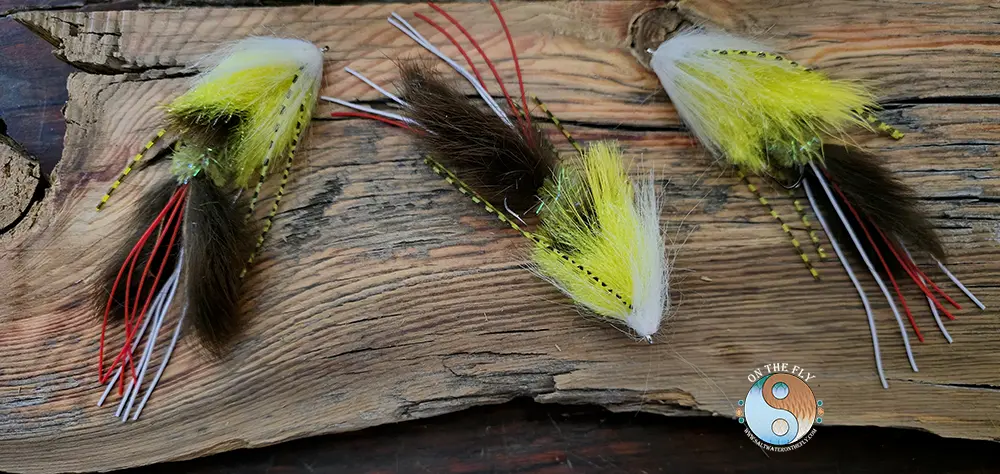
Conventional anglers secretly envy the intense fight you get on high-quality fly fishing gear. You experience zero line stretch, pure connection to the fish, and the smug satisfaction of tying your own patterns. Some days the fish want a loud crankbait much more than your artisanal, hand-tied fly. That’s when I throw flashy Gurglers.
Key Takeaways
- Pickwick Lake offers 43,000 acres of prime bass habitat created by the TVA in the 1930s.
- Fly anglers excel in shallow water, creeks, and heavy structure where conventional gear often fails.
- Expect to encounter largemouth, smallmouth, and aggressive spotted bass across different lake zones.
Best Spots for Pickwick Lake Bass Fishing: Top Locations for Tennessee River Bass Fishing
Pickwick spans a massive geographic footprint, meaning you need a solid strategy before launching your boat. Without a clear plan, you will likely spend the entire day motoring around the reservoir like a lost tourist. Fly fishing truly shines in the shallow-to-mid-depth structure where you can visually track the aggressive take of a smallmouth bass.
Bear Creek and Yellow Creek Backwaters
These specific areas provide largemouth bass heaven with endless cypress trees, hydrilla mats, and submerged stump fields. Prespawn fish stage here in the spring, while fall brings a massive feeding frenzy on schooling shad. Cast poppers into the small pockets and watch the surface explode with violent strikes.
Coffee Slough
This expansive backwater offers one to five feet of water filled with cypress, grass, and wooden stumps. This year-round bass factory is absolutely perfect for throwing floating lines and large streamer patterns. You will see much less boat traffic because the skinny water keeps the heavy fiberglass bass boats away.
Koger Island
This location features hidden stumps mixed with thick milfoil and hydrilla where big bass live year-round. Target the outer edges with heavy crayfish patterns to trigger aggressive strikes from territorial fish. This area demands precise casting and a sturdy 9-weight fly rod to succeed in the heavy cover.
Second Creek and Panther Creek
You want to fly fish for bass on Pickwick Lake Tennessee? Then listen up about Second Creek and Panther Creek. These spots are not for the faint of heart. They have rocky points everywhere. You will also find riprap along the banks. And plenty of shallow flats too. This makes them a prime location for bass. But it also means snags. Lots of snags. Get ready to lose some flies. It is part of the game.
Fly fishing here means you can wade. Or you can drift slowly. Both methods let you get close. You can target those rocky points. Bass hide there. They wait for an easy meal. Shallow flats are good for largemouth bass. They like to ambush prey. You need to cast accurately. Your aim matters a lot here. It means less time untangling. More time fishing.
Ledges Near the Main River Channel
The main river channel on Pickwick Lake is no joke. It holds some serious bass. You’ll find shallow hydrilla on top of these ledges. Then the bottom drops to 15 feet or more. This is prime Pickwick Lake summer fishing territory. Largemouth bass Pickwick Lake love to ambush from these depths. Smallmouth bass Pickwick Lake patrol the edges too. Spotted bass Pickwick Lake also crash the party here.
You need long casts to reach these fish. A fast retrieve with Pickwick Lake streamers works well. Try a Pickwick Lake Clouser Minnow. It mimics the abundant Pickwick Lake Gizzard Shad. The Pickwick Lake current helps your fly move. Look for Pickwick Lake current seams where fish wait. The Tennessee Valley Authority (TVA) dam releases make these currents. So, watch the TVA operating guide. Fish hug the Pickwick Lake structure. They feed on shad and Pickwick Lake Bluegill.
Pro Tip:
Always check the TVA operating guide for water release schedules before heading out. Dam generation creates the current that turns on the smallmouth bite, but fluctuating water levels can leave you stranded in the shallows.
Essential Fly Fishing Gear: The Top 13 Best Bass Fly Patterns for Pickwick
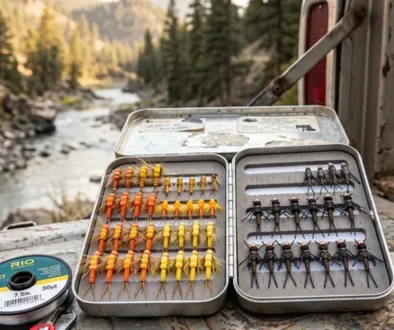
These thirteen specific patterns are battle-tested for imitating Pickwick’s shad, crayfish, bluegill, and frog forage base. Tie them in sizes 2 through 6/0 depending on how aggressive the fish feel on any given day. Use bright chartreuse and white for dirty water, and stick to natural colors for clear conditions.
Baitfish and Streamer Patterns
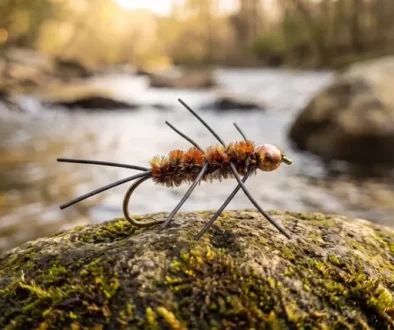
The Chartreuse and White Clouser Minnow acts as the ultimate workhorse for this entire lake system. Heavy dumbbell eyes get it down quickly, and it strips exactly like a terrified, fleeing shad. Smallmouth bass inhale it in heavy current seams, though it causes hilarious wind knots if your casting mechanics get sloppy.
Lefty’s Deceiver represents another classic choice that allows for long casts and a natural swimming action. Articulated Sparkle Minnows provide extra movement during the fall feeding frenzy when bass gorge themselves. Throwing this flashy pattern into a breaking school of gizzard shad means game over for the fish.
Topwater and Surface Bugs
A Yellow and Black Foam Popper reigns as the undisputed topwater king during the early morning hours. Gurgle it across the small hydrilla pockets at dawn for almost guaranteed surface explosions. The Gurgler is a noisy, floating surface fly that causes a massive commotion on the water.
Deer Hair Frog patterns are absolutely mandatory for fishing over the thickest vegetation mats. Skitter the frog across the heavy cover and pray for a massive blowup from a hidden largemouth bass. Terrestrial Hoppers offer a fun bonus for anglers walking the banks and casting tight to the grass.
Crayfish and Bottom Bouncers
Near Nuff Crayfish patterns completely dominate the rocky areas and deep river ledges. Bounce this heavily weighted fly on the bottom to make largemouths lose their minds in Bear Creek. This pattern also doubles as an irresistible snack for hungry smallmouths hunting in the rocks.
The Weighted Slumpbuster acts as a deep-water beast for targeting underwater points and steep drop-offs. Use a slow strip-strip-pause retrieve to trigger lethargic fish holding tightly near the bottom structure. Thank me later when you pull a monster smallmouth from the dark depths.
Conservation Challenges on Pickwick: The TVA Soap Opera No One Asked For
Humans love patting themselves on the back for saving rivers while accidentally creating entirely new ecological problems. Pickwick’s overall health bounces between good and fair depending heavily on rainfall amounts and agricultural runoff. Dry spells mean dangerously low oxygen in deep water, while heavy rains turn the lake into a nutrient soup.
The Asian carp invasion presents a massive, ongoing headache for local fisheries biologists and angry anglers. Silver and bighead carp swim upstream, vacuuming up essential plankton and competing heavily with the native forage. They act exactly like an uninvited guest who eats all your snacks and multiplies rapidly.
Chemicals and mercury in the local catfish mean you should probably pay close attention to fish consumption advisories. You should eat your catch at your own risk, or just practice catch and release like a responsible angler. Hydrilla and milfoil create fantastic aquatic vegetation for growing bass until they completely choke out the shallow coves.
Trash cleanups by local bass groups happen frequently, but the lake still sees immense fishing pressure. Boat traffic, commercial development, and the battle between recreation and reality never stop on this reservoir. Check out our https://saltwateronthefly.com/fly-fishing-shop/ fly fishing gear, outdoor apparel to find the right equipment for pulling fish from this heavy cover.
Multi-Species Opportunities: Beyond Fly Fishing Bass on Pickwick Lake Tennessee
Fly fishing for bass on this massive reservoir often turns into a wild, multi-species surprise party. You never quite know exactly what will grab your line when you strip a streamer through the current. Crappie absolutely love attacking small streamers or woolly buggers cast near the submerged cypress trees.
Bluegill and Redear Sunfish will aggressively smash small poppers on the shallow, sandy flats. This provides kid-friendly chaos and non-stop action during the incredibly hot summer months. White Bass and Yellow Bass regularly school up to chase small shad flies in the spring runs.
These schooling maniacs hit hard and fight well above their actual weight class. Sauger hang out in the deep tailrace areas during the colder winter months. You can catch them on small Clousers for a feisty and highly underrated fight on a sinking line.
Frequently Asked Questions
What weight fly rod is best for Pickwick Lake?
A 9-weight or 10-weight fly rod is ideal for throwing large bass bugs and fighting the heavy winds common on this massive reservoir. The heavier rod also helps you pull big bass out of thick hydrilla mats.
What is the best time of year to fly fish for bass here?
Spring and fall offer the best action for fly anglers. Spring brings prespawn fish into the shallow backwaters, while fall triggers aggressive feeding frenzies as bass chase schooling shad near the surface.
Do I need a sinking fly line for Pickwick?
Yes, carrying an intermediate or full-sinking line is highly recommended. While floating lines work great in the shallow sloughs, sinking lines are necessary for fishing the deep ledges and tailrace currents.
Are there special regulations for bass on this lake?
The Tennessee Wildlife Resources Agency (TWRA) enforces a five-bass combination limit with a 15-inch minimum length for largemouth and smallmouth bass. Always check current TWRA regulations before your trip as rules can change.
Final Cast: Making Memories on the Water
Pickwick Lake fly fishing for bass is far from a perfect, pristine wilderness experience. It features messy historical baggage, ongoing ecological drama, conservation curveballs, and fish that laugh at your best efforts. That exact combination of unpredictable chaos makes this specific Tennessee fishery absolutely legendary among dedicated anglers.
You should load up your truck, tie on a Clouser Minnow, and go prove your skills. The local bass do not care about your fragile ego, but they certainly love a well-presented fly. Keep your casting loops tight, manage your excess line, and embrace the wild nature of the Tennessee River.
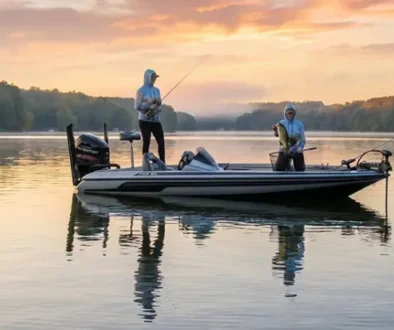
Fly anglers can easily hang with the conventional tournament boats if they understand the water and structure. Your 9-weight rod provides plenty of backbone to handle anything swimming in these deep waters. May your backing stay securely on the reel more often than not as you chase these incredible fish.
Terminal Tackle for Fishing Pickwick Lake Tennessee: The No-BS Guide to Hooks, Weights, Rigs & Gear That Won’t Snap, Snag, or Sink Your Day (Because This TVA Beast Eats Cheap Crap for Breakfast)
Listen up, you tackle-box warriors and weekend warriors who think “terminal tackle” is just fancy talk for “the stuff at the end of your line that costs more than your lunch.” If you’re googling “terminal tackle for fishing Pickwick Lake” because your last trip ended with a $47 Carolina rig decorating a stump field and a smallmouth laughing at you from the depths, congratulations—you’re in the right place. This monster breaks down exactly what you need to not look like a rookie on this 43,000-acre Tennessee River beast.
Pickwick Lake—spanning Tennessee, Alabama, and Mississippi like a drunk uncle at a family reunion—ain’t your sleepy farm pond. It’s ledges, current seams, hydrilla mats, stump fields, and rocks that chew through terminal tackle like it’s a midday snack. Rocks and current punish cheap gear fast. We’re talking strong hooks, corrosion-resistant weights, and fluorocarbon leaders that won’t turn into spaghetti when a 6-pound smallie decides your line owes it money. We’ll cover bass (the main event), crappie, catfish, and bonus species. Plus seasons, top locations, common screw-ups, and why your buddy’s $200 rod is useless without the right terminal setup. Fly guys are still over there double-hauling poppers while we’re wondering who’s catching the most fish.
Reason Terminal Tackle Matters More Than Your Ego on Pickwick Lake (Spoiler: It’s the Current, Rocks, and Hungry Fish)
Terminal tackle is everything from the swivel down: hooks, sinkers, leaders, snaps, beads, and whatever else keeps your bait in the strike zone without turning into underwater art. On Pickwick? It’s non-negotiable. The TVA dam pumps current like a bad espresso habit, ledges drop 20+ feet in seconds, and submerged stump fields from old drowned towns are basically fish hotels with razor blades. Skimp on terminal tackle and you’ll spend more time re-rigging than fishing. Pros swear by tungsten over lead (heavier, smaller profile, less snags, and hey, less lead in the water for the fish you’re trying not to poison). Fluorocarbon leaders (15-20 lb for bass) for abrasion resistance. Strong hooks—Owner, Gamakatsu, VMC, Partridge, Mustad—because a bent hook is how you lose the fish of the day.
TWRA regs keep it simple: black bass combo limit 5 fish/day, 15-inch minimum (applies across TN/AL/MS reciprocal waters). Crappie 30/day, 9-inch min. Catfish no limit under 34 inches, one over. Check the reciprocal agreement—you don’t need three licenses. But ignore terminal gear and you’ll be that guy posting “fish weren’t biting” on Facebook while everyone else is limiting out.
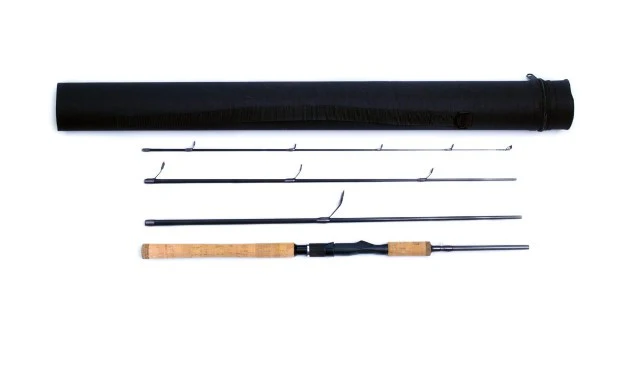
Bass on Pickwick: Terminal Tackle Setups That Actually Work (Texas, Carolina, Alabama—Pick Your Poison)
Bass fishing here is ledge central in summer, grass and backwaters in spring/fall, tailrace chaos year-round. Here’s the terminal tackle that turns “maybe” into “boat full.”
Texas Rig: The Workhorse for Grass, Stumps, and “I Don’t Wanna Snag Everything”
-
- Terminal setup: 3/0-5/0 offset worm hook (Eagle Claw Lazer Sharp, Owner Hooks, or Gamakatsu), 1/4-1 oz tungsten bullet weight (pegged with a rubber stop or toothpick), 15-20 lb fluoro leader. Braid main line (50 lb+) for punching mats.
- Why it slays Pickwick: Crawl it through hydrilla in Bear Creek or Yellow Creek backwaters. Let it fall, shake, drag. Largemouths ambush like they’re mad at the world. Sarcasm: nothing says “fun” like a 5-pound bass inhaling your creature bait while your cheap lead weight buries itself in a stump.
- Pro tip: Use a 7’6” medium-heavy baitcaster, 17-20 lb fluoro. Colors: green pumpkin, black/blue for clear water.
Carolina Rig: The “Drag It Slow and Look Smart” Rig for Ledges and Points
-
- Terminal setup: 1/2-1 oz tungsten barrel or egg sinker, glass or plastic bead (for click), barrel swivel, 3-4 ft 15-20 lb fluoro leader, 3/0-4/0 EWG worm hook or shaky head.
- When to use: 18-25 feet on main-lake ledges, underwater points near Koger Island or Natchez Trace Bridge. Drag it, hop it, let the bait do the dancing. Smallmouths and spots love it when bass are suspended or bottom-oriented.
- Humor break: Your spinning-rod buddies call it “old man fishing.” You call it “filling the livewell while they chase buzzbaits.”
Alabama Rig (Umbrella Rig): The Schooling Bass Slayer (With Regs Caveat)
- Terminal setup: 3-hook version (TN limit—don’t be that guy with 5), 3/8-3/4 oz jigheads or swimbait heads (Owner Flashy Swimmer or VMC), 4-5 inch swimbaits or grubs. 65 lb braid to a heavy swivel.
- Prime spots: Ledges, creek channels, shad schools in spring/fall. Wilson Dam tailrace for winter smallies.
- Warning: Some tournaments ban ‘em. Check local rules or you’ll be that dude getting the side-eye.
Other Bass Terminal Must-Haves
- Drop shot/Ned/Shaky Head: 1/4-1/2 oz tungsten drop-shot weights or cylinder weights, #2-1/0 hooks, 10-12 lb fluoro. Finesse on pressured smallies in clear water or deep structure.
- Football Jig: 1/2-3/4 oz with craw trailer. Bounce on rocky points and ledges—smallies crush it.
- Swimbait Jighead: 3/4-1 oz for big glide baits on offshore schools.
Gear recommendation: 7-7’6” MH rods, 6.8:1-7.1:1 reels, 15-20 lb Sunline or fluorocarbon. Tungsten everything—sensitivity is king when you can’t see the bottom.
Crappie Terminal Tackle: Because Slabs Don’t Care About Your Bass Ego
Pickwick’s crappie fishery is underrated—cypress, brush piles, and channel edges hold slabs year-round.
-
- Jig Head Setup: 1/16-1/8 oz Mr. Crappie or similar jigheads with 1-2 inch tubes or curly tails. Slip bobber or fixed float above for suspended fish. Spider rigging: multiple rods with 1/8 oz jigheads, live minnows or plastics.
- Slip Sinker Rig: For still fishing—egg sinker on main line, bead, barrel swivel, 24-36” leader to circle hook.
- Locations: Bear Creek Ditch, old shoals canal, tailrace. Troll slow or anchor up. No limit under 34 inches—one trophy over.
Top Locations & Seasons: Where Your Terminal Tackle Actually Gets Tested
-
- Spring (Pre-spawn/Shad Spawn): Backwaters (Bear Creek, Yellow Creek)—Texas rigs in grass. Tailrace for A-rigs. Current seams love Carolina rigs.
- Summer: Ledges 15-25 feet—Carolina and football jigs. Deep cranking with heavy terminal.
- Fall: Schooling bass—Alabama rigs and topwater with light terminal.
- Winter: Tailrace smallies—drop shots and shaky heads. Catfish still bite.
- Must-visit spots: Koger Island stumps, Natchez Trace ledges, Coffee Slough, Wilson Dam tailrace. Use electronics—Pickwick rewards homework
Must-Have Terminal Tackle Brands & Budget Hacks (Don’t Be Cheap, But Don’t Go Broke)
- Hooks: Owner, Gamakatsu, VMC—sharp out of the pack.
- Weights: Tungsten (Eco Pro, Bass Mafia)—smaller, more sensitive.
- Swivels/Beads: Spro Power Swivels, strong barrel swivels.
- Leaders: Seaguar InvizX or Sunline Sniper fluoro.
- Snaps: Heavy-duty cross-lock for quick changes. Budget hack: Buy bulk tungsten and pre-tie leaders. Avoid no-name Amazon junk unless you enjoy re-rigging every 10 minutes. 2025 updates include new tungsten jigheads and finesse swivels—worth the upgrade if you fish often.
Common Terminal Tackle Screw-Ups (And How to Avoid Becoming That Guy)
- Weak hooks: Bend out on a 7-pounder? Upgrade.
- Wrong weight size: Too light in current = drifting into nowhere. Too heavy = no action.
- Mono leaders: Abrasion city—fluoro or nothing.
- No bead on Carolina: No click = missed strikes.
- Ignoring corrosion: Pickwick’s water eats cheap stuff.
- Overloading the boat: 10 rods is fine; 10 tangled rigs is not.
Pro tip: Pack a terminal tackle box with pre-tied leaders. Electronics + GPS = repeat the exact ledge drifts.
Conservation Quick Hit: Don’t Be a Jerk With Your Tackle
Pickwick has Asian carp issues, sedimentation, and advisories. Use non-lead weights where possible. Catch-and-release the big ones. Support local cleanups. TWRA does good work—respect the regs or lose the fishery.
Final Cast: Load Up the Terminal Tackle and Go Make Some Memories (Or at Least Good Stories)
Pickwick Lake fishing with the right terminal tackle isn’t rocket science—it’s about matching the madness of the water. Strong hooks, smart weights, abrasion-resistant leaders, and the right rig for the spot turn average days into “holy crap, did you see that?” days. Whether you’re dragging a Carolina on a ledge, spider-rigging crappie, or holding on to a 3-way catfish rig, this lake rewards the prepared. So stock that terminal box, check the TVA levels, and get out there. Your spinning-rod buddies will still be buying new lures while you’re posting pics of limits. Tight lines, minimal snags, and may your terminal tackle stay terminal (not lost).