Fly Fishing for Bass on Santee Cooper Lakes South Carolina
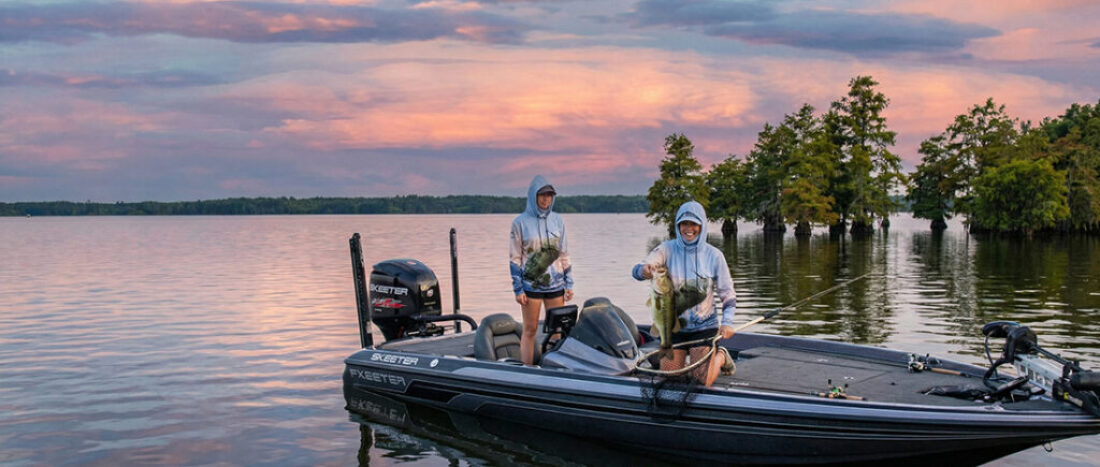
Fly Fishing for Bass on Santee Cooper Lakes South Carolina is a trip you daydream about from your office chair. The cypress trees, the tannin-stained water, and the way a bass blows up on a popper scare you more than you scare it. Fly Fishing for Bass on Santee Cooper Lakes South Carolina is loud, raw, and the opposite of polite little trout sips.
You are not signing up for quiet casting lanes and dainty dry flies here. You are signing up for flooded timber, grass beds, hidden stumps, and bass that eat like they have something to prove. If that sounds like your idea of a fishing adventure, you are in the right place.
Table of Contents
Reason Santee Cooper Is Such A Strong Bass Fishery
Santee Cooper is really two lakes, Marion and Moultrie, joined by a diversion canal. Together they cover more than 170,000 acres of prime warmwater habitat. It never should have been this good for bass, but the result is a world-class fishery.
The lakes came out of a New Deal hydroelectric project that flooded hardwood forest and swamps. The engineers rushed the job due to war efforts. They left piles of standing timber, stumps, and cypress knees everywhere.
Those leftovers turned into endless ambush points for largemouth bass and stacked the place with structure. As the system settled in, baitfish, bluegill, and shad filled the new lakes. The bass followed the food, and the population exploded.
Later, striped bass got landlocked here and started spawning. This drew national eyes to the place as a diverse fishery. You can see how high-level pros break down the water through Major League Fishing coverage of where to catch them at this breakdown.
Big events keep proving how rich this system is. At the Bassmaster Elite series stop here, anglers weighed four-day totals well over 70 pounds. Preston Clark set one of the heaviest four-day records at 115 pounds, 15 ounces.
This shows the caliber of big bass swimming in these waters. Coverage of the 2022 Bassmaster Elite on Santee Cooper explains how those bags came together at this event recap. Bassmaster ranked Santee Cooper as the third-best bass lake in the country in 2021.
This ranking tells you exactly what kind of quality lives here. Regional coverage of South Carolina bass waters through outlets like Game and Fish has echoed the same story. They highlight this region as a consistent big fish producer at this region overview.
Throw A Fly Rod Here Instead Of Conventional Gear
You might wonder if bringing a fly rod to a tournament-style bass factory is wise. Some think it is like bringing a butter knife to a gunfight against modern fishing tackle. It is not.
These lakes are shallow over huge areas and full of visible cover. Baitfish and panfish cruise within easy reach of a floating line. That makes it a playground for big streamers, poppers, and frog flies.
You are not bombing crankbaits blindly into the depths. You are making sharp, accurate shots at wood, grass, and pad edges. You work the fly right through the strike zone with precision.
Bass here already eat walking frogs, buzzbaits, and big soft plastics. Shifting that profile into feathers and foam is simple. The fish are used to seeing chunky profiles, so topwater baits fit right in.
Your fly looks like one more helpless thing to crush. The main difference is the movement when you strip it. The fight is where the fly rod wins on fun.
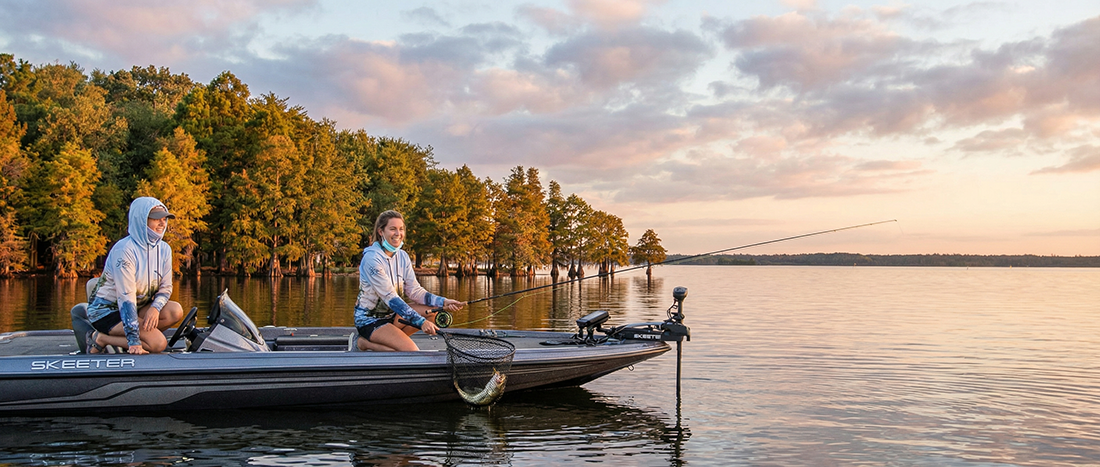
A four-pound Santee bass ripping you sideways through a cypress pocket on a seven or eight-weight rod is memorable. You start caring a lot less about the gear gap with the bass boat across the bay. It becomes about the experience rather than just the catch.
The Layout Of Santee Cooper And How That Affects Fly Anglers
To connect the dots on patterns, you have to break the lakes into zones. They do not fish the same way everywhere. Familiar names of specific spots will pop up often in reports.
| Area | Main Features | Best Fly Approach |
|---|---|---|
| Upper Lake Marion | Cypress, blackwater creeks, shallow swampy flats | Topwater poppers and frogs, slow streamers along wood |
| Lower Lake Marion | More open water, points, grass beds | Shad style streamers on floating or sink tip |
| Lake Moultrie | Deeper bowl, offshore humps, hydrilla edges | Streamers and craw patterns on sink tip or intermediate |
| Diversion Canal | Current, rock, transitions | Heavy baitfish and craw flies, swung through seams |
The upper lake of Marion feels like a flooded forest more than a lake. For a fly angler, that is home turf. You make short casts into little openings between trees.
Obvious bass cover almost begs you to swing a fly past it. As you move toward the Wilson Dam and out into Lake Moultrie, things get wider. Points and offshore structure play a much bigger role in this section.
Here you think more about bait schools, wind-blown banks, and contour breaks. You might even spot anglers using forward-facing sonar to track schools. Techniques that the pros lean on in tournaments apply here.
These methods are explained through the Major League Fishing Mercury Pro Tactics series at this tactics page. They translate well to fly patterns. You simply change the tool in your hand to match the forage.
Best Seasons For Fly Fishing For Bass On Santee Cooper Lakes South Carolina
You can catch bass here year-round. However, certain windows line up much better for a fly rod. Water level and weather play huge roles in success.
Spring
March through early May is probably the easiest time for a fly angler to connect with numbers. Water temperatures warm into the 60s. Fish move shallow to stage and then bed.
On the front end, work points, ditches, and timber that sit close to deep water. As fish lock onto beds, you shift your focus to flats. Backs of pockets and protected coves hold the largest fish.
You do not have to sight fish for bed fish to score. Sometimes you can see them in clearer sections of the Santee Cooper lakes. The neat thing is that your standard fly patterns still shine.
Suspended streamers and small crayfish imitations dropped in gaps draw strikes. Information about seasonal patterns is shared often at sites like Anglers Headquarters at this report hub. Checking these reports gives you a good chance of finding active fish.
Summer
By summer, the warm weather has taken over. The shallow cover comes alive with activity. Hydrilla and pads top out near the surface.
Shade lines get stronger as the sun gets high. Bass group on grass edges, docks, and any current they can find. Early and late in the day is pure topwater time.
Poppers and frogs over submerged grass are exciting. Midday you may slide deeper with sink tips. Fishing the outside weed edge near brush piles is effective.
If you are float tubing, you will live on those quiet banks. Access to shade is critical for the fish. This close-range work is ideal for short casts.
Fall
Fall feels like someone turned on a feed switch. Shad and other bait push shallow into creeks. Bass start chasing to bulk up before winter fishing kicks in.
This is streamer season for fly anglers. Think white, silver, and pale shad tones. Move the fly at a steady, medium pace.
On wind-blown points, you can line up parallel casts. Work that structure with almost conventional rhythm. You are just using flies instead of hard baits.
You will often find fish chasing bait in open water. A well-placed Deceiver through those schools works wonders. It is arguably the best time to catch numbers of fish.
Winter
Winter does not mean dead water in South Carolina. The lakes never get truly frozen out like ice fishing destinations up north. However, the fish do slow down.
Colder months push fish into deeper drains and channels. They seek areas with stable temperature and food. As a fly angler, that means a slower approach.
Use heavier flies and perhaps jigs finesse tactics adapted for the fly rod. Crayfish and bottom-oriented patterns near rock or wood work well. You must inch them along the bottom.
You might fish fewer places, but you cover them carefully. This is patient work. It is less about huge numbers and more about finding the right depth.
Gear For Santee Cooper Bass On The Fly
You do not need a dozen setups here. It helps to bring at least two rods rigged and ready. That way you are not swapping leaders and lines all day.
Rod, Reel, And Line Choices
For most people, a seven or eight-weight fly rod covers the range. If you like very big articulated streamers, bump to a nine-weight. Pick rods with strong butts to steer fish out of wood.
Spinning anglers often use long rods similar to a Fenwick World Class bass rod. You can see these setups detailed for power techniques at this rod description. Translate that power idea to your fly gear selection.
For lines, start with a weight-forward floating line. This handles poppers, frogs, and shallow streamer work perfectly. A sink tip line helps for channels, drops, and deeper cover.
A good large arbor reel matters here. Brands like Abu Garcia are famous for conventional reels, but fly anglers need good drag too. These fish love to wrap you in the timber.
Leaders And Tippet
There is no point babying tippet on Santee Cooper. You do not want to watch flies disappear in trees. Think short and stout for your terminal tackle.
A straight section of twenty-pound mono works fine. If you like a tapered leader, end it with a strong bite section. Power fishing anglers here use very heavy lines.
They often use 25 to 50-pound braided mainline. This gives you an idea of how abrasive the cover is. You can see examples of heavy line at this braid page and at this fluorocarbon guide.
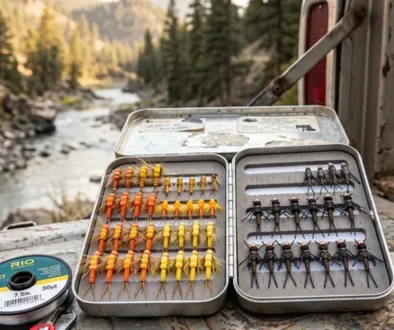
Flies That Consistently Produce On Santee Cooper
Bass here feed on a wide variety of prey. This includes shad, bluegill, crappie, and small catfish. Your flies should cover those main shapes.
Surface Patterns
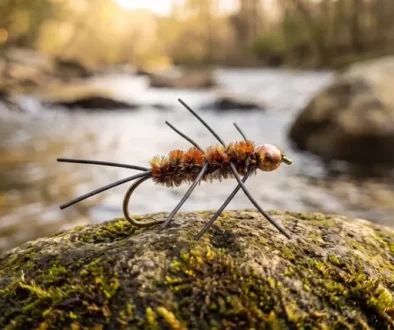
- Foam bass poppers in size 2 to 6 in black or chartreuse
- Dahlberg style divers for a sliding action across cover
- Frog patterns with weed guards for pad fields
- Gurglers for a quieter profile over shallow flats
Work poppers with sharp pops around cypress trunks. Often the strike comes right after a pause. In pads, pull frogs fast enough to avoid snagging.
Streamers And Subsurface Flies
- Deceivers and baitfish streamers in white or chartreuse
- Articulated Game Changers for lifelike swimming action
- Clouser style crayfish in rust and brown
- Sculpin patterns for bottom work near rock
You want a mix of heavy and light patterns. This helps you cover different layers in the water column. Count the fly down a couple of seconds on edges.
For deeper channels, use heavier eyes. Bites can feel like a steady weight in those zones. Stay connected and use a strip set to hook the bass caught deep.
Fishing From A Boat, Bank, Or Float Tube
You do not need a twenty-foot boat to have a strong trip. Boat traffic is heavy in some areas. This is especially true during major events like the ICAST Cup covered at this event listing.
Boats
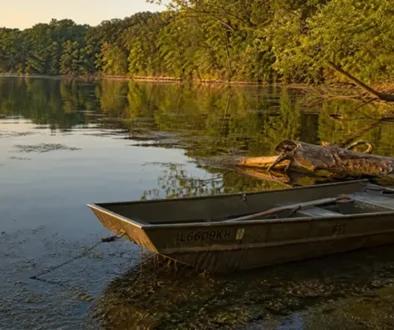
Jon boats and skiffs work if you read the water well. You must know how to spot stumps and underwater hazards. Stay in marked lanes where they exist.
Take it easy anytime visibility is poor. A trolling motor and shallow water anchors are helpful. This allows for a quiet approach to milk specific spots.
Clean, Safe, And Ethical Fishing
Healthy fisheries stay healthy because anglers take care of them. Santee Cooper carries the pressure of huge catfish and bass fishing. National write-ups about it being a top spot explain this at this feature story.
As a visiting fly angler, you have a part to play. Release bigger fish in good shape to preserve the genetics. Pack your trash out and respect the vegetation.
On the invasive species front, be careful. The Clean Drain Dry campaign reminds boaters to rinse gear. You can learn the steps at this cleaning page.
This prevents carrying unwanted hitchhikers between lakes. If you are hopping between lakes, that habit matters. It protects different fish species from invasive threats.
Licenses, Local Info, And Planning Your Trip
Before you back the trailer down, you need a license. You will need a legal fishing license for South Carolina. The process is simple to complete online.
You can find details through the South Carolina Department of Natural Resources. Their licensing portal is available at this licensing page. Major League Fishing also keeps a reference at this license page.
If you like to track when pros are in town, check schedules. You can see upcoming Major League Fishing events at this main site. Bassmaster schedules for Santee Cooper are at this schedule page.
Local tourism info helps with lodging. Blacks Camp is a legendary spot to stay and get bait or food. Areas near Historic Berkley County are mentioned at this county page.
This puts you close to ramps near Charleston. It is useful if you want to blend fishing with family time. You can visit pro shops in the area for expert tips.
It is worth checking regional outdoor publications. Outlets like the 2025 Fly Fisherman Destinations guide provide context. It is available at this magazine listing.
This helps you compare Santee to places like Lake Hartwell or Lake Murray. It helps build a full South Carolina itinerary. You might even find comparisons to Smith Mountain Lake or Hot Springs fisheries.
Keeping Up With Tactics And Tournament Insights
The cool part about chasing bass here is the information available. You can watch what the best in the game are doing. Tournaments keep pushing new patterns you can tweak.
Major League Fishing hosts pro breakdowns online. You can find these in Angler Columns at this column index. They also have ongoing Angler News at this news feed.
These cover everything from offshore structure to seasonal shifts. You can mirror these tactics with your fishing gear. It helps to know what the Elite Series pros are doing.
They also share fishery efforts through their Fisheries Management Division. This is located at this fisheries page. Pairing that with fishing news helps you time trips.
If you want a broader picture, look at regional coverage. Game and Fish maintains coverage for regions across the East. You can skim those pages starting at this regions hub.
Follow through to put Santee Cooper in context with other stops. Places like Smith Mountain or even simple farm ponds have their place. But Santee offers a chance at a 10-pound largemouth that few places can match.
Conclusion of Fly Fishing for Bass on Santee Cooper Lakes
Fly Fishing for Bass on Santee Cooper Lakes South Carolina is a unique challenge. You are casting through forested shallows and swinging streamers past old river runs. You are fighting thick-shouldered bass in a rough neighborhood of timber.
The lakes have the numbers and size to keep you coming back. Repeated tournament success and regional coverage prove this year after year. It is a place where you can catch fish deep or shallow.
If that idea sticks in your mind, listen to it. Mark the seasons that match your style and get a fishing guide if you need one. Check your license, grab your gear, and start fishing Santee today.