Roadless Rule Rollback: What It Means for Trout & Salmon
The Water Above the Last Road
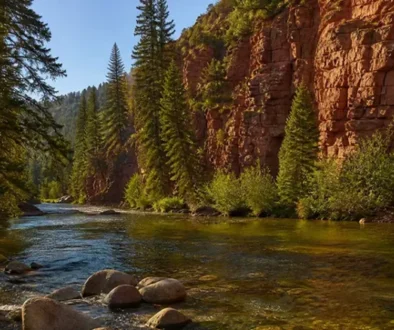
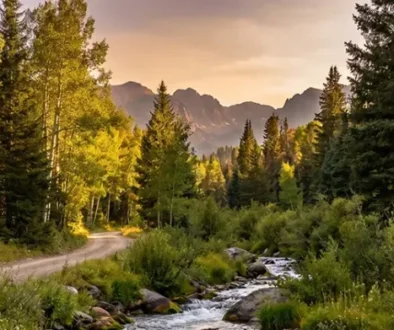
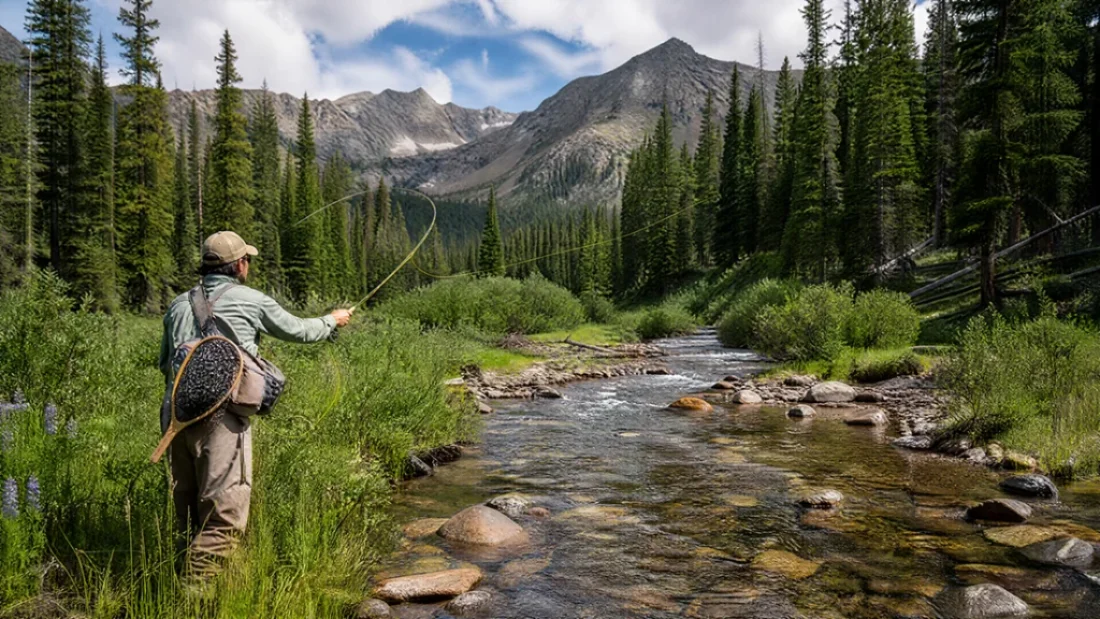
The best trout water in the West usually starts where the road ends. Every guide knows it. You park at the trailhead, hike two hours, and drop into a creek so clear you can count the spots on a cutthroat before it ever sees your fly.
That water is now on the table. The U.S. Forest Service has proposed scrapping the 2001 Roadless Area Conservation Rule, the national policy that has kept bulldozers and most commercial logging out of roughly 45 million acres of national forest for a quarter century.
This article cuts through the politics and asks the one question anglers care about: what happens to fish when roads go into roadless country? The short answer is that the agency’s own analysis expects harm to trout and salmon. The long answer is below.
Table of Contents
What the Roadless Rule Rescission Actually Does
The USDA announced the proposed rule in August 2026. Public comments closed around October 6, 2026, and a final decision is expected in early 2027. Until then, the existing protections stay in force.
|
Item |
Detail |
|---|---|
|
Acres affected |
About 45 million acres of Inventoried Roadless Areas (IRAs) |
|
What goes away |
The national ban on new road building and most commercial timber harvest in IRAs |
|
Who decides instead |
Individual national forest plans and local Forest Service managers |
|
What stays protected |
Designated Wilderness, plus Idaho’s and Colorado’s own state roadless rules. Question what is the reason Montana and New Mexico Don’t? Save the Rockies! |
|
Public comment |
Analyses of hundreds of thousands of comments found roughly 99% opposed |
|
Agency’s preferred option |
Full rescission |
Rescission does not automatically build a single road. It removes the national guardrail and hands decisions to forest-by-forest planning under NEPA, the National Forest Management Act and the Endangered Species Act.
That matters for anglers. Instead of one national fight, protection of your home drainage becomes a series of local fights, forest plan by forest plan, project by project.
Congress is also in the mix. The Roadless Area Conservation Act of 2025 (H.R. 3930 / S. 2042) would write roadless protections into law, while some Republican efforts have sought to nullify the existing rule.
Roadless Areas Are the Last Strongholds for Native Trout
Roadless areas are the headwaters. They hold the cold, clean, connected water that native trout and salmon need to spawn, and they feed the rivers most of us fish downstream.
These lands punch far above their weight for wildlife. Roadless areas are often cited as habitat for about 25% of threatened and endangered species relative to their land area.
Three things make roadless headwaters irreplaceable for fish:
- Cold water. Intact, shaded, high-elevation streams stay cold through August. As summers get hotter, these reaches are the refuges trout retreat to.
- Clean gravel. Trout and salmon bury their eggs in loose gravel that needs steady flows of oxygenated water. Undisturbed slopes shed little fine sediment to choke it.
- Connection. Without culverts and road crossings, fish move freely between spawning tributaries, summer refuges and winter pools.
For many native populations, these drainages are not just good habitat. They are the last habitat. Pure-strain cutthroat and isolated bull trout populations often survive only above the reach of roads, development and competing non-native fish.
How Roads and Logging Hurt Fish Populations
Roads, not trees coming down, are the biggest threat to fish. The Forest Service’s own draft environmental impact statement (DEIS) names roads as a primary source of sediment tied to timber operations. Here is how the damage reaches the water.
1. Sediment smothers spawning gravel
A road is a long, bare scar that sheds dirt every time it rains or snow melts. That fine sediment washes into streams and settles into spawning gravel, cutting off oxygen to buried eggs. It also buries the cracks where mayfly, stonefly and caddis nymphs live, which starves fish of food.
The DEIS expects more soil erosion, landslide risk and sediment pollution if the rule is rescinded.
2. Landslides and blown-out roads
Roads cut into steep mountain slopes change how water moves through the hillside. In big storms, fill slopes fail and dump tons of material into the creek below. One failure can bury a spawning reach for years.
3. Culverts block fish movement
Every stream crossing is a potential barrier. Undersized or perched culverts stop trout from reaching spawning tributaries and summer cold-water refuges. A population cut off from its spawning water slowly disappears.
4. Warmer water
Logging along streams removes shade. Roads and cleared ground change runoff timing. Both push water temperatures up, and bull trout and cutthroat are among the most cold-dependent fish in North America.
5. Invasive species ride in
The DEIS lists the spread of invasive species as a documented road effect. Roads carry weed seeds, aquatic hitchhikers and, too often, illegally stocked fish. Non-native brook, brown and rainbow trout can outcompete or hybridize with native trout once they gain access.
6. More pressure, more harvest
Access cuts both ways. A creek that takes three hours to hike into gets a handful of anglers a season. Put a road beside it and it gets that many on a weekend. Small headwater populations cannot absorb that kind of pressure or poaching.
7. A maintenance bill nobody pays
The Forest Service already carries a road maintenance backlog of about $6.9 billion. Unmaintained roads are the ones that wash out. Adding miles to a system that cannot maintain what it has is a recipe for more sediment in more streams.
The Fish Most at Risk
The DEIS concludes that full rescission “may affect, and is likely to adversely affect” 327 threatened and endangered species and 71 critical habitats. It singles out aquatic species such as salmon and trout. These are the fish anglers should watch most closely.
|
Species |
Where it matters |
Why roads hurt it |
|---|---|---|
|
Bull trout |
Montana, Idaho, Pacific Northwest |
Needs the coldest, cleanest water of any western trout; spawns in clean headwater gravel; federally listed as threatened |
|
Westslope cutthroat |
Montana, Idaho, Washington |
Pure populations often survive only in isolated headwaters; vulnerable to hybridization once roads bring in rainbows |
|
Yellowstone and other inland cutthroat |
Greater Yellowstone, Great Basin, Southern Rockies |
Small, fragmented populations with little room to absorb habitat loss |
|
Steelhead and Pacific salmon |
Pacific Northwest, Northern California, Alaska |
Rely on forest headwaters for spawning and rearing; sediment kills eggs and juveniles |
|
Southern Appalachian brook trout |
Eastern national forests |
The DEIS flags more accessible Eastern areas as more vulnerable to water-quality impacts |
For Montana anglers, the risk is close to home. Western Montana’s national forests hold large roadless blocks that feed bull trout and westslope cutthroat water. Idaho keeps its own state rule, so the national rollback hits states like Montana, Wyoming, Oregon and Washington harder.
The Wildfire Argument: Does It Hold Water?
USDA Secretary Brooke Rollins and Forest Service Chief Tom Schultz frame the rescission as a wildfire fix. Their case deserves a fair hearing, because fire also hurts fish when it burns hot and the next storm sends ash and mud downstream.
The case for rescission:
- More than 40% of IRAs, mostly in the West, have high or very high wildfire hazard potential.
- Only about 5% of IRAs have received hazardous fuels treatments since 2014.
- About 9.8 million acres of IRAs overlap the wildland-urban interface, where homes meet forest.
- Local managers would gain flexibility for thinning, fuels reduction and fire response.
What the DEIS and independent analyses add:
- Thinning, prescribed fire and some fuels work are already allowed under the current rule, with exceptions for safety and forest health.
- IRAs have seen treatments at rates comparable to other national forest lands.
- Wildfire ignition density is roughly 4 times higher on non-roadless national forest land in some comparisons. Most ignitions are human-caused and often tied to roads.
- Expected timber gains are modest, about 5% to 10% more annual sawtimber, because steep terrain and access costs limit what is worth cutting.
For anglers, the trade-off is stark. The fire benefit is debated and limited by terrain. The sediment, culvert and access impacts of new roads are well documented and long-lasting.
Downstream: Clean Water and the Fly Fishing Economy
What happens in the headwaters does not stay there. Sediment from a new road in a roadless drainage travels to the big rivers where most guided trips, drift boats and fly shops make their living.
National forest watersheds supply drinking water to more than 60 million Americans by frequently cited estimates. The DEIS expects added sediment to affect water quality for roughly 24 million people in the relevant watersheds, and notes that sediment can raise treatment costs for city water systems.
The same dirty water that costs a city more to treat costs a river its hatches. Fewer bugs mean fewer rising fish. Fewer fish mean fewer booked days, fewer flies sold and fewer travelers choosing a destination.
I owned fly shops and guided Montana water for more than a decade. Our clients did not fly across the country to fish a muddy ditch. They came for cold, clear rivers fed by wild country. That is the product, and it starts above the last road.
What Anglers Can Do Now
The national comment period has closed, but the fight now moves to places where anglers have real leverage.
- Call your members of Congress. Tell them where you stand on the Roadless Area Conservation Act of 2025 (H.R. 3930 / S. 2042) and on efforts to nullify the rule. Name the specific creek you fish.
- Watch your local forest plan. If rescission is finalized, road and timber decisions shift to individual forest plans. Sign up for planning updates from the national forest that holds your home water.
- Comment on site-specific projects. Every road and timber sale still goes through NEPA review. Comments from anglers who know a drainage carry weight.
- Join a conservation group. Trout and public-lands organizations track these projects full time and send alerts when your water is on the line.
- Document your water. Photos, catch records and redd sightings from a specific creek make powerful evidence in a local comment.
- Fish it and talk about it. Public land that people use and love is harder to give away. Take a friend into roadless country this season.
Roadless Rule FAQ
What is the Roadless Rule?
The 2001 Roadless Area Conservation Rule is a national policy that generally bans new road construction and most commercial logging in Inventoried Roadless Areas of national forests.
How many acres would lose protection?
About 45 million acres of national forest. Idaho and Colorado keep their own state roadless rules, and designated Wilderness is not affected.
How would opening roadless areas affect fish?
New roads add sediment that smothers spawning gravel, culverts that block fish movement, warmer water from lost shade, invasive species and heavier fishing pressure. The Forest Service’s draft analysis says full rescission is likely to adversely affect 327 threatened and endangered species, including salmon and trout.
Which fish are most at risk?
Bull trout, westslope and other native cutthroat, steelhead, Pacific salmon and Southern Appalachian brook trout, all of which depend on cold, clean headwater streams.
When will the decision be final?
A final decision is expected in early 2027. The current rule stays in effect until then, and litigation or congressional action could change the outcome.
Is the Roadless Rule repealed yet?
No. As of October 2026, the rescission is a proposed rule. The public comment period closed around October 6, 2026.
The Bottom Line
Roadless areas are where wild trout and salmon hold on when everything downstream gets harder. The Forest Service’s own analysis expects roads in that country to mean more sediment, more barriers and more harm to listed fish, in exchange for modest timber gains and debated fire benefits.
The decision is not final. Anglers who speak up locally, forest by forest and creek by creek, still have a say in what happens to the water above the last road.
Sources
- USDA Forest Service proposed rule to rescind the 2001 Roadless Area Conservation Rule (Federal Register notice, August 2026)
- USDA Forest Service Draft Environmental Impact Statement on the Roadless Rule rescission (Regulations.gov and Forest Service public reading room)
- U.S. Forest Service Roadless Areas program page
- Roadless Area Conservation Act of 2025, H.R. 3930 / S. 2042