Description
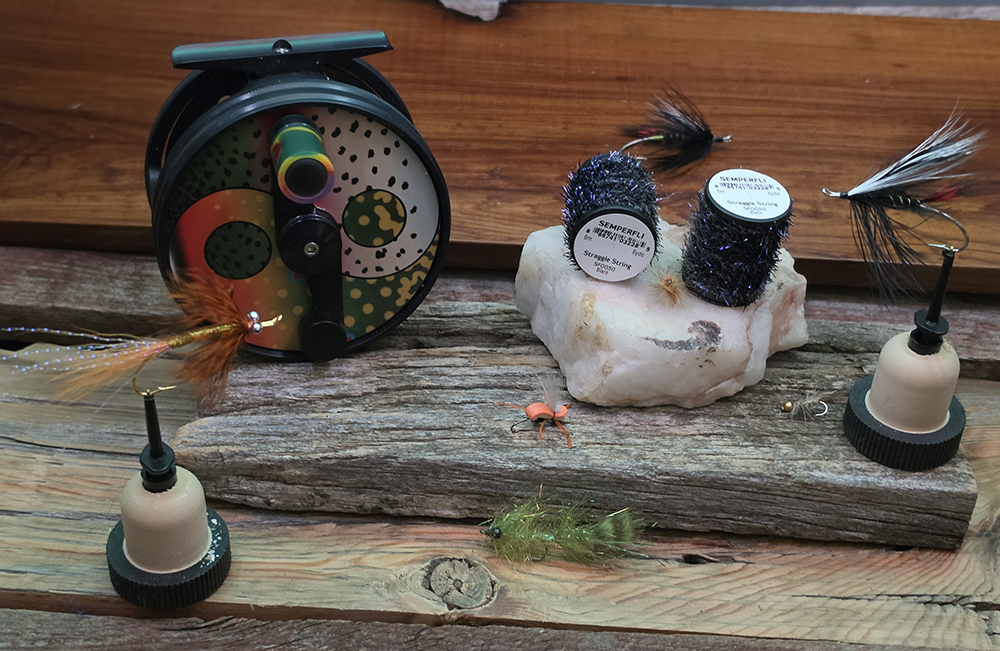
Black Semperfli Straggle String Micro Chenille
Black is the color every box runs out of first. Little black stoneflies in February, black caddis in spring, midges all year, and ants and beetles all summer. Black Straggle String gives you a slim, segmented, leggy profile in one material. Wrap it as a thorax behind a parachute post, use it as a collar on a soft hackle, or pick out the fibers as legs on a nymph. Because the core won’t absorb water, it’s the black thorax that keeps a dry fly floating through a long drift.
Recipe 1: Black Straggle Klinkhammer
- Hook: Partridge Klinkhamer 15BN, size 12 to 16
- Thread: Semperfli Nano Silk, black
- Wing post: White or hi-vis poly yarn
- Abdomen: Fine black dubbing, tapered
- Hackle: Grizzly or dun, parachute style
- Thorax: Black Straggle String
Tying: Tie the post in at the bend of the curved shank, then dub a thin abdomen well down into the bend. Tie in the hackle at the post base. Wrap 3 to 4 turns of Straggle String around the base of the post to form the thorax. Wind the hackle parachute-style, tie off, and whip finish behind the eye.
How to fish it: The abdomen hangs below the film like a hatching caddis or midge, and the post keeps it visible. Dead drift it on 5X or 6X tippet through foam lines and soft seams during spring caddis and evening midge hatches. On windy summer afternoons it doubles as a sunken ant. Don’t false cast it dry: the slight tilt is what fools rising fish.
Recipe 2: Straggle Little Black Stone
- Hook: 2X-long nymph hook, size 14 to 18
- Bead: Black tungsten, 2.5 to 3 mm
- Thread: Semperfli Nano Silk, black
- Tail: Black goose biots, split
- Abdomen: Black thread, ribbed with fine copper wire
- Wing case: Black Thin Skin or Scud Back
- Thorax and legs: Black Straggle String
Tying: Mount the bead and wrap a thread base. Tie in the split biot tails and wire, build a slim thread abdomen, and rib it. Tie in the wing case at the two-thirds point, then wrap Straggle String forward to the bead. Pull the wing case over, tie off, and pick a few fibers down for legs.
How to fish it: Little black stones crawl to the banks in February and March on the Missouri, Bitterroot, and Madison. Fish this under an indicator or on a Euro rig along slow inside seams and the tail-outs above riffles. Hit the warmest part of the afternoon. Add a tiny lift at the end of the drift to imitate a nymph heading for the rocks.


Reviews
There are no reviews yet.