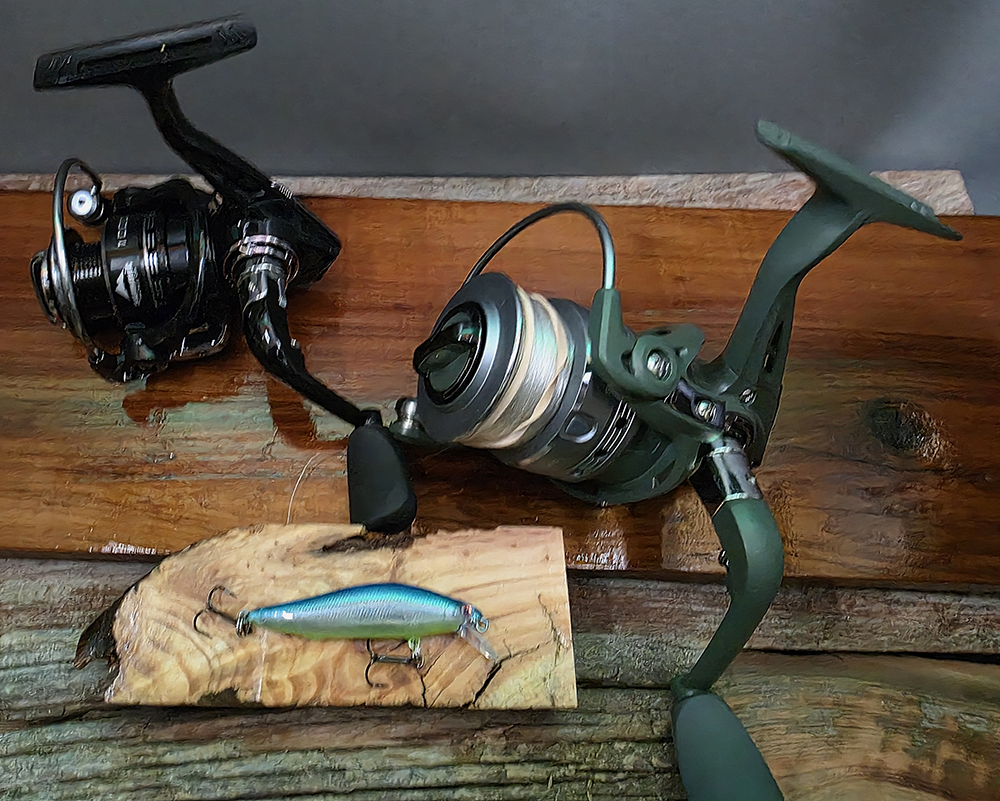
Description
Blue-Chartreuse Mini Jerk for Stained Water and Inshore Flats
There’s an old saying on the Gulf Coast: “If it ain’t chartreuse, it ain’t no use.” It’s half a joke. Chartreuse stays visible longer than almost any other color in stained, green or muddy water. The blue back adds contrast and reads as baitfish from below.
The Blue-Chartreuse Mini Jerk is the problem solver in this lineup. Throw it after a rain, in spring runoff, on windblown banks where the water’s churned up, and on inshore flats where the tide’s pulling mud off the bottom. It runs 2.75 inches, stays under 5 feet, and fishes in fresh water and salt.
Target species
- Largemouth bass: stained ponds, reservoirs and windblown banks.
- Smallmouth bass: rivers after rain, when the water’s high and colored.
- White bass and hybrid stripers: when they push shad to the surface.
- Walleye: stained reservoirs and river mouths.
- Crappie: shallow brush in spring when the water’s colored.
- Speckled trout (spotted seatrout): grass flats and potholes.
- Redfish: shallow flats and marsh edges in off-color water.
- Snook and ladyfish: docks and mangrove edges, where legal and in season.
How to fish it
In stained fresh water, fish the windblown bank. Wind pushes bait and stirs the water, and the fish follow. Use a faster, more aggressive cadence than you would in clear water, snap-snap-snap-pause, to throw off flash and vibration.
On the salt flats, cast ahead of moving fish or across potholes and grass edges in 2 to 4 feet of water. Twitch it hard over the grass, then let it pause at the edge of a pothole. Specks and reds hold on those edges waiting for something to come over the top.
Gear: 7′ medium-light spinning rod. Use 8 to 10 lb braid with a 12 to 15 lb fluorocarbon leader in salt, since reds and specks will fray light line. Rinse the lure and your reel in fresh water after every saltwater trip, or the hooks and split rings will rust.




Reviews
There are no reviews yet.