Description
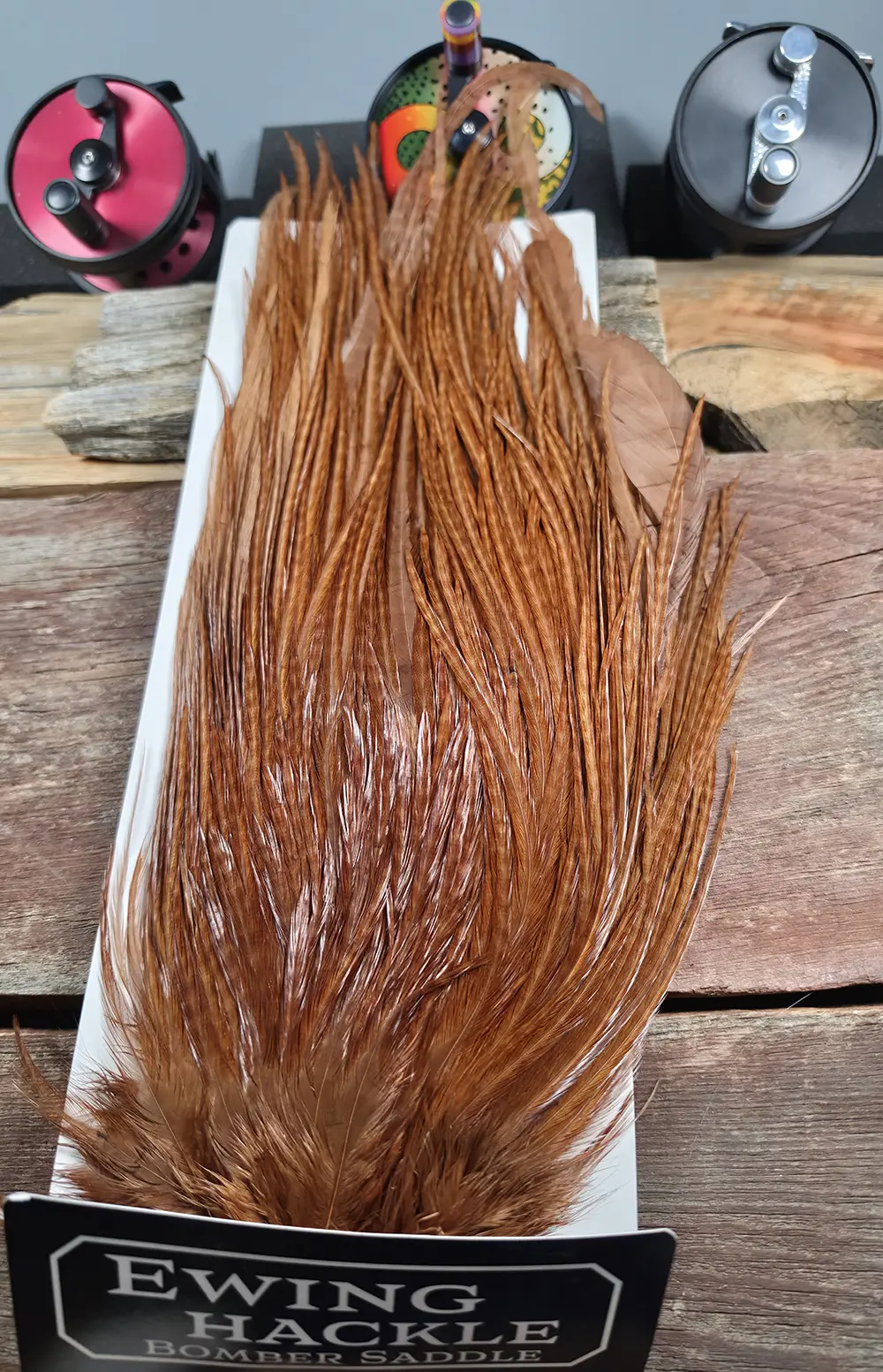
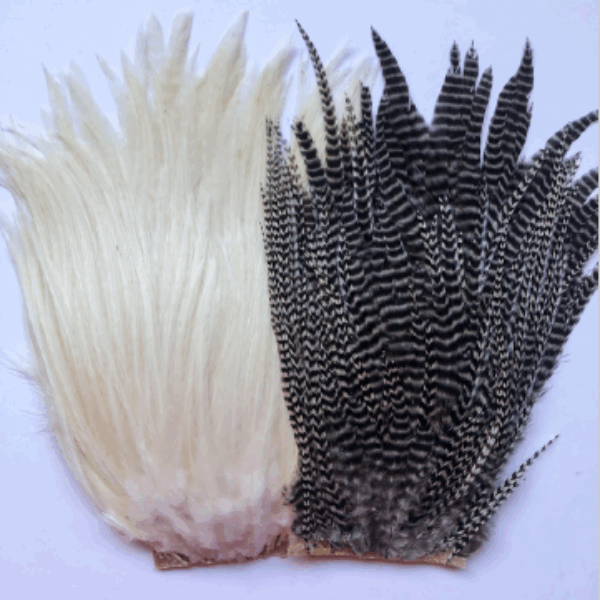
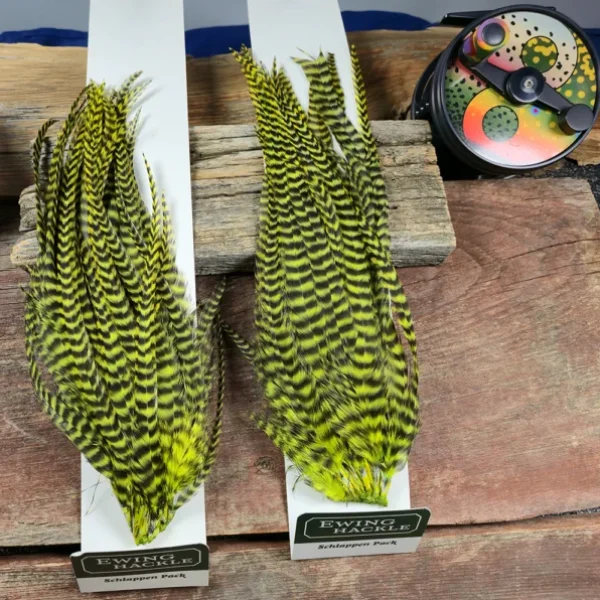
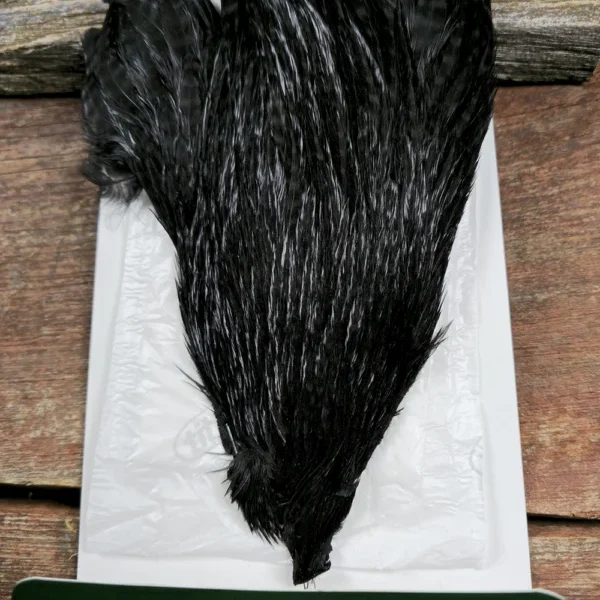
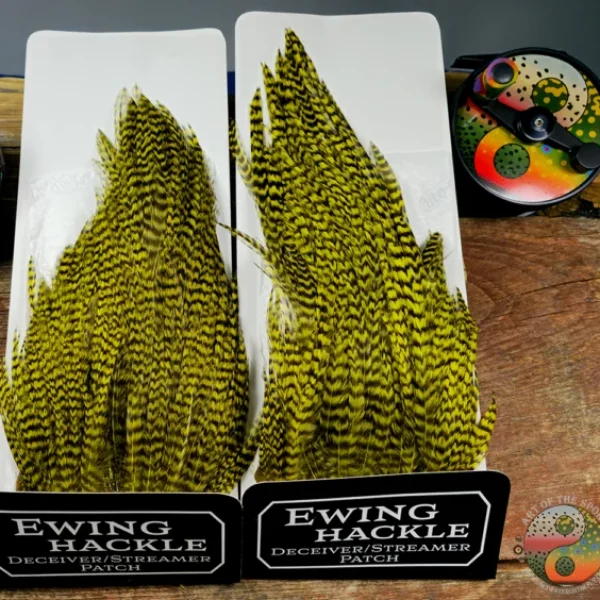
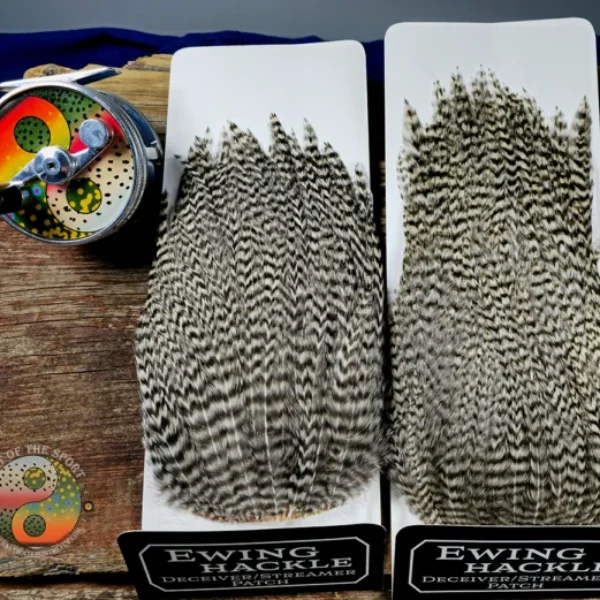
Ewing Coachman Brown Bomber Saddle hackle for Royal Wulff and Renegade flies
Coachman Brown is not just brown. It is darker and redder, the color of an old saddle that has been oiled every spring for forty years. It is the hackle on the Royal Coachman, the Royal Wulff, the Royal Trude and the Renegade, which means it has probably fooled more trout than any human being alive, including that guy at the fly shop who tells everybody about his 26-inch brown.
I once watched a client fish nothing but a Royal Wulff for six days on the Yellowstone. He refused to change flies, refused advice and refused lunch on the third day because the trout were “too dumb to stop eating.” He was right. The fish do not know what a Royal Wulff is supposed to imitate. Neither do we. It works anyway.
The Ewing Coachman Brown Bomber Saddle gives you that classic color on 4–6+ inch genetic rooster feathers with stiff, glossy barbules and even taper. Wrap more turns per fly, float it higher, and fish it longer before it needs a dunk in floatant.
Use it for Royal Wulffs, Royal Coachmen and Royal Trudes, Renegades and Bivisibles, Atlantic salmon dries, and big attractors for pocketwater and backcountry trout.
Recipe 1: Royal Wulff (the attractor)
- Hook: Partridge Dry Fly, #8–#14
- Thread: Semperfli Classic waxed Black 8/0
- Wing: White calf body hair, upright and divided
- Tail: Moose body hair, one shank length
- Body: Peacock herl butt, red floss band, peacock herl front
- Hackle: Two Coachman Brown Bomber Saddle feathers, wrapped behind and in front of the wing
Tying notes: Twist the peacock herl around the thread before wrapping; trout teeth shred bare herl. Coat the red floss with a thin layer of head cement so it keeps its color wet. Pack the hackle on: 5–6 turns behind the wing, 3–4 in front.
How to fish it: Fish it anywhere trout are looking up and you cannot tell what they are eating: pocketwater, mountain streams, riffle seams and backcountry lakes. Cast it upstream and let it drift drag-free, or use it as a buoyant indicator with a beadhead nymph 18–30 inches below. The white wing stays visible in broken water, and the trout seem to think it is the best thing they have ever seen.
Recipe 2: Renegade (wet or dry)
- Hook: Partridge dry fly or Partridge for a wet, #8–#14
- Thread: Semperfli Classic Waxed Black 8/0
- Tag: Flat gold tinsel, 3–4 turns
- Rear hackle: One Coachman Brown Bomber Saddle feather, 3–4 turns
- Body: Peacock herl, twisted around the thread
- Front hackle: One white saddle feather, 3–4 turns
Tying notes: The Renegade is a fore-and-aft fly. Make the rear and front hackles match in size so the fly sits level on the water. For a wet version, use a heavier hook and strip one side of each feather so the hackle lies back.
How to fish it: Fish the dry version dead-drift in riffles and on still water during evening rises. Fish the wet version on a slow swing in Western rivers, or strip it slowly on an intermediate line in mountain lakes, where brook trout and cutthroats eat it as a caddis or a beetle. It has been catching fish since the 1920s for a reason nobody can quite explain, so stop trying and go fish it.
Reviews
There are no reviews yet.