Description
The Drakenstone A year-round nymph that keeps evolving — and keeps producing
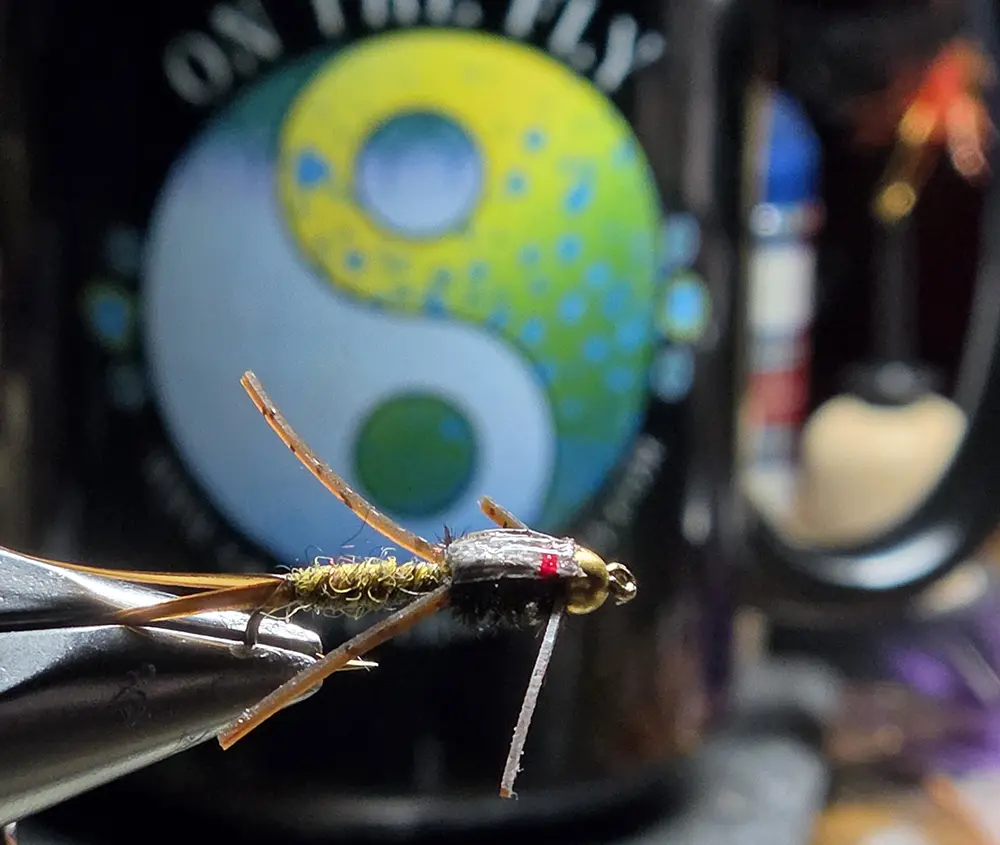
The Drakenstone didn’t come out of a vise session looking for a new pattern to name. It came out of years of tweaking a searching nymph until it stopped needing tweaks. Every material swap on this fly happened because something outfished the last version — not because it looked better in the box. The 2026 build, with the Bug Yard body and the peacock/flash thorax stack, is the best-producing version yet, and it’s earned a permanent slot in the box for every season, not just one hatch window.
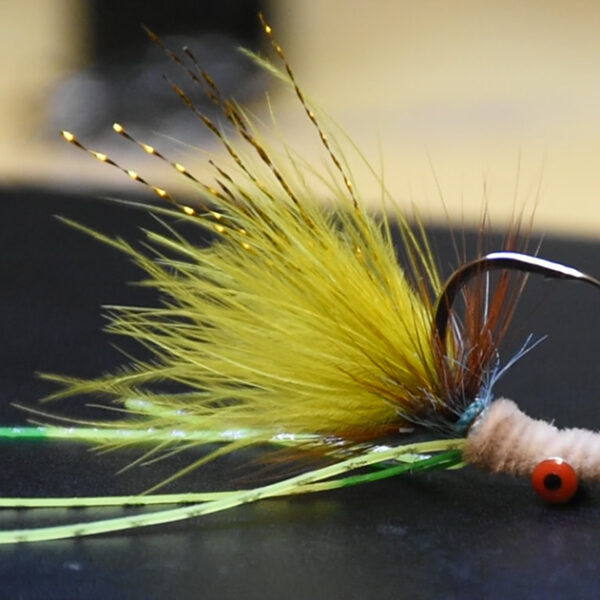
Tied on a 2XL nymph hook in sizes 10–16, the Drakenstone reads as a generic drake/stone silhouette in the water — buggy, segmented, with just enough flash to get noticed without looking like a spinner bait. Fish it high-stick, under an indicator, or as the point fly in a euro rig, and it holds up in everything from technical spring creeks to pushy freestone water.
Materials
| Component | Material |
|---|---|
| Hook | 2XL Nymph Hook, sizes 10–16 |
| Thread | Semperfli Classic Six Aught (6/0) |
| Tail | Magpie Material Drake Brown Wild Turkey Biots, slayed (split) |
| Body | Semperfli Bug Yard — Pale Olive (primary), Caddis Brown (secondary, gaining ground) |
| Thorax | Peacock Herl over Brown Silicone Legs with Orange Glitter |
| Thorax Back | Peacock Wing Fibers under Semperfli Flat Pearl Flash |
Seasonal variant: In Caddis Brown, sized up to a bulky #8, the Drakenstone doubles as a pre-stonefly imitation ahead of the hatch on rivers like the Madison and Gallatin — a pattern within the pattern for guides who want one fly box doing two jobs.
Tying Notes
- Thread base: Start Semperfli 6/0 at the hook eye and run a smooth, even base back to the bend. Keep it thin here — the Bug Yard body will add its own bulk.
- Tail: Tie in a matched pair of Magpie Drake Brown Wild Turkey biots at the bend, slaying (splitting) them into a V for a natural, kicking silhouette on the drift.
- Body: Wrap Semperfli Bug Yard forward in tight, slightly overlapping turns to the point where the thorax begins — about the front third of the hook shank. Pale Olive is the go-to; tie a run in Caddis Brown when you want a darker, buggier profile.
- Legs: Tie in Brown Silicone Legs with Orange Glitter on both sides of the thorax area, angled back toward the tail.
- Thorax: Twist and wrap Peacock Herl over the leg base to build a full, mottled thorax.
- Thorax back: Pull a small clump of Peacock Wing Fibers over the top of the thorax, then cover with a strip of Semperfli Flat Pearl Flash for a segmented, light-catching wing case. Tie off behind the eye.
- Finish: Whip finish with the 6/0 thread and a drop of head cement or UV resin at the head for durability — this fly sees a lot of rock contact.
Nymphing Presentation
The Drakenstone is built to be fished as a searching pattern first and a hatch-matcher second — which is exactly why it works year-round.
- Euro/tight-line rig: Run it as the point fly with a smaller attractor or midge pattern above it. The Bug Yard body and peacock thorax give it enough natural sink and profile that it doesn’t need heavy weight to get down — let the water column do the work and keep contact through the drift.
- Indicator rig: Standard two-fly setup, Drakenstone on point, 12–18 inches of tippet between flies depending on depth and current speed. Set depth so it’s ticking bottom without constant snagging — this fly reads best near the substrate, where the natural insects it imitates actually live.
- Seams and pocket water: Work it through current seams, the soft edge behind boulders, and pocket water on rivers like the Madison and Gallatin — the profile mimics both drake nymphs and pre-emergent stoneflies, so it holds up whether or not a specific hatch is on.
- Pre-stonefly window: Switch to the #8 Caddis Brown bulky tie in late winter/early spring ahead of the stonefly emergence. Fish it heavier and closer to bottom — this size is built to imitate the larger, clumsier naturals moving toward the banks pre-hatch.
- Year-round adjustment: In low, clear water, drop to a 14 or 16 in Pale Olive for a more subdued profile. In high or stained water, size up and lean on Caddis Brown for a bigger silhouette and more contrast.
This is a fly that rewards confidence — fish it like you expect it to work, because at this point, it usually does.
Reviews
There are no reviews yet.