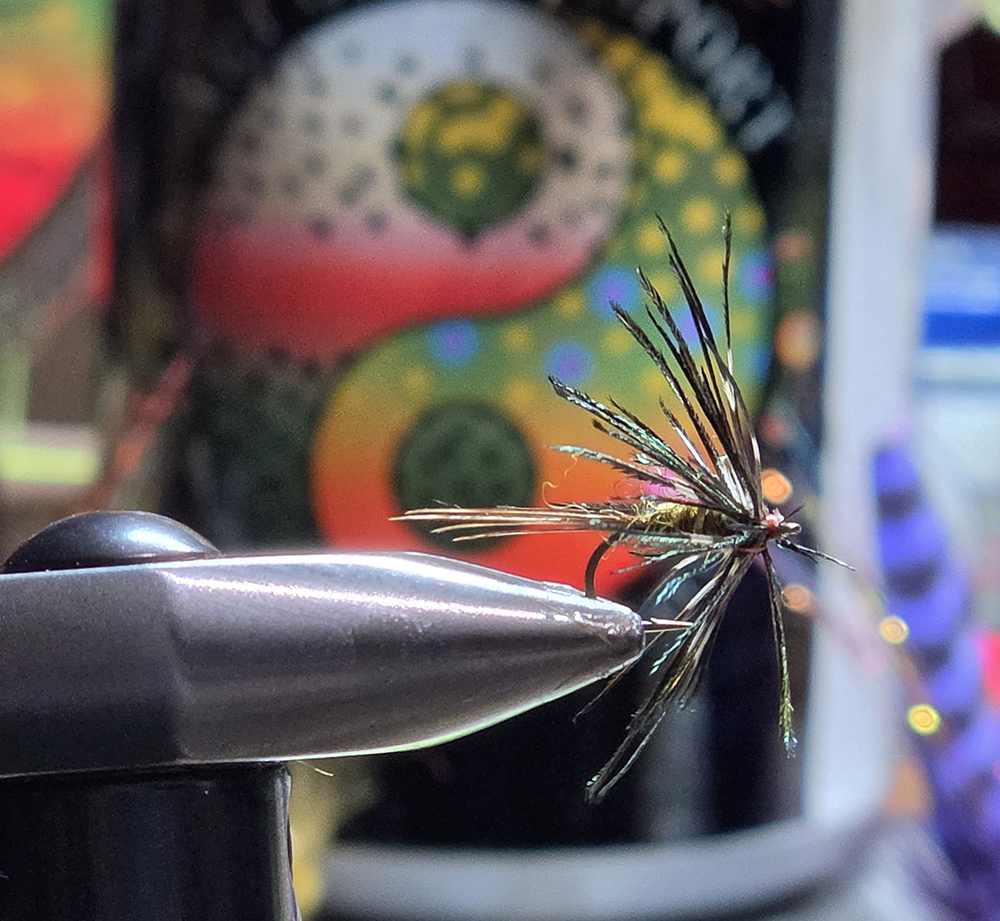
Description
The recipe stays at the bench
People ask what is in the Revelation Soft Hackle. The answer is no.
The tying instructions are so hush-hush that if they ever got out, nothing with fins would be safe, from trout to panfish. So the recipe stays at my bench, and the fish stay nervous.
Here is what I will tell you. It is a soft hackle, the oldest trick in fly fishing: a slim body and a collar of soft feather that breathes in the current. The fly does the work. You hang on.
Reason it works
Trout and panfish both eat bugs that are swimming for the surface, and a rising bug cannot hide or get away. A soft hackle looks exactly like that easy meal. The hackle fibers open and close with every change in current, so the fly looks alive on a dead drift, on the swing, and hanging straight downstream.
It is not tied to match one bug. It passes for an emerging caddis, a mayfly on its way up, or a drowned anything, which is why one pattern covers this much water.
How to fish the Revelation Soft Hackle
- The swing. Cast across and slightly downstream, throw one upstream mend, and let the fly sink. Then let the line come tight and swing the fly across the current. Keep the rod tip low and follow the line around. Most takes come in the last third of the swing.
- The hang. When the swing ends, do nothing for a five count. The fly hangs and flutters straight below you, and fish that followed it across will often eat it right there.
- The lift. Dead-drift the fly down to a fish or a likely spot, then stop the rod and let the current raise the fly toward the surface. It looks like a bug leaving for good, and trout hate to let one go.
- The dropper. Tie it 18 to 24 inches below a heavier nymph or under an indicator. Fish the drift as normal, then let the whole rig swing out at the end instead of picking up. You get two presentations in every cast. Most takes happen on the tail out of the swing. Let it sit for a brief second at the end of the swing.
- Behind a dry. Hang it 12 to 18 inches off the bend of a bushy dry fly during a hatch. Fish taking emergers just under the surface will pick the soft hackle over the dry.
- Panfish and ponds. Cast along weed edges, docks and shade. Let it sink a few seconds, then bring it back with a slow hand-twist retrieve and long pauses. Bluegill and crappie usually eat on the pause.
Setting the hook: on a tight-line swing, do not yank. The fish hooks itself against the current. Just lift the rod and come tight. A hard set on a swung fly breaks tippet, so fish 4X or 5X rather than going lighter.
Which size to fish
|
Size |
Reach for it when |
|---|---|
|
12 |
Panfish and pond bass, big caddis, high or off-color water |
|
14 |
Everyday trout water. Start here if you are only buying one size |
|
16 |
Clear water and mayfly hatches, or fish that refuse the 14 |
|
18 |
Tailwaters, spring creeks and pressured fish eating small bugs |
Frequently asked questions
What does the Revelation Soft Hackle imitate? Nothing exactly, and that is the point. It suggests an emerging caddis or mayfly, or any small bug caught in the current.
Does it work for panfish? Yes. Bluegill, crappie and other panfish eat soft hackles readily. Fish a size 12 or 14 on a slow retrieve.
Do I need a sinking line? No. A floating line and a 9-foot leader cover almost everything. Add a small split shot a foot above the fly in fast or deep water.
Will you share the pattern? No. Nice try.



Reviews
There are no reviews yet.