Description
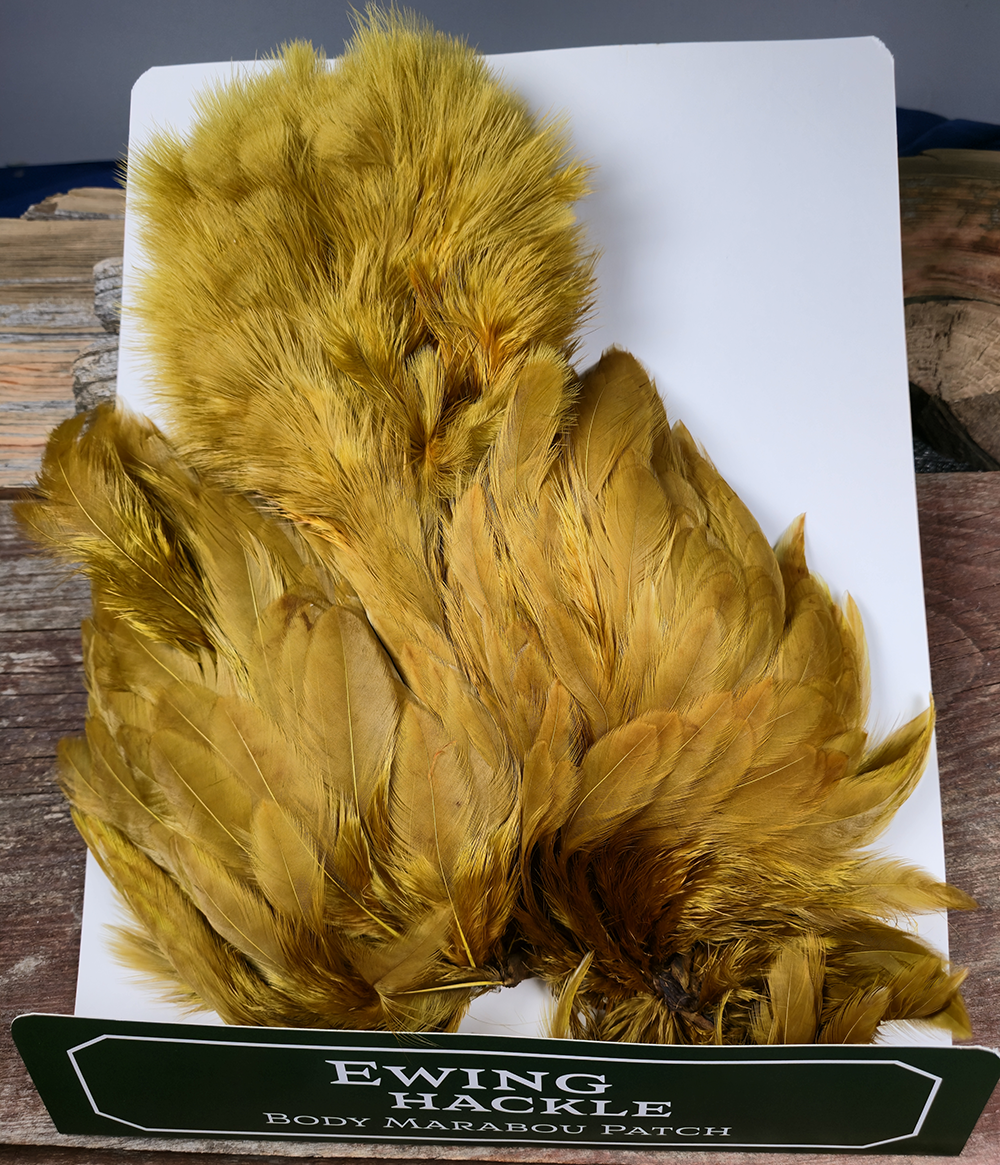
Golden Olive Ewing Chickabou Marabou Body Patch
Golden Olive sits between olive and tan, and it matches more bugs than you’d think. Caddis pupae, PMD emergers, olive-tan scuds, and the sandy-olive shrimp on a bonefish flat all live in this color.
Golden Olive Ewing Chickabou is warm, soft and translucent when wet. It’s a classic Irish and British wet-fly color for a reason. On the flats, it blends into turtle grass and sand where brighter colors spook fish.
Trout, grayling, whitefish, bonefish and carp all take it.
Recipe 1: Golden Olive Chickabou Soft Hackle
- Hook: Wet-fly or standard nymph, #12–#16
- Thread: Olive or primrose 8/0
- Body: Golden olive floss or tying thread, thin, ribbed with fine gold wire
- Thorax: Hare’s Ear dubbing, a few turns
- Hackle: Golden Olive Ewing Chickabou, 1–2 turns from the tip of a plume
Tying:
Use the finest fibers at the very tip of the patch. Strip one side of the stem and wrap just one or two turns. Too much hackle kills the movement.
How to fish:
During caddis hatches, swing it down and across on a floating line. Let it rise at the end of the swing like an emerging pupa. That rise is the trigger. Takes are often hard, so keep a soft hand.
Recipe 2: Golden Olive Chickabou Bonefish Charlie
- Hook: Saltwater #4–#6
- Eyes: Small bead-chain or lead, tied on top so the fly rides hook-up
- Thread: Tan 6/0
- Tail: Small tuft of Golden Olive Ewing Chickabou
- Body: Clear Vinyl Rib over gold flash
- Wing: Golden Olive chickabou fibers plus a few strands of tan craft fur
Tying:
This is a Crazy Charlie with a chickabou tail and wing added. The soft wing pulses on the pause where the stiff craft-fur version stays still.
How to fish:
On sandy or grassy flats, lead tailing bonefish by 3–4 feet. Let it settle, then make short 4-inch strips. If the fish follows without eating, stop. Let the fly sit on the bottom. That’s usually when it eats.


Reviews
There are no reviews yet.