Description
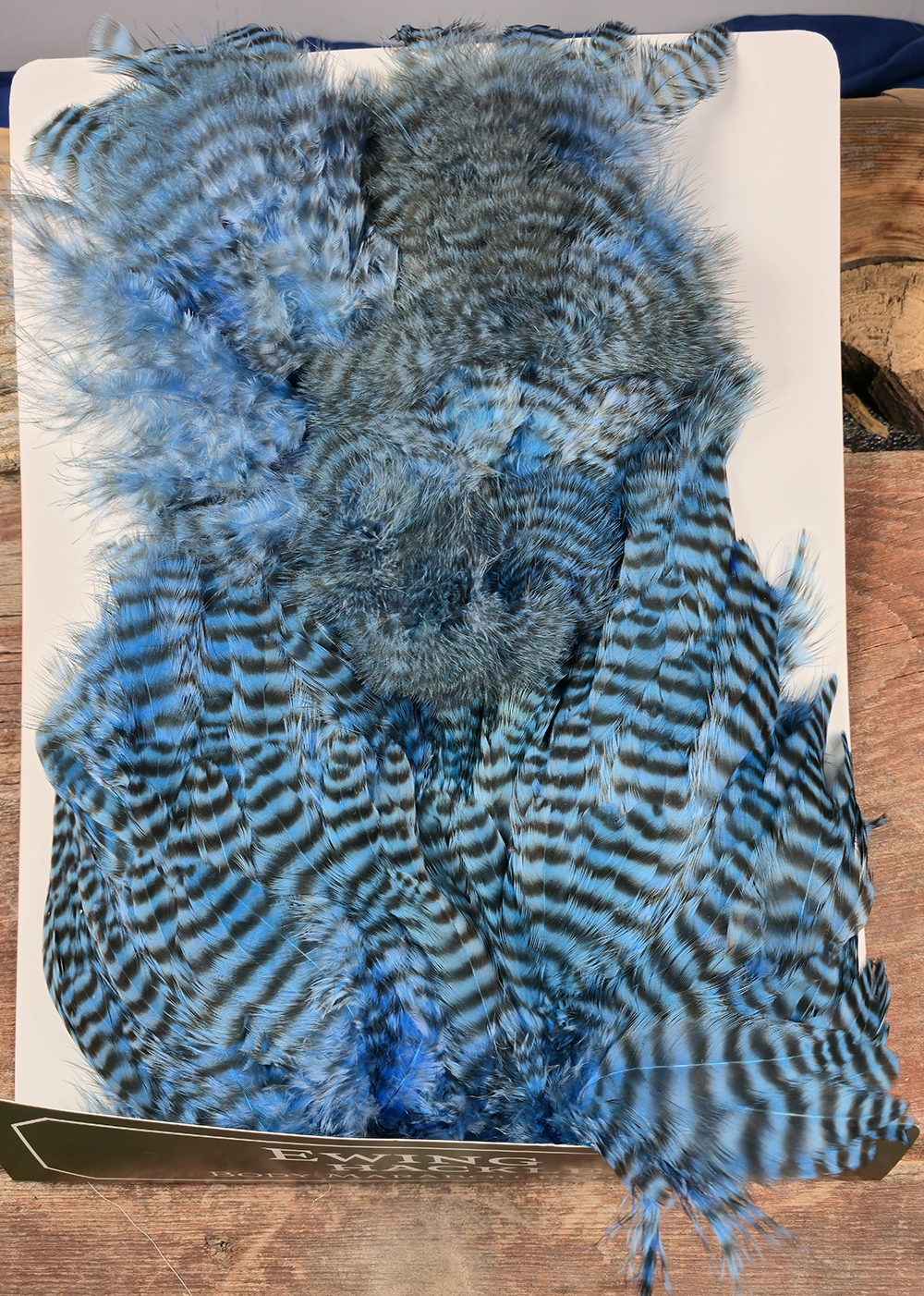
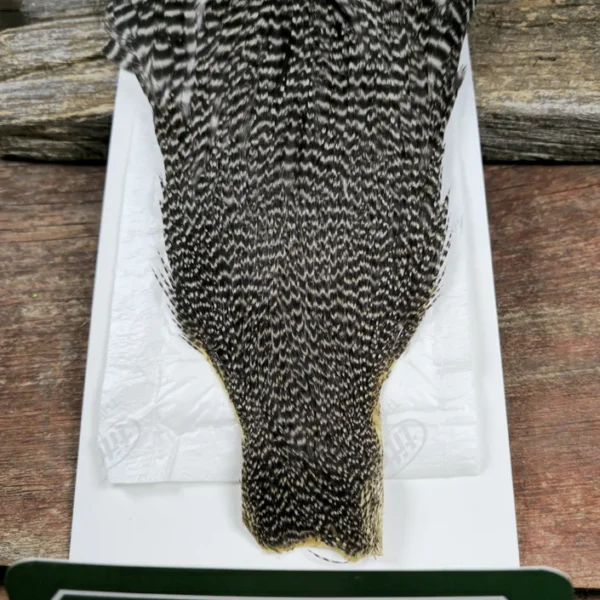
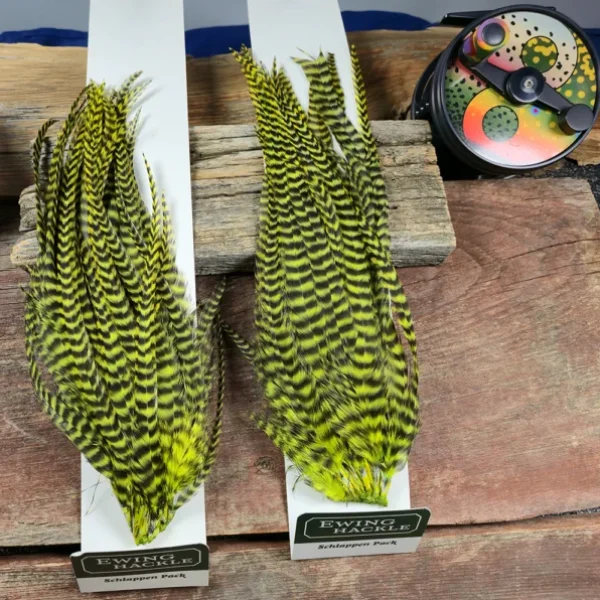
Kingfisher Blue Grizzly Chickabou Body Marabou Patch
Kingfisher Blue Grizzly is turquoise with dark bars — the back of a blueback herring, a sardine, a menhaden or a mackerel. If you fish the coast, you already know these fish. So do the stripers, albies, bluefish and tuna chasing them.
Kingfisher Blue Grizzly Ewing Chickabou gives you barred blue fibers for baitfish backs, toppings and tails. Combined with white underneath, it makes a two-tone baitfish that looks real in clear ocean water.
Striped bass, false albacore, bonito, bluefish, Spanish mackerel and tuna.
Recipe 1: Kingfisher Blue Grizzly Chickabou Herring Deceiver
- Hook: Saltwater 1/0–3/0
- Thread: White 140-denier
- Tail: 4–6 white saddle hackles, plus Kingfisher Blue Grizzly Ewing Chickabou on top
- Flash: 6 strands silver and blue Flashabou
- Body: Silver Mylar tubing or flat tinsel
- Collar: White bucktail underneath, blue grizzly chickabou on top
- Eyes: 3D eyes, glued
Tying: This is Lefty Kreh’s Deceiver with a chickabou back. The chickabou adds a soft, moving topping that bucktail doesn’t give you.
How to fish: During fall migrations, fish it on an intermediate line around rips, jetties and bait schools. Strip fast with short pauses. When stripers are busting on top, cast into the edge of the blitz and strip immediately.
Recipe 2: Kingfisher Blue Grizzly Chickabou Albie Clouser
- Hook: Saltwater #1–1/0
- Eyes: Small lead or tungsten dumbbell
- Thread: White 6/0
- Belly: White bucktail, sparse
- Flash: Silver Krystal Flash
- Back: Kingfisher Blue Grizzly Ewing Chickabou, short, tied on top
Tying: Albies want small and sparse. Keep the whole fly about 2.5 inches. Tie the chickabou back short so it doesn’t foul.
How to fish: False albacore move fast. When you see a school busting bait, lead it by 10–15 feet and strip as fast as you can — two-handed if you can manage it. Albies eat fast flies. A slow retrieve gets ignored.
Reviews
There are no reviews yet.