Description
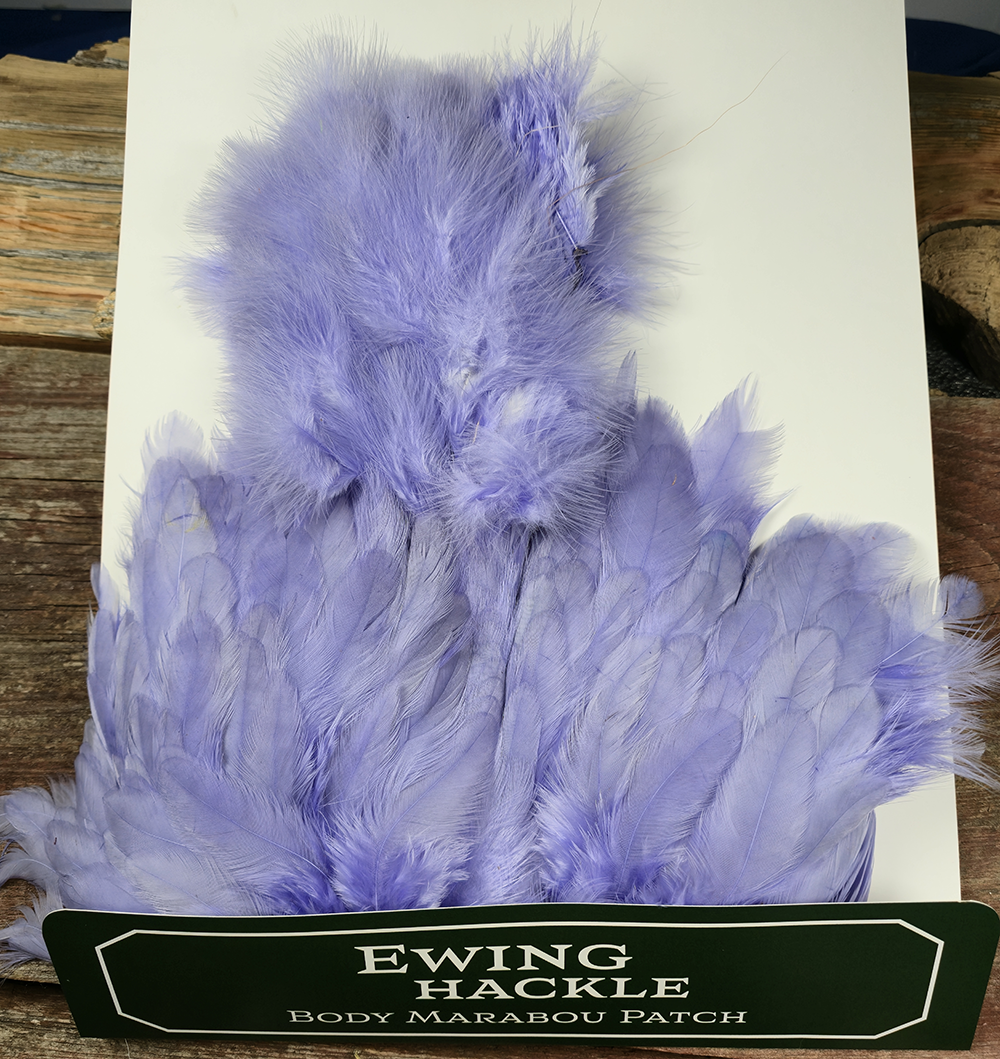
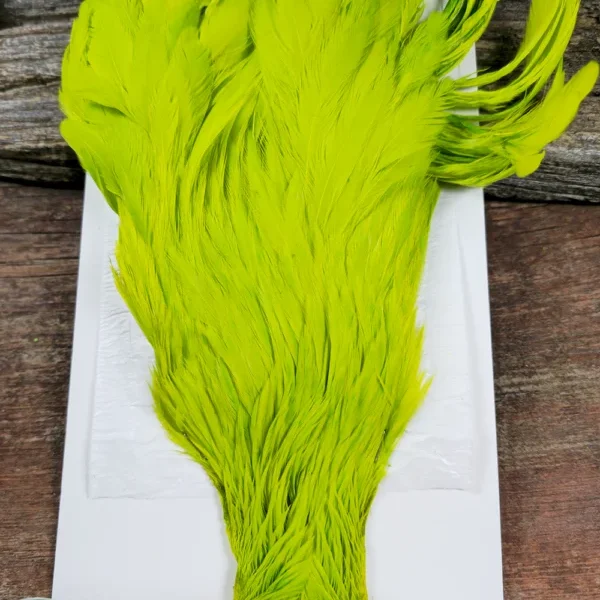
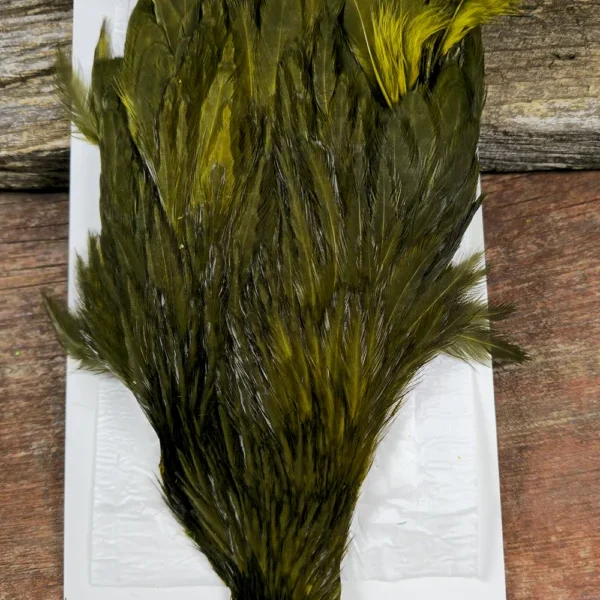
Lavender Ewing Chickabou Marabou Body Patch
Lavender is a pale, soft purple. It’s purple’s quiet cousin. In clear water, when bright purple is too loud, lavender gives steelhead and trout the color they like without spooking them.
Lavender Ewing Chickabou gives you light purple fibers for spey collars, marabou spiders, crappie jigs and shrimp patterns. It also blends beautifully with pink and white for a soft, natural shrimp color.
Steelhead, salmon, crappie, trout and sea-run cutthroat.
Recipe 1: Lavender Chickabou Steelhead Marabou Spider
- Hook: Spey or salmon hook, #2–#6
- Thread: Purple or black 8/0
- Tag: Fine flat silver tinsel
- Body: Short, silver tinsel or a dubbing ball at the rear
- Hackle: Lavender Ewing Chickabou, 3–4 turns, wrapped as a long collar
- Collar: One turn of guinea fowl or teal flank
Tying: A marabou spider is mostly hackle. Wrap the chickabou like a soft hackle and stroke it back between turns. The finished fly should look like a soft, wispy cone.
How to fish: On clear, low summer water, swing it on a floating line with a long leader. Mend to slow it down and keep it shallow. Lavender gets interest from steelhead that have seen too many bright flies.
Recipe 2: Lavender Chickabou Crappie Jig
- Hook: 60-degree jig hook, #8–#10
- Head: 1/32 oz painted jig head, white or pink
- Thread: White 8/0
- Tail: Lavender Ewing Chickabou, one plume, plus 2 strands pearl flash
- Body: Pearl Ice Dub, thin
- Collar: One turn of lavender chickabou
Tying: Simple and fast. Tie the tail in heavy at the bend so it doesn’t wrap the hook.
How to fish: In spring and fall, crappie school around brush piles and docks. Fish it under a small indicator at the depth they’re holding. Let the wind and waves move it. When the indicator stalls, set.
Reviews
There are no reviews yet.