Description
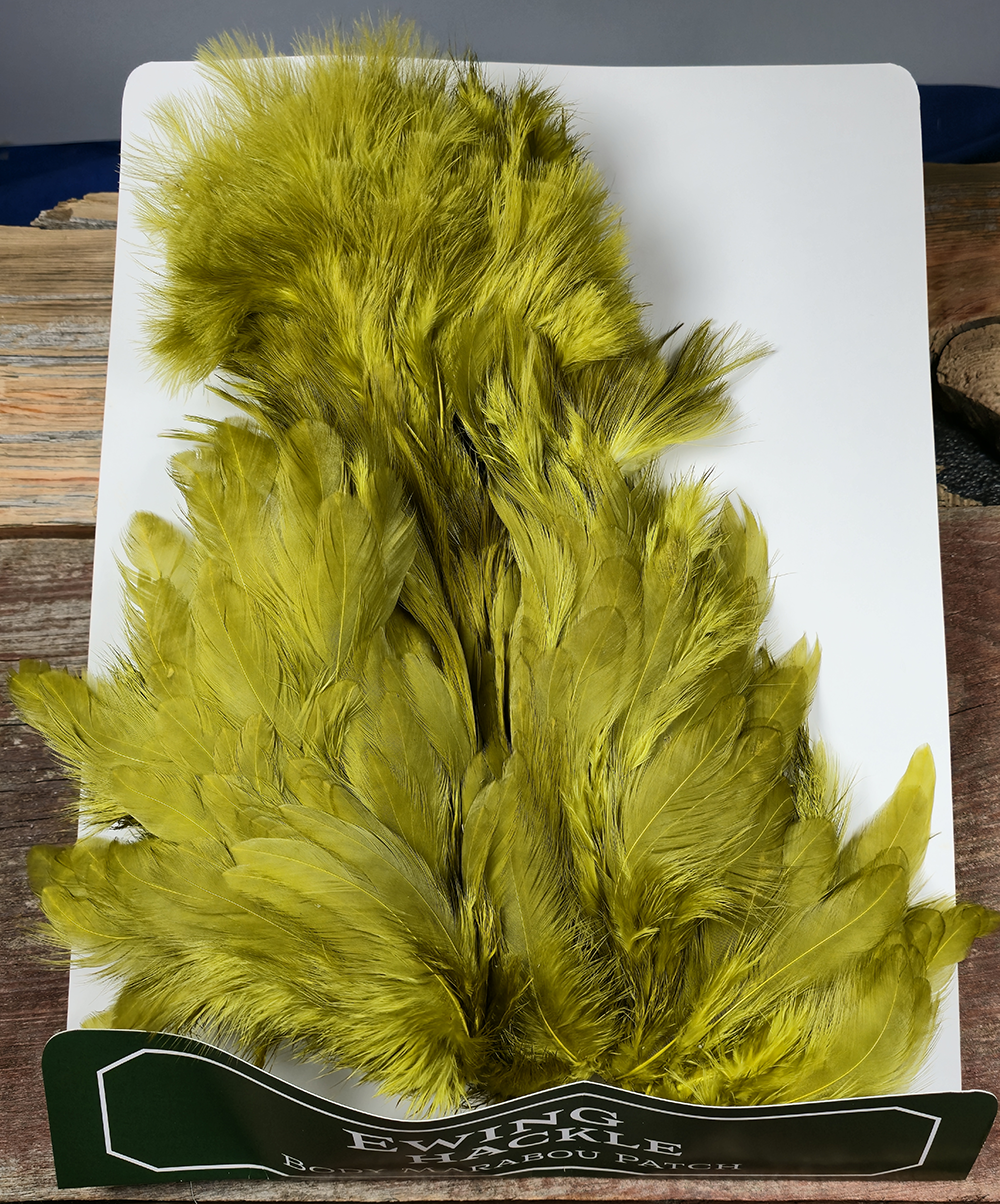
Olive Ewing Chickabou Marabou Body Patch
Olive is the color of things that live in rivers. Sculpins, damsel nymphs, dragonfly nymphs, leeches, young-of-year trout, crawfish in weedy water — they’re all some shade of olive. If you fish moving water and don’t carry olive, you’re fishing with one hand.
Olive Ewing Chickabou is a true mid-olive, not too yellow, not too dark. It’s the tail on my everyday trout bugger and the whole body on a stillwater damsel. On smallmouth rivers, olive chickabou sculpins move fish that ignore every hard bait in the boat.
Trout, smallmouth, largemouth, carp, steelhead. Olive belongs in every box.
Recipe 1: Olive Chickabou Damsel Nymph
- Hook: 2XL nymph, #10–#12
- Bead: Gold or olive glass bead (optional)
- Thread: Olive 8/0
- Tail: Olive Ewing Chickabou, short tuft, half shank length
- Body: The same chickabou fibers twisted on the thread and wrapped thin
- Thorax: Olive Hare’s Ear dubbing
- Eyes: Small black bead-chain or mono eyes
Tying:
Use the short fibers from the tip of the patch. Twist them into a rope with the thread and wrap a slim, tapered abdomen. Keep the whole fly skinny — real damsel nymphs are pencil-thin.
How to fish:
In lakes from late spring through summer, fish it on a floating or intermediate line along weed edges. Retrieve with slow, 3-inch pulls and long pauses. Damsels swim with a side-to-side wiggle, and the chickabou does that for you.
Recipe 2: Olive Chickabou Sculpin
- Hook: 4XL streamer, #2–#6
- Weight: Coneheads or a sculpin helmet, plus 10 wraps lead-free wire
- Thread: Olive 140-denier
- Tail: Olive Ewing Chickabou, full plume
- Body: Olive Ice Dub, brushed out
- Pectoral fins: Two short chickabou tufts, one each side
- Head: Olive wool or deer hair, trimmed wide and flat
Tying:
Tie the two chickabou pectoral fins in at the front third, angled out like a sculpin’s fins. Keep the head wide and flat so the fly stays near the bottom.
How to fish:
Sculpins live on the bottom and don’t swim far. Use a sink-tip, dead-drift it through riffles, and add short, hard hops off the gravel. Big browns and smallmouth eat it when it settles after a hop


Reviews
There are no reviews yet.