Orange Lake Fly Fishing: Florida’s Overlooked Largemouth Bass Giant
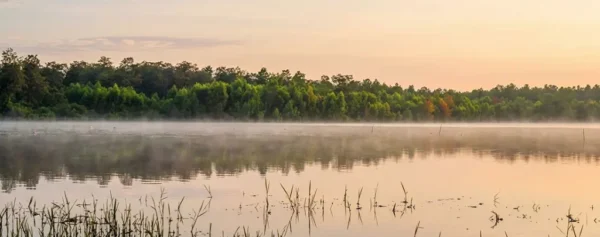
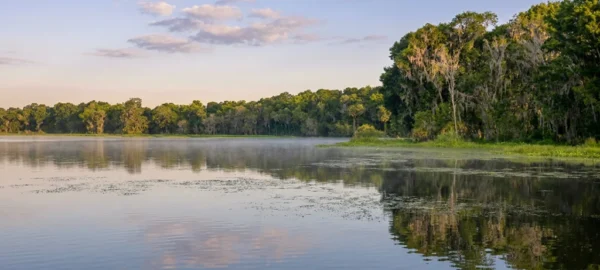
Orange Lake sits in north-central Florida between Gainesville and Ocala and gets almost no national attention despite being one of the most productive largemouth bass fisheries in a state full of excellent largemouth bass fisheries. That’s not an accident — Orange Lake fly fishing benefits from a combination of size, shallow water, extraordinary aquatic vegetation, and relative anonymity that keeps pressure low and fish populations high. At roughly 12,000 acres, Orange Lake is large enough to absorb fishing pressure without showing it, and the bass here have the kind of attitude that comes from growing up in water that never truly gets cold.
The aquatic vegetation on Orange Lake is the key to understanding the fishery. Hydrilla, pepper grass, lily pads, and emergent marsh vegetation cover enormous portions of the lake, creating the dense, complex habitat that Florida largemouth bass exploit masterfully. Orange Lake fly fishing is a surface game for most of the year — deer hair frogs, large poppers, and weedless streamers worked over and through the vegetation produce bass that attack with the kind of violence that makes you grateful for a strip-set reflex. A bass pushing four pounds that comes out of the hydrilla at a surface fly with zero warning is one of Florida fly fishing’s genuine pleasures.
Spring is prime time for Orange Lake fly fishing. Bass move shallow to spawn from February through April, with the largest fish — females pushing toward double digits — accessible in the shallowest vegetation margins in the warmest weather. A properly presented fly on a Florida largemouth in pre-spawn condition, sitting in 18 inches of water over a bright sand bottom, is a sight fishing moment that competes with anything in saltwater.
Orange Lake also holds substantial populations of bluegill and shellcrackers that are often overlooked in the pursuit of bass but provide consistent action on small poppers and nymphs when the bass aren’t cooperating — which, to be honest, isn’t very often.
Access Orange Lake from the Cross Creek area or the public ramps on the northwest shore. A kayak or canoe gets you into the vegetation edges that a larger boat can’t reach.
Target Species: Largemouth Bass, Bluegill, Redear Sunfish, Black Crappie, Bowfin Best Seasons: February–May (spawn) | October–November (fall feeding) | Year-round viable Fly Patterns: Deer hair frogs, large poppers, weedless Deceivers, Woolly Buggers, small nymphs Notable Areas: Cross Creek access, northwest vegetation edges, hydrilla beds, Lochloosa Lake connection