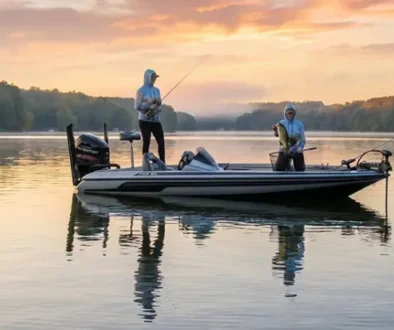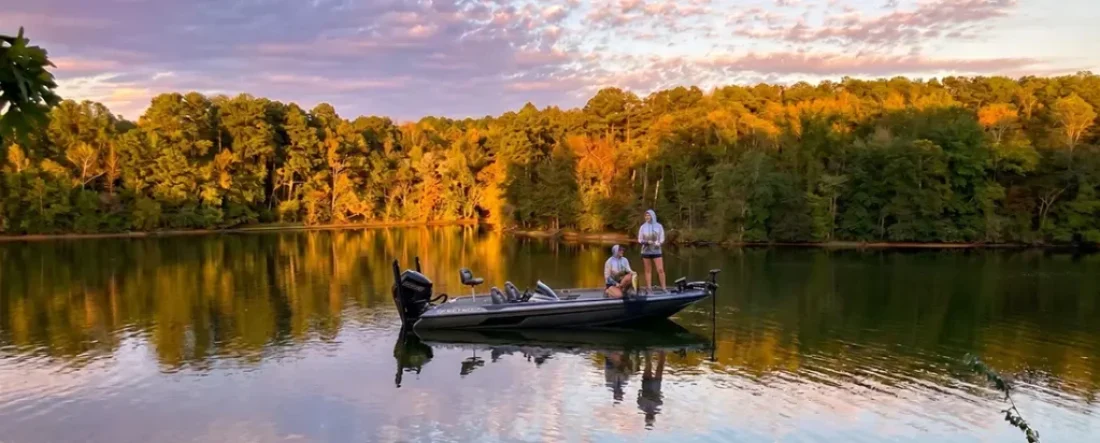
Conventional Fishing on Pickwick Lake Tennessee: Bass, Panfish, Catfish, and Everything Else That Will Humble You
Let me be upfront about something. I am, first and foremost, a fly fishing guy. I spend my better years chasing bonefish on flats and smallmouth on Rocky Mountain rivers. I tie my own flies. I own more rods than I have storage space for, and not one of them has a levelwind reel attached to it.
But somewhere along the way, life handed me Pickwick Lake Tennessee — 43,000 acres of TVA reservoir sprawling across the Tennessee-Alabama-Mississippi border like a drunk relative who showed up for the holiday weekend and never left. And Pickwick, bless its complicated heart, has a way of making a man pick up a spinning rod without shame.
Because here is the truth nobody puts in the brochure: sometimes the fish don’t care about your artisanal hand-tied Clouser Minnow. Sometimes they want a chartreuse spinner bait retrieved at exactly the speed of slightly-panicked baitfish. And when you are standing on a boat in 92-degree Tennessee heat, staring at a sonar screen full of bass stacked on a ledge twenty feet down, humility arrives quickly and without much ceremony.
So. This is the conventional fishing companion to Fly Fishing Bass on Pickwick Lake. Consider it the guide for when the fly rod earns a rest on the gunwale and you reach for something with a little less romance and a lot more hardware.
Table of Contents
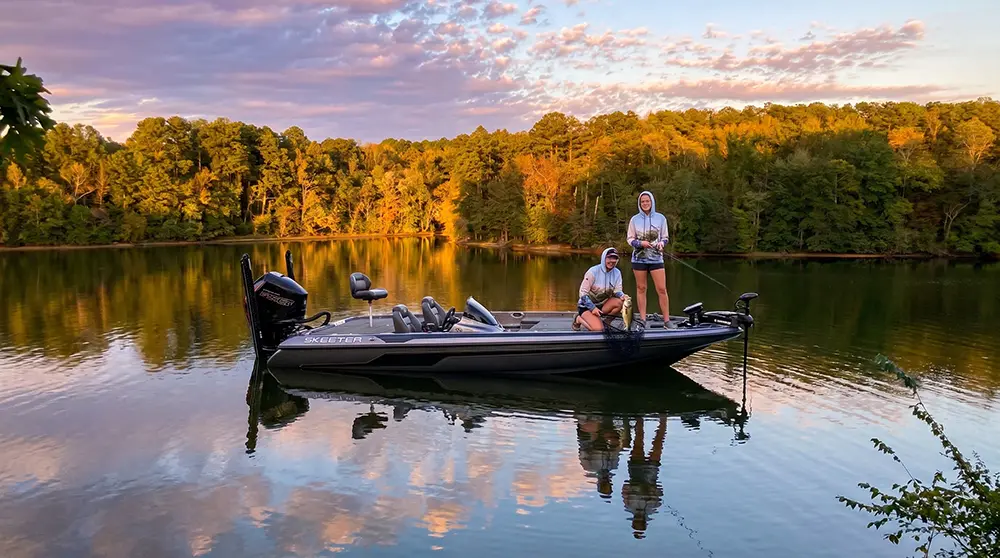
What Swims in Pickwick Lake: A Species Rundown for the Ambitious and the Delusional
Pickwick is not a one-trick reservoir. It is a multi-species madhouse shaped by TVA dam operations, seasonal shad migrations, and the kind of underwater structure that eats cheap terminal tackle for breakfast and asks for more. Here is what is swimming around down there.
Largemouth Bass
The largemouth is Pickwick’s headline act — the headliner who shows up late, causes a scene, and still gets a standing ovation. These fish spend most of the year orienting to structure, whether that means submerged timber in the backwater coves of Bear Creek and Yellow Creek or the hydrilla mats in Coffee Slough that look like a green carpet someone dropped on the water.
In spring, prespawn largemouths push shallow and develop a pronounced opinion about anything that drops into their sight cone. This is the best time to embarrass yourself on topwater lures — walking a Zara Spook across a stump field at first light is one of those experiences that makes you briefly question whether you ever needed to go anywhere else in life. The answer is yes, you did, but the question is worth asking.
Summer pushes largemouths deep. Find ledges, find current seams, and find your humility — because these fish will sit on the exact ledge your electronics are pointing to and simply decline to eat for four consecutive hours. It happens. Plan accordingly.
Fall is a second spring. Shad move shallow, bass follow, and the lake briefly becomes generous again before winter makes everyone miserable.
Best conventional gear for largemouth: Texas-rigged creature baits in green pumpkin or black/blue (3/0 to 5/0 Owner or Gamakatsu offset hook, 1/2 to 1 oz tungsten bullet weight). Swim jigs along the grass edges. Jerkbaits on the rocky points in fall. A topwater popper at dawn, every time, without question.
Smallmouth Bass
If largemouth are the chess players of Pickwick, smallmouth are the ones flipping the board. They live primarily in the upper lake where the Tennessee River’s current runs harder, around Natchez Trace and the rocky areas near Koger Island, and they fight with a disproportionate fury that makes you check your drag more than once.
Smallmouth on Pickwick are legendary among tournament anglers. The TVA tailrace below Wilson Dam produces some of the finest winter smallmouth fishing in the South — something nobody from Montana will admit to caring about until they experience it personally.
Best conventional gear for smallmouth: Drop shot rigs (1/4 oz cylinder weight, #1 or #2 finesse hook, Roboworm in natural shad) for pressured fish. Football jigs in 1/2 to 3/4 oz on rocky points. Tube baits in green pumpkin dragged slowly across hard bottom. Ned rigs when the fish are being absolutely insufferable and refusing everything else.
Spotted Bass
The spotted bass is the uninvited middle child of Pickwick — not as prestigious as a big largemouth, not as romantically infuriating as a smallmouth, but absolutely everywhere and completely willing to hit whatever you throw. They school up in the mid-lake areas and will attack a swimbait, a crankbait, a drop shot, or a stray sandwich wrapper with equal enthusiasm.
Do not underestimate them. A two-pound spot in current fights like it has a personal grievance with you specifically.
Black and White Crappie
Crappie on Pickwick are exceptional and criminally underrated by anyone who showed up with a bass rod and tournament aspirations. Both species coexist in this lake, and they tend to stack together around structure — cypress trees, brush piles, submerged timber, anything that qualifies as a vertical apartment building for small fish with opinions.
Black crappie run larger on average. White crappie are more numerous and push into shallower water. During spring and fall, they stage in eight to twelve feet of water around creek channels and points. In summer and winter, they drop deeper along ledges and channel edges, which is where a small flutter spoon or a vertical jig fished under a fish finder earns its place in the boat.
Regulations: 30 crappie per day in combination, 9-inch minimum. This is a real limit, not a suggestion — the Tennessee Wildlife Resources Agency has rangers and they have seen every excuse.
Best conventional gear for crappie: 1/16 to 1/8 oz jigheads with 1.5 to 2-inch tube bodies or curly tails in chartreuse, white, or pink. Live minnows under a slip bobber for slower presentations. Spider rigging — running multiple rods off the bow trolled at a crawl through brush — remains the single most effective way to locate and catch numbers of Pickwick crappie. It also looks deeply uncool, which is fine.
Bluegill and Redear Sunfish
Here is where fishing circles back around to something pure and honest. The bluegill on Pickwick are aggressive, thick-bodied, and available to anyone standing on a bank with a slip bobber and a red worm. They do not require sonar, a tournament entry fee, or a running argument with the TVA about water levels.
Redear sunfish — shellcrackers, if you are from the South — run larger and tend to feed deeper, using their pharyngeal teeth to crunch snails and clams off hard bottoms. Find them on gravel and clay points in spring, eight to fifteen feet down, and they will put a genuine bend in a light spinning rod.
Both species hit small spinners, inline buzzers, and tube jigs. A 1/32 oz jighead with a tiny curl tail catches bluegill until your arm gets tired. This is not a problem. This is the point.
Regulations: Redear sunfish, 20 per day. Bluegill and other sunfish — no creel or length limit. Fish accordingly.
White Bass and Yellow Bass
When the shad spawn kicks off in late spring — usually around May, depending on when the TVA decides the water temperature is cooperating — white bass go completely berserk. They school near the surface, crash shad balls, and create visible feeding frenzies that you can spot from a hundred yards by watching the birds. Cast a small white spinnerbait or a 1/4 oz chrome blade into the school and hold on.
White bass have a 15-per-day limit. Yellow bass have no creel or length limit, which tells you something about how the biologists feel about yellow bass specifically.
Striped Bass and Hybrid Striped Bass
Stripers on Pickwick are not trophy class, but they are absolutely present and worth targeting in the tailrace below Wilson Dam, particularly from spring through fall when they follow shad movements through the main river channel. A hybrid striper — a cross between striped bass and white bass — will hit a large swimbait or a topwater plug and put you immediately on your back foot.
Regulations: Two per day in combination with striped bass, 15-inch minimum.
Catfish: Blue, Channel, and Flathead
This is where things get genuinely absurd in the best possible way. Pickwick Lake is home to some of the largest blue catfish in the American Southeast. The Tennessee state record blue cat exceeds 120 pounds — a number that is difficult to hold in your head as a real fish until you see one pulled to the surface and have to revise several of your assumptions about what fish are capable of.
Blue catfish are structure-oriented predators that hunt shad, skipjack, and anything else that makes the mistake of swimming past a ledge or channel edge they have decided to own. Modern anglers are locating and catching them using forward-facing sonar technology originally designed for bass fishing, which has dramatically improved both catch rates and the blue catfish’s rapidly developing sense of paranoia.
Channel catfish are the workingman’s catch — available, willing, and excellent table fare when prepared with a cast iron skillet and a complete disregard for dietary guidelines. They hit cut shad, chicken liver, stink bait, and live minnows, often at night when they’re most active.
Flathead catfish are ambush predators that prefer live bait — live bluegill, live shad, live sunfish — and the deep timber structure in the lower lake backwaters. They grow large, they fight hard, and they require a heavier rod than you think you need.
Regulations: No creel limit for catfish under 34 inches. One fish over 34 inches per day. This regulation exists because the trophy fish are irreplaceable and the TWRA has better things to do than watch you take home a 50-pound blue cat you can’t fit in your cooler anyway.
Walleye and Sauger
Walleye in Pickwick sit at the far end of the reputation spectrum — present, catchable, but not the main event. They lurk in the rocky tailrace areas and deeper channel zones, and they respond well to blade baits and jigging spoons worked vertically in winter. The TWRA manages them with a 5-per-day, 16-inch minimum — a respectful limit for a fish that has a certain glass-eyed dignity about it.
Sauger, the smaller and less glamorous walleye cousin, appear in winter in the Wilson Dam tailrace in numbers that will surprise you. Ten per day, 15-inch minimum. They hit small Clousers — yes, even here — and blade baits with equal enthusiasm.
Hybrid Stripers, Paddlefish, and Bonus Species
Pickwick also holds hybrid stripers (wipers), which fight above their weight class and hit topwater plugs in the spring shad run. Paddlefish are present — bizarre prehistoric filter feeders that are legally snagged during a short season from April 24 through May 31, two fish per day. Do not attempt to present a conventional lure to a paddlefish and expect results. They will not appreciate it.