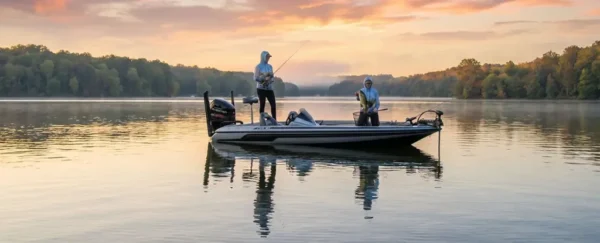
Chickamauga Lake Fly Fishing: Tennessee’s Bass and Striper River Lake
Chickamauga Lake is the Tennessee Valley Authority’s impoundment of the Tennessee River just north of Chattanooga, a 35,000-acre reservoir with a fly fishing identity built on largemouth bass, striped bass, and one of the better sauger fisheries in the state that most fly fishers have never considered as a fly rod target. Chickamauga Lake fly fishing benefits from its location in the southern Tennessee Valley — a region with an outdoor culture and a fishing tradition that runs deep — and a water quality improvement over the past two decades that has made the fishery substantially better than it was in the reservoir’s earlier history. Chickamauga is not the Tennessee River’s most famous impoundment. It is increasingly its most interesting one.
Largemouth bass are Chickamauga Lake’s most reliable fly fishing target and the species that drives the majority of the lake’s recreational fishing pressure. The reservoir’s extensive shallow water, abundant dock and marina structure, and the flooded timber and vegetation in the lake’s numerous creek arms provide largemouth with year-round habitat diversity. Chickamauga Lake largemouth fly fishing follows a predictable seasonal calendar: spring spawn from late February through April is prime time, with fish accessible in shallow protected water and responsive to surface presentations. Summer bass fishing retreats to the dock and structure game, with morning and evening topwater windows producing the most exciting action. Fall brings bass back to the shallows as water temperatures drop and shad schools move shallow ahead of the cooling water.
The Harrison Bay area on the lake’s western shore and the Hiwassee River arm on the eastern end both provide excellent largemouth habitat and are the sections of Chickamauga Lake that fly fishers should prioritize. The Hiwassee arm in particular — where the Hiwassee River’s relatively clear water enters the main lake — produces sight fishing conditions for bass that the main lake’s more turbid water cannot match.
Striped bass in Chickamauga Lake provide the fly rod’s most exciting opportunity, with fall surface feeding on shad schools producing the kind of open-water blitz action that demands a 9-weight and a large white Deceiver or popping bug. Striper surface activity on Chickamauga in October and November, when fish are actively pushing bait against the surface in the main lake’s open water, is a genuine event worth timing a trip around.
Target Species: Largemouth Bass, Striped Bass, Spotted Bass, Sauger, Crappie, Catfish Best Seasons: February–May (largemouth spawn) | September–November (striper surface, fall bass) Fly Patterns: Poppers, deer hair frogs, large Deceivers, Clousers, weedless streamers Notable Areas: Harrison Bay, Hiwassee River arm, Sale Creek area, Wolftever Creek, main lake striper humps