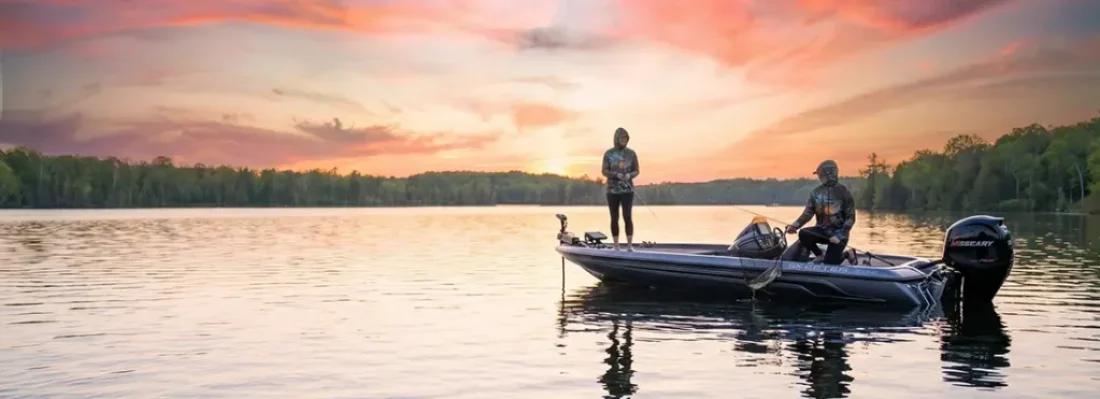
Chippewa Flowage Conventional Tackle Fishing: Bass, Pike, Walleye, Musky, and Panfish in the Heart of the Wisconsin Northwoods
Introduction: Welcome to 17,000 Acres of Humility
There is a certain kind of angler who shows up at the Chippewa Flowage for the first time with a boat full of confidence, a tackle box the size of a small refrigerator, and a personal guarantee to himself that he is going to “figure it out.”
He does not figure it out. Not that first day. Usually not the second, either.
The Big Chip — Wisconsin’s sprawling, bog-riddled, island-studded monster of a reservoir — has been absorbing the confidence of overconfident anglers since 1924. It does this quietly, efficiently, and without apology. You will launch, look out at 17,000 acres of floating bogs, submerged timber, old river channels, weedy flats, and rocky points stretching as far as you can see, and you will say something like “Well. This is bigger than I thought.”
Yes. It is.
Chippewa Flowage conventional tackle fishing is one of the Midwest’s genuinely great outdoor experiences — and one of its most underrated. This is not a suburban bass pond stocked with fish that practically climb into the boat for a granola bar. This is wild, sprawling, northern Wisconsin water that rewards the prepared and quietly destroys the careless. Bass, largemouth and smallmouth both. Fly rod angler? The Big Chip is just as deadly with a popper and an 8-weight. Read the full Chippewa Flowage Bass Fly Fishing Guide for flies, tactics, and gear built specifically for fly fishers. Northern pike with the manners of a bar fight. Walleye that couldn’t care less what color your jig is, thank you very much. Muskellunge that are essentially mythological creatures wearing fins. And panfish — crappie, bluegill, and perch — that will remind you fishing is supposed to be fun.
Bring your A-game. Bring backup lures. Bring patience.
And for the love of all things holy, bring a map!
Table of Contents
A Short History of the Big Chip (For Those Who Like Context Before They Get Skunked)
Before there was a Chippewa Flowage, there was a valley. A beautiful, river-laced, forest-covered valley carved by the Chippewa River and its tributaries over thousands of years. The Ojibwe people — the Lac Courte Oreilles Band specifically — lived on this land for generations. They fished. They harvested wild rice. They built a life shaped by water that ran where it naturally chose to run.
Then came the utility companies.
In 1923, the Wisconsin-Minnesota Light and Power Company (later absorbed into Northern States Power) constructed the Winter Dam at the outlet of the Chippewa River. Water backed up across the valley. By 1924, the flowage as we know it today was largely complete. Old farms, old forests, river bottoms, and wild rice beds went underwater. Nearly 900 Ojibwe tribal members were displaced from land that had been theirs for generations — a dark chapter in the lake’s history that still resonates in the local community.
The physical result of that flooding was the third largest lake in Wisconsin by surface area and the second largest reservoir. The drowned timber — those twisted, stumpy, haunted-looking snags that reach out of the water like something from a bad dream — is what is left of the old forest. It is also where the bass hide and where the pike ambush panfish with the casual brutality of a seasoned predator.
The flowage sits within Sawyer County, centered near the town of Hayward, Wisconsin. Hayward is the self-proclaimed “Muskie Capital of the World,” which is either a bold marketing claim or a deeply sincere local belief, depending on who you ask at the bait shop. The Freshwater Fishing Hall of Fame and Museum is located here, housing Louis Spray’s controversial 69-pound, 11-ounce muskellunge caught in 1949 — still listed as a world record by the organization, still argued over by musky hunters with the passion most people reserve for politics.
The Lac Courte Oreilles Band of Lake Superior Chippewa maintains a reservation on the flowage’s northern shore to this day. Their history here predates the dam by centuries. When you fish the Big Chip, you are fishing water with weight to it — not just in depth, but in meaning.
Understanding the Flowage: A Map Is Not Optional
The Chippewa Flowage is divided, loosely, into a western half and an eastern half by the main body of water and the old river channel that still runs through the middle of it. Understanding this geography is the difference between finding fish and spending your afternoon boating in confused circles.
The West Side holds clearer water, extensive weed flats, large cabbage beds, lily pad systems, and the big, shallow bays that largemouth bass treat as their personal dining rooms. This is topwater country in the morning and evening. It is also where the floating bogs — massive, drifting mats of sphagnum moss and vegetation — create new structure every season.
The East Side feels more like a river. The Chippewa River’s influence still runs through here, with stained water, defined current seams, rocky points, boulder fields, and submerged wood. This is where smallmouth bass and walleye concentrate. It rewards anglers who know how to read moving water structure.
The Islands — all 200-plus of them — are not just scenic. They create current breaks, wind shadows, and ambush points. Every island has a wind-exposed side and a calm side. Every island point is a potential fish location.
The Bogs are either a delight or a navigation nightmare depending on your mood. They move. Literally. A bog that was on the north side of a bay in spring can drift to the south side by August. They create pockets, channels, and shade lines that concentrate fish. They also eat anchor lines, motor blades, and occasionally the dignity of anglers who get too aggressive in tight spaces.
Grab the Chippewa Flowage map on Fishidy before you go. Mark your waypoints. Come back to those waypoints. That is how you fish big water.
Bass Fishing on the Chippewa Flowage: Both Kinds, Both Attitudes
Wisconsin opens its bass season in late May, and the Chippewa Flowage celebrates this occasion the way any self-respecting northern fishery should — with complete indifference to your schedule and every intention of making you work.
Largemouth Bass
The largemouth bass on the Big Chip are fat, mean, and extremely committed to living inside whatever piece of cover is most inconvenient for you to fish. They love lily pad edges, sunken timber, the bog margins, and shallow weedy bays with a clear drop nearby. They behave, in short, like largemouths everywhere — except here they are bigger, the cover is denser, and there are far more logs masquerading as fish than you will be comfortable with.
Peak Season: Late May through June for topwater action, July and August require adjustments for heat, September and October bring some of the year’s best big-fish opportunities.
Prefer to throw a frog pattern over a hollow-body frog? The Chippewa Flowage Bass Fly Fishing Guide covers the fly rod side of the same water.
Proven Conventional Tackle for Largemouth:
- Topwater Lures: Buzzbaits in white or chartreuse are the alarm clock that wakes the shallow bays at first light. Hollow-body frogs — Livetarget or BOOYAH Poppin’ Pad Crasher — are essential for fishing the lily pads and bog edges where a hard bait would spend most of its time hung up in vegetation. Pencil poppers and walk-the-dog baits like the Heddon Zara Spook work well on open bay transitions at dawn and dusk. Work them slow. Then slower.
- Soft Plastics: A Texas-rigged Zoom Brush Hog or Zoom Trick Worm in green pumpkin, watermelon red, or black and blue covers most situations. Use a 4/0 wide-gap hook and a 3/8 to 1/2-ounce tungsten bullet weight when punching into the thick stuff. In lighter cover, go weightless and let it flutter down. A Senko-style wacky rig on a light dropshot hook is devastating along the edges of weed transitions.
- Jigs: A 1/2 to 3/4-ounce football jig or flipping jig in black and blue or green pumpkin with a chunk trailer is a year-round workhorse. Pitch it to timber, drag it over rocky transitions, hop it along the edge of weed lines. It does not care where you throw it. It just catches fish.
- Crankbaits: A square-bill crankbait like the Strike King KVD 1.5 in natural shad or crawfish patterns for deflecting off shallow timber and rocks. A medium-diving crankbait for working deeper weed edges and points in summer.
- Spinnerbaits: Do not underestimate a white or chartreuse 3/8-ounce spinnerbait with a willow-leaf blade burning through weed edges at first light. It has caught more bass than most anglers want to admit.
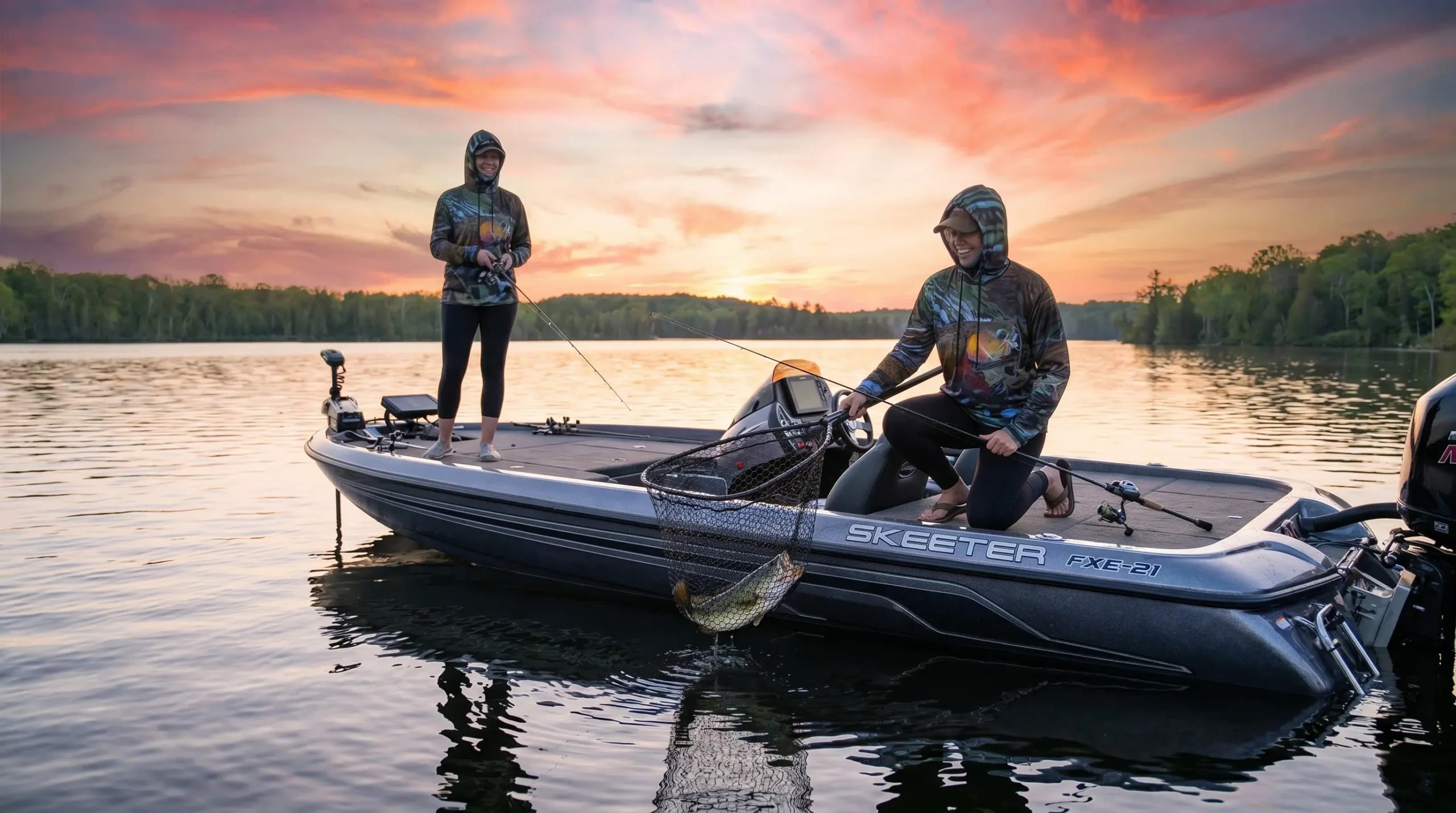
Recommended Setup: Medium-heavy baitcaster, 7-foot to 7-foot-3 rod, 15 to 17-pound fluorocarbon for most applications. Heavier braid — 50 to 65 pound — for punching heavy mats and thick timber. The fish here go straight into the cover the moment they feel the hook. Give them nowhere to go.
Smallmouth Bass
If largemouth bass are the big, obnoxious loud guys at the party, smallmouth bass are the quiet ones in the corner who will unexpectedly pick up a refrigerator when threatened. Pound for pound, nothing in freshwater fights harder, and the Chippewa Flowage’s east side grows them fat on crayfish and baitfish.
Smallmouth on the Big Chip concentrate around rock, wood, and current. Find a rocky point where an old river channel swings close to shore, and you have found a smallmouth address. Find a boulder field in eight to twelve feet of water with stained water moving over it, and you have found a smallmouth convention.
Peak Season: Post-spawn in June through early July is extraordinary. Fall — late September through freeze-up — can produce the biggest fish of the year on big swimbaits and jerkbaits as the water cools.
Proven Conventional Tackle for Smallmouth:
- Drop Shot: A drop shot rig with a 4-inch Roboworm Straight Tail or Berkley Gulp Minnow in natural shad or green pumpkin is a go-to technique in deeper water along points and channel edges. Keep the weight on the bottom, the bait hovering 6 to 18 inches above. Smallmouth cannot stand it.
- Ned Rig: The TRD (The Real Deal) by Z-Man on a 1/10 to 1/4-ounce mushroom head jig is absolutely stupid in its effectiveness on Chippewa Flowage smallmouth. Fish it on a medium-light spinning rod with 8-pound fluorocarbon. Drag it. Hop it. Stop it. The bait stands on its tail and the fish lose their minds.
- Tube Jigs: A 4-inch tube in smoke, green pumpkin, or brown on a 1/4 to 3/8-ounce tube jig head catches smallmouth on rocky structure and gravel flats. It imitates a crayfish well enough to fool fish that eat crayfish for every meal.
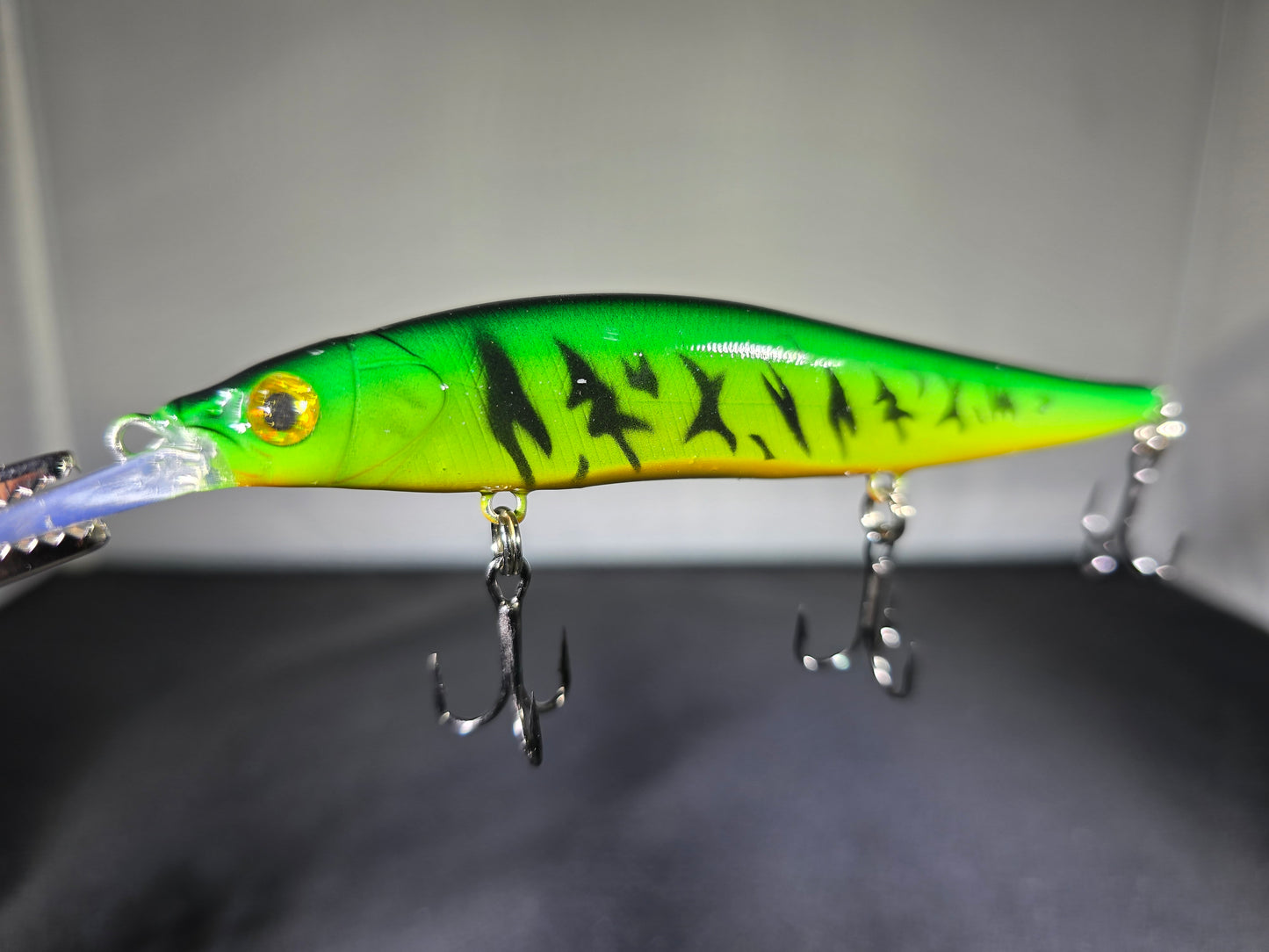
- Jerkbaits: Suspending jerkbaits — a Rapala Husky Jerk or Lucky Craft Pointer — in natural shad or perch patterns are lethal in the clearer, western sections and on rocky east-side structure in spring and fall. Jerk, jerk, pause. The pause is where everything happens.
- Swimbaits: A 3 to 4-inch paddle-tail swimbait on a 3/8-ounce swimbait head in natural perch or shad color is effective along points, near boulders, and along rocky shorelines. It covers water efficiently and triggers reaction strikes.
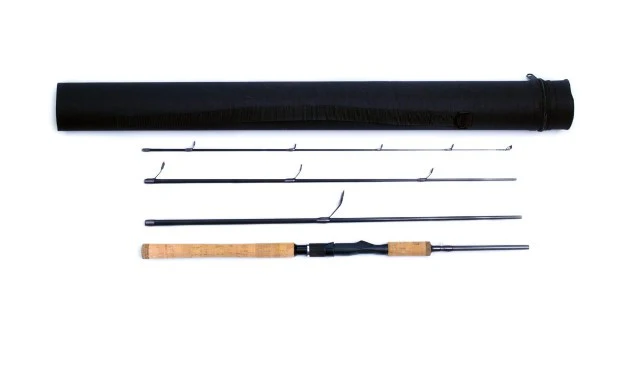
Recommended Setup: Medium-light to medium spinning rod, 6-foot-6 to 7-foot-10, 8 to 12-pound fluorocarbon. For swimbaits and larger presentations, a medium-power baitcaster with 12 to 15-pound fluorocarbon is appropriate.
Northern Pike: The Bully You Actually Want to Meet
Northern pike are the Chippewa Flowage’s resident chaos agents. They are in the weeds. They are in the open water. They are behind every submerged log, lurking under every floating bog, and casually destroying every crankbait that wanders too close to their personal space.
Wisconsin manages its pike population in the flowage through an active pike improvement project aimed at producing larger, healthier fish. The result is that the Big Chip produces legitimate trophy-class pike — fish over 40 inches are real possibilities, and they fight like something that resents being caught.
Pike are ambush predators. They sit motionless in heavy cover and wait for something that looks like a meal to swim by within explosion range. Your job is to make your lure look like that meal.
Peak Season: Early spring — right after ice out and through May — produces explosive pike action in the shallows as fish move up to warm and spawn. Fall is equally productive as pike feed aggressively before ice. Summer midday pike fishing is possible but requires deeper, cooler water and bigger presentations.
Proven Conventional Tackle for Northern Pike:
- Spinnerbaits: A large tandem-blade spinnerbait — 1 ounce or heavier — in white, chartreuse, or firetiger with a substantial trailer creates enough flash and vibration to pull pike out of heavy cover. Burn it fast past weed edges and bog margins.
- Inline Spinners: The Mepps Musky Killer or Blue Fox Musky Buck in sizes 5 and 6 are classic Northwoods pike lures that remain devastatingly effective. There is a reason your grandfather used them. They work.
- Topwater: A large Heddon Zara Spook, a Whopper Plopper 130, or a big surface chugger fished over or near weeds in low-light conditions produces explosive topwater pike strikes that will absolutely test your cardiac health. Few things in fishing are louder or more violent.
- Swimbaits and Glide Baits: A large paddle-tail swimbait — 6 to 9 inches — in perch, sucker, or cisco patterns triggers pike that are keying on baitfish. Glide baits like the Suick or a large Jake deliver a wide, sweeping action that pike find irresistible.
- Soft Jerkbaits: A large soft plastic jerkbait — Zoom Super Fluke or Berkley Havoc — on a heavy jig head worked with an erratic twitch-and-pause retrieve imitates an injured baitfish. Pike have a well-documented weakness for injured baitfish.
- Live and Cut Bait: A large sucker or chub rigged on a quick-strike rig and fished under a slip bobber over weed flats and bog edges is an extremely effective traditional pike method. Some of the biggest fish in the flowage are taken this way by anglers with no interest in being trendy about it.
Critical Tackle Note: Northern pike have teeth. Real ones. Proper ones. Teeth that will dismantle your tackle without remorse or apology. Use a quality wire leader — 12 to 18 inches of seven-strand or single-strand wire — or at minimum a 60 to 80-pound hard fluorocarbon leader. The cost of ignoring this advice is measured in lures.
Recommended Setup: Heavy baitcaster or conventional reel, 7 to 8-foot rod with a moderate-fast action, 50 to 65-pound braided line with a wire or heavy fluoro leader. For live bait, a heavier spinning rod with 20-pound mono works well.
Walleye: The Ghost of the Flowage
Walleye fishing on the Chippewa Flowage is an exercise in patience, low-light discipline, and the humbling realization that fish with marble-sized eyes and the table fare of royalty do not particularly care about your feelings or your schedule.
Walleye are structure-oriented, light-sensitive, and most active at dawn, dusk, and after dark. They hold on points, rock piles, humps, and along the deep edges of weed lines. They move. The fish you found on Tuesday’s evening bite will likely not be in exactly the same spot Thursday morning, because walleye make their own rules.
The Chippewa Flowage holds a healthy walleye population, and locals take the walleye fishery seriously. It is a legitimate multi-species destination — not just a musky and bass lake that happens to have walleye.
Peak Season: Early May through June post-spawn is prime. Evening and night bites in summer remain productive. Fall — September and October — brings aggressive feeding walleye as water cools.
Proven Conventional Tackle for Walleye:
- Jigs: The jig and minnow combination is the universal walleye language. A 1/8 to 1/2-ounce ball jig or stand-up jig head in natural colors — chartreuse, white, orange — tipped with a live fathead minnow or a 3-inch Berkley Gulp Minnow. Drag it. Hop it gently. Fish it painfully slow. Slower than you think. Even slower than that.
- Live Bait Rigs: A Lindy rig — slip sinker, snell, and a live nightcrawler or minnow — dragged slowly along points, rocky transitions, and weed edges is the classic Midwest walleye technique. It still outfishes more modern approaches in many conditions because fish do not read fishing magazines.
- Crankbaits: Shad Raps, Flat Raps, and Flicker Shads in natural perch, shad, or firetiger patterns trolled or cast along structure are effective for covering water to locate active walleye. Trolling a crankbait along a defined depth contour — 8 to 15 feet — is a proven way to find fish before committing to vertical presentations.
- Blade Baits: A 1/2 to 3/4-ounce blade bait — Swedish Pimple or Cicada — jigged vertically over points and channel edges in summer and fall is an underused technique that catches walleye consistently.
- Nightcrawler Harnesses: A spinner harness with a #4 to #1/0 hook, willow-leaf blades in gold or orange, trailing two hooks with a full nightcrawler, trolled or drifted behind a bottom bouncer — this is a walleye rig that has caught fish since long before anybody was filming it for social media.
Recommended Setup: Medium-light to medium spinning rod, 6-foot-6 to 7-foot, fast action, 8 to 10-pound fluorocarbon for jigging. For live bait rigs and trolling, 10 to 12-pound monofilament has the right stretch characteristics to absorb the initial run before the hookset.
Muskellunge: The Fish of 10,000 Casts (We Are Being Generous)
The Chippewa Flowage is musky country. It has been musky country since before you were born and will remain musky country long after. The Freshwater Fishing Hall of Fame is in Hayward for a reason. Louis Spray caught what is certified as one of the great documented world record musky here in 1949, and the musky hunting community has been making pilgrimages to the Big Chip ever since.
A full musky fishing guide would require its own article, a separate article about that article, and possibly a therapy session. But since you may encounter one of these fish while casting for something else — or while specifically hunting them — here is the functional overview.
Musky are apex predators. They are large, suspicious, slow to commit, and psychologically committed to making you question your life choices. A follow — when the fish trails your lure to the boat without striking — is considered progress in the musky world. You will do a figure-eight with your rod at boatside, the fish will look at your lure the way a food critic looks at bad risotto, and swim away. You will do this many times.
Peak Season: Fall — September through November — is the best time for large musky. The fish feed aggressively as water cools and pile on calories before winter. Spring post-spawn can also produce.
Basic Musky Tackle Overview:
- Large bucktails and inline spinners — Mepps Giant Killer, Buchertail — in black, white, or firetiger, size 7 and up.
- Large topwater baits — Whale Tails, Baby Shads on topwater — for shallow, warm-water situations.
- Glide baits — the Suick, the Reef Hawg — with S-curve retrieve cadences.
- Large jerkbaits worked on heavy equipment with patient, disciplined retrieves.
- Heavy baitcasting outfit, 8 to 10-weight equivalent, 80-pound braid, 130-pound wire leader, strong nerves.
The musky anglers on the Chippewa Flowage are a tribe unto themselves. They are generous with information and they take the resource very seriously. Respect their practices — nearly all musky fishing here is catch-and-release — and you will be welcomed into the fold.
Panfish: Because Sometimes You Just Want to Catch Fish
Here is the thing that the bass tournament crowd and the musky obsessives sometimes forget to mention about the Chippewa Flowage: the panfish are exceptional. Genuinely, embarrassingly, catching-fish-every-cast exceptional. If you have a child in the boat, or a friend who is new to fishing, or a morning when you simply want to remind yourself that catching fish is, in fact, enjoyable, the panfish will not let you down.
Crappie
Crappie on the Chippewa Flowage are the flowage’s undersung heroes. They run large — 10 to 13-inch slab crappie are not unusual in the better structure — and they school tightly around submerged timber, brush piles, dock pilings, and deeper weed edges in summer.
Timing: Spring is the showstopper. Crappie move shallow in late April and May to spawn around woody cover and the margins of weed lines. They are in clear, shallow water and they are aggressive. Fall brings crappie back toward structure in 12 to 20 feet of water where they school and can be targeted precisely with vertical presentations.
Tackle:
- 1/16 to 1/8-ounce crappie jig heads in chartreuse, white, pink, or orange tipped with a 2-inch paddle tail or tube plastic.
- Small Bobby Garland Baby Shads, Crappie Magnets, or similar soft plastics.
- Live minnows — fatheads or small shiners — under a slip bobber near timber.
- Light spinning rod, 6-foot, medium-light action, 4 to 6-pound monofilament or fluorocarbon.
Find the timber, find the crappie. It is not more complicated than that.
Bluegill and Sunfish
Bluegill are everywhere on the Chippewa Flowage — along weed edges, around docks and boat hoists, over sandy flats, and anywhere there is insect activity near the surface in summer. The Flowage grows big gills, and they will eat all day long, which makes them perfect if you are the kind of person who needs constant confirmation that your lure is in the water.
Tackle:
- 1/32 to 1/16-ounce teardrop jigs or small tube jigs in bright colors tipped with a waxworm, small piece of nightcrawler, or small soft plastic.
- Live worm on a small hook under a bobber — which catches bluegill, keeps children entertained for hours, and reminds adults why they started fishing in the first place.
- Small inline spinners — Rooster Tails in size 0 or 1 — for covering shallow flats and locating active fish.
- Light to ultralight spinning setup, 4 to 6-foot rod, 4-pound monofilament.
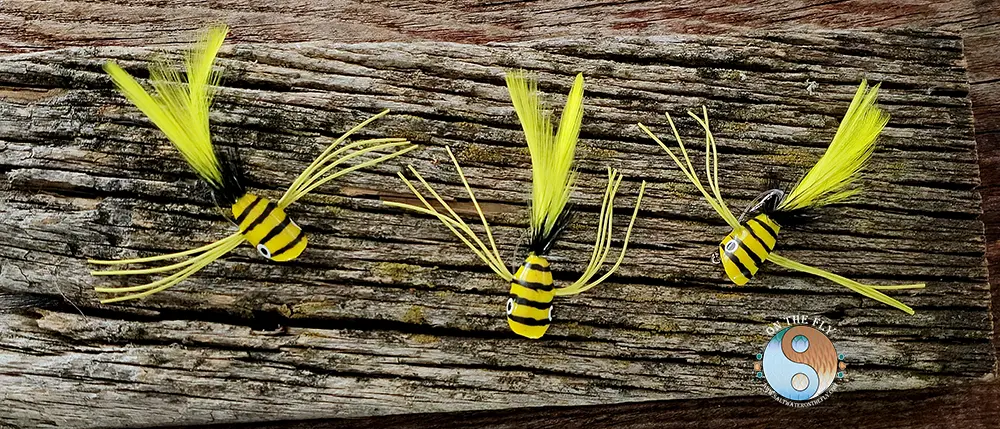
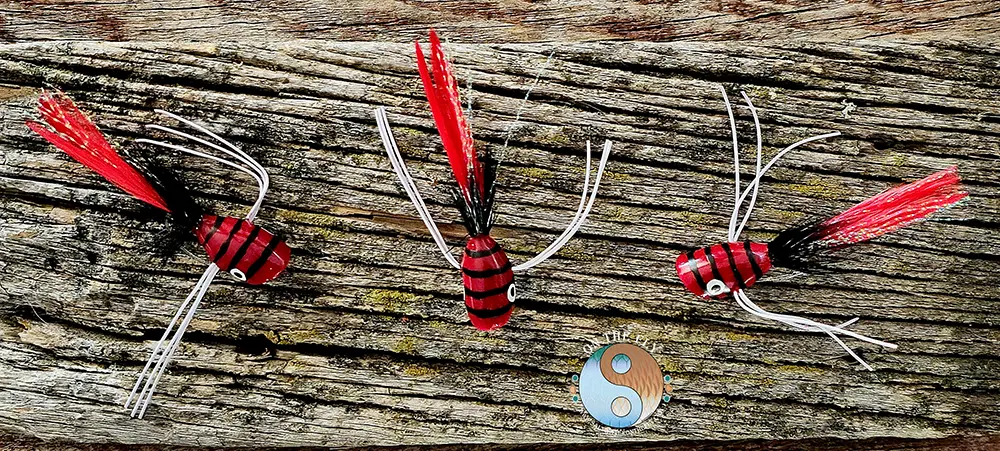
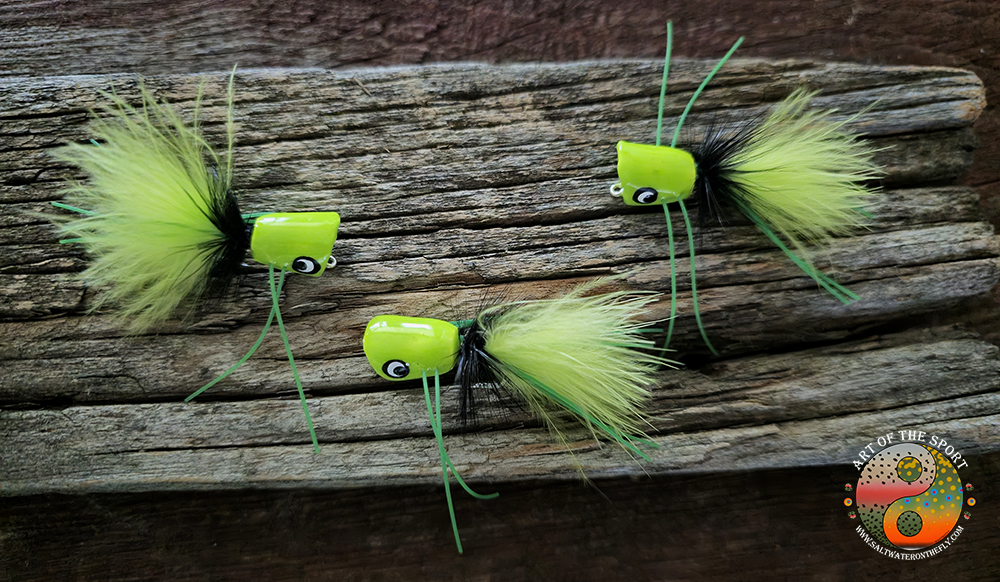
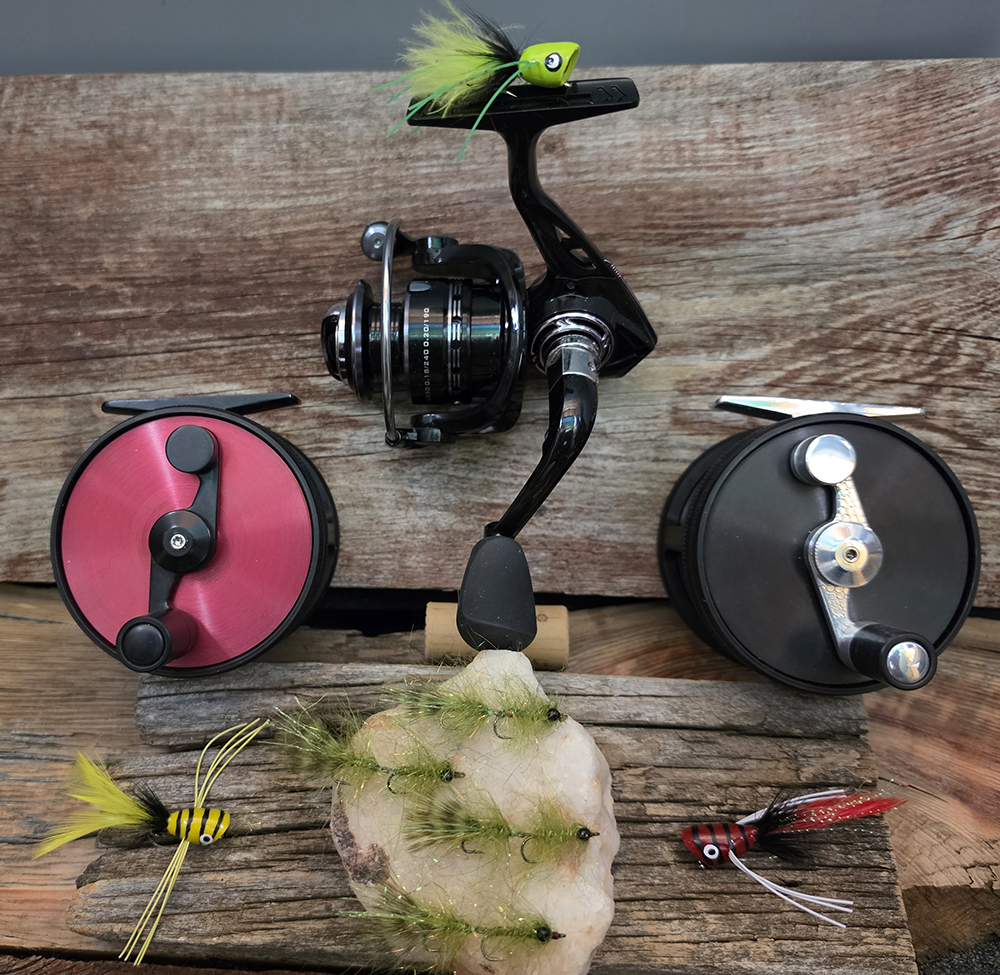
Fl. Sasquatch Bush Fur Leeches and Summit Tackle Spinning Reel.
Yellow Perch
Yellow perch are present in the Chippewa Flowage in solid numbers and deserve more attention than they typically receive from visiting anglers fixated on bass and musky. They are delicious — bordering on scandalously delicious — and in winter they are the primary target for ice anglers on the flowage. During open water, they school on rocky points and deeper weed edges in 8 to 20 feet.
Tackle:
- Small jigging spoons — Swedish Pimple, Kastmaster — tipped with a minnow or minnow head, jigged vertically.
- Small jig heads tipped with a small soft plastic or live minnow.
- Light spinning rod, 6-pound monofilament.
Walleye Ice Fishing: A Brief but Necessary Mention
The Chippewa Flowage ice fishing culture is its own universe. When the ice comes — typically in December — the flowage transforms into a city of ice shacks, snowmobiles, and deeply layered clothing. Walleye, perch, crappie, and northern pike are all targeted through the ice.
For ice fishing walleye and perch: small jigging spoons tipped with a minnow or waxworm, Clam Drop jigs, and live bait rigs under tip-ups. For pike under the ice: large tip-up setups with dead or live suckers, 8 to 12 inches below ice, over 6 to 12 feet of water near structure.
Ice anglers take the Chippewa Flowage very seriously. With good reason.
Seasonal Strategy at a Glance
| Season | Target Species | Key Locations | Top Presentations |
|---|---|---|---|
| Early Spring (April–May) | Pike, Bass (post-spawn), Crappie | Shallow flats, creek arms, timber margins | Spinnerbaits, live bait, crappie jigs under bobbers |
| Late Spring (May–June) | Largemouth Bass, Walleye, Smallmouth | Weed edges, rocky points, channel edges | Topwater, jig and minnow, tube jigs |
| Summer (July–August) | Bass, Pike, Panfish | Deep weed edges, open water transitions, morning/evening shallows | Frogs, crankbaits, swimbaits, small jigs |
| Fall (September–October) | Musky, Smallmouth, Walleye, Big Pike | Points, rocky humps, channel edges, cooling shallows | Large glide baits, jerkbaits, crankbaits, live bait rigs |
| Winter (Ice) | Walleye, Perch, Crappie, Pike | Mid-depth timber, rocky structure, weed edges | Jigging spoons, tip-ups, live bait rigs |
Guides, Boat Rentals, and Lodging
The Chippewa Flowage is big enough that a local guide is genuinely valuable on your first visit — and still useful on subsequent ones. Hayward Guide Service offers multi-species trips on the flowage with experienced captains who know the water the way you know your own driveway. Tom Leahy’s Guide Service is one I’ve seen on the lake and a respected name that has been working the Big Chip for years.
For lodging, the Lake Chippewa Flowage Resort Association (LCFRA) is your best starting point. Member resorts are invested in the health of the lake and know their water. Options range from rustic cabin rentals to full-service resorts. Timber Kove, Oak Shores, and Treeland Farm RV Resort are among the well-positioned options.
If you do not have a boat, most resorts offer rental options — from fishing boats to pontoons. Book these early in the summer season. They go fast.
And if island camping sounds like your kind of thing — waking up on a remote island, casting from camp, coffee on the water before the rest of the world exists — the Chippewa Flowage’s public island campsites are among the best experiences the Northwoods offers.
Rules, Regulations, and Keeping the Big Chip Healthy
The Chippewa Flowage operates under Wisconsin DNR regulations with some flowage-specific rules you need to know before you launch.
- Bass: Wisconsin state regulations govern season dates, size limits, and daily bag limits. Smallmouth often carry stricter harvest rules than largemouth. Always check the current year’s regulations before fishing — they update annually.
- Walleye: Subject to state regulations and sometimes flowage-specific size and bag rules. Verify current rules with the DNR.
- Northern Pike: The pike improvement project in the flowage has specific slot limits and bag rules designed to improve the size structure of the population. Read these carefully. The rules exist for good reason.
- Muskellunge: The Chippewa Flowage’s musky fishery is almost entirely catch-and-release by regulation and culture. Check current size limits and handle these fish with care.
Beyond legal requirements, conventional tackle anglers on the Big Chip can do a lot for the fishery by practicing voluntary catch-and-release of large breeding-class fish, using barbless hooks where practical, minimizing air exposure when photographing fish, and respecting the wetland margins and bog systems that serve as spawning and nursery habitat.
The pike improvement project deserves special mention. Biologists including DNR fisheries expert Max Wolter have invested serious effort in understanding and improving the flowage’s pike population. The goal is a healthy size structure — more large fish, a balanced predator-prey relationship — and the regulations around pike are calibrated to support that goal. Follow them. The future quality of this fishery depends on it.
The Ojibwe heritage of this lake also carries conservation weight. The Lac Courte Oreilles Band of Lake Superior Chippewa have treaty rights on the flowage and a long-standing relationship with this water that predates any dam or resort. Their perspective on the resource — shaped by generations of connection to it — is worth understanding and respecting.
A Few Things Nobody Tells You Before Your First Trip
- The floating bogs move. What was open water last fall might be a mat of vegetation now. What was a navigable channel in spring can be a bog-choked dead end by August. Update your maps. Ask locals.
- The old timber will find your prop. Navigate slowly in unfamiliar areas. The flowage has submerged wood in places your depth finder cannot always see.
- Northern pike are not a rumor. You will get follows. You will get cutoffs. You will watch a lure you liked very much disappear into the vegetation next to a disturbingly large swirl. Bring wire leaders and carry a de-hooking tool.
- Hayward is worth your time. The Angry Minnow brewery, with its full menu and patio, is an excellent destination after a long day. The Freshwater Fishing Hall of Fame is legitimately interesting even if you are not a musky person. The local bait shops have more useful current information than anything you read online, including this article.
- The weather changes fast. Northern Wisconsin is not messing around with its weather. Afternoon thunderstorms in summer are real and can escalate quickly on open water. Watch the horizon. Give yourself margin.
- Island camping changes people. In a good way.
Final Cast: Why the Big Chip Sticks With You
There are lakes that are pleasant. There are lakes that are productive. And then there are lakes that are experiences — places with enough water, enough species, enough history, and enough wild northern character that they alter something in the people who fish them.
The Chippewa Flowage is the third kind.
You come here for bass or walleye or crappie or pike and you leave with something harder to define — the way fog hangs in the timber at sunrise, the sound of a pike strike at dusk, the absurdity of an island camp breakfast with a fly rod in hand and nowhere to be until the hatch. The Big Chip is not subtle and it does not apologize for its size or its complexity.
You will want to come back. Probably before the fish slime is off your hands.
Pack extra lures. The pike will eat them. And if you ever want to trade the spinning rod for a fly rod, the Big Chip rewards that too. The Chippewa Flowage Bass Fly Fishing Guide is waiting for you.
Capt. Grumpy is a fly shop owner, veteran Montana fly fishing guide, and saltwater fishing content expert based in Montana. He is the voice behind Saltwater on the Fly and has spent a career covering fishing destinations from Wisconsin’s Northwoods to the saltwater flats of the Gulf Coast. He believes in honest fishing information, functional gear advice, and the idea that overthinking your tackle selection is always the wrong move.