Montana’s Classic Stonefly Bench: The Green River and the South Fork Boise — Tailwater Stoneflies of the Intermountain West
Series: Montana’s Classic Stonefly Bench — Article 5
Not every great stonefly river announces itself.
The Deschutes canyon puts on a show — willows crawling with salmonflies, redband trout hammering dries against the basalt walls, boat traffic on the road section that reminds you why you floated past Trout Creek. The Madison in late May is an event, orchestrated and celebrated and attended accordingly. These rivers know what they are and so does everyone else.
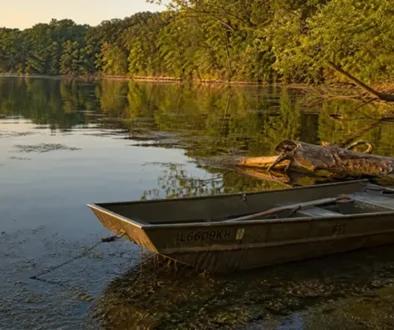
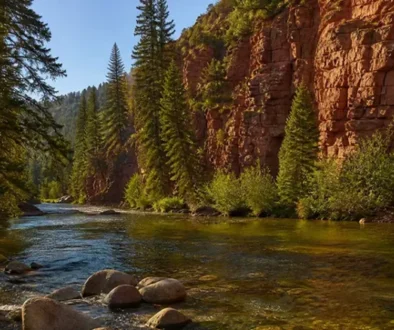
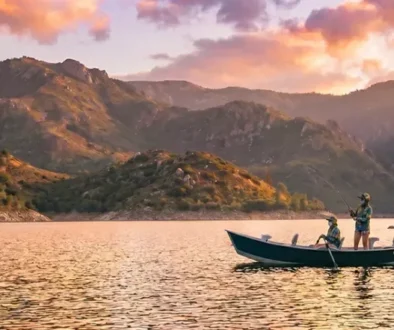
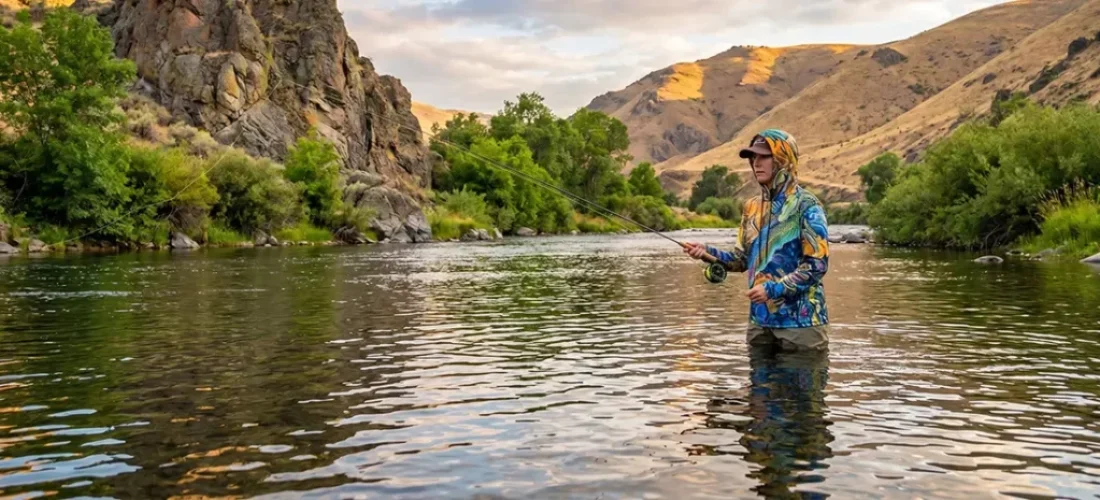
The Green River below Flaming Gorge Dam and the South Fork of the Boise below Anderson Ranch Dam are different animals. They are remote, cold, technical tailwaters that sit in canyon country and don’t advertise. The Green runs through red rock Utah in water so clear you can count the fish before you cast to them. The South Fork Boise drops through a steep Idaho canyon that limits road access to the point where most of the fishing happens from a drift boat or by hiking in on foot. Both rivers hold brown trout that have seen enough flies to have opinions about everything — your presentation, your tippet, your drift, the specific shade of olive on your nymph.
I know the Green from the water. Several days below the dam, bent rods and wind and rain and the kind of nymphing that requires full attention because the fish that eat your Kaufmann’s Rubberlegs in that current are not small and they do not give you time to think about what comes next. Brown trout in the Green River do not negotiate. They take the fly and they go and the reel tells you everything you need to know about whether your knots were tied correctly that morning. The South Fork Boise I know from wading trips — a few hours here and there on different visits, the kind of river you keep coming back to in pieces because each piece gives you something worth returning for.
These are not easy rivers. They are rewarding ones — which in this series, as in the fishing life generally, is the better thing to be.
This is Article 5 of Montana’s Classic Stonefly Bench. The series that started on Pat Barnes’ bench in West Yellowstone has now covered Montana, Oregon, and arrives here in the canyon country of Utah and Idaho with three patterns built specifically for the demands of technical tailwater stonefly fishing.
Table of Contents
Two Tailwaters, One Shared Logic
The Green River and the South Fork Boise share a fundamental character despite being in different states on different drainages. Both are dam-controlled tailwaters with cold, stable year-round water temperatures that support large populations of educated brown and rainbow trout. Both fish best from a drift boat in high water and on foot in low, clear conditions. Both reward technical nymphing pre-hatch and precise dry fly presentation when the surface feeding starts. And both hold fish that have been fooled enough times to require something better than approximate.
The Green River:
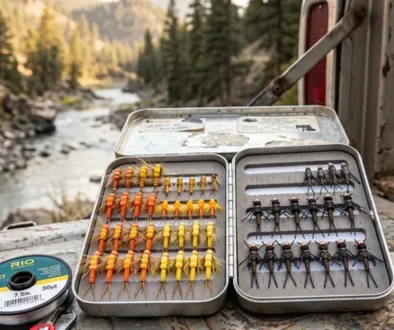
below Flaming Gorge Dam flows through a spectacular red rock canyon in northeastern Utah — about 30 miles of fishable water divided into three sections, A through C, with Section A immediately below the dam holding the densest populations of fish and the most consistent hatch activity. The river runs cold and steady year-round, 48 to 52 degrees near the dam, which keeps the insects hatching on a near-daily cadence and the fish feeding consistently across every season. The stonefly component of the Green’s hatch calendar is not the headline act — that belongs to the PMD and BWO hatches — but the yellow sally and golden stone are present from June through midsummer, and the Kaufmann’s Rubberlegs nymph fished pre-hatch in the deep runs produces the kind of brown trout that remind you why you drove to northeastern Utah.
The river fishes best in the 800 to 2,000 cfs window. Above that range the wade options disappear and the nymph rigs need to go heavier. Before you load the truck, check the gauge — Flaming Gorge releases can change overnight and the difference between a fishable Section A and a blown-out wade is a few hundred cfs you didn’t see coming.
The South Fork Boise:
below Anderson Ranch Dam is one of the best tailwater fisheries in Idaho and one of the least written-about quality fisheries in the American West. Wild brown and rainbow trout averaging 14 to 18 inches, with fish in the 18 to 22 inch range not uncommon in the deeper canyon pools. The stonefly hatch calendar here runs from the yellow sallies in late May through the salmonfly and golden stone hatches in June and July, with October Caddis extending the surface fishing into fall. Large orange Stimulators, foam stones, and Pat’s Rubber Legs are the foundational patterns — the same logic as everything else in this series, applied to water that is more remote and less pressured than the famous Idaho rivers that get all the attention.
Tailwater Stonefly Calendar
| Hatch | River | Timing | Size |
|---|---|---|---|
| Little Yellow Stone | Green River, South Fork Boise | June–July | 12–16 |
| Golden Stonefly | Green River, South Fork Boise | June–early August | 6–10 |
| Salmonfly | South Fork Boise | Mid-June–mid-July | 4–8 |
| October Caddis | South Fork Boise | September–October | 6–8 |
Pre-hatch nymphing window:
Both rivers fish the Kaufmann’s Rubberlegs and Pat’s Rubber Legs through the cold months and the pre-hatch period — any time stonefly adults are not yet on the water. On the Green this means most of the year. On the South Fork Boise it means spring through early June before the salmonfly nymphs begin their migration to the banks. The nymph is never wrong on either river if the hatch isn’t happening. The nymph is often right when the hatch is happening too.
How to Tie the Kaufmann’s Rubberlegs Stone Nymph
Reason This Fly Exists
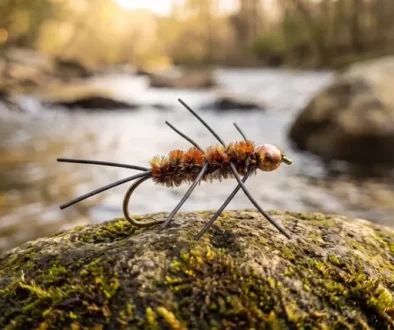
Randall Kaufmann built the Rubberlegs Stone Nymph to solve the pre-hatch problem on large western tailwaters — the window before adults appear when stonefly nymphs are the primary large food source for big trout and the presentation required is deep, heavy, and precise. The Green River below Flaming Gorge is exactly the kind of water this fly was designed for: cold, clear, and full of brown trout holding in deep runs where a lightweight nymph never reaches the strike zone.
The fly is not subtle. It is heavy, dark, and leggy — a convincing stonefly nymph silhouette built on a long shank hook with tungsten or lead weight that gets it to the bottom of the run where the big fish are holding and keeps it there through the drift. The rubber legs create movement that no other material replicates in slow, cold tailwater currents where the fish have time to inspect everything. On the Green River in wind and rain with high flows and brown trout that are not interested in anything small, this fly bent my rod more than once and screamed the reel every time it did.
Hook & Materials
| Component | Material |
|---|---|
| Hook | Partridge, 3X long nymph, size 4–10 |
| Thread | Semperfli 6/0 Classic, black or dark brown |
| Weight | Lead wire or tungsten bead, appropriately sized |
| Tail | Dark brown goose biots, split |
| Abdomen | Dark brown or black chenille, medium |
| Rib | Copper wire, fine |
| Legs | Brown barred rubber legs, two per side at thorax |
| Wingcase | Dark turkey tail or black Thin Skin |
| Thorax | Dark brown or black dubbing — SLF or Haretron |
| Antennae | Dark brown goose biots, split, optional |
| Head | Thread or tungsten bead |
Weight note:
The Rubberlegs Stone Nymph needs to get to the bottom of a deep tailwater run and stay there. Use a tungsten bead at the head and additional lead wire wraps under the thorax on the Green River and other large, deep tailwaters. Underweighting this fly is the most common mistake — you will spend the drift in the wrong part of the water column and the fish will never know you were there.
Hook note:
The 3X long shank is not optional. Stonefly nymphs are long, segmented insects and the hook length is part of what makes the silhouette convincing at depth. A standard nymph hook produces a shorter, stubbier fly that doesn’t read as a stonefly nymph to fish that have been eating the real thing.
Tying Instructions
Step 1 — Weight and Thread Base
Slide a tungsten bead onto the hook and mount in the vise. Wrap fifteen to twenty turns of lead wire behind the bead and push the coils forward against it. Start dark thread behind the lead wraps and build a smooth transition — thread ramp from shank diameter up to lead diameter and back down. The thread transition keeps the lead from sliding and gives the chenille abdomen something to bind against.
Step 2 — Tail
Select two dark brown goose biots. Tie them in at the bend on opposite sides of the hook shank, tips curving outward and slightly downward — not upward. The split biot tail creates the forked tail profile of a natural stonefly nymph. Length: one quarter to one third of the hook shank. Bind each biot down individually with three tight thread wraps before adding the second.
Step 3 — Ribbing Wire
Tie in a length of fine copper wire at the tail tie-in point. Let it hang for now.
Step 4 — Abdomen
Tie in dark brown or black medium chenille at the tail tie-in point. Wrap forward in tight, touching turns to the two-thirds mark on the shank, building a fat, segmented-looking abdomen. The chenille should be full but not sloppy — each turn should be distinct. Tie off and trim.
Step 5 — Rib
Counter-wrap the copper wire forward through the chenille abdomen in five to six evenly spaced turns. The counter-wrap goes in the opposite direction from the chenille — this locks the chenille down, adds durability, and creates a subtle segmentation that the chenille alone doesn’t produce. Tie off and trim.
Step 6 — Rubber Legs
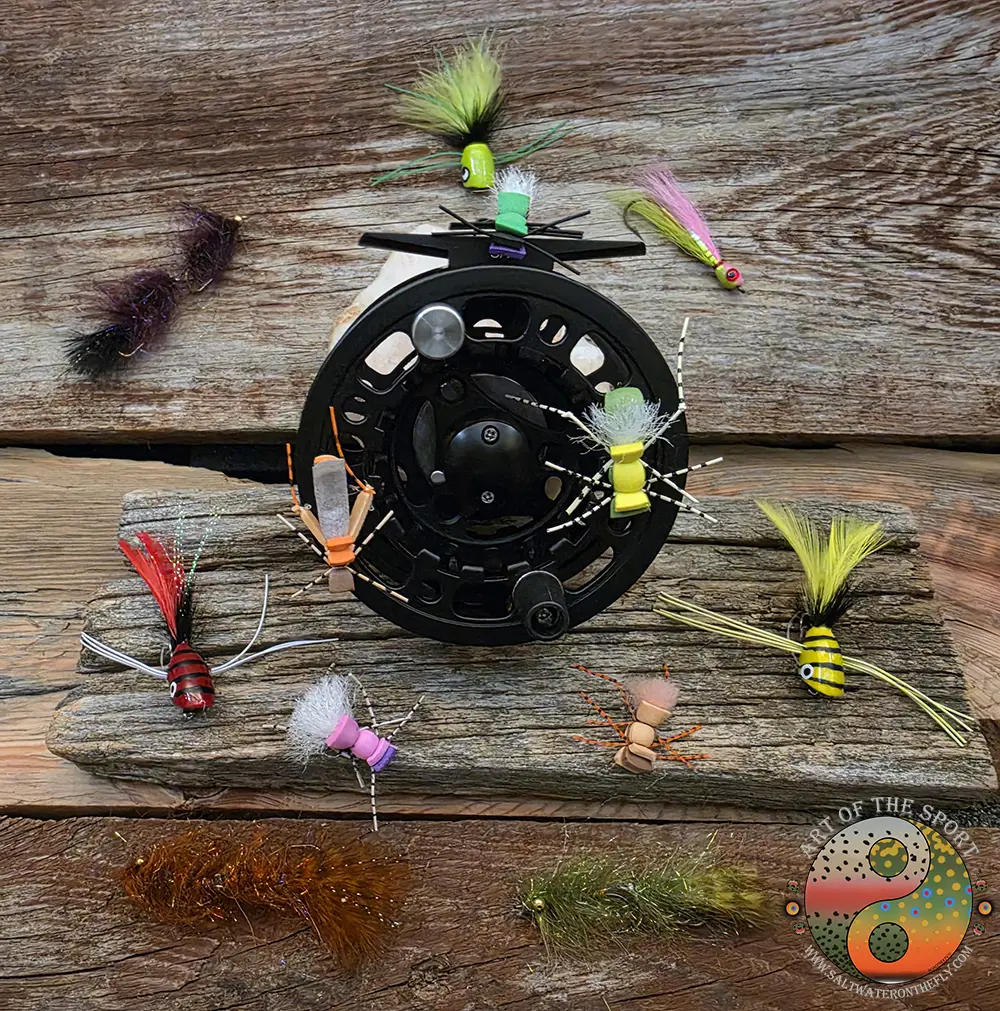
Cut two pairs of barred rubber legs — brown barring on tan or orange base is the classic Kaufmann color. Using figure-eight wraps, tie one pair of legs on each side of the hook at the front of the abdomen. Each leg should extend approximately one hook-gap length beyond the body on each side, splaying slightly downward and outward. These legs are the heartbeat of the fly in moving water — every micro-current variation moves them and the fish respond to that movement the way they respond to nothing else at depth.
Step 7 — Wingcase
Cut a strip of dark turkey tail feather or black Thin Skin, approximately the width of the hook gap. Tie it in flat on top of the hook directly behind the bead, pointing rearward over the abdomen. Do not fold it forward yet — it will be folded over the thorax in Step 9.
Step 8 — Thorax
Dub a full, slightly rough thorax of dark brown or black SLF or Haretron dubbing between the wingcase tie-in point and the bead. The thorax should be distinctly fuller than the abdomen — it represents the swollen thorax section of a mature stonefly nymph in the pre-hatch migration period. Two to three full turns of well-loaded dubbing.
Step 9 — Fold Wingcase
Pull the turkey tail or Thin Skin strip forward over the thorax and tie off directly behind the bead. The wingcase should lie flat and smooth over the top of the thorax. Trim the excess flush. A drop of UV resin or head cement over the wingcase adds durability and a slight sheen that catches light at depth.
Step 10 — Head and Finish
Build a small, clean thread head behind the bead. Whip finish twice. Hard head cement on all thread wraps.
Tying Notes
Carry in sizes 4, 6, and 8. The size 4 is for the deepest, fastest runs on the Green and South Fork Boise where the fish are holding beyond the reach of smaller flies. The size 6 covers most situations. The size 8 is for lower, clearer water and more selective fish.
Fish this nymph under an indicator set at one and a half times the water depth, with enough split shot above the fly to keep it ticking along the bottom on a natural drift. On the Green River in wind and high water, that means more shot than feels right and a longer indicator set than you’re used to. Trust the weight. The fish are on the bottom and the fly needs to meet them there.
How to Tie the Chubby Chernobyl
Reason This Fly Exists
The Chubby Chernobyl exists because tailwater trout on technical rivers eventually refuse everything that sits on the surface the way a real insect does not — that is, everything that floats too perfectly, rides too high, and doesn’t create the footprint of a large insect that has committed to the surface film and can’t escape it. The Chubby Chernobyl is a foam-bodied attractor dry fly that sits low, floats forever, and casts a silhouette that triggers aggressive takes from brown and rainbow trout on the Green River, the South Fork Boise, and every other western tailwater where fish have developed strong opinions about everything except large, struggling surface insects.
It is also the most effective hopper-dropper indicator in the western fly fishing arsenal. A size 8 Chubby Chernobyl supporting a size 16 Pheasant Tail or a size 18 RS2 is a two-fly system that produces on the Green River from June through September — the dry fly as indicator, the nymph as producer, and the occasional take on the surface fly as the reminder that you are never actually sure which one the fish wants.
On the South Fork Boise during the salmonfly and golden stone hatch, the Chubby Chernobyl fished alone as a large stonefly attractor produces the kind of aggressive surface takes from big browns that justify every hour of the drive to Anderson Ranch Dam.
Hook & Materials
| Component | Material |
|---|---|
| Hook | Partridge or similar, size 6–12 |
| Thread | Semperfli 6/0 Classic, tan or orange |
| Underbody | Orange or tan closed-cell foam, 2mm, trimmed to shank width |
| Overbody | Orange or tan closed-cell foam, 2mm, tied over underbody |
| Body Hackle | Ewing Brown or tan dry fly hackle, palmered |
| Wing | White or orange Predator Fibers or poly yarn, divided |
| Legs | Barred rubber legs, two per side |
| Head | Foam pulled forward and tied down |
Foam note: The two-layer foam construction — underbody and overbody — is what makes the Chubby Chernobyl float indefinitely without dressing and sit low enough in the film to trigger takes from selective fish. Do not substitute craft foam for fly tying foam. Fly tying closed-cell foam is consistent in density and compresses and rebounds correctly. Craft foam is not.
Color variations:
- Salmonfly version: Orange foam, orange rubber legs, orange wing
- Golden stone version: Tan or yellow foam, brown rubber legs, white or yellow wing
- Hopper version: Tan or olive foam, tan rubber legs, white wing
Tying Instructions
Step 1 — Hook and Thread Base
Mount a Partridge size 8 in the vise. Tan or orange thread from eye to bend.
Step 2 — Underbody Foam
Cut a strip of 2mm closed-cell foam the width of the hook shank. Tie it in at the bend, binding it flat along the top of the shank. Wrap thread forward over the foam to the two-thirds mark, creating a segmented effect by binding the foam in three distinct sections. Do not overwrap — the foam should compress slightly but retain its shape.
Step 3 — Body Hackle
Tie in a Ewing brown or tan dry fly hackle by the tip at the tail end of the underbody foam. Palmer it forward through the foam segments in three to four turns. Tie off at the front of the underbody. Trim fibers below the hook shank.
Step 4 — Rubber Legs
Tie one pair of barred rubber legs on each side of the hook at the front of the underbody using figure-eight wraps. Legs should splay outward and slightly rearward — not straight down.
Step 5 — Wing
Cut a small bundle of white or orange EP Fibers or poly yarn. Tie in on top of the hook directly in front of the rubber legs. Divide into two equal posts using figure-eight wraps. The wing should stand roughly upright — it is primarily a visibility aid for the angler, not a silhouette feature for the fish.
Step 6 — Overbody Foam
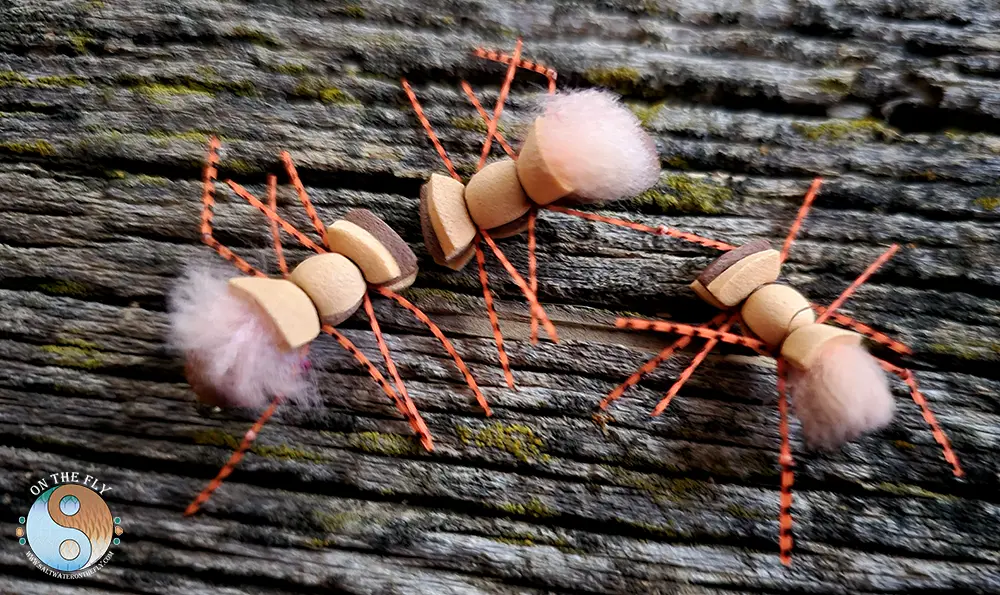
Cut a second strip of 2mm foam the same width as the underbody strip. Tie it in directly in front of the wing, pointing rearward over the body. Pull it forward over the wing tie-in and bind it down immediately in front of the wing posts, creating a distinct segmented body with the wing emerging from the foam joint. Then pull the foam forward again to the eye of the hook, bind it down, and trim to form the head. The foam head should extend slightly over the eye — this is what gives the Chubby Chernobyl its characteristic profile from below.
Step 7 — Head and Finish
Build a thread head behind the foam head. Whip finish twice. A drop of UV resin on the thread wraps at each foam binding point adds significant durability — the foam binding points are the first thing to fail on a hard-fished Chubby Chernobyl.
Tying Notes
Carry the Chubby Chernobyl in sizes 6, 8, and 10 in both orange and tan. The orange version covers salmonfly presentations on the South Fork Boise. The tan version fishes as a golden stone imitation and as a hopper-dropper indicator on the Green River. The size 10 is the late-season and fine-tippet version for pressured fish on low, clear water.
Fish the Chubby Chernobyl on 3X or 4X tippet as a standalone dry on the South Fork Boise during the stonefly hatch. Fish it on 4X with a 6X dropper of 18 to 24 inches for the hopper-dropper system on the Green River. The dropper tippet comes off the bend of the hook with an improved clinch knot.
How to Tie the Green River Tan Caddis
Reason This Fly Exists
The caddis hatch on the Green River is one of its most consistent and productive surface events, running from June through September across multiple species and producing the kind of steady, reliable dry fly fishing that the stonefly hatch delivers in concentrated bursts. The Green River Tan Caddis — a simple, low-riding elk hair caddis variation in the tan and cream coloring specific to the Green’s dominant caddis species — is the pattern that serious Green River anglers carry in sizes 14 through 18 whenever the stonefly box isn’t the primary tool.
It belongs in this article because it fishes the same water as the Rubberlegs nymph and the Chubby Chernobyl, targets the same fish, and extends the dry fly season on the Green well past the stonefly window into the consistent caddis hatches of late summer. A complete Green River box is not complete without it.
Hook & Materials
| Component | Material |
|---|---|
| Hook | Partridge, size 14–18 |
| Thread | Semperfli 6/0 Classic, tan |
| Body | Tan or cream Antron dubbing |
| Hackle | Light ginger or tan dry fly hackle |
| Wing | Light natural elk hair or bleached elk hair, tent-style |
| Head | Tan thread |
Tying Instructions
Step 1 — Hook and Thread Base
Mount a Partridge size 16 in the vise. Tan UTC 70 thread from eye to bend. Compact, minimal thread base.
Step 2 — Body
Spin a moderate amount of tan or cream Antron dubbing on the thread. Wrap forward from the bend to the three-quarters mark in smooth, touching turns. The body should be slightly tapered — slightly thicker toward the front, thinner at the bend. Keep it slim. The Green River caddis are not bulky insects.
Step 3 — Hackle
Tie in a light ginger or tan dry fly hackle directly in front of the body. Take three to four turns forward, tie off, trim. Sweep fibers rearward and hold with thread pressure. On a size 16 hook, three turns is often correct — four can crowd the wing tie-in.
Step 4 — Wing
Cut and stack a sparse clump of light natural or bleached elk hair. Tips must be perfectly even. The wing is tied tent-style over the body — slightly forward of horizontal, not completely flat and not upright. Length: equal to the body plus a small amount beyond the bend. Tie in directly in front of the hackle with firm pinch wraps. The wing should sit on top of the fly like a tent, angled forward slightly. Trim butts at a taper, cover with thread.
Step 5 — Head and Finish
Small, clean tan thread head. Whip finish twice. Thin head cement only — thick lacquer runs on a size 16 hook.
Tying Notes
Carry in sizes 14, 16, and 18. The size 14 covers the early season caddis on the Green and the golden stone caddis that fish alongside the stonefly hatch in June. The size 16 is the year-round workhorse. The size 18 is for clear, low late-season water and fish feeding selectively on the smaller species.
Fish the Green River Tan Caddis on a 9-foot leader, 5X tippet for the 16 and 18 sizes. The Green is low and clear in July and the fish can see everything. Dead drift first, then try a slight skitter at the end of the drift — the caddis adult skitters on the surface before taking flight and the fish know it. A drag-free drift that transitions into a controlled skitter is the most complete presentation on this river.
Reading Tailwater Stonefly Fishing
Tailwater fish are not the same fish as freestone fish and they should not be approached the same way. Here is the practical distinction:
Freestone fish — Madison, Gallatin, Rock Creek — see variable flows, variable temperatures, and variable food sources. They are opportunistic feeders that respond aggressively to large, well-presented dry flies and nymphs because the feeding windows are real and the competition for food is constant.
Tailwater fish — Green River, South Fork Boise — live in cold, stable, food-rich water year-round. They are well-fed, educated, and under no particular urgency to eat anything. They have learned that most of what drifts over them is not food. The ones that haven’t learned that lesson are not the ones you’re fishing to — the river selects for caution over generations and the fish that remain are the ones that survived by being careful.
What this means practically: longer leaders, finer tippet, cleaner drifts, and more patience than any freestone river requires. On the Green River a 12-foot leader with 6X tippet is not excessive for a size 18 caddis to selective risers. On the South Fork Boise during low, clear summer conditions, a bad drift on 4X tippet to a brown trout in a flat pool will move that fish off the feeding lie before you’ve finished watching the fly drag. These fish punish haste and reward precision.
The nymph is the consistent producer on both rivers. The dry fly is the reward.
What’s Next in the Series
Montana’s Classic Stonefly Bench has now covered the foundational stonefly patterns from the Bitterroot to Utah and Idaho, with each article building on the tying tradition established in Article 1 on Pat Barnes’ bench in West Yellowstone. The series has not run out of water.
Article 6 moves into Wyoming — the North Platte, the Snake River, and the high-country freestone streams of the Absaroka and Wind River ranges where the stonefly season runs short, the fish run large, and the patterns are built for altitude and attitude.
The bench keeps going. So does the hatch.
← Article 4: The Deschutes & Rogue — Oregon’s Stonefly Rivers Article 6: Wyoming’s Stonefly Water — →
Montana’s Classic Stonefly Bench is an ongoing series covering the foundational western stonefly patterns from the tiers who built them.