How to Tie the Fl. Sasquatch Olive Bush Fur Leech
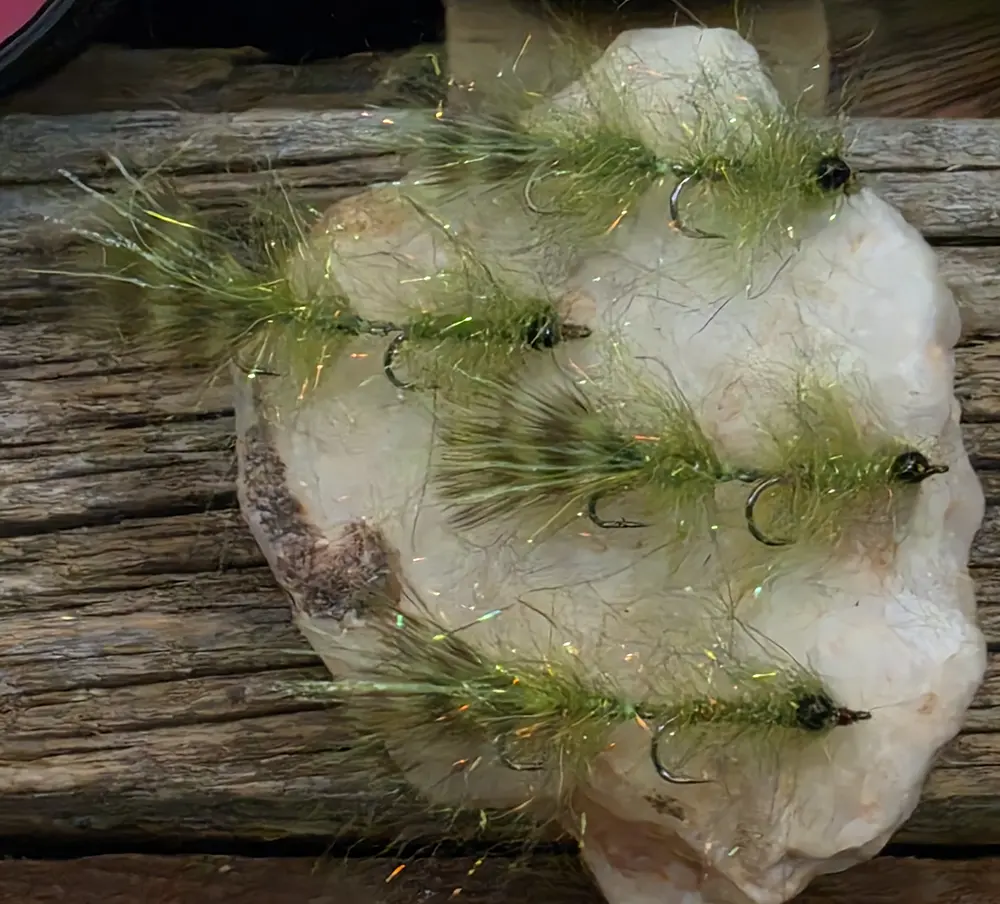
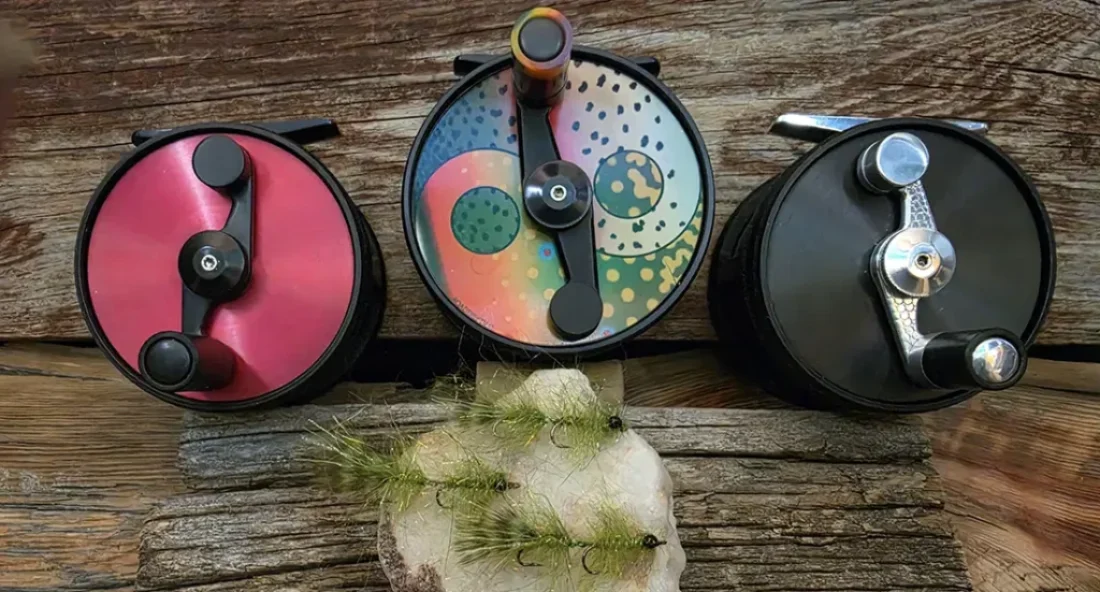
Articulated chartreuse streamer — tied with a hand-spun wire dubbing brush for maximum movement and durability
Why a wire dubbing brush?
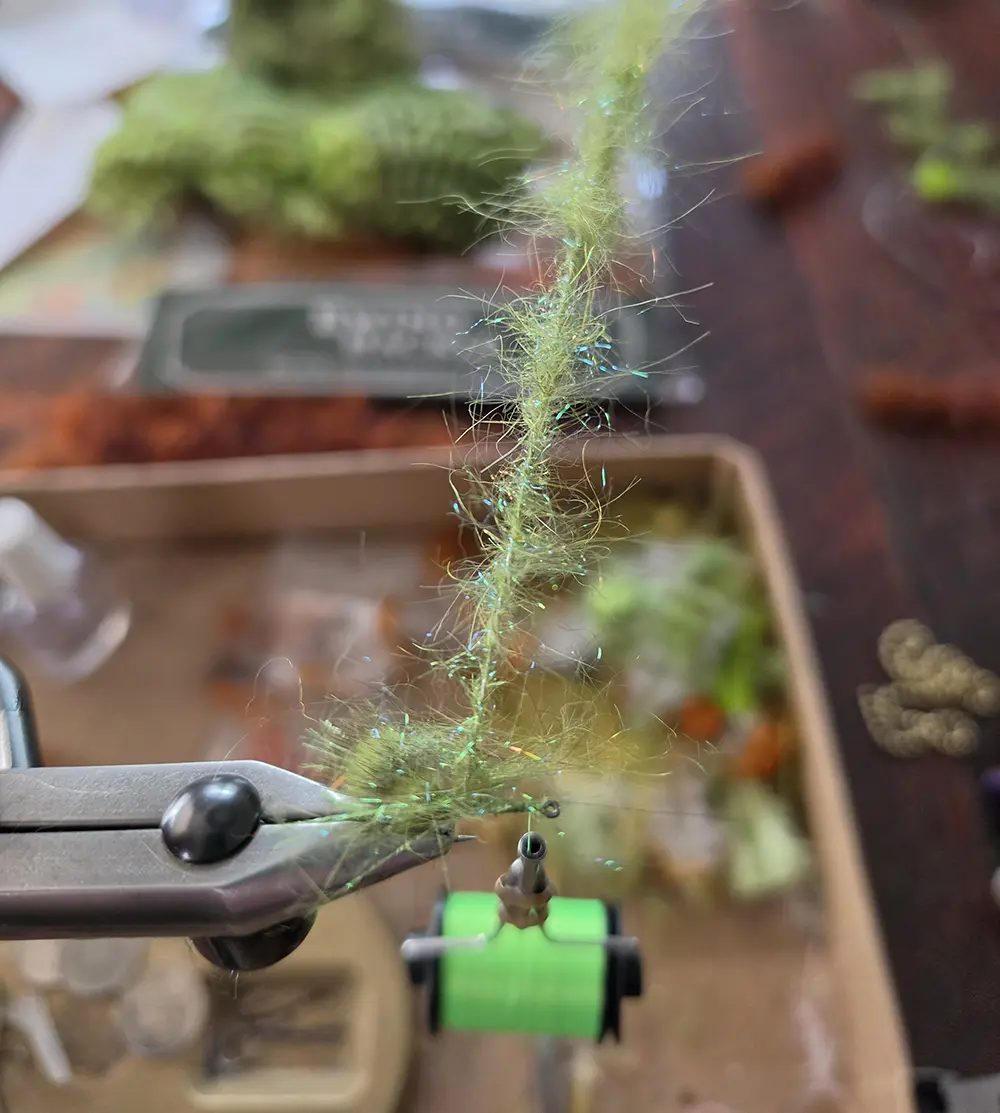
Most tiers dub Fl. Sasquatch Olive Bush Fur directly onto waxed thread. This works — but spinning it into a wire dubbing brush first changes everything. The brush locks the fibers into a tight, evenly distributed rope that wraps faster, builds more consistent body segments, and produces a finished fly that holds its profile cast after cast. The wire core also gives the body a slight stiffness between the articulation points that improves swimming action without killing the breathability of the fur. It’s a 5-minute extra step that pays off every time the fly hits the water.
Table of Contents
Materials List for Fl. Sasquatch bush fur leech
Hook
Partridge, #1–#10
Thread
Semperfli Aught
Body
Fl. Sasquatch Bush Fur
Flash
Semperfli Chartreuse Krinkle Flash
Tail / Collar
Green Chartreuse Ewing Chickabou
Brush Wire
Fine wire, .010–.012
Junction
Articulation wire or mono loop
Head finish
UV resin or head cement
Tools
Rotary vise, bodkin, whip finisher, dubbing twister
Tying Instructions
-
1
Build the rear hook / trailing section
Mount your rear Partridge hook in the vise. Start your Semperfli six aught classic waxed thread at the mid-shank and lay a smooth, tight thread base back to just above the barb. Keep wraps close — aught thread is thin and you want zero bulk at the foundation. Lock with a half-hitch before moving forward.
Pro Tip
Semperfli aught thread has almost no diameter. Keep your bobbin tension consistent — this thread cuts through materials fast if you let your wraps ride too hard.
-
2
Tie in the Ewing Chickabou tail
Select 1-2 plumes of Green Chartreuse Ewing Chickabou. Strip the base fibers and measure the tail to roughly 1.5x hook gap in length. Tie in by the stripped stems at the bend with tight thread wraps, securing the marabou-like fibers so they flow back cleanly off the hook. The Chickabou breathes on every micro-movement — don’t overly compress the stems at tie-in or you’ll kill that action. The Marabou Body makes a great collar if your fishing conditions call for one.
Pro Tip
Wet your fingers before handling Chickabou. It helps you stack the fibers neatly before tying in, and a wet plume is easier to control under thread pressure.
-
3
Add the Krinkle Flash
Cut 4–6 strands of Semperfli Fl. Green Krinkle Flash, fold them at the midpoint, and tie them in on top of and flanking the Chickabou tail. Trim so the flash extends slightly beyond the tail — not short of it, not far past it. The crinkled texture scatters light differently than flat flash; don’t over-tie it or you’ll bury the effect.
-
4
Dub the rear body with Fl. Sasquatch Olive Bush Fur
Wax your thread lightly and apply a thin, tapered rope of Fl. Sasquatch Olive Bush Fur. The material is spiky and fibrous — keep the rope sparse. Wrap forward in tight, overlapping turns to the mid-shank, building a segmented body that breathes without bulk. Use a velcro loop or bodkin to pick out trapped fibers after each wrap, keeping the profile alive and mobile. Whip finish and cut thread.
Pro Tip
Less dubbing than you think. Fl. Sasquatch Bush Fur expands in water — what looks sparse on the vise becomes a full, pulsing body in the current.
-
5
Build the articulation connection
Create a loop of articulation wire or heavy mono and attach it to the eye of the rear hook. The loop should be long enough to allow free swing but short enough to prevent foul-hooking on the front shank. Crimp or tie a knot to secure, then apply a drop of UV resin over the connection for durability. This hinge is the mechanical heart of the fly — take your time here.
-
6
Mount the front hook and connect
Mount your front Partridge hook in the vise. Thread the articulation loop through the eye and secure it at the rear of the front hook shank with tight thread wraps. Build a smooth ramp over the connection point — this prevents thread fraying and keeps the fly swimming straight. Confirm the rear hook hangs freely before proceeding.
-
7
Dub the front body
Continue with the dubbing brush forward Fl. Sasquatch Bush Fur body on the front shank, matching the rear body taper. The front section should be slightly fuller than the rear to give the fly a natural head-heavy swim. Advance the dubbing to within 3–4mm of the eye, leaving room for the collar and head. Pick out fibers thoroughly — this section drives the majority of the fly’s breathing movement.
-
8
Tie the Chickabou collar
Select 2–3 fresh Ewing Chickabou plumes. Tie in by the stem just behind the eye and wrap forward 2–3 turns, sweeping fibers back with each wrap. The collar should flare slightly, framing the head and blending into the body dubbing. Secure and advance thread to the eye.
Pro Tip
Stroke the fibers back with your left hand between each wrap. This keeps the collar swept rearward rather than splayed randomly, giving the head a cleaner finish.
-
9
Finish the head and cement
Build a small, smooth thread head with 6–8 tight wraps. Whip finish twice and trim the thread. Apply a thin coat of UV resin or head cement to the thread head — rotate the fly slowly under a UV light for a full cure. This locks down the thread wraps and adds a slight sheen that complements the Krinkle Flash on the strip.
Step by Step Images for Tying a Fl. Sasquatch Olive Bush Fur Leech
-
- Tied in Fl. Sasquatch Bush Fur Brush
-
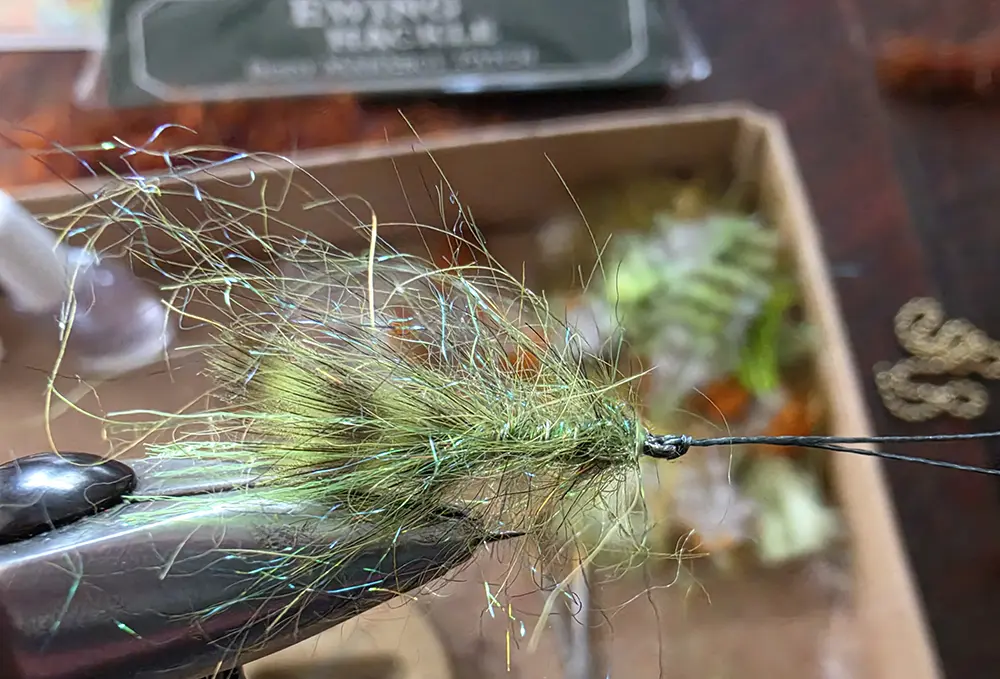
- Finish Trailer of Fl. Sasquatch Bush Fur Leech.
-
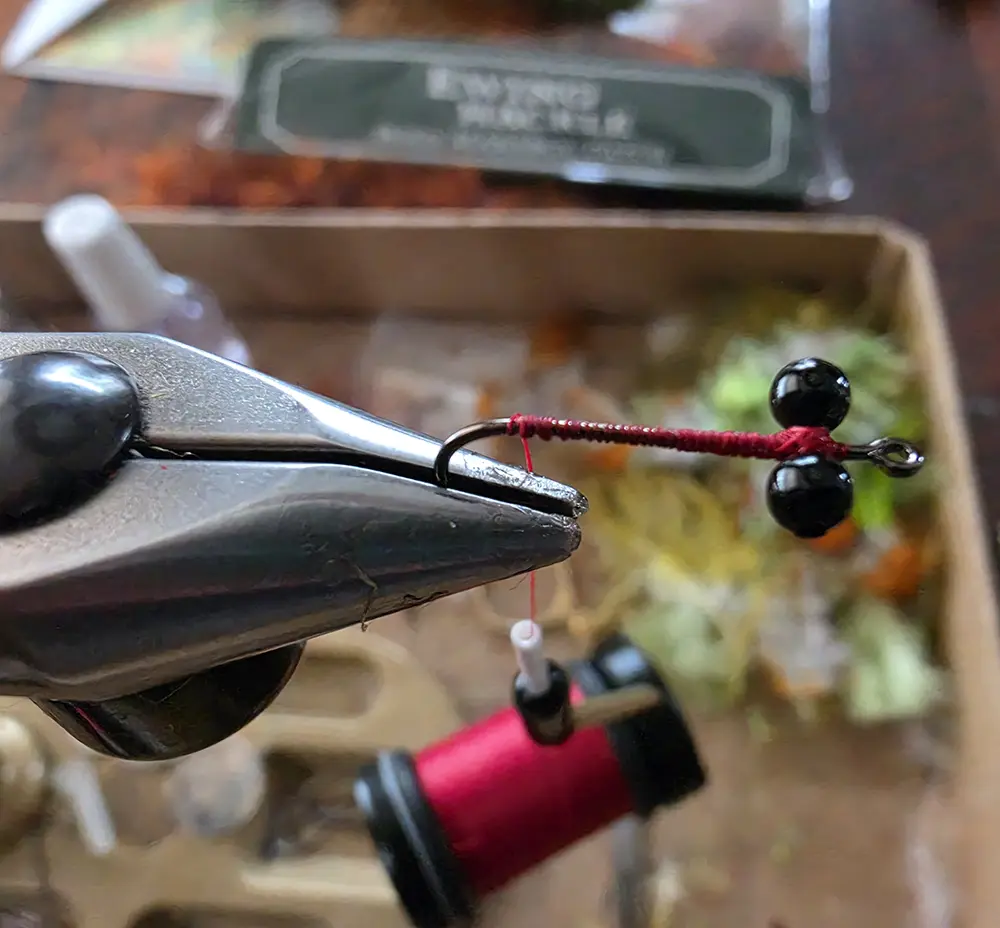
- Eyes Tied On
-
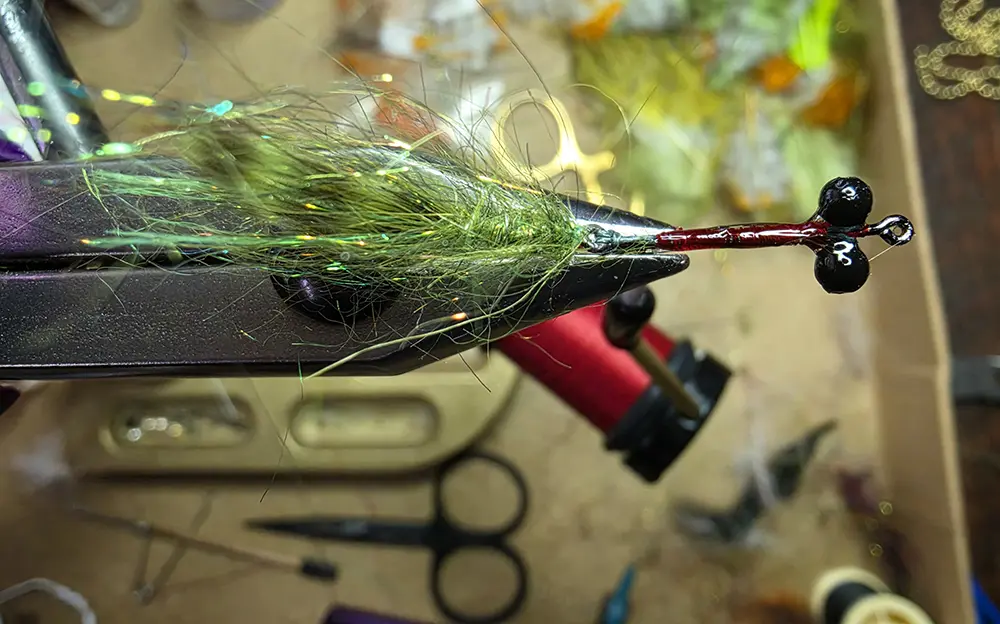
- Articulated Trailer Attached on a Fl. Sasquatch Olive Bush Fur Leech.
Pattern Variations
Black / Purple
Swap chartreuse materials for black Sasquatch fur and purple Chickabou. Night fishing and low-light conditions. Deadly on bass and snook.
Olive / White
Olive bush fur body with white Chickabou collar. Mimics juvenile baitfish in clearer water — strong redfish and sea trout pattern.
All-White
Full white build with pearl Krinkle Flash. Bright flats and high sun. Works wherever sand eels or bay anchovies are present.
Pink / Cerise
Pink bush fur, cerise flash, hot pink Chickabou. Tropical species and stained water. A tarpon favorite when they’re keyed on crabs or shrimp.
Hook Size Guide
#1–#2 Striped bass, redfish, pike, large snook — full saltwater build, heavy wire Partridge.
#4–#6 Sea-run trout, largemouth bass, smaller inshore species.
#8–#10 Trout in clear or low water — slim profile, reduce flash by 50%.
Don’t want to tie your own? We tie the Fl. Sasquatch Bush Fur Leech to order in all hook sizes. Order the finished fly →