Montana’s Classic Stonefly Bench: Wyoming — Lost, Found, and Catching Cutthroat
Series: Montana’s Classic Stonefly Bench — Article 6
Wyoming doesn’t care about your schedule.
This is the first thing you need to understand about fishing Wyoming. You will make plans. Wyoming will make different plans. You will study maps, book accommodations, research hatches, and drive twelve hours through sagebrush convinced you know exactly what you’re doing. Then Wyoming will hand you a dirt road that wasn’t on the map, a small creek that wasn’t in any article, and a cutthroat trout that hasn’t been asked a difficult question since the Eisenhower administration, and you will catch so many fish on a size 10 Yellow Humpy that you will forget what you originally drove twelve hours to do.
This happened to me more than once. I am not complaining.
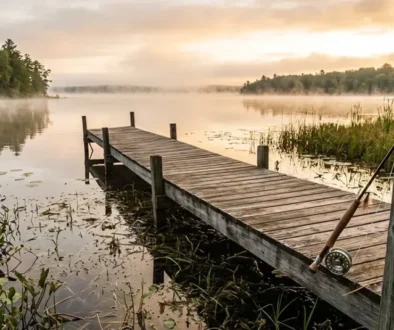
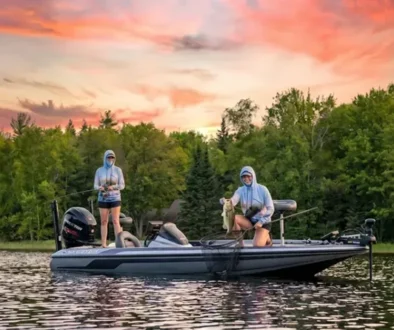
I have spent days on the Snake River with a fly rod in one hand and a DSL camera in the other, floating through Grand Teton scenery so aggressively beautiful that it constitutes a hazard to drift boat operations. The fine-spotted cutthroat of the upper Snake are not complicated fish. They live in one of the most spectacular river corridors in North America, they eat large dry flies with an enthusiasm that border on reckless, and they reward any angler willing to put down the camera long enough to make a cast. I put down the camera. I made the cast. I should have done it sooner.
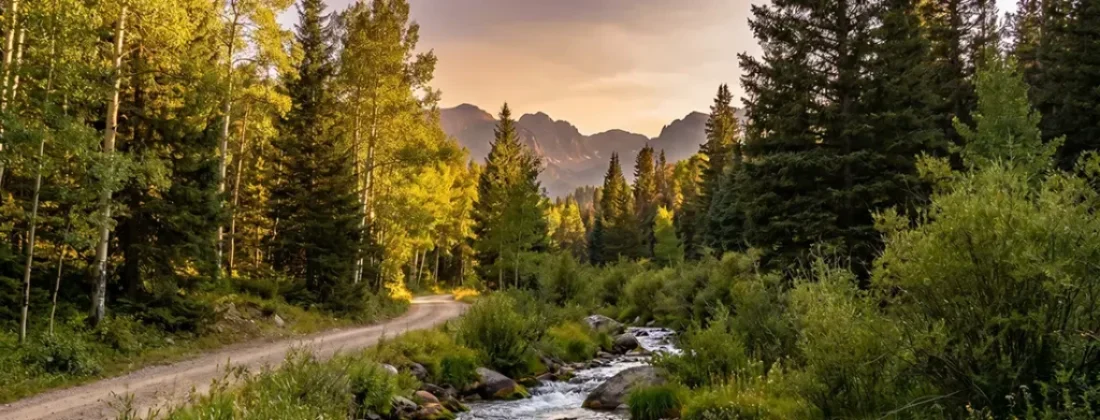
I have also wandered Wyoming backroads on trips where getting lost wasn’t a navigational failure — it was the plan. Small streams along vacant two-tracks that don’t appear on most maps. Creeks that tumble out of the Absaroka and the Wind River ranges cold and fast and full of cutthroat that have never had a philosophical debate about whether a size 12 Royal Wulff accurately imitates a salmonfly nymph. It does not. They eat it anyway. This is Wyoming’s gift to the fly fisher who has spent too much time reading about selectivity.
The North Platte — specifically the Miracle Mile below Kortes Dam and the Grey Reef section near Casper — is something else entirely. Up to 7,000 trout per mile in some sections. Brown and rainbow trout in the 14 to 20 inch range with genuine 30-inch fish present for the angler willing to face the Wyoming wind without whimpering. The stonefly hatch runs mid-May through mid-June, the Green Drake and caddis follow, and the North Platte will test every skill you developed on the tailwaters of Articles 4 and 5 and then ask if you have anything else.
This is Article 6 of Montana’s Classic Stonefly Bench. Wyoming doesn’t do anything quietly and neither will this article.
Table of Contents
Three Wyoming’s, Three Fly Boxes
Wyoming is a large state and it fishes like several different states depending on where you point the truck. Understanding which Wyoming you’re fishing determines everything about pattern selection, leader length, presentation approach, and how much wind you’re willing to tolerate before you declare the day a spiritual experience rather than a fishing trip.
The Snake River Wyoming:
Jackson Hole to the Idaho border — is big-bug country. The Snake River fine-spotted cutthroat is the native trout of this drainage and it has been eating large stoneflies, hoppers, and attractor dries since long before anyone thought to write a series about it. The salmonfly hatch arrives in early June and the river fishes best from a drift boat through the braided channels between the Tetons and the Snake River Range. Wading access exists but the Snake is a big, fast river with unstable gravel bars that move when you’re standing on them. A drift boat is not a luxury here — it is the correct tool for covering the water.
Wyoming backroad small streams:
the tributaries and headwater creeks of the Absaroka, the Wind Rivers, the Bighorns — are the antidote to everything else in this series. No crowds. No boat traffic. No fish that have been educating themselves on elk hair diameter for two weeks. Small rods, attractor dries, cutthroat that eat when they’re hungry and hide when they’re not and follow no other predictable schedule. These streams reward wandering. They punish the angler who arrives with a rigid plan. Pack light, bring a map you’re willing to ignore, and fish upstream.
The North Platte:
Miracle Mile, Grey Reef, the Saratoga stretch — is a destination fishery disguised as a remote Wyoming drive. Up to 7,000 trout per mile is not a number that requires interpretation. The stonefly hatch from mid-May through mid-June, combined with the Green Drake emergence that follows, produces what regulars describe as the best consecutive weeks of dry fly fishing in southern Wyoming. The Miracle Mile is more remote than it sounds — the access road is unpaved and in spring conditions it will test your vehicle’s ground clearance and your commitment to being there. Go anyway.
The Wyoming Stonefly Calendar
| Hatch | Water | Timing | Size |
|---|---|---|---|
| Skwala | Snake River | March–April | 8–12 |
| Salmonfly | Snake River | Early–mid June | 2–6 |
| Salmonfly | North Platte (Miracle Mile) | Mid-May–mid-June | 4–8 |
| Golden Stonefly | Snake River, North Platte | June–July | 6–10 |
| Little Yellow Stone | All Wyoming water | June–August | 12–16 |
| High Country Stonefly | Small mountain streams | July–August | 8–14 |
Wyoming wind advisory:
Every row in the table above comes with an asterisk that reads if the wind isn’t blowing. Wyoming wind is not a weather condition — it is a character in the story. A 30-mph headwind on the North Platte during the salmonfly hatch is not unusual. It is Tuesday. Shorten your leader, load your rod deeper, and aim three feet to the left of where you want the fly to go. The fish are still there. They are used to the wind. You will get used to it too.
How to Tie the Yellow Humpy
Reason This Fly Exists
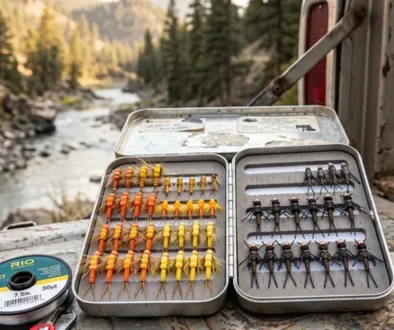
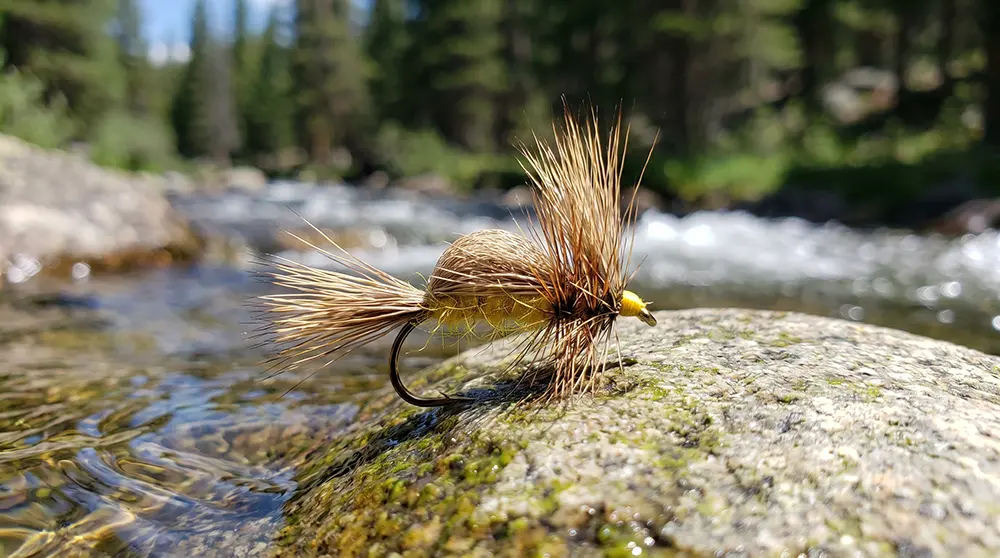
The Humpy is Wyoming’s fly. Not Montana’s, not Oregon’s — Wyoming’s. It was developed specifically for the fast, pocket water of high-country western streams where elk hair floatability, large profile, and near-indestructibility matter more than precise imitation. The Yellow Humpy, in particular, matches the golden stonefly, the little yellow stone, and every other large pale insect that tumbles off bankside vegetation into fast mountain water — and when nothing specific is hatching it functions as the greatest attractor dry fly ever tied, which means it functions most of the time.
Pat McManus would have fished the Yellow Humpy. He would have fished it badly, caught fish anyway, and written something funny about it. The cutthroat in Wyoming’s small streams make this possible for everyone. Thou it’s grandfather the Goofus Bug fooled many trout in it’s day. The Humpy adds that bit of bizazz in modern fly fishing times.
The construction — elk hair tail, elk hair hump over a dubbed body, elk hair wing, mixed hackle — sounds complicated until you’ve tied a dozen of them, after which it becomes the fastest confident fly on your bench. Tie thirty before the season. You will lose half of them in streamside willows and catch enough fish on the other half to make that ratio feel correct.
Hook & Materials
| Component | Material |
|---|---|
| Hook | Partridge or Mustad 94840, size 8–14 |
| Thread | Semperfli 6/0, yellow |
| Tail | Natural elk hair, stacked |
| Body | Yellow dubbing — or Antron, sparse |
| Hump | Natural elk hair, pulled forward over body |
| Wing | Natural elk hair, upright and divided |
| Hackle | Brown and grizzly, mixed, two hackles |
| Head | Yellow thread |
The Humpy principle:
The elk hair hump is both the fly’s most distinctive visual feature and its primary flotation mechanism. The hollow elk hair fibers trap air and the hump creates a bubble of buoyancy that keeps this fly riding high in whitewater that would drown any conventional dry fly. This is a fly engineered for punishment and it delivers on that promise.
Color variations:
- Yellow Humpy: Yellow body, natural elk hair hump and wing, mixed brown/grizzly hackle — matches golden stone and yellow sally, functions as general attractor
- Royal Humpy: Red floss body with peacock herl segments, natural elk hair — the high-country fly fisher’s Royal Wulff
- Orange Humpy: Orange dubbing, natural elk hair — salmonfly attractor on the Snake and North Platte
Tying Instructions
Step 1 — Hook and Thread Base
Mount a Partridge Hook size 10 in the vise. Yellow thread from eye to bend in a smooth, tight base. On a size 10 Humpy you have room to work — use it. A crowded Humpy is a poorly tied Humpy.
Step 2 — Tail
Stack a moderate clump of natural elk hair — tips perfectly aligned. Length equal to the hook shank. Tie in at the bend with progressive tension. The tail should splay slightly — the natural spread of properly stacked elk hair is correct for this pattern. Trim butts at a taper and cover with thread to the midpoint of the shank.
Step 3 — Elk Hair Hump — Tie In
Cut a clump of natural elk hair approximately twice the diameter of the tail clump. Stack until tips are even. Here is the critical step that separates a good Humpy from a bad one: tie this clump in at the midpoint of the shank with the tips pointing rearward over the tail. The hair should extend well beyond the bend of the hook. Bind it securely with five or six tight thread wraps at the midpoint, then advance the thread forward to the three-quarters mark. Do not trim this hair clump — it will be pulled forward to form the hump.
Step 4 — Body Dubbing
Spin a sparse amount of yellow dubbing on the thread. Wrap forward from the midpoint to the three-quarters mark in two or three touching turns. The dubbed body should be visible beneath the hump but not thick — the hump is the visual feature, not the body.
Step 5 — Pull the Hump Forward
Pull the elk hair clump forward over the dubbed body and bind it down at the three-quarters mark with four tight thread wraps. The elk hair should form a distinct rounded hump over the body — not flat, not angled, but arched. If the hump flattens, you used too little hair or bound it down too far rearward. Practice makes this step instinctive.
Step 6 — Wing
The tips of the elk hair clump that you just pulled forward should now be extending beyond the tie-down point toward the eye of the hook. These tips form the wing. Lift them upright with your thumbnail and take several tight thread wraps immediately in front of them to prop them vertical. Divide the wing into two equal sections using figure-eight wraps between the sections. The divided upright elk hair wing should stand at roughly 90 degrees to the hook shank. Trim any hair that is excessively long — the wing should be approximately equal to the shank length.
Step 7 — Hackle
Tie in one Ewing Hackle brown and one grizzly dry fly hackle together in front of the wing. Wind them forward together in three to four turns, interleaving the fibers. Tie off behind the eye, trim excess. The mixed brown and grizzly hackle is the Humpy’s visual secret — the barred grizzly provides contrast and movement that a solid brown hackle doesn’t.
Step 8 — Head and Finish
Small, clean yellow thread head. Whip finish twice. Hard head cement. This fly is going into fast water and taking abuse — a loosely finished head will unravel after three fish.
Field Tips for the Yellow Humpy
On Wyoming small streams:
Fish upstream, short casts, accurate placement tight to the bankside structure. The cutthroat are in the seams along the bank and in the foam lines at the head of each pool. A Humpy dropped accurately into a foam line will be taken or ignored within two seconds — if it’s ignored, pick up immediately and move upstream. Don’t wait out a dead drift in low-activity water on a small stream. Keep moving.
On the Snake River:
Use a size 8 or 10 Yellow Humpy as a hopper-dropper indicator with a size 14 or 16 nymph dropper during the summer terrestrial season. The Snake’s cutthroat feed aggressively along the bankside grasses where hoppers fall in, and a Humpy with a dropper covering the water column produces double the opportunity on every cast.
On the North Platte:
The Humpy in orange or yellow size 8 through 10 during the stonefly and caddis hatch. Fish it tight to the bank on the Miracle Mile where the fish are holding under overhanging structure. Short casts, accurate presentation, don’t line the fish you can see holding in the clear water. The North Platte in low summer conditions is transparent and the fish can see your leader before they see your fly if you’re careless.
How to Tie the Double Bead Peacock Stone Nymph
Why This Fly Exists
The North Platte deserves its own nymph and the Double Bead Peacock Stone is it. Up to 7,000 trout per mile in the Miracle Mile section means the competition for food is real and the fish are conditioned to intercept large, weighted stonefly nymphs tumbling along the bottom of a freestone river with the enthusiasm of a trout that has not had a slow day since spring runoff cleared.
The peacock herl body is the key. Peacock herl has an iridescent quality in moving water that no synthetic material accurately replicates — it catches light at different angles simultaneously and produces a lifelike sheen that fish across every western river recognize and eat. Two tungsten beads instead of one get the fly to the bottom of the Miracle Mile’s deep runs faster than any single-bead construction and keep it there through the drift. The name is an accurate description of the construction and a guarantee of the result.
Tie these in volume. The Miracle Mile’s rocks will take a percentage of them and the fish will earn the rest.
Hook & Materials
| Component | Material |
|---|---|
| Hook | Partridge hook or a hook of preference 3X long, size 6–10 |
| Thread | Semperfli, black |
| Bead | Two tungsten beads, black or gold, matched to hook size |
| Weight | Lead wire, 10–15 wraps behind beads |
| Tail | Dark brown goose biots, split |
| Abdomen | Peacock herl, 4–6 strands twisted together |
| Rib | Fine copper or gold wire |
| Legs | Brown barred rubber legs, one pair |
| Wingcase | Black Thin Skin or dark turkey tail |
| Thorax | Black or dark brown dubbing, rough |
| Head | Two tungsten beads |
Two bead note: Slide both beads onto the hook before mounting in the vise. Push them both to the eye. They sit stacked against each other and the hook eye — this is intentional and it works. The double bead creates both additional weight and a larger, more prominent head profile that triggers strikes in the same way any large, rounded stonefly nymph head does.
Peacock herl note: Peacock herl is fragile. Twist four to six strands together before wrapping — a twisted herl rope is dramatically more durable than a single strand and produces a fuller, more segmented abdomen. Add a drop of UV resin over the finished herl abdomen to lock everything in place and triple the fly’s fish-per-fly lifespan.
Tying Instructions
Step 1 — Beads and Hook
Slide two matched tungsten beads onto the Partridge hook and mount in the vise. The beads will sit stacked at the eye. Wrap 10 to 15 turns of lead wire directly behind the beads and push the lead coils snug against the rear bead. Start black thread behind the lead and build a smooth transition ramp.
Step 2 — Tail
Tie in two dark brown goose biots at the bend, one on each side, tips curving outward and slightly downward. Split biot tail, length one quarter of the shank. Bind each individually.
Step 3 — Ribbing Wire
Tie in fine copper or gold wire at the bend. Let it hang.
Step 4 — Peacock Herl Abdomen
Select four to six strands of peacock herl from a full eye feather — the strands with the densest, most iridescent fibers. Twist them together into a rope on the thread. Wrap the twisted herl rope forward in touching turns from the bend to the two-thirds mark. Each turn should be snug against the previous one — gaps in peacock herl are both ugly and structurally weak. Tie off and trim.
Step 5 — Rib
Counter-wrap the copper or gold wire forward through the herl abdomen in five evenly spaced turns. The counter-wrap locks the herl down and adds the metallic flash that makes this fly particularly effective in the colored water that the Miracle Mile sees during spring runoff. Tie off and trim.
Step 6 — Rubber Legs
Tie one pair of brown barred rubber legs on each side at the front of the abdomen using figure-eight wraps. Legs splay outward and slightly rearward.
Step 7 — Wingcase
Tie in a strip of black Thin Skin or dark turkey tail directly behind the beads, pointing rearward. Do not fold forward yet.
Step 8 — Thorax
Dub a full, rough thorax of black or dark brown dubbing between the wingcase and the rear bead. Rough, picked-out dubbing produces more leg-like fibers and more movement in the water than tightly spun smooth dubbing. Make it look like it was tied in the field.
Step 9 — Wingcase and Finish
Pull the Thin Skin or turkey tail strip forward over the thorax and tie off directly against the rear bead. Trim flush. Apply UV resin over the wingcase and the peacock herl abdomen — cure it with a UV light. The fly is now significantly more durable than the average stonefly nymph and will survive the Miracle Mile’s rocky bottom long enough to catch the fish it was tied for.
Whip finish behind the rear bead. Small thread head. Hard head cement.
Field Tips for the Double Bead Peacock Stone
Reading the Miracle Mile: The fish on the Miracle Mile hold in predictable lies — the front of each run where fast water transitions to slower, the seam between main current and slack water, the tailout of each pool where the gravel is visible and the nymphs concentrate before emergence. Fish these transitions systematically rather than covering water randomly. The Miracle Mile has enough fish per mile that random coverage still produces — but systematic coverage produces more.
Strike indicator depth: Set the indicator at one and a half times the water depth. The double bead fly sinks fast but the heavy current of the Miracle Mile needs the indicator set deeper than your instinct suggests. Recheck depth every time you move to a new run — the Miracle Mile varies significantly in depth between sections.
Wind adjustment: When the Wyoming wind is blowing hard enough to push your indicator upstream — and it will — switch to a tight-line nymphing setup with a weighted leader and no indicator. High-stick the Double Bead Stone through the runs with your rod tip following the fly downstream. You lose the indicator’s visual cue and gain direct contact with the fly, which in heavy wind is the better trade.
The dropper option: On calmer days fish the Double Bead Stone as the point fly with a size 16 Flashback Pheasant Tail or Hare’s Ear as a dropper 18 inches above it. The stonefly nymph goes to the bottom where the big fish are; the smaller nymph covers the mid-column where the rainbows feed. One rig, two zones, twice the information on every drift.
How to Tie the Snake River Salmonfly Special — Foam and Elk for Cutthroat
Reason This Fly Exists
The Snake River fine-spotted cutthroat is the most enthusiastic dry fly fish in Wyoming. This is not a controversial statement — it is the experience of everyone who has floated the upper Snake in June during the salmonfly hatch with a size 4 orange dry fly and a willingness to cast tight to the bank. These fish do not require a perfect presentation. They require a large orange fly that lands in the right zip code and doesn’t drag immediately. The rest is gravity.
The Snake River Salmonfly Special is the Deschutes Canyon Stone from Article 4 tied specifically for the Snake’s braided channel structure — the same foam underbody, the same rubber legs, the same flat downwing. What changes is the fishing context. On the Deschutes you’re covering canyon water from a drift boat with precise casts to specific holding lies. On the Snake you’re threading channels through the Tetons with a camera around your neck and a cutthroat rising every thirty feet along the willow-lined banks. The fly is the same. The scenery is considerably better.
Hook & Materials
Tie this pattern using the identical materials and construction as the Deschutes Canyon Stone detailed in Article 4. The recipe is unchanged:
| Component | Material |
|---|---|
| Hook | Partridge Hook, size 4–6 |
| Thread | Semperfli Classic, orange |
| Tail | Dark moose body hair |
| Underbody | Orange closed-cell foam |
| Abdomen | Orange Antron dubbing over foam |
| Abdomen Hackle | Dark brown saddle, palmered |
| Rubber Legs | Brown barred rubber legs, two pairs |
| Wing | Natural elk hair, flat and low |
| Thorax | Orange dubbing |
| Head Hackle | Ewing Brown dry fly hackle |
For the complete tying sequence, refer to Article 4: The Deschutes and the Rogue. The construction is identical — what follows here is everything that changes when this fly goes from the Deschutes to the Snake.
Snake River-Specific Field Notes
Float fishing the braided channels: The Snake’s upper section braids into multiple channels through the cottonwood and willow flats between Wilson and the Buffalo Entrance to Grand Teton. The fish hold tight to the willow banks where salmonflies and hoppers drop in throughout the summer. Your job in the drift boat is to put the fly within twelve inches of the bank and keep it there for three seconds. If the cutthroat wants it — and it usually does — the take comes before the fly has traveled a boat length.
The camera problem: There will be moments on the Snake when you cannot decide whether to fish or photograph because the scenery is doing something unreasonable with the light and the mountains and the river simultaneously. The correct answer is to fish first and photograph after. The mountains will still be there. The rise form disappears in four seconds.
Double the drift, double the fish: On the Snake during the salmonfly hatch, fish two patterns in tandem — a size 4 Salmonfly Special as the lead fly and a size 8 Yellow Humpy or Golden Stimulator trailing 18 inches behind on a tippet off the bend. The cutthroat that refuses the large pattern often eats the smaller one. Two flies covers the possibility that the fish has formed an opinion about size without having to change the leader between runs.
Small stream Wyoming: When you’re wandering the backroads and you find a small creek coming off a mountain you didn’t plan to stop at — stop. Tie on a size 10 or 12 Yellow Humpy and fish upstream through every piece of structure that looks like it could hold a cutthroat. Fish are where you find them in Wyoming and you find them in places that don’t appear on hatch charts or in fishing reports. Take your time. You are already lost. This is not a problem. This is Wyoming doing you a favor.
Wyoming Fishing: The Ten Things Nobody Puts in the Guidebook
Because Wyoming earns it and this series has earned the right to say what needs saying.
1. The wind is not going away. It is a permanent feature of southern and central Wyoming. A 7-weight is not excessive on the North Platte when the wind is blowing, which is most of the time. Pack accordingly.
2. The Miracle Mile access road is not a joke. Check conditions before you drive it in spring. A stuck truck is a long walk from cell service and a longer conversation with a tow truck driver who has heard every version of your story.
3. The cutthroat on the Snake are more willing than you think. Anglers routinely overthink presentation on a river where the fish haven’t developed the same doctoral-level opinions as Henry’s Fork rainbows. Fish the bank. Fish it accurately. Repeat.
4. Small streams reward small rods. A 3-weight and a box of Yellow Humpies will catch more fish on Wyoming backroad creeks than a 5-weight with a full selection of technically correct patterns. The fish don’t know the difference and the 3-weight is more fun.
5. Grey Reef fishes differently than the Miracle Mile. Grey Reef is a tailwater fishery near Casper — colder, clearer, more selective fish on midges and PMDs. The stonefly patterns that work on the Miracle Mile need to be supplemented with smaller midge and mayfly patterns at Grey Reef. Carry both boxes.
6. Bear spray is not optional in certain drainages. The Snake River corridor, the Absaroka tributaries, the Buffalo Fork — these are active grizzly bear drainages. The bear spray is not for decoration. This is not alarmist. It is information.
7. The North Platte’s fish counts are real. 7,000 trout per mile sounds like marketing. It is not. The density of fish in the Miracle Mile section is the kind of thing that recalibrates your understanding of what a trout stream can produce. Go see it.
8. The Green Drake hatch on the North Platte follows the stonefly hatch. If you’re there for the salmonflies in late May through mid-June, stay for the Green Drakes. The combination of both hatches in sequence is what serious North Platte regulars plan their season around.
9. Getting lost on Wyoming backroads is a feature, not a bug. The streams along the route from wherever you are to wherever you were going are frequently better than the destination. Bring extra water, extra food, and the willingness to not be where you planned.
10. The Tetons will make you a worse fisherman for about twenty minutes every morning. The light on those mountains at first light does something to a person’s ability to focus on casting. This passes. Fish anyway.
What’s Next in the Series
Montana’s Classic Stonefly Bench is not finished with the American West. Article 7 goes to the rivers that defined Colorado fly fishing — the South Platte, the Frying Pan, the Roaring Fork — and the stonefly patterns built for Front Range water that fishes differently than anything covered in the series so far.
Colorado has its own tying tradition, its own hatch calendar, and its own particularly educated trout. The series follows them there.
Shop Yellow Humpies, Double Bead Peacock Stone Nymphs, Ewing Hackle, and the full stonefly box at Saltwater on the Fly.
← Article 5: The Green River & South Fork Boise Article 7: Colorado — South Platte, Frying Pan & Roaring Fork — Coming Soon →
Montana’s Classic Stonefly Bench is an ongoing series covering the foundational western stonefly patterns from the tiers who built them.