Description
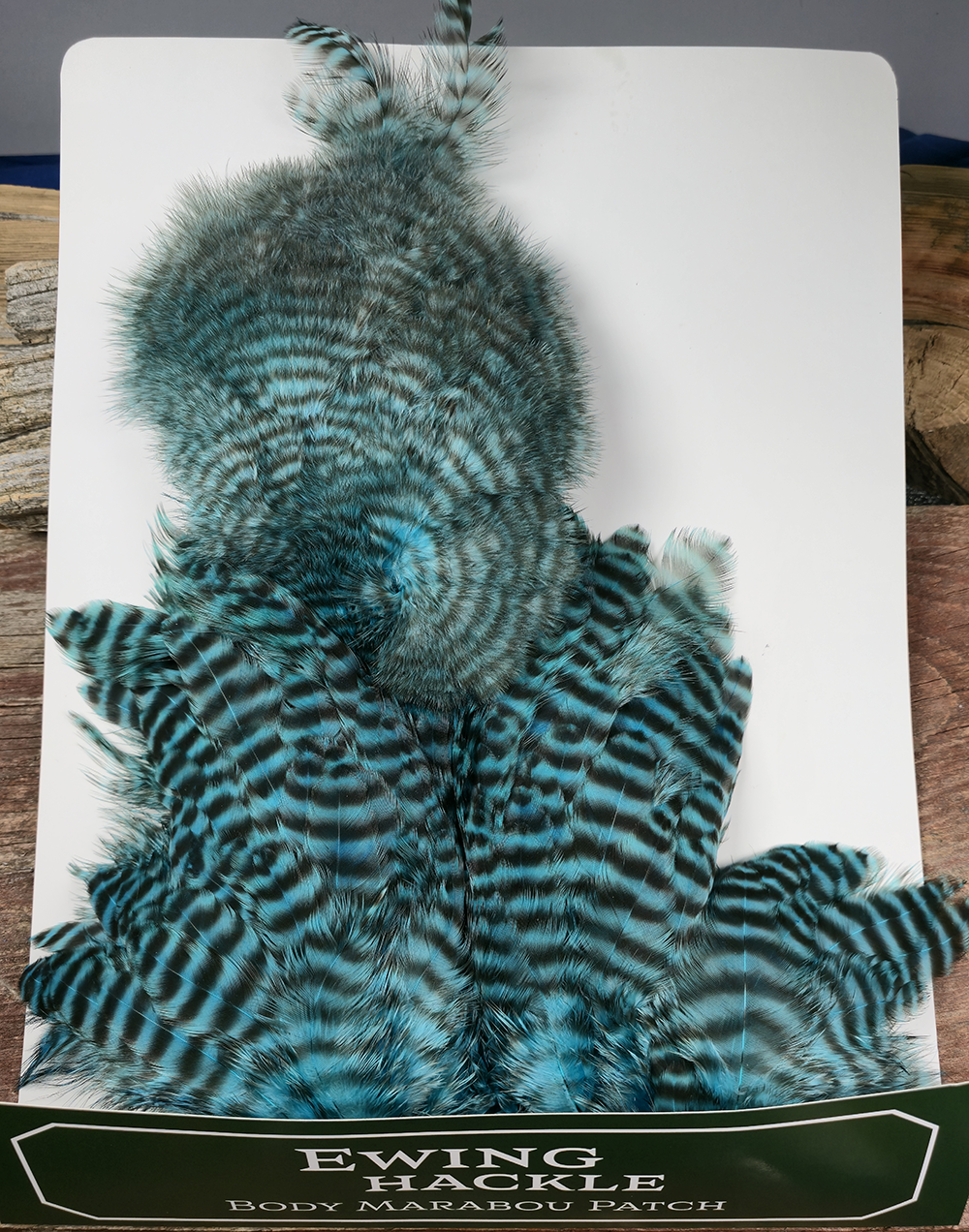
Silver Doctor Blue Grizzly Ewing Chickabou Marabou Body Patch
Royal Blue Grizzly is deep blue with dark bars, and it’s the closest thing in a feather to a bluegill’s flank. Bluegill have blue-tinged gill plates and dark vertical bars. Bass, pike and muskie eat bluegill all summer.
Royal Blue Grizzly Ewing Chickabou also works where bluegill don’t live: in South America, peacock bass tear up barred, colorful streamers, and blue grizzly is one of the best accents you can tie.
Bluegill, bass, pike, muskie and peacock bass.
Recipe 1: Royal Blue Grizzly Chickabou Bull Bluegill Bug
- Hook: Nymph or jig hook, #10–#12
- Bead: Small black or copper tungsten
- Thread: Black 8/0
- Tail: Royal Blue Grizzly Ewing Chickabou, short tuft
- Body: Peacock Ice Dub, thin
- Legs: 2 thin black-and-blue rubber legs per side
- Collar: One turn of royal blue grizzly chickabou
Tying: Small and buggy. Big bluegill are not dumb. The whole fly should be under an inch.
How to fish: Around bedding areas and weed edges in late spring, cast it under a small indicator or let it sink on a floating line. Twitch it slowly. Bull bluegill hit hard and fight harder for their size than almost anything that swims.
Recipe 2: Royal Blue Grizzly Chickabou Peacock Bass Streamer
- Hook: Saltwater 2/0–3/0, strong wire
- Thread: White 140-denier
- Tail: Yellow chickabou or saddles, with Royal Blue Grizzly Ewing Chickabou on top
- Body: Yellow-green Ice Dub, brushed out
- Bars: Royal blue grizzly chickabou tufts tied in at three points down the body
- Head: EP fiber or wool, with large 3D eyes
Tying: Peacock bass have three dark vertical bars and a lot of color. Tie in short chickabou tufts at three points along the body to make the bars.
How to fish: Peacock bass hit fast and hard near structure. Cast tight to fallen trees and rocks and strip fast and steady. Don’t pause long — they lose interest. Use a strong leader and a stiff rod.
Facebook post
Want to catch a big bass? Throw something that looks like a bluegill.
Bluegill are the most common prey for largemouth in a lot of lakes. They have blue-tinged gill plates and dark bars down their sides. Royal Blue Grizzly Ewing Chickabou has that blue and those bars.
But I also tie little bluegill bugs with it for the bull bluegill themselves. If you’ve read our Bull Bluegill on the Fly series, you know I’m a big fan. A 10-inch bull on a 4-weight is a blast.
And if you ever get to South America for peacock bass, this patch makes great bars on a streamer.
Get Royal Blue Grizzly Ewing Chickabou: https://saltwateronthefly.com/product/royal-blue-grizzly-chickabou-marabou-body-patch/
Bluegill fans — what’s your biggest? — Capt. Grumpy
Silver Doctor Blue Ewing Chickabou Marabou Body Patch
- SEO title: Silver Doctor Blue Chickabou Patch – Ewing Fly Tying | Saltwater on the Fly
- Meta description: Silver Doctor Blue Ewing Chickabou for salmon flies and American shad darts. The pale, classic blue from the Silver Doctor salmon fly.
- Product page: Silver Doctor Blue Chickabou
Product description
Silver Doctor Blue is the pale, bright blue from the throat of the Silver Doctor, one of the most famous Atlantic salmon flies ever tied. It’s lighter and softer than royal blue, with a cool, icy look.
Silver Doctor Blue Ewing Chickabou gives you that classic blue in a soft, easy-to-wrap feather. It’s perfect for salmon and steelhead collars, shad flies, and any baitfish pattern that needs a light blue back.
Atlantic salmon, steelhead, American shad, sea trout and bonito.
Recipe 1: Silver Doctor Blue Chickabou Salmon Fly
- Hook: Salmon or spey hook, #4–#6, or a 1-inch tube
- Thread: Red 8/0 (the classic red head)
- Tag: Fine oval silver tinsel and yellow floss
- Tail: Golden pheasant crest
- Body: Flat silver tinsel, ribbed with fine oval silver
- Hackle: Silver Doctor Blue Ewing Chickabou, 2 turns as a throat/collar
- Wing: Grey squirrel tail or mixed bucktail, sparse
Tying: A simplified “hairwing” Silver Doctor. Wrap the blue chickabou collar before the wing so it flares around the body. Finish with a red head.
How to fish: On bright days in clear water, swing it on a floating line or light sink-tip. Mend to slow the swing. Silver-bodied flies flash in the sun and work well for fresh-run salmon and steelhead.
Recipe 2: Silver Doctor Blue Chickabou Shad Fly
- Hook: Short-shank wet fly or jig hook, #6–#8
- Bead: Silver bead or small bead-chain eyes
- Thread: Red 6/0
- Tail: Silver Doctor Blue Ewing Chickabou, short tuft, plus 2 strands silver flash
- Body: Silver flat tinsel or Mylar
- Head: Red thread, built up
Tying: Shad flies are simple. Short tail, flashy body, red head. The blue chickabou adds the color that shad seem to love in clear water.
How to fish: During spring shad runs, swing it across the current on a sinking line. Shad hold in deep runs and below dams. Let the fly swing slowly near the bottom. When you hit a school, you’ll hook fish on every few casts.
Facebook post
Some colors have history. Silver Doctor Blue has a lot of it.
The Silver Doctor is one of the most famous Atlantic salmon flies ever tied. That pale, icy blue throat is one of the reasons it caught fish. This patch puts that classic blue in chickabou.
I tie it two ways. One is a simple hairwing Silver Doctor for steelhead and salmon on bright, clear days. Silver body, blue chickabou collar, red head.
The other is a shad fly. When American shad run up East Coast rivers in spring, they hit little blue-and-silver flies swung through deep runs. It’s some of the most fun fishing nobody talks about.
Get Silver Doctor Blue Ewing Chickabou: https://saltwateronthefly.com/product/silver-doctor-blue-chickabou-body-marabou-patch/
Anybody else a shad fan? — Capt. Grumpy
Silver Doctor Blue Grizzly Ewing Chickabou Marabou Body Patch
- SEO title: Silver Doctor Blue Grizzly Chickabou – Ewing Fly Tying | Saltwater on the Fly
- Meta description: Barred Silver Doctor Blue Grizzly Ewing Chickabou for shiner streamers and sardine Clousers. Pale blue barring for smallmouth and jacks.
- Product page: Silver Doctor Blue Grizzly Chickabou
Product description
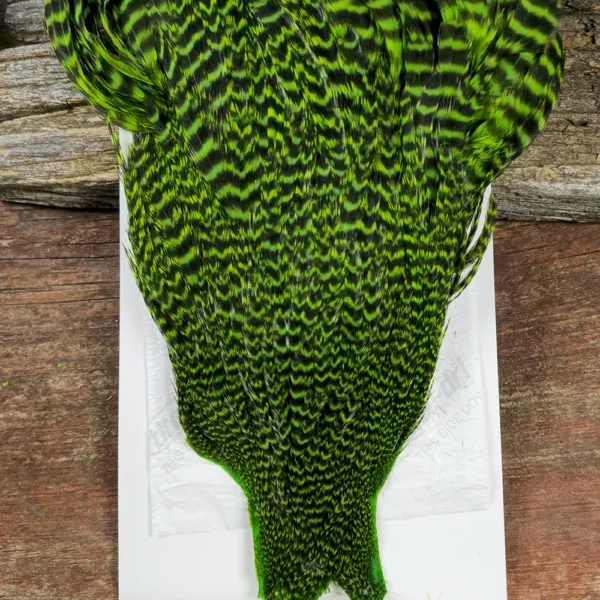
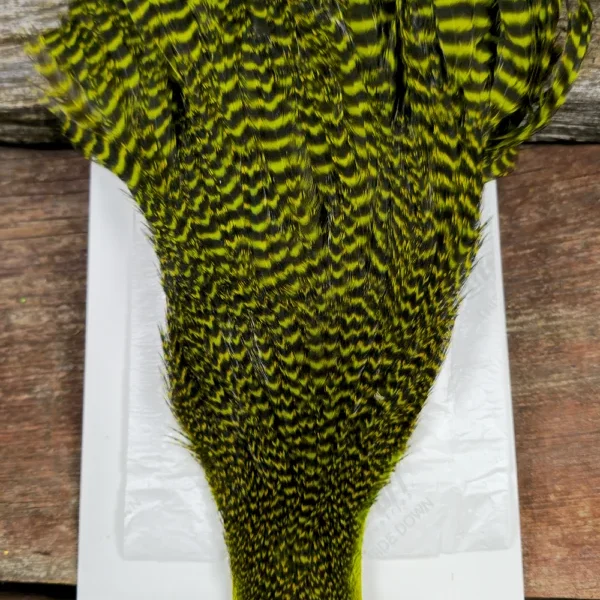
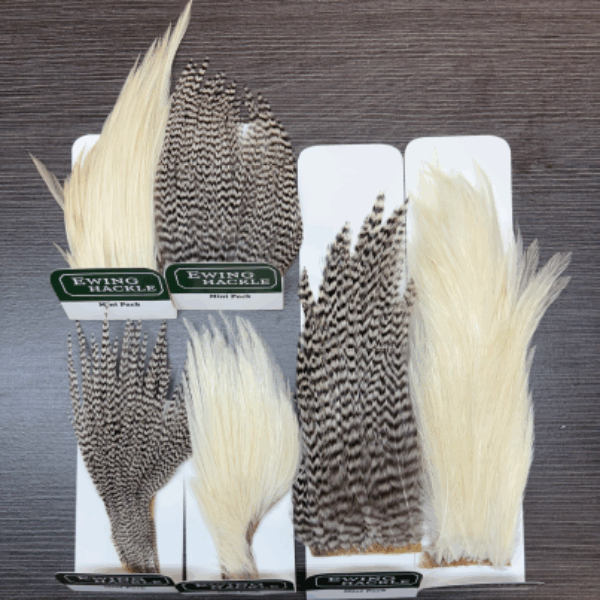
Silver Doctor Blue Grizzly is pale blue with soft bars. It looks like the back of a spottail shiner in a clear river or a sardine flashing just under the surface on a reef edge.
Silver Doctor Blue Grizzly Ewing Chickabou gives you light, barred blue fibers for baitfish backs and tails. Pair it with white or silver underneath for a natural, light-water baitfish.
Smallmouth, trout, jack crevalle, bonito, Spanish mackerel and snook.
Recipe 1: Silver Doctor Blue Grizzly Chickabou Shiner Streamer
- Hook: 3XL streamer, #4–#6
- Bead: Silver tungsten cone
- Thread: White 6/0
- Tail: White chickabou with Silver Doctor Blue Grizzly Ewing Chickabou on top
- Body: Pearl Mylar tubing or silver flat tinsel
- Wing: Silver Doctor Blue Grizzly chickabou, full length, plus 2 strands silver flash
- Throat: A few fibers of red chickabou (the gills)
Tying: Shiners are slim and silvery. Keep the fly thin. The red throat gives fish a target to hit.
How to fish: In clear smallmouth rivers, fish it on a floating line or light sink-tip. Cast across and strip it back with steady 6-inch strips. Smallmouth chase shiners in the shallows at dawn and dusk.
Recipe 2: Silver Doctor Blue Grizzly Chickabou Sardine Clouser
- Hook: Saltwater #1–1/0
- Eyes: Small chrome dumbbell eyes
- Thread: White 6/0
- Belly: White bucktail
- Flash: Silver Flashabou, 6 strands
- Back: Silver Doctor Blue Grizzly Ewing Chickabou, over a few strands of blue bucktail
Tying: Keep the back short and sparse. The chickabou adds the bars and soft motion; the bucktail adds shape.
How to fish: Around reef edges and bait schools, cast into the bait and strip fast. Jacks and mackerel don’t like a slow fly. If you see fish chasing bait on top, cast past the school and strip through it.
Reviews
There are no reviews yet.