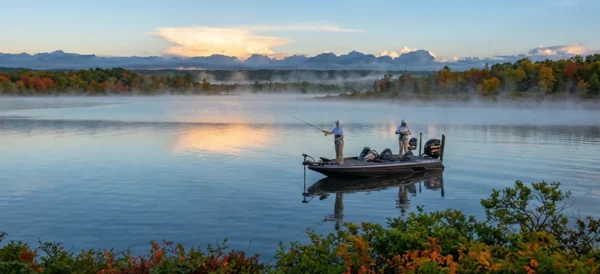
Grand Lake Fly Fishing: Oklahoma’s Walleye and Striper Destination
Grand Lake o’ the Cherokees — Grand Lake to everyone who actually fishes it — sits in the northeastern corner of Oklahoma where the Ozark landscape crosses the state line and the water gets clear enough to make you forget you’re in Oklahoma. At 46,500 acres, Grand Lake fly fishing is a significant freshwater proposition built on one of the most underrated walleye fisheries in the central United States, a healthy striper population that produces surface action throughout the fall, and largemouth and smallmouth bass in the rocky, clear-water coves and shorelines that the Grand River hills provide. Northeastern Oklahoma is the Ozarks, and the Ozarks produce clear, cold, productive water regardless of which side of the state line you’re standing on.
Grand Lake walleye fly fishing is the proposition that serious fly fishers in the region have been slow to commit to, and that is a mistake worth correcting. Grand Lake’s walleye population — fed by the reservoir’s healthy shad and perch populations and supported by aggressive state stocking programs — is one of Oklahoma’s most significant and most fishable. Walleye on Grand Lake are accessible to fly fishing presentations during the low-light periods of dawn and dusk throughout the warmer months, particularly along the main lake’s rocky points and the gravel humps that rise from the channel in the lake’s lower sections. Sink-tip lines, large white and chartreuse Clousers fished slowly along bottom structure in 10 to 18 feet of water — that is Grand Lake walleye fly fishing in its most productive form.
Striped bass are Grand Lake’s most exciting fly rod target, and fall striper fishing here is legitimately special. From September through November, stripers push threadfin shad schools to the surface in the main lake’s open water and in the creek arm mouths, producing the kind of surface busting activity that makes large white Deceivers and popping bugs the correct answer. Birds working the surface in the lower lake are the tell. Get there fast, position ahead of the school rather than into it, and make the first cast count. Grand Lake stripers are not shy fish, but a spooked school is a lost opportunity.
Smallmouth bass — the Ozark contribution to Grand Lake’s fish community — inhabit the rocky, current-influenced sections of the Neosho River arm and the Spring River arm with more enthusiasm than the stained, soft-bottomed portions of the main lake. Grand Lake smallmouth fly fishing on the rocky bluff shorelines of the upper lake arms in June and July, with crayfish patterns and surface poppers, is the kind of fishing that reminds you why the Ozark region deserves its smallmouth reputation regardless of state lines.
Target Species: Walleye, Striped Bass, Largemouth Bass, Smallmouth Bass, White Bass, Crappie Best Seasons: April–June (walleye spawn, smallmouth) | September–November (striper surface) Fly Patterns: Large Clousers, white Deceivers, poppers, crayfish patterns, sink-tip streamers Notable Areas: Neosho River arm, Spring River arm, lower main lake humps, Drowning Creek, Monkey Island area