Lake Eufaula Oklahoma Fishing: Largemouth Bass, Crappie, Catfish, and Every Other Species That’s Been Quietly Waiting Its Turn
Let’s start where every honest conversation about Lake Eufaula has to start: the largemouth bass
Lake Eufaula largemouth are not subtle. They are not the kind of fish that makes you feel clever for fooling them. They’re the kind of fish that explodes through six inches of water to eat a topwater that was minding its own business on the surface, and then immediately tries to relocate to Arkansas via the nearest brush pile. The lake has produced bass well over 10 pounds, Florida-strain genetics run through the population like a rumor through a small town, and the sheer volume of structure — 600 miles of shoreline, flooded timber from here to the Oklahoma border, creek arms that go back so far you start to wonder if you’ve crossed into Texas — means there is always somewhere productive to point a baitcaster. Spring spawning seasons and fall shad blitzes push fish shallow with a predictability that almost feels unfair. Almost. The lake will still find a way to humble you. It always does.
The bass fishing at Lake Eufaula is, in a word, serious. Bassmaster Elite events have been held here for a reason. Local anglers who’ve spent decades learning this water catch fish that would make a Montana trout guide reconsider his career. The mid-lake rocky points around Nichols Point, the submerged timber of the Canadian River arm, the riprap near the dam — these aren’t just good spots, they’re the kind of spots that get passed down like family recipes, whispered at the bait shop, and protected with the kind of territorial intensity usually reserved for nesting eagles. If you want the full fly fishing breakdown on bass in this reservoir — the patterns, the structure, the topwater bite that’ll reorder your priorities — that guide lives right here.
But here’s the thing about Lake Eufaula that the tournament crowd hasn’t fully processed: the bass don’t own the whole lake. They just act like they do. Beneath every brush pile, beside every mud flat, and suspended in every stained creek arm lives an entire ecosystem of fish that most anglers blow past at mach 3 on their way to the next waypoint — and every single one of them is worth your time, your spinning rod, and occasionally your dignity.
I once spent three hours targeting crappie on Eufaula with an 5′-6″ spinning rod, a slip bobber the size of a baseball, and a 1/16 oz chartreuse jig. A tournament bass boat doing roughly mach 3 blew past me close enough to rattle my fillings. The driver gave me the kind of look usually reserved for people who bring a casserole to a barbecue. I caught 22 crappie. He came back at noon with nothing and asked me what I was using. Justice is slow but thorough.
This is your complete guide to fishing Lake Eufaula Oklahoma — crappie, bluegill, white bass, hybrid stripers, catfish, drum, and everything else that collectively proves you don’t need a $60,000 rig to have a great day on this water.
Table of Contents
The Full Species Breakdown: What’s Living in Lake Eufaula Beyond the Bass
Black Crappie and White Crappie: Lake Eufaula’s Most Underappreciated Obsession
Both species of crappie thrive in Lake Eufaula, and both will absolutely wreck your plans to do anything else for the rest of the day. Black crappie (Pomoxis nigromaculatus) tend to prefer slightly clearer water and denser vegetation. White crappie (Pomoxis annularis) tolerate the stained, murky conditions of the river arms far better and consequently dominate the upper reaches of the lake.
The Oklahoma Department of Wildlife Conservation has no minimum size or daily bag limit on crappie in Lake Eufaula as of the most recent regulations — which is either a gift or a trap, depending on how much freezer space you have and whether your spouse has started making pointed comments about the smell.
Where to find them: Crappie in Lake Eufaula live and die by structure. Submerged brush piles — both natural and intentionally placed by ODWC and local fishing clubs — are the primary holding areas year-round. The upper ends of Cowikee Creek, Duchess Creek, and Sandy Creek are loaded with brush and flooded timber that hold crappie from February through November. During spring spawning (water temps 58–68°F), fish move into 3–8 feet of water near woody structure and flat shorelines. Post-spawn, they slide to 10–18 feet, directly below where they were spawning.
Best crappie lures and tactics for Lake Eufaula:
Jig fishing is the backbone of crappie fishing on Eufaula. A 1/16 oz jighead with a 1.5 to 2-inch curly-tail grub or tube in chartreuse, white, pink, or black/chartreuse is the universal currency. Cast tight to visible structure, count it down to the strike zone, and retrieve slowly with occasional pauses. The bite is usually a subtle tick or dead weight — set the hook on anything that doesn’t feel like water.
Spider-rigging is the method the serious crappie crowd uses on Eufaula during the post-spawn and winter months. Multiple rods fanned out from the bow, each with a jig at a precisely metered depth, trolled at 0.3–0.8 mph through known brush pile fields. It is methodical, effective, and looks extremely strange to anyone watching from shore. Fish 8–18 feet depending on season and water temperature.
Live minnows under a slip bobber remain the single most reliable crappie setup when the bite turns finicky. A #4 Aberdeen hook, split shot, slip bobber set to depth, and a lively 2-inch shiner dropped directly into the brush. This is the rig that catches fish when nothing else will, and there is zero shame in that.
Tiny crankbaits trolled slowly through brush pile fields — a Bandit 100 or similar small-profile plug in shad or chartreuse patterns — produce well in summer when crappie are suspended and reluctant to chase vertical presentations.
Bluegill and Redear Sunfish: Small Fish, Big Attitude
If you’ve never had a plate-sized bluegill (Lepomis macrochirus) eat a tiny spinner in eight inches of water and subsequently try to pull a spinning rod out of the hand of a grown adult, you haven’t properly appreciated what Oklahoma has to offer. Pound for pound, bluegill are the most honest fish in freshwater. They’re not trying to be difficult. They just want to fight you, and they’re surprisingly good at it.
Redear sunfish (Lepomis microlophus), called “shellcrackers” throughout Oklahoma, grow considerably larger than bluegill and occupy slightly deeper water near hard bottom and shell beds. A two-pound redear on ultralight spinning gear is a legitimate trophy and will make you question every expensive fishing trip you’ve ever taken.
Lake Eufaula panfish habitat: Shallow coves with aquatic vegetation, boat docks, rock riprap banks, and any area near spawning flats in 2–6 feet. During the late spring spawn, bluegill make circular nests in sandy or gravelly bottom — often visible from the boat if the water has any clarity at all.
Best conventional tackle for bluegill fishing Lake Eufaula:
Spinning gear is the correct tool for Eufaula bluegill — a 5 to 6-foot spinning rod, 1000-series reel, 4 lb monofilament or 6 lb braid with a 4 lb fluorocarbon leader. Anything heavier and you’ve stopped fishing and started lifting.
Small inline spinners — a 1/16 oz Rooster Tail in yellow, chartreuse, or white — are the most consistently productive bluegill lure on the lake. Cast near dock pilings, riprap, or visible nests and retrieve slowly just under the surface. The strike is aggressive and immediate and deeply satisfying.
Micro jigs in 1/64 to 1/32 oz with tiny tube or paddle-tail bodies produce bluegill throughout the season, particularly when fish are holding slightly deeper near vegetation edges.
Live bait under a small bobber — red worms, wax worms, or crickets — is the method grandparents used, kids use, and anyone who’s gotten skunked on artificial eventually returns to. It works. Crickets in particular during summer are wildly effective on both bluegill and redear.
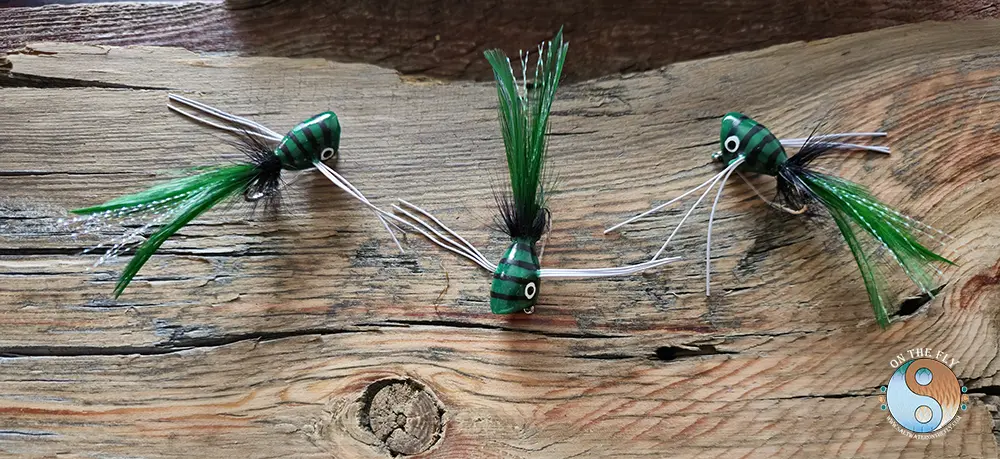
Small topwater poppers — 1-inch foam poppers or small chuggers on ultralight spinning gear — produce explosive surface strikes from bluegill in the early morning shallows during the spawn. It is objectively the most fun you can have with a light rod and a two-dollar lure.
No bag or size limits on sunfish in Oklahoma. Fish responsibly and leave the spawning beds intact.
White Bass: Lake Eufaula’s Wildest Party and Nobody Sent You an Invitation
Every spring, when water temperatures climb into the low 60s°F, white bass (Morone chrysops) run up the river arms and creek tributaries of Lake Eufaula in numbers that defy sensible description. The Canadian River arm and the North Canadian tributaries turn into a chaotic, splashing, line-screaming carnival. Fish stack so tight in current breaks below old bridge pilings and gravel shoals that you can practically scoop them out with a net — although the ODWC would prefer you didn’t.
The white bass run on Lake Eufaula typically peaks between mid-February and early April. The fish are aggressive, fast, and genuinely fun on light to medium spinning gear. They’re also excellent table fare — mild, white, flaky fillets that most people who catch them inexplicably throw back because they’ve been told they’re “rough fish.” Those people are wrong, and they’ve been eating bad fish tacos at chain restaurants instead.
The white bass schooling season: Later in summer, “schoolies” erupt on the surface across the open mid-lake areas, typically in the early morning and late evening. Birds dive, water boils, and shad go airborne in a panic that is both amazing to witness and completely impossible to ignore. This is also when hybrid stripers join the chaos.
Best conventional tackle for white bass at Lake Eufaula:
Curly-tail grubs on a 1/4 oz jighead in white or chartreuse are the single most effective white bass lure in the state of Oklahoma. Cast upcurrent, let the grub swing through the strike zone, and hold on. During the spring run, you will not need to be creative.
Tail spinners — a 3/8 oz Road Runner or similar blade-and-jig combination — add flash and vibration that triggers reactionary strikes in stained water conditions. Deadly during the run when fish are stacked in current seams.
Small spinnerbaits in 1/4 oz, white or silver blades, retrieved steadily through moving water produce aggressive strikes and handle slightly larger fish without the bend-out risk of light wire hooks.
Topwater walking baits and chuggers — a Zara Spook Jr., Yo-Zuri Sashimi Pencil, or small Lucky Craft Sammy — are the correct choice when schooling fish push shad to the surface. Match the retrieve cadence to the baitfish size and work the edges of the school rather than bombing the middle of it.
Jigging spoons — a 3/8 to 1/2 oz slab spoon in silver or gold — are the overlooked white bass weapon during deep schooling events. Locate suspended fish on sonar, drop the spoon to depth, and yo-yo it aggressively. The strikes are violent and the hookup rate is high.
Hybrid Striped Bass (Wipers): Lake Eufaula’s Most Unhinged Residents
The hybrid striped bass — a cross between white bass and striped bass, called “wipers” throughout Oklahoma — is stocked by ODWC and has established a solid and increasingly impressive population in Lake Eufaula. These fish are, without question, the most aggressively stupid fish in the lake. They’ll hit a swimbait that’s clearly too big. They’ll chase a topwater from 15 feet below the surface. They do not negotiate, and they are not interested in your opinion about what they should be eating.
A 5 or 6-pound wiper on a medium-action spinning rod is approximately 90% of an experience that motivational coaches charge serious money to replicate through other means. They run, they bulldoze, they occasionally jump, and they pull line with a sustained, grinding power that makes a bass fight feel like a misunderstanding.
Where to find hybrid stripers at Lake Eufaula: Mid-lake open water, around creek channel intersections, and anywhere threadfin shad school heavily in late summer and fall. Look for birds working the surface — where the birds are, the wipers are directly below them, and chaos is approximately 90 seconds away.
Best conventional tackle for Lake Eufaula hybrids:
Swimbaits on 3/4 oz jigheads — a 4 to 5-inch paddle-tail in white, pearl, or shad pattern — are the workhorse presentation. Cast past the school, count down to fish depth, and retrieve steadily. The strike is rarely subtle.
Large jigging spoons — 3/4 to 1 oz in silver or chrome — are the most effective deep presentation during summer stratification when hybrids suspend over the thermocline. Locate fish on sonar, drop the spoon, and snap-retrieve aggressively.
Topwater chuggers and pencil poppers during surface schooling events require nothing more than getting your lure into the melee quickly. A Heddon Zara Spook, Rapala Skitter Pop, or Yo-Zuri surface chugger will all get destroyed. Cast to the leading edge of the school, work fast, and don’t be surprised when something considerably larger than expected eats it.
Live or cut threadfin shad drifted under a large slip cork or fished on a Carolina rig is the most consistent big-wiper technique outside of surface schooling. Locate fish on electronics, match bait depth to the suspended fish, and wait.
Channel Catfish: Lake Eufaula’s Most Reliable Option When Everything Else Goes Wrong
Let’s have an honest conversation about channel catfish (Ictalurus punctatus). They’re not glamorous. They’re not going to show up on a tournament weigh-in stage. You’re not going to post a hero photo of one in a grip-and-grin pose on Instagram. But on a warm June night, sitting on a folding chair at a Corps of Engineers campground on Lake Eufaula with a rod in a sand spike, a cold beverage in hand, and a chicken liver on a 3/0 circle hook somewhere on the bottom — channel catfish are exactly what you need.
Lake Eufaula holds a tremendous population of channel cats averaging 2–8 pounds, with fish over 15 pounds a realistic possibility along the deeper channel edges.
Best channel catfish spots on Lake Eufaula:
- Main lake channel edges and depth transitions from 8 to 20 feet
- Below the Eufaula Dam tailwaters (verify ODWC access regulations before fishing)
- Points where tributary creeks enter the main lake — especially productive after dark
- Rocky humps and riprap banks during warmer months
Best channel catfish bait for Lake Eufaula:
Chicken livers are messy, fragrant in a way that never fully leaves your boat, and consistently among the top channel cat producers on Eufaula. Fish them on a #2 to 1/0 treble hook tied short off a slip sinker rig. Replace every 15–20 minutes or after a missed strike.
Punch bait and dip bait on sponge or worm hooks produce channel cats steadily throughout the warm months. The scent trail in still water is remarkable, and the results frequently are too.
Fresh cut shad — gizzard or threadfin — is arguably the best all-around channel cat bait on the lake. Fresh is far superior to frozen; bring a cast net and cut your own the morning of. Hook through the back behind the dorsal on a 2/0 to 3/0 circle hook under a slip sinker rig.
Nightcrawlers on lighter presentations work well in the clearer water sections near the dam and in the lower lake reaches, particularly in spring when water temperatures are still moderate.
Conventional tackle for channel catfish:
A 7 to 8-foot medium-heavy spinning or baitcast rod, 17–20 lb monofilament or 30 lb braid, slip sinker rig (egg or no-roll sinker), and a 2/0 to 3/0 circle hook. Set up a sand spike or rod holder, point it toward the water, and let the fish do the rest. This is the most efficient catfishing system on the planet and you don’t need to overthink it.
Blue Catfish: The Serious Business of Lake Eufaula Catfishing
Blue catfish (Ictalurus furcatus) run larger than channels and require a different approach in both mindset and gear. Double-digit fish are common, and dedicated trophy catfish expeditions targeting 30-pound-plus fish have become a legitimate tourism niche at Lake Eufaula.
These fish prefer the main river channels, major creek channel intersections, and the deeper lake basin. They move with current — when the Corps is pulling water through the dam, blue cats redistribute through the system with a predictability that rewards anglers who pay attention to generation schedules.
Best blue catfish tactics on Lake Eufaula:
Drift fishing with fresh-cut shad across the main lake basin is the single most consistent summer method for blue cats. A three-way rig with a 2 to 4-oz bell sinker and 18-inch leader to a 5/0 to 7/0 circle hook, baited with a fresh-cut shad section, drifted at 0.5–1.5 mph along channel edges. Cover water until you find concentrations, then anchor or slow troll the area.
Anchoring on channel bends with fresh or live shad, particularly during stable water conditions, is the go-to approach for trophy blues. Find the inside bend of a main channel curve in 20–35 feet, set multiple rods with different presentations at different depths, and wait with heavy-action rods in sand spikes or rod holders rated for the purpose.
Jug fishing and trotlines where legal are traditional Eufaula methods for blue cats. Verify current ODWC regulations on legal gear before setting up a spread.
Conventional tackle for blue catfish:
Heavy-action 7 to 8-foot catfish rod rated for 20–40 lb line, large capacity baitcaster or heavy spinning reel, 50–65 lb braided mainline, heavy mono or fluorocarbon leader, and 5/0 to 8/0 Kahle or circle hooks. When a 30-pound blue catfish decides to run, none of this will feel like overkill.
Flathead Catfish: The Reclusive Nightmare Under Every Brush Pile
Flathead catfish (Pylodictis olivaris) are nocturnal, structure-oriented ambush predators. They hide inside the same flooded timber and brush piles that hold bass during the day, and at night they own the neighborhood entirely. Flatheads in Lake Eufaula grow large — 20 to 40-pound fish are real possibilities, and fish approaching 60 pounds have been documented in the system.
There is exactly one bait that consistently matters for flatheads: live bait. Live bluegill, perch, or large golden shiners on a heavy 5/0 to 7/0 circle hook, presented directly into or on top of heavy structure. There is no trick. There is no alternative that works consistently. The flathead wants something alive, and it will wait longer than you will.
Flathead catfish tackle:
8 to 9-foot heavy catfish rod, 50–65 lb braid, heavy-duty swivel, 18-inch 60 lb fluorocarbon leader, 5/0 to 7/0 circle hook. A Carolina-style rig or simple slip sinker to hold the bait in place near the structure. When a 30-pound flathead decides to relocate your bait into a submerged cedar tree, you’ll understand why every component on this list is necessary.
Fish the upper creek arms and main river channels from sunset to 3 AM in summer. This is not casual fishing. It is deliberately waiting in darkness for something that has survived by being better at its job than most fishermen are at theirs. Respect accordingly.
Freshwater Drum: The Fish You Didn’t Ask For (That Actually Rips)
The freshwater drum (Aplodinotus grunniens) is possibly the most disrespected game fish in Oklahoma freshwater. Anglers catch them while targeting bass, catfish, and crappie and frequently use words I can’t publish on a family fishing website. This is a mistake. Drum in Lake Eufaula commonly run 5–15 pounds, and a large drum on the end of a spinning rod in current is a sustained, powerful fight that would impress you considerably more if it had a different name and a better PR team.
They’re bottom feeders that prefer crawfish, mollusks, and shad. Target them deliberately on rocky points and riprap areas with crawfish-imitating soft plastics, small jigs, or live nightcrawlers on a Carolina rig. The larger ones are actually decent eating when properly prepared — not quite catfish quality, but considerably better than their reputation suggests.
Best conventional presentation: A 3/8 oz shaky head jig with a crawfish-colored finesse worm or small creature bait, worked slowly along rocky bottom transitions. You’ll catch drum. You’ll also catch bass, which means you’ll never know which one is biting until it’s four feet from the net making a face like it’s reconsidering its life choices. Welcome to Eufaula.
Seasonal Fishing Calendar for Lake Eufaula Oklahoma
Spring (March–May): The Whole Lake Wakes Up at Once
This is the best time of year at Eufaula, and it is chaos in the most glorious possible way. Crappie spawn in April. Bluegill spawn in May. White bass are running the tributaries in March. Bass are on beds. The lake simultaneously offers more conventional tackle opportunities than any one person can reasonably pursue, which leads to the specific kind of fishing paralysis where you spend 45 minutes at the boat ramp trying to decide what to target and then end up catching a drum.
- Crappie: 3–8 feet, staging on brush near spawning flats. Live minnows and 1/16 oz jigs. Best morning bite.
- Bluegill: Shallow spawning beds in 2–5 feet; visible nests. Inline spinners, micro jigs, and small topwaters producing best.
- White bass: Running the Canadian River arm and tributary creeks. Curly-tail grubs in current. Find the current break, find the fish.
- Bass: Pre-spawn staging on points and creek channel swings, then beds in 2–6 feet. Jerkbaits and swimbaits pre-spawn; finesse rigs on beds.
- Catfish: Moving shallow into flats at night as temps rise. Fresh cut shad producing big channel and blue cats.
Summer (June–August): Fish Deep or Fish Early
Water temperatures on Lake Eufaula in summer can exceed 90°F in the shallows by midday, and the fishing responds accordingly. Early morning and after sunset are non-negotiable for quality surface and shallow action. Midday belongs to the crappie on deep brush piles, the drum on rocky bottom near the dam, and whoever is running electronics over the open basin looking for suspended hybrids.
- Crappie: Deep brush piles, 12–20 feet. Spider-rig or vertical jigging with small jigs.
- Bluegill: Early morning around docks and shaded wood. Ultralight spinners and live crickets.
- Catfish: Night fishing prime season. Blues on channel drift setups; channels on shallow flats after dark.
- Hybrids/White Bass: Open water schooling on shad — look for birds, attack with swimbaits and jigging spoons.
- Flathead catfish: Best fishing of the year. Live bait, heavy timber, after midnight.
Fall (September–November): The Comeback Tour
Falling water temperatures trigger one of the best fishing windows of the year across every species. Crappie move shallower. Bluegill make a second feeding push. White bass and hybrids go absolutely berserk schooling on shad in open water. Catfish feed aggressively before the winter slow. The lake is also less crowded — tournament pressure drops, the weather becomes tolerable, and every species seems to have decided to make up for the indignities of August.
- Crappie: 8–15 feet, returning toward structure. Jigs and minnows on light spinning gear.
- Hybrids/White Bass: Surface schooling on shad blitzes — most exciting conventional tackle fishing of the year.
- Catfish: Aggressive pre-winter feeding. Cut shad and live bait producing big fish.
- Bass: Transitional period with shad-pattern cranks and swimbaits on main lake points.
Winter (December–February): The Slow Season That Isn’t Completely Hopeless
Crappie fishing in Lake Eufaula in winter can actually be exceptional if you’re willing to work for it. Fish suspend over deep brush piles in 15–25 feet and feed slowly on tiny jigs. Vertical jigging with a 1/32 oz marabou or tube jig in black or chartreuse, presented precisely on a sensitive light-action spinning rod, catches limits of fish for people who cannot feel their fingers. It builds character. Fishing does that when it’s not building frustration.
Best Fishing Locations on Lake Eufaula Oklahoma
Crowder Creek Arm: Excellent crappie structure with multiple brush pile complexes. Local fishing clubs have invested heavily in habitat here. Spring and fall are outstanding for both crappie and bluegill on conventional spinning tackle.
Brooken Cove: Rocky riprap and comparatively clear water near the dam. Best area on the lake for redear sunfish. Also produces hybrid stripers and drum on rocky bottom presentations. The clearer water makes sight fishing for spawning bluegill viable in May.
Canadian River Arm (Upper): White bass run staging area. Heavy timber, stained water, and strong current near the river mouth during high water. Top crappie and channel cat production on conventional gear throughout the season.
Duchess Creek and Cowikee Creek: Prime shallow-water panfish habitat with extensive cover. During high water, flooded bank vegetation holds staggering numbers of bluegill and crappie in water barely deep enough to float a boat. A kayak here in late April with an ultralight spinning rod is a religious experience.
Main Lake Basin (Open Water): Hybrid striper and white bass territory during schooling events. Nothing to target until the birds show up — then it’s the best topwater and swimbait fishing on the lake.
Dam Area and Longtown Reach: Deepest, clearest water. Blue catfish in the channel on drift presentations. Big drum on rocky structure. The occasional enormous flathead terrorizing whatever lives near the riprap.
Conventional Tackle Recommendations for Lake Eufaula Oklahoma
Ultralight Spinning (Crappie/Bluegill/Sunfish):
- 5’6″ to 6’6″ ultralight spinning rod (Lew’s Mach Speed, Ugly Stik Carbon, or similar)
- Size 1000–2000 spinning reel
- 6 lb braid mainline with 4 lb fluorocarbon leader
- 1/64 to 1/8 oz jigheads; 4 lb mono as alternative for live bait presentations
- Small slip bobbers, Aberdeen hooks, and split shot for live minnow and bait fishing
Light to Medium Spinning (White Bass/Hybrids/Drum):
- 6’6″ to 7′ medium-action spinning rod
- Size 2500–3000 spinning reel
- 10–15 lb braid with 8–10 lb fluorocarbon leader
- 1/4 to 3/8 oz curly-tail grubs, swimbaits, jigging spoons, inline spinners, topwater lures
Medium-Heavy Baitcast (Bass/Larger Hybrids):
- 7′ medium-heavy baitcast rod
- Low-profile baitcast reel, 7:1 or higher retrieve ratio
- 15–20 lb fluorocarbon or 30–40 lb braid
- Texas-rigged plastics, swim jigs, crankbaits, spinnerbaits, topwaters
Catfish — Channel and Blue:
- 7 to 8-foot medium-heavy to heavy catfish spinning or baitcast rod
- Large-capacity reel with 20–50 lb braid
- Slip sinker rig, three-way rig, or drift rig
- 2/0 to 7/0 circle hooks; fresh cut shad, chicken livers, punch bait
Flathead Catfish:
- Heavy-action 8 to 9-foot rod
- 50–65 lb braid, 60 lb fluorocarbon leader
- 5/0 to 7/0 heavy-gauge circle hooks
- Live bluegill or perch — no substitutes
Oklahoma Fishing License and Regulations for Lake Eufaula
An Oklahoma fishing license is required for all anglers 16 years and older. Annual resident and non-resident licenses are available from the Oklahoma Department of Wildlife Conservation at wildlifedepartment.com.
Key regulations as of the most recent ODWC rulebook:
- Crappie: No minimum length, no bag limit (fish responsibly — don’t clean out the brush piles)
- Bluegill/Sunfish: No minimum length or bag limit
- White bass: No size limit; 15-fish daily bag limit
- Hybrid striped bass: 18-inch minimum; 5-fish daily bag limit
- Channel/Blue catfish: No minimum length; 15-fish daily combined bag limit
- Flathead catfish: No minimum length; 5-fish daily limit
Always verify regulations directly with ODWC at wildlifedepartment.com before your trip. Regulations are updated annually and fishing license requirements apply to both resident and non-resident anglers.
Frequently Asked Questions: Fishing Lake Eufaula Oklahoma
What is the best time of year to catch crappie at Lake Eufaula? The spring pre-spawn (March through mid-April) and fall turnover (October–November) produce the most consistent crappie action on conventional spinning gear. Spring fish are shallow and aggressive around 3–8 feet of brush; fall fish are stacking on structure in 8–15 feet and respond well to slow vertical jigging.
What is the best crappie rig for Lake Eufaula? A 1/16 oz jighead with a 1.5-inch tube or curly-tail in chartreuse or white on a light spinning rod is the standard starting point. When fish are finicky — typically cold fronts and midwinter — a live minnow under a small slip bobber fished directly above a brush pile will out-fish everything else on the water.
Can you catch catfish from the bank at Lake Eufaula? Absolutely. The Corps of Engineers maintains public access areas and bank fishing spots throughout the reservoir. Night fishing from the bank with fresh cut shad or chicken livers near channel edges and riprap banks produces consistent channel catfish, and the occasional large blue. Sand spikes and rod holders make this manageable solo.
What’s the best tackle for white bass during the spring run on Lake Eufaula? A 6’6″ to 7′ medium spinning rod with a 2500-series reel, 10 lb braid, and a 1/4 oz white or chartreuse curly-tail grub covers 90% of situations. When fish are stacked in current, cast upcurrent, let the lure swing through the seam, and retrieve slowly. Tail spinners and small spinnerbaits are strong alternatives when fish want more flash.
Are hybrid striped bass (wipers) worth targeting at Lake Eufaula? Absolutely. ODWC has stocked wipers and the population is growing. Fall is the prime time to encounter them in numbers during open-water shad blitzes. They average 3–8 pounds, they hit topwaters and swimbaits with prejudice, and they fight with a sustained, bulldozing power that makes most bass feel polite by comparison.
What’s the best way to target big blue catfish at Lake Eufaula? Drift fishing with fresh-cut gizzard shad on a three-way rig across the main lake channel edges in summer is the most consistently productive method for larger blues. Anchor on inside channel bends with multiple rods for trophy-class fish. Fresh bait is non-negotiable — frozen shad works, but fresh shad works better and the big fish know the difference.
Is flathead catfish fishing worth the effort at Lake Eufaula? If you’re willing to fish after dark with live bait in heavy cover and accept the possibility of a long wait followed by something that tries to relocate your entire rig — yes, absolutely. Flatheads in Eufaula grow large, the population is healthy, and the experience of landing a 30-pound fish on a warm summer night is not something you’ll confuse with anything else.
Conservation and Ethics for Lake Eufaula Anglers
Lake Eufaula’s panfish and catfish populations are generally healthy, but not invincible. The brush pile habitat throughout the reservoir represents years of effort by ODWC, local fishing clubs, and private anglers who hauled Christmas trees and cedar brush into the lake at their own expense to create structure. Don’t anchor over community brush piles during peak season and strip them clean. The crappie you leave today are the ones you’ll catch next spring.
Practice responsible catfish harvest — keep what you’ll eat and release the rest, particularly large breeding-class fish. Flathead catfish are apex predators with slow reproduction rates; releasing fish over 15 pounds is a conservation decision that pays dividends for everyone who fishes behind you.
Clean, drain, and dry your equipment between waterbodies. Zebra mussels are a legitimate threat to the Eufaula ecosystem. They would decimate the plankton base that drives the entire forage chain — including the shad that every species on this list depends on. This is not hypothetical. It has happened to other Oklahoma reservoirs. Don’t be the vector.
The Bottom Line on Lake Eufaula Oklahoma Fishing
Here’s the thing about Lake Eufaula that the tournament crowd hasn’t fully processed: the bass are great, but they’re one act in a much longer show. The crappie will outlast the bass bite by three hours on a tough morning. The white bass will make you laugh out loud when they blow up a topwater in eight feet of water like you personally offended their grandmothers. The flathead catfish will humble you in ways that are difficult to explain to people who weren’t there. And the bluegill — the honest, unpretentious, aggressively cooperative bluegill — will remind you why you started fishing in the first place, back before you had opinions about rod actions and strong feelings about fluorocarbon.
Lake Eufaula is a big, complicated, stained, wind-beaten, Corps-managed, historically rich, biologically diverse reservoir that does not care about your aesthetic preferences. It will give you the best fishing of your life and the most frustrating day you’ve ever spent outdoors, sometimes in the same afternoon. That is Oklahoma fishing at its most honest — and that’s why people keep coming back.
Pack the spinning rods. Bring the cut shad. And maybe, just maybe, let the bass boat driver wonder what you’re using.
Tight Lines — Capt. Grumpy / Saltwater on the Fly