Girdle Bug: Ninety Years of Fooling Big Trout on Montana Rivers
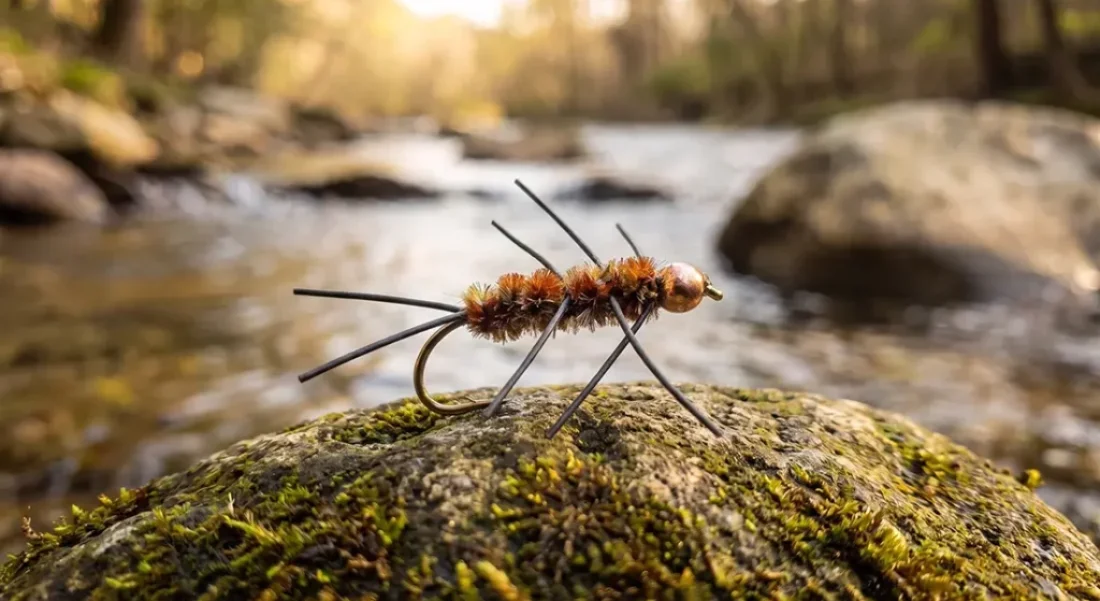
There’s a certain kind of fly that never needs reinventing. It’s ugly, it’s heavy, and it catches fish in every water condition you’ll ever fish. The Girdle Bug is that fly. It’s been doing its job on Montana rivers since the 1930s, and it’s still doing it today — same chenille body, same splayed rubber legs, same simple idea that’s outlasted nearly a century of “better” patterns.
Table of Contents
Frank McGinnis and the Big Hole River
The Girdle Bug’s story starts with Frank McGinnis, a fly fisherman from Anaconda, Montana, whose family treated the Big Hole River as their own backyard water. The McGinnis clan fished it hard enough, and often enough, that a favorite stretch is still known today as “Frank’s Hole” — named for the man himself.
Frank wasn’t trying to build a legacy. He was trying to match the big, homely nymphs — hellgrammites, crane fly larvae, and stonefly nymphs — that the Big Hole’s biggest rainbows and browns were keyed in on. His original version was tied on a size-8 snelled hook, wrapped with fine strips of rubber for legs. As the story goes, that rubber came from cutting up women’s girdles, since real rubber leg material wasn’t something you could just order from a catalog in the 1930s. Frank called his creation the McGinnis Rubberlegs.
The fly worked. Word got around the Big Hole valley, and by the 1940s, other anglers had started calling it something else entirely — the Girdle Bug, in honor of where the legs came from. The name stuck harder than McGinnis’s own name ever did. Today, most anglers who fish it have no idea a real person named Frank tied the first one, or that his family still has a hole on the Big Hole named after him.
That puts the pattern at right around ninety years old. Not quite a full century, but close enough that it’s flat-out earned its spot as one of Montana’s legendary trout flies — durable, simple, and still filling nets long after most of its contemporaries have been forgotten.
Charles Brooks and Tying in the Round
If Frank McGinnis gave the Girdle Bug its shape, Charles Brooks gave it its philosophy — even if he never tied one himself.
Brooks was a retired Air Force major who spent more than 25 years fishing the Yellowstone and Madison River drainages, developing patterns and refining nymphing tactics most modern anglers still use without knowing where they came from. What set him apart was simple: he strapped on a dive mask and got in the water to watch how trout actually eat.
What he saw mattered. In heavy currents, a drifting nymph doesn’t present the same side to a fish twice — it tumbles, rolls, and gets grabbed from whatever angle it happens to be facing when a trout commits. Most traditional wet flies and nymphs of the era were tied with a defined top and bottom, like a swimming insect holding still in calm water. Brooks realized that was wrong for big freestone rivers. So he started tying patterns “in the round” — materials, legs, and hackle distributed evenly around the entire hook shank, with no real top or bottom at all. A fly built this way looks right no matter which way the current is spinning it.
His best-known application of the idea is the Brooks Stone (also called the Brooks Montana Stone) — a heavily weighted stonefly nymph built with a lacquered yarn body, ostrich herl gills, and hackle fibers tied in on both the top and bottom of the fly in equal measure, so there’s no wrong side facing the fish. It became one of the standard patterns for imitating the giant salmonfly and golden stone nymphs of the Yellowstone, Madison, and Big Hole, and it’s still tied and fished today, more than half a century after Brooks developed it.
The Girdle Bug had this idea baked in almost by accident, a decade or two before Brooks put a name to it. Rubber legs splayed off both sides of a chenille body are naturally 360 degrees — there’s no top, no bottom, just movement and profile from every angle. That’s a big reason the fly has stayed relevant on fast, heavy western rivers for as long as it has.
Tying the Classic Girdle Bug
Materials
- Hook: Size 4–10, 3XL or 4XL heavy nymph hook
- Weight: Heavy lead or lead-free wire, wrapped along the shank
- Thread: Semperfli Classic Black or brown, 6/0
- Body: Medium or large chenille, solid black or coffee brown
- Legs/Tail: White, Black, or yellow medium round rubber legs
Steps
- Mount the hook and start your thread just behind the eye.
- Wrap lead or lead-free wire along the shank, from behind the eye down to above the barb. Break it off, then run thread back over the wraps to lock it in and smooth out the underbody.
- Bring thread back to the tail position, just above the bend.
- Cut two strands of rubber leg material, about 1.5 to 2 times the shank length, and tie them in at the bend so they splay out to each side — not stacked on top. This is where the “in the round” profile starts.
- Tie in the chenille at the base of the tail.
- Wind the chenille forward in tight turns, stopping about a third of the shank length back from the eye to leave room for the front legs and head. Tie off and trim.
- Cut two more strands of rubber leg for the front, matching the tail length, and tie them in so they splay evenly to each side.
- Build a small thread head, whip finish, and seal it with head cement or UV resin. This fly gets hammered by big fish and the head is the first thing to fail if you skip this step.
- Trim legs to length and fish it.
Fishing the Girdle Bug from High Water to Low
Where this fly really earns its keep is across a full season of changing water — and that’s where most anglers leave fish on the table by fishing it the same way in June that they do in September.
High, off-color water (spring runoff, post-rain spikes). Trout can’t see far and they’re not chasing anything. Go bigger — a size 4 or 6 Girdle Bug pushes more water and silhouettes better in dirty flows. Add extra wraps of lead if you’re not ticking bottom; in high water, split shot above the fly is often necessary even with a weighted pattern. Fish it tight to the banks and current seams where displaced trout are holding out of the main force of the flow, and slow your presentation down — these fish aren’t moving far for a meal, so the fly needs to be right in their window.
Moderate, dropping water. As flows recede and clarity starts to come back, this is prime Girdle Bug water — arguably the best window of the year for this fly. Trout are repositioning into classic holding lies: seams, pocket water, the heads and tails of pools. A size 6 or 8 in black or coffee brown, fished as the point fly in a two-fly nymph rig with a smaller mayfly or caddis pattern trailing behind, covers the water efficiently. This is also when the “in the round” profile pays off most — faster, more turbulent flows tumble the fly, and a pattern with even legs on every side never presents wrong.
Low, clear water (late summer, early fall). This is where anglers get this fly wrong most often — they keep fishing it big and heavy out of habit. Scale down to a size 8 or 10, lighten the wire wraps, and lengthen your leader and tippet. Clear water means spooky fish with a long look at anything drifting past, so a more natural drift matters more than a big profile. Target deeper pools, undercut banks, and shaded pockets where big fish still feel safe holding in skinny, clear flows. A single Girdle Bug fished on its own, with a long fluorocarbon tippet and a careful approach, will often out-fish a flashier, more “technical” rig.
Across all three conditions, the constant is depth. This fly does its work near the bottom, not mid-column — get it down, keep it down, and let the legs do the rest.
Modernizing the Girdle Bug: New Materials and the Bead Head Version
McGinnis tied his original with whatever was on hand in 1930s Anaconda, and that scrappy, use-what-works spirit is still the right way to approach this fly. The classic solid-color chenille and round rubber legs catch fish and always will — but a few modern materials give the pattern more flash, more movement, and more versatility without losing what made it work in the first place.
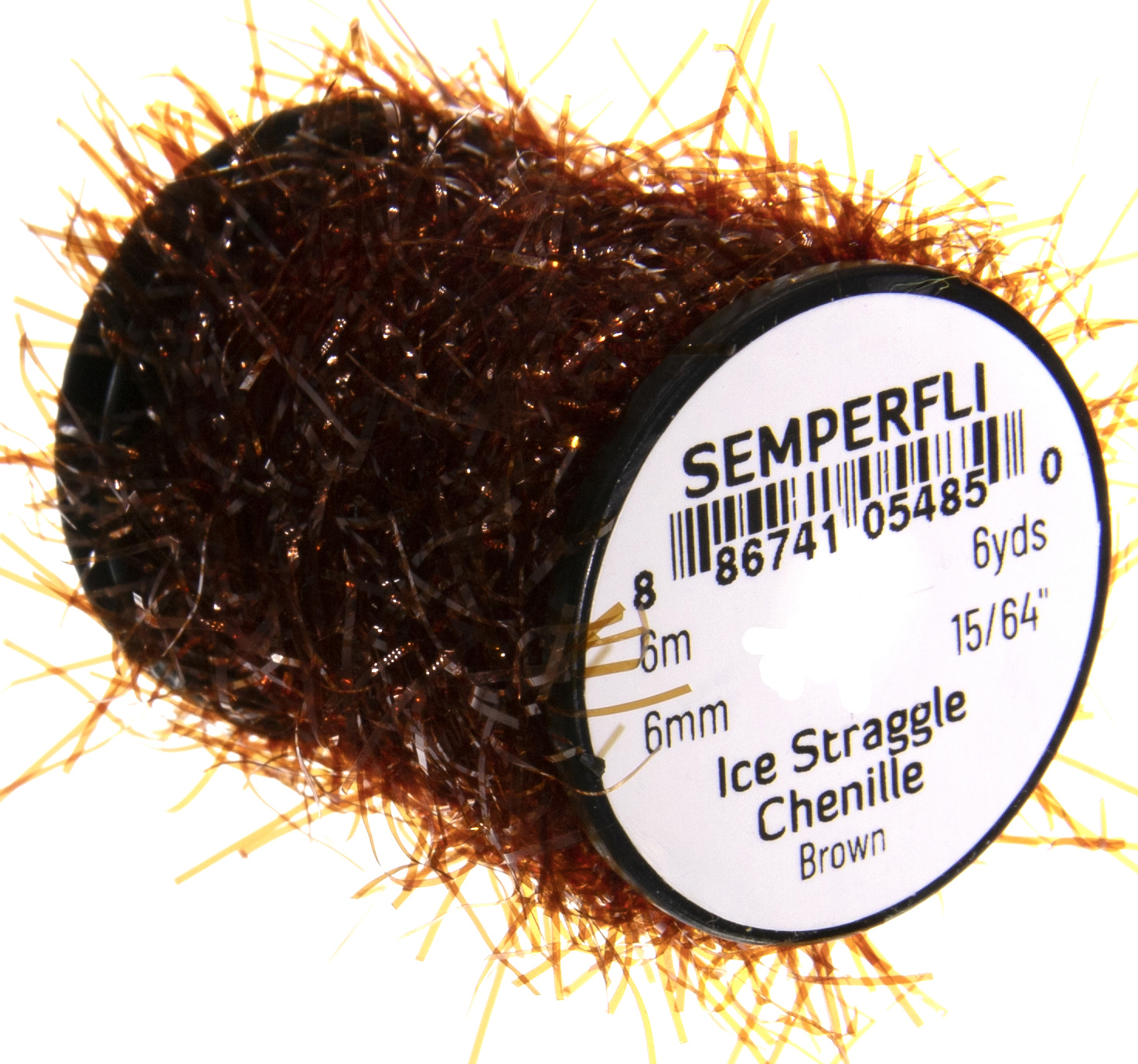
Chenille options. Standard round chenille is still the workhorse and the most durable choice for a fly that gets chewed on. But variegated chenille — two or three colors twisted together — adds a mottled, natural look that reads as more “buggy” in clear water, especially in brown/black or olive/black combinations. Ice Chenille-Semperfli Straggle or Estaz-style holographic chenille swaps some of that natural look for flash, which can be the difference-maker in stained water or on overcast days when you want the fly to catch a fish’s attention from farther off. Chenille with a rougher, more fibrous “crystal” texture also pushes more water on the swing, giving the fly a bit more built-in movement even on a dead drift.
Leg options. Round rubber is classic, but silicone legs (often sold as Sili Legs or similar) hold their kick and action longer, resist waterlogging, and come in barred, speckled, and UV-reactive colors that plain rubber doesn’t. Speckled or barred legs in particular add a segmented, more lifelike look without changing anything about how the fly ties or fishes. Standard round rubber is still the more durable, budget-friendly choice for a fly you expect to lose in the rocks — worth keeping both on hand and picking based on the water you’re fishing.
Tying as a Bead Head
Adding a bead is the single easiest way to modernize the Girdle Bug, and it changes how the fly fishes as much as how it looks.
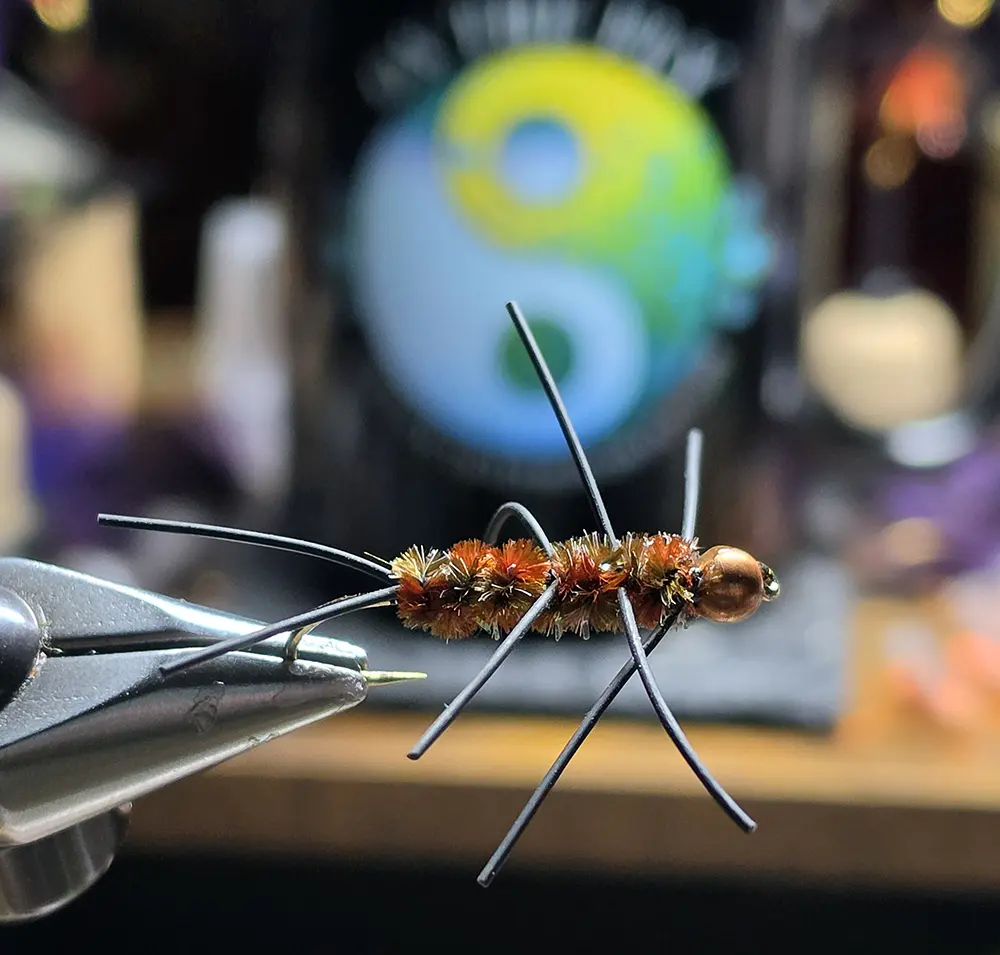
- Before mounting the hook in the vise, slide a tungsten bead (sized to match the hook — typically 1/8″ to 3/16″ for a size 4–10 3XL or 4XL hook) onto the hook point and up around the bend to the eye.
- Mount the hook and, if you want extra weight, wrap lead or lead-free wire behind the bead rather than along the full shank — this keeps the weight concentrated up front, which helps the fly ride hook-point-up and jig through the water column on the retrieve or swing.
- Start your thread just behind the bead and proceed with the tail, body, and front legs exactly as in the classic recipe above.
- Build your thread head and whip finish directly against the back of the bead rather than building a separate head — the bead itself functions as the head.
A bead head Girdle Bug sinks faster, rides with a jigging action that can trigger strikes a static drift won’t, and gives you a visual cue (the flash of the bead) that helps in slightly stained water. It’s a strong choice as the point fly in a euro-nymphing rig or any tight-line setup where you want a fast, direct connection to the fly. The tradeoff is subtlety — a gold or silver bead adds flash that can work against you in low, gin-clear water and bright sun, where the sparser, unweighted profile of the classic tie is harder for a spooky trout to pick out as fake. Copper or black nickel beads split the difference, adding weight without as much glare.