Bull Bluegill on the Fly: The Best Trophy Bluegill Lakes in Illinois, Ohio & Missouri
By Capt. Grumpy, Saltwateronthefly.com
I’ve been bit by a lot of things in my life. Barracuda. A cranky mule in the Bitterroot. My third ex-wife’s Chihuahua, which had the disposition of a wolverine and the teeth of a much larger dog. But nothing — and I mean nothing — prepared me for the first time an honest two-pound Midwest bull bluegill inhaled my popper and put a bend in a seven-and-a-half-foot three-weight that I did not know was physically possible without the rod filing for workman’s comp.
Most folks who’ve only chased “gills” off a farm pond dock with a bobber and a garden worm think of them as a starter fish. A kid fish. Something you catch while you’re waiting for the real fishing to start. I am here, sunburned and slightly humbled, to tell you that theory is dead wrong, and the Midwest is where you go to bury it. Illinois, Ohio, and Missouri alone have produced bluegill that would embarrass most of the “trophy” panfish you’ve caught in your life — fish measured in pounds, not ounces, with shoulders like a linebacker and an attitude to match.
Table of Contents
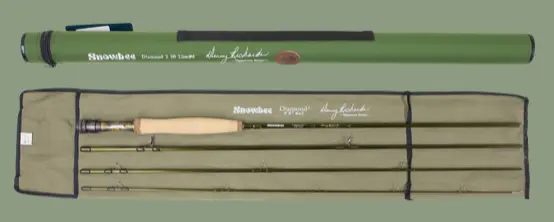
The Gear: Why a 7’6″ 3-Weight Is the Perfect Bluegill Weapon
Before we start naming lakes, let’s talk hardware, because showing up to bluegill water with the wrong stick is like bringing a canoe paddle to a knife fight — technically a tool, wrong job entirely.
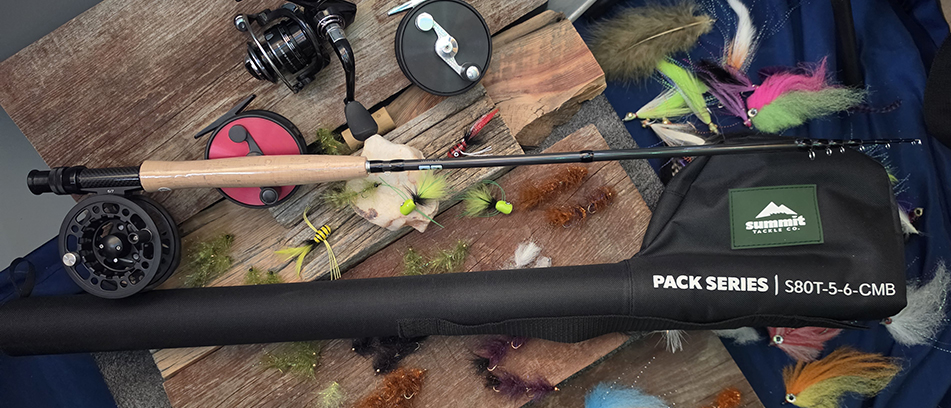
My go-to for bull bluegill is a 7-foot-6-inch, 3-weight fly rod. Short enough to work tight banks, brushy pond edges, and overhanging timber without hanging up every third cast. Light enough that a pound-and-a-half bluegill — which, believe me, feels like a five-pound bass on this rod — turns into an honest, cackling-out-loud fight instead of a formality. Pair it with a weight-forward floating line, a 7.5-foot leader tapered with 4X or 5X Fluorocarbon Tippet, and you’ve got a setup that will make you fall back in love with fly fishing if you’ve spent too many seasons squinting at midge hatches on technical trout water.
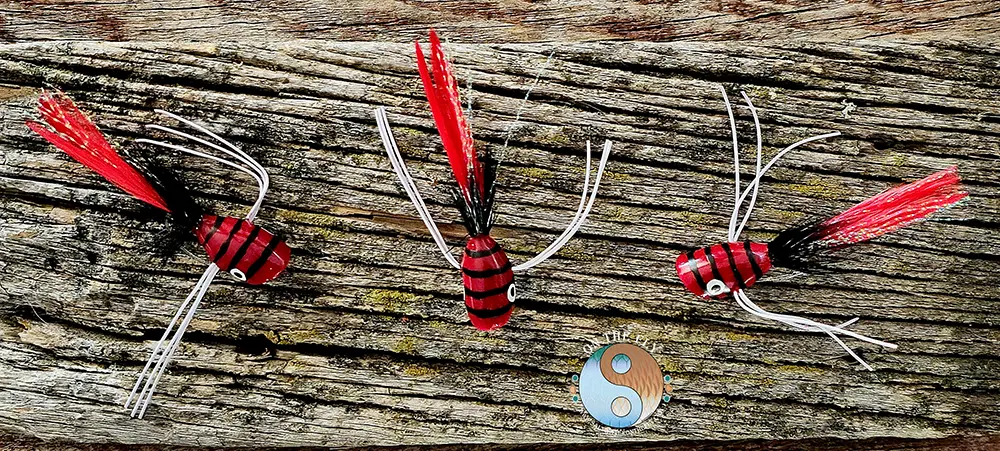
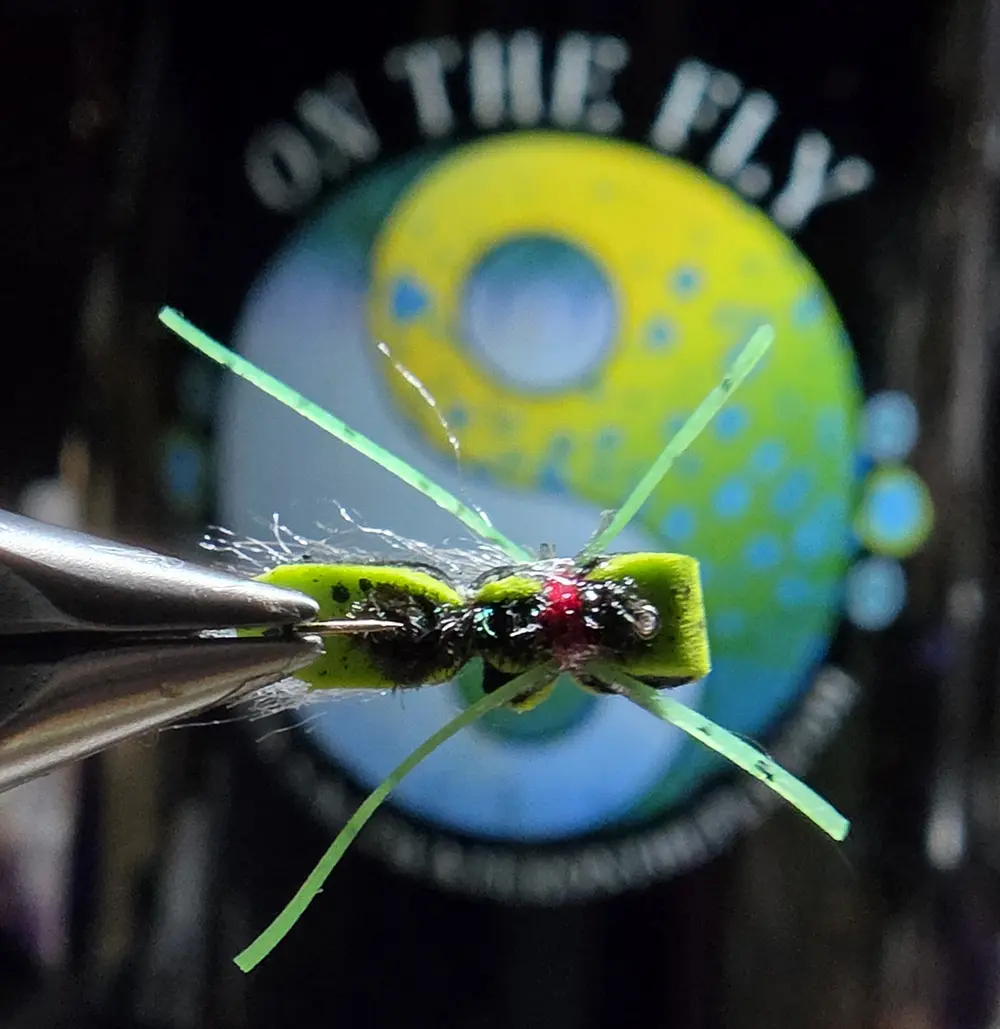
Poppers, when conditions are right, are the whole show. Calm mornings, cloudy afternoons, or that magic hour before dusk when the surface goes glassy — that’s when a size 8 to 10 foam or cork popper, popped gently and left to sit, will get absolutely obliterated. Don’t strip it like a bass popper. Twitch it. Let the rings die out. Twitch again. Bluegill takes are sneaky right up until the moment they’re not, and then your rod tip is buried and you’re grinning like an idiot.
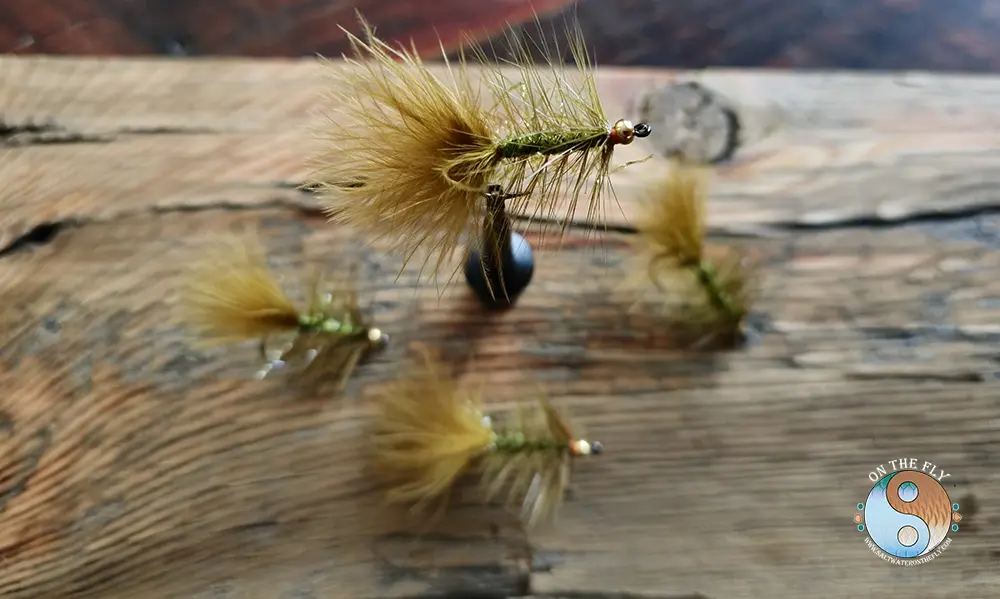
When the surface bite shuts off — bright sun, high pressure, cold front — go subsurface. Small streamers in the size 8-12 range (think tiny Woolly Buggers, Clouser minnows tied sparse, or simple marabou leech patterns) stripped slow with long pauses will find the bigger, more cautious fish holding deeper. And don’t sleep on nymphs fished under a small strike indicator or on a slow, dead-drift swing near weed edges and drop-offs — bluegill eat more subsurface bugs than most fly anglers give them credit for, and a size 12-16 pheasant tail or small foam-bodied nymph will out-fish a popper on a tough day nine times out of ten.
A word for the conventional tackle crowd — and I say this with love, because I still keep a spinning rod in the truck — an light-medium spinning rod spooled with 2 to 4-pound test, a small slip-bobber, and a live nightcrawler or wax worm on a size 8 hook is about as close to a sure thing as fishing gets. Micro-jigs in the 1/32 to 1/64-ounce range, twitched slow under that same bobber, will also load the cooler. It’s not fancier than fly fishing. It’s just a different kind of fun, and on these waters, both methods flat-out work.
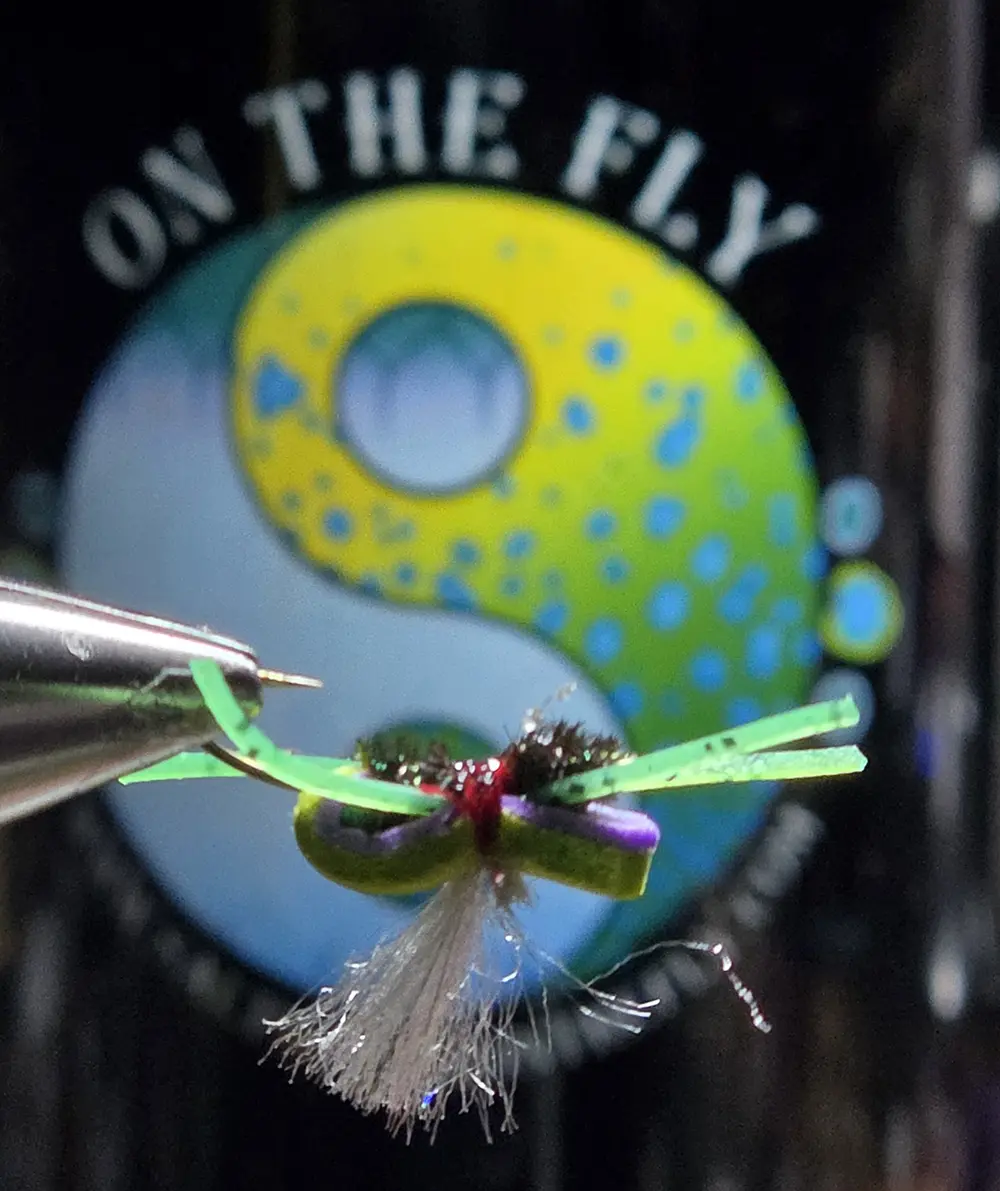
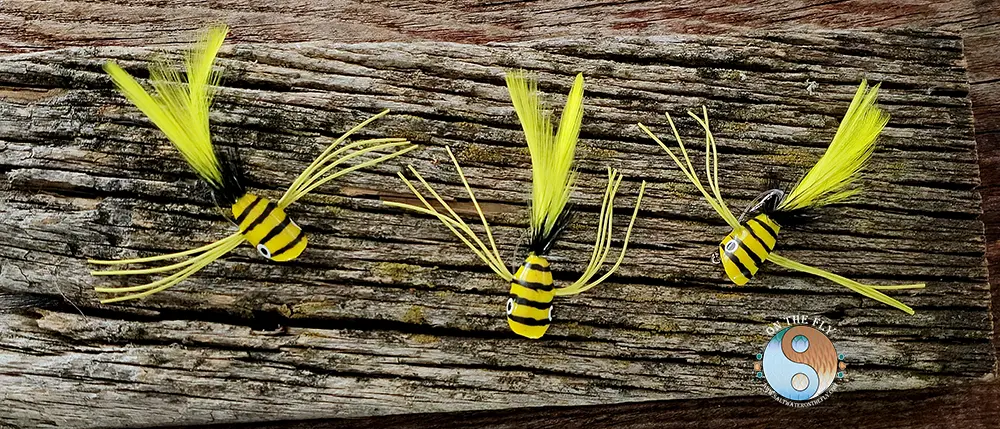
My Fly Box for Midwest Bull Bluegill
If you want the short version to hand your local fly shop, here’s what actually stays tied on through a full season of this:
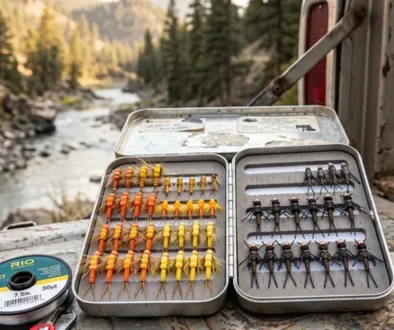
- Poppers: size 8-10, foam or hard-body, in chartreuse/white, black, and yellow. Rubber legs are not optional — they’re doing half the work.
- Small streamers: size 8-12 sparse Woolly Buggers (olive, black, brown), mini Clousers, and simple marabou leech patterns.
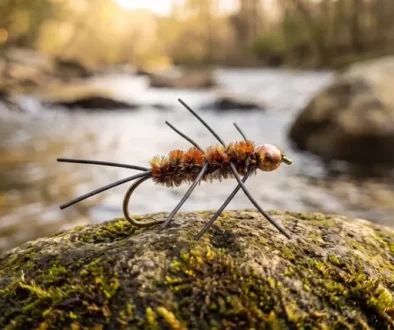
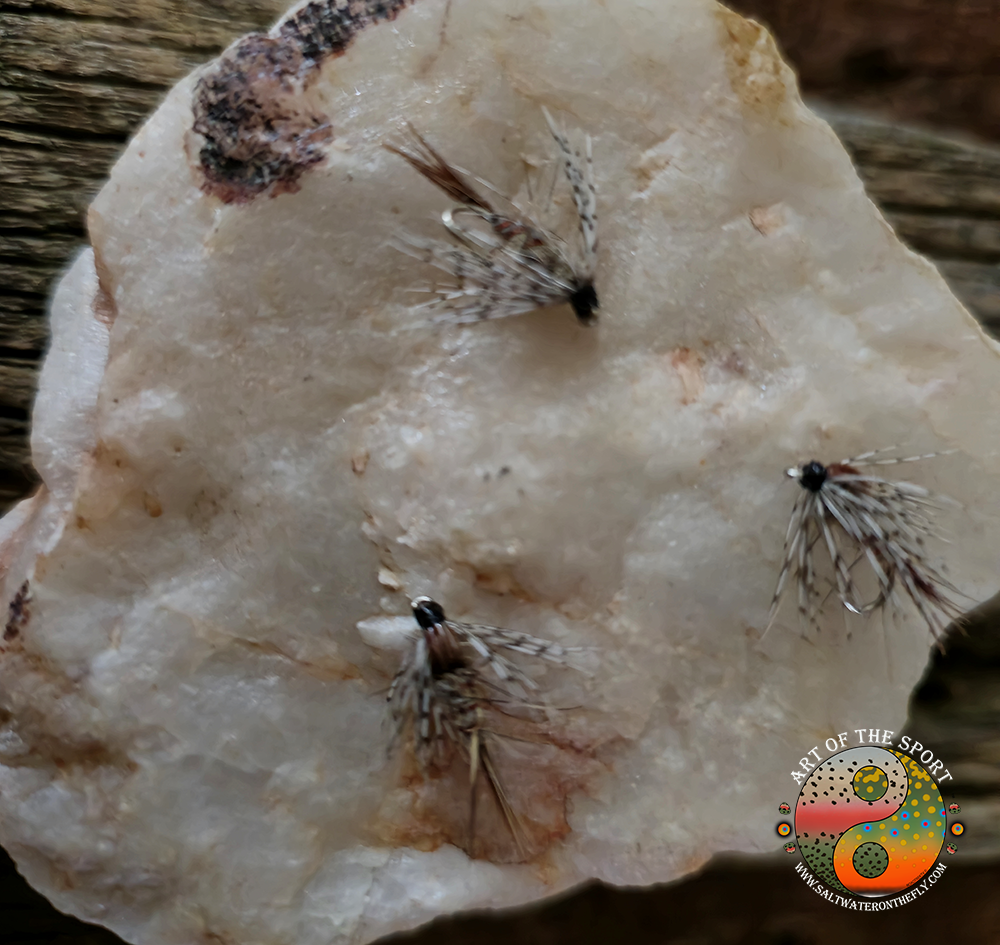
- Nymphs: size 12-16 pheasant tail, small foam-bodied nymphs, and anything buggy-looking with a little flash.
- Terrestrials, for late summer: foam beetles and ants in size 12-14, especially near overhanging trees.
Keep it simple. I’ve watched grown adults dump forty dollars of “specialty panfish flies” into a river when a size 10 popper and a sparse olive streamer would’ve done the entire job. Bluegill are not picky. They are, however, extremely opinionated about presentation — which is a fancier way of saying “don’t smack it down like you’re mad at it.”
Alright. Gear’s sorted. Let’s go catch some pigs.
Illinois: Farm Pond Royalty and Big-Water Backup
Illinois doesn’t just have good bluegill fishing — it has a legitimate claim to bluegill royalty. The state record, an absurd 3-pound, 8-ounce specimen, was hauled out of a Jasper County farm pond by Darren May back in 1987. That fish went 13.75 inches long with a 16-inch girth, which is less “bluegill” and more “bluegill wearing a bluegill costume.” The kicker: it was caught just months after Illinois officially named the bluegill its state fish, like the fish knew it had a reputation to uphold.
If you want a shot at that kind of fish, start close to home. The unassuming farm ponds and small lakes scattered around the Chicago area — including the well-known Busse Lake — are a legitimate bet for quality bluegill without a long drive. But if you want to fish bigger water with a fly rod and still find pods of bull gills, put these on your list:
- Clinton Lake — big water, big fish potential, especially around submerged cover.
- Rand — a reliable community lake with consistent panfish action.
- Crab Orchard Lake — a southern Illinois giant with plenty of structure to popper along.
- Horseshoe Lake — shallow, weedy, and exactly the kind of water a popper was built for.
- Chain O’Lakes — a sprawling system with more backwater and cover than you can fish in a season.
- Mermet Lake — a quieter southern option, great for a stealthy popper approach.
- Little Grassy Lake — clear water and healthy structure make this a sneaky-good pick.
- Hennepin Canal — long, linear, and loaded with edge water that bluegill love to hold in.
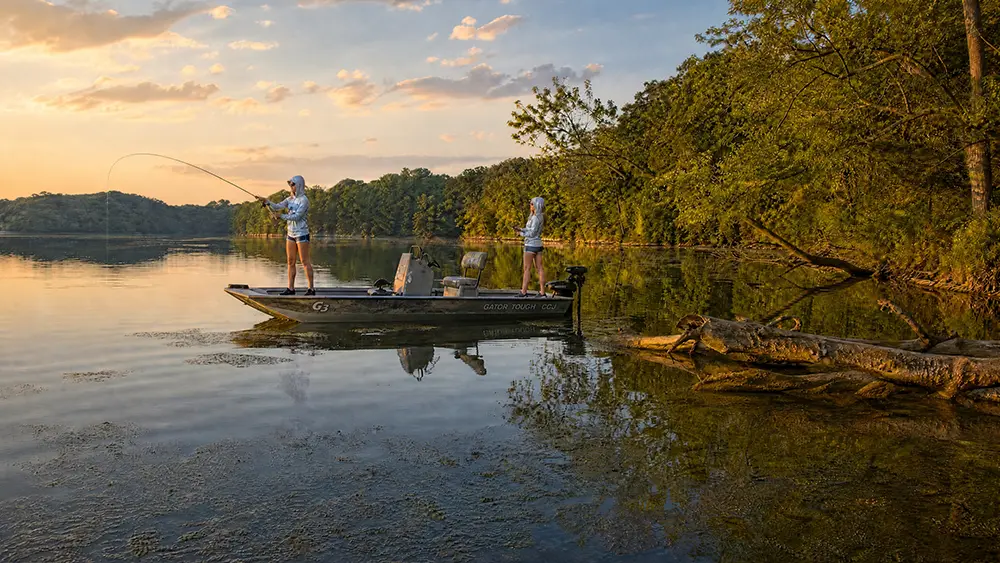
How to fish it: Illinois bluegill tend to relate hard to any kind of cover — dock pilings, laydowns, weed edges, riprap. Work your popper tight to that structure, let it sit longer than feels natural, and be ready. On bright days, drop a small streamer or nymph along the same seams. Bring a boat or kayak if you can for the bigger reservoirs like Clinton and Crab Orchard, but the smaller lakes and ponds are entirely bank-fishable with that 7’6″ 3-weight.
I’ll admit I have a personal grudge against Horseshoe Lake, on account of losing what I am fully convinced was a two-pound-plus bluegill in about eight inches of milfoil, twenty feet from the bank, in front of three witnesses who still bring it up. The fish ran me straight into the salad, wrapped the leader twice, and was simply gone — no dramatic jump, no big splash, just a slack line and the distinct sensation of a fish laughing at me from somewhere in the weed bed. That’s the other thing nobody tells you about bull bluegill in heavy cover: they fight like they know exactly where the nearest obstruction is, and they use it.
Ohio: The Quietly Excellent Bluegill State
Ohio doesn’t get talked about enough in bluegill circles, and frankly, that suits the locals just fine. The state record is a 3.28-pound, 12.75-inch giant, caught by Willis D. Nicholes at Salt Fork Reservoir in 1990 — proof that Ohio’s biggest lake by surface acreage isn’t just a bass and muskie factory.
Bluegill show up in nearly every body of water in the state, from the Lake Erie shoreline down to the Ohio River, but a handful of lakes consistently punch above their weight for size and numbers:
- Salt Fork Reservoir — the record-holder, and still a legitimate bet for a true giant.
- Mogadore Reservoir — solid numbers with good average size.
- Portage Lake system — a network of connected water offering plenty of untouched pockets.
- Highlandtown Lake — a smaller lake known for quality over quantity.
- Wolf Run Lake — good structure and consistent producer.
- Piedmont Lake — big enough to fish all day and still find new water.
- Pleasant Hill Lake — a reliable option with easy bank access.
Ohio’s ponds — particularly those historically managed by the old Ohio Electric Power Company properties — also throw quality fish, and shouldn’t be overlooked just because they’re not on the “top lakes” list you’ll find plastered everywhere else.
Timing tip that most guys miss: fall fishing in Ohio can be outstanding, especially once football season kicks in and the lakes empty out. I don’t know what it is about a Saturday afternoon lake with nobody on it except you, a popper, and a cooler of bluegill that don’t know it’s supposed to be tough fishing this time of year — but it works, and it’s about as peaceful as fishing gets.
I fished Piedmont Lake on exactly one of those quiet fall Saturdays a few years back, and it remains one of the strangest fishing days of my life — not because the fishing was hard, but because it wasn’t. I threw a size 10 black popper along maybe four hundred yards of shoreline and had a fish on almost every other cast for two solid hours, all while a college football game blared faintly from someone’s truck radio in the empty parking lot behind me. I have caught permit on the flats that fought less hard than some of those Piedmont bluegill. I’m not exaggerating for effect. Well — maybe a little. But not much.
Missouri: Farm Pond Country, Perfected
If Illinois has bluegill royalty, Missouri has the working-class dynasty — an entire state built on the humble, unglamorous, absolutely lights-out farm pond. The state record is an 11-year-old’s fish: Mike Giovanini, fishing a Zebco reel and worms in 1963, hauled out an 11.25-inch bluegill with a 15.25-inch girth that has now held for more than six decades. Let that sink in. Six decades, and nobody in the entire “Show-Me State” has managed to beat an 11-year-old with a Zebco.
Missouri’s agricultural belt is absolutely stuffed with farm ponds capable of producing that kind of fish, and if you can find a landowner willing to let you wet a line — ask politely, bring a six-pack as a thank-you, it works more than you’d think — you’re in business. For public water, don’t overlook:
- Current River — moving water bluegill fight even harder than their still-water cousins.
- Big Piney River — clear, scenic, and full of feisty panfish.
- Table Rock Lake — a bass-and-trout darling that also holds serious bluegill numbers.
- Truman Lake — big, sprawling, and loaded with coves worth popper water.
- Tobacco Hills — a lesser-known gem worth the drive.
Missouri fisheries biologist Tory Mason has pointed out exactly what separates a good bluegill pond from a great one: abundant food, a healthy population of largemouth bass to keep bluegill numbers in check (so the survivors grow big instead of stunting out), and a clean watershed. If you’re pond-hunting on your own, that’s the checklist. Find a pond with a few largemouth cruising the shallows and clear water, and you’ve probably found your next popper session.
That bass-population detail is worth dwelling on for a second, because it trips people up. Instinct says “fewer predators, more bluegill survive, bigger average size.” Wrong instinct. A pond with no bass gets overrun with bluegill, they outbreed the food supply, and you end up with a thousand stunted five-inch fish that never had a chance to grow. A pond with a healthy bass population thins the herd, and the survivors — the smart, wary, cover-hugging ones — get fat and old. Those are the ones eating your popper. It’s the same logic that applies to a lot of things in life, honestly, though I’ll spare you the lecture and let you draw your own conclusions about competition and mediocrity.
On moving water like the Current and Big Piney, the technique shifts a little. Bluegill in current hold in the soft seams behind rocks and logs, not out in the main flow, so you’re working your popper or streamer along the edges of the current break, not down the middle. A dead-drift nymph through the same seam, with just enough weight to tick bottom occasionally, will out-produce a popper on cloudy days when the fish are holding a little deeper.
Frequently Asked Questions: Illinois, Ohio & Missouri Bluegill
What’s the best fly for bull bluegill in Illinois, Ohio, or Missouri? A size 8-10 popper in chartreuse/white or black is the go-to when conditions are calm. When the surface bite is off, switch to a small olive or black streamer, or a size 12-16 nymph fished slow near cover.
What size fly rod is best for trophy bluegill? A 7-foot-6-inch, 3-weight rod is close to ideal — short enough for tight cover and brushy banks, light enough to make even an average bluegill feel like a genuine fight.
Do I need a boat to fish these lakes? No. Most of the lakes listed — especially the farm ponds, Horseshoe Lake, and Mermet Lake — are entirely bank-fishable. A kayak or small boat helps on bigger reservoirs like Clinton, Crab Orchard, Truman, and Table Rock, but isn’t required.
Can I catch bull bluegill on conventional tackle here? Absolutely. Ultralight spinning gear with 2-4 lb line, a slip-bobber, and live bait or a micro-jig will produce fish on every lake in this article.
Wrapping Up Part One
Three states down, and we haven’t even gotten to Nebraska’s sneaky-big Sandhills fish, Kentucky’s strip-mine-lake monster, or Iowa’s late-May spawn blitz — that’s coming in Part Two, and it’s just as good, if not better.
For now: rig up that 7’6″ 3-weight, tie on a size 8 popper, and go find one of these lakes. And when that popper disappears in a swirl that’s way too aggressive for a fish that’s supposed to be “beginner-friendly” — well, welcome to the club. We’ve all been humbled by a bluegill. It’s a rite of passage.
Gear Up For Your Next Trip at Saltwateronthefly.com
You don’t need to guess at rods, flies, or gear — I’ve already done the guessing, the breaking, and the re-buying for you over more than a decade of guiding. Head over to Saltwateronthefly.com for:
- Fly rods, reels, and lines built for panfish, bass, and everything in between — including the exact style of 3-weight setup we talked about above.
- Hand-picked popper, streamer, and nymph patterns tested on real water, not just tied to look good in a bin.
- Guided trips and adventure travel bookings if you’d rather chase bluegill, redfish, or trout with someone who’s already made the mistakes so you don’t have to.
Tight lines, and don’t let a “panfish” talk you into using light tackle you’re not ready to lose. See you on the water — or in Part Two, whichever comes first.