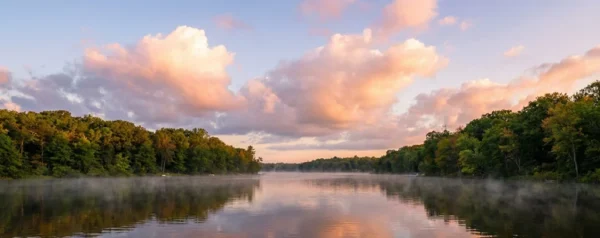
West Okoboji Lake Fly Fishing: Iowa’s Glacial Gem and the Walleye Water Nobody Talks About
West Okoboji Lake in Dickinson County sits in the Iowa Great Lakes region of northwestern Iowa — a chain of glacial lakes left behind by the last ice age that are, by any honest assessment, the most visually striking and ecologically significant freshwater lakes in a state not typically associated with remarkable lakes. West Okoboji Lake fly fishing operates in clear, cold, spring-fed glacial water with a depth that reaches 136 feet — extraordinary for Iowa — and a water quality that supports walleye, smallmouth bass, yellow perch, and northern pike in a fishery that locals protect with the possessiveness of people who understand exactly what they have.
West Okoboji is the fly fishing anchor of the Iowa Great Lakes chain. The lake’s exceptional clarity — visibility often reaches 15 to 20 feet in the summer — creates sight fishing conditions for smallmouth bass along the rocky shorelines and gravel points of the lake’s western and southern banks that are genuinely unusual for Iowa. West Okoboji smallmouth fly fishing on the rock and cobble structure of the lake’s clearer sections is a crayfish pattern game, fished slowly along bottom in 6 to 14 feet of visible water to fish that can see the fly from a distance and evaluate it accordingly. Presentation matters more than pattern here. Get quiet, get low, and make the first cast the right one.
Walleye fly fishing on West Okoboji operates in the low-light windows of dawn and dusk throughout the summer, when fish that spend daylight hours in the lake’s deeper, darker water push to the shallower rocky structure along the shoreline to feed. Sink-tip lines, large white Clousers worked slowly along the bottom transition zones in 8 to 15 feet of water, and the patience to fish methodically through low-light periods rather than abandoning the approach after twenty minutes — that is the walleye fly fishing formula on West Okoboji.
Northern pike provide West Okoboji’s most aggressive fly rod experience, with pike using the weed edges and shallow bays of the lake’s protected western shoreline year-round. Large articulated streamers and pike flies in chartreuse and white or perch-imitating patterns stripped aggressively through the weed edges produce strikes that are, without exception, memorable. West Okoboji pike are not enormous by Minnesota or Wisconsin standards, but they are pike, and pike never do anything halfway.
The Iowa Great Lakes region is a genuine destination for the fly fisher who does the research. West Okoboji rewards the effort.
Target Species: Walleye, Smallmouth Bass, Northern Pike, Yellow Perch, Largemouth Bass Best Seasons: May–June (walleye spawn period) | June–September (smallmouth, pike) | Fall (walleye feeding) Fly Patterns: Crayfish patterns, large white Clousers, articulated pike flies, perch streamers, poppers Notable Areas: West shoreline rock structure, Emerson Bay, Miller’s Bay weed edges, southern gravel points, Smith’s Bay