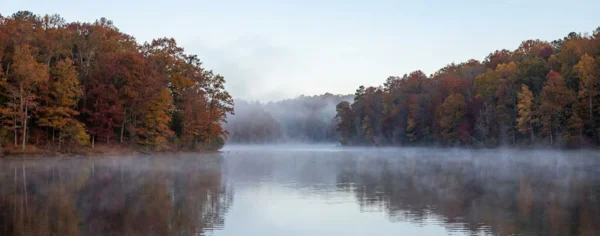
Falls Lake Fly Fishing: North Carolina’s Triangle Largemouth and Striper Lake
Falls Lake sits in Wake and Durham counties just north of Raleigh, a 12,000-acre Neuse River impoundment that serves as the primary drinking water reservoir for the Research Triangle and, somewhat improbably, one of the better fly fishing opportunities in the North Carolina Piedmont. Falls Lake fly fishing operates without the fanfare of the mountain trout streams to the west or the coastal redfish water to the east, which means a productive, accessible reservoir within thirty minutes of one of the most densely populated regions in the state receives far less fly rod pressure than the quality of the fishery justifies. Urban proximity is not a disqualifying characteristic. Neither, as it turns out, is being a drinking water reservoir.
Largemouth bass are Falls Lake’s primary fly fishing target and the species that drives the reservoir’s recreational fishing culture. The lake’s upper Neuse River arm — the section from the Highway 50 bridge upstream to the end of navigable water — is Falls Lake fly fishing’s most productive territory, combining flooded timber, creek channel structure, and the river’s residual current influence into the kind of habitat complexity that concentrates largemouth year-round. Spring spawning bass move into the shallow, protected pockets of the upper Neuse arm from late February through April, accessible in water that is shallow enough for sight fishing when the clarity cooperates and the fish are holding on visible structure. A weedless deer hair frog or large foam popper dropped tight against a submerged log and worked slowly back through the laydown — that is Falls Lake largemouth fly fishing in its most reliable and most satisfying form.
Summer largemouth fly fishing on Falls Lake demands early alarms and commitment to the first two hours of daylight before the Raleigh recreational boat traffic materializes in significant numbers. Bass work the vegetation edges and dock structure of the main lake in low-light conditions and retreat to deeper, shadier water as the sun climbs and boat wakes begin rolling through the shallows. The evening window — the last ninety minutes before dark — produces a second productive surface fishing opportunity when the lake calms and bass return to the shallows to feed.
Striped bass in Falls Lake receive stocking support from the North Carolina Wildlife Resources Commission and provide a secondary fly rod target that peaks in the cooler months. Fall striper activity in the main lake and the upper Neuse arm, from October through December, produces surface feeding opportunities on shad schools that are intermittent but worth positioning for during the fall bass season. White perch — an overlooked fly rod target throughout the Piedmont reservoirs — are abundant in Falls Lake and provide fast, consistent action on small streamers and wet flies during the spring spawning period in April and May.
Falls Lake’s proximity to Raleigh, Durham, and Chapel Hill makes it the most accessible fly fishing water in the Triangle, and the North Carolina Wildlife Resources Commission maintains multiple public boat access points around the reservoir. Weekday fishing, particularly September through November, is Falls Lake fly fishing at its most productive and least congested.
Target Species: Largemouth Bass, Striped Bass, White Perch, Crappie, Chain Pickerel, Catfish Best Seasons: February–May (largemouth spawn) | September–November (fall bass, striper) | Spring (white perch) Fly Patterns: Deer hair frogs, large poppers, weedless Deceivers, small streamers, Clousers Notable Areas: Upper Neuse River arm, Highway 50 bridge area, Beaverdam Creek arm, Rolling View Recreation Area, main lake timber fields