Fly Fishing Buggs Island Lake (Kerr Reservoir): The Definitive Guide Nobody Asked For (But You Desperately Need)
Because 50,000 acres of Virginia bass water doesn’t fish itself
Table of Contents
Reason Buggs Island Deserves Your Attention (And Your Bug Box)
Let’s be honest — when most fly fishers think “dream destination,” Virginia doesn’t exactly conjure up the same imagery as Montana’s Gallatin Canyon or the limestone spring creeks of Pennsylvania. You’re not going to see Buggs Island Lake splashed across the cover of a glossy fly fishing magazine next to some dude in a tilted brim hat holding a 28-inch brown trout over crystal-clear water.
And yet.
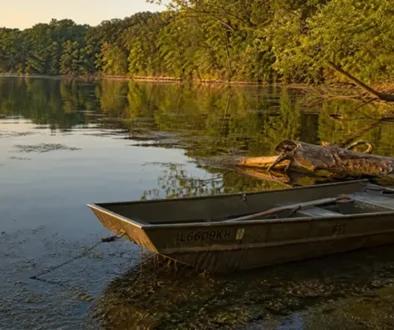
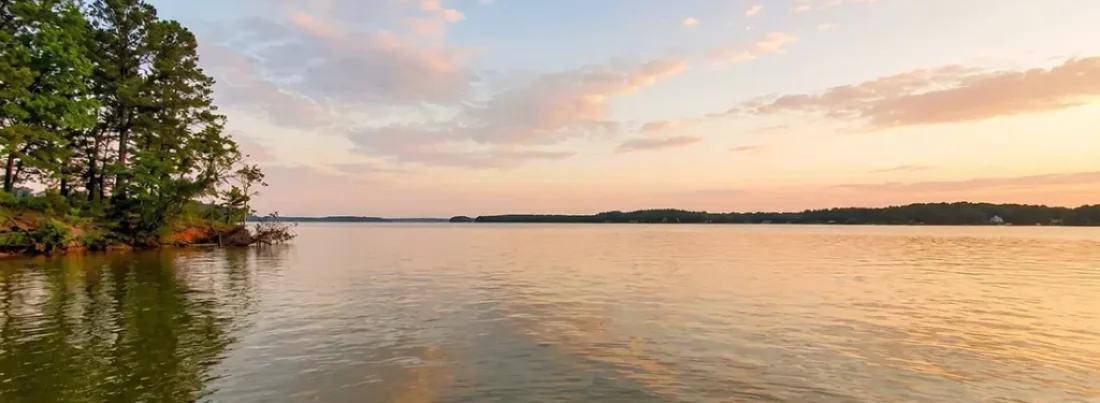
Here’s what Buggs Island Lake — aka Kerr Reservoir, aka that giant puddle straddling the Virginia/North Carolina border that nobody in the fly fishing world talks about enough — quietly offers: 50,000 acres of largemouth bass water, 800 miles of cove-studded, tree-lined shoreline, and some of the most explosive topwater fly fishing in the Mid-Atlantic. All within two hours of Richmond, three and a half of Northern Virginia, and roughly three hours from the Outer Banks crowd who absolutely ruined every good thing about coastal fishing.
We’re talking about a lake so big that if you spent every weekend of your life on it, you’d still be finding new water when you hit retirement. A lake where bass literally jump on poppers with the enthusiasm of a golden retriever greeting its owner. A lake with creek arms so protected and calm on an early May morning that you’ll wonder why you ever chased trout.
So yes. Buggs Island. Let’s do this.
Know Your Lake: The Fast Facts That Actually Matter {#know-your-lake}
Before you go loading up the truck and making questionable fuel stop decisions on I-85, here’s the orientation you didn’t know you needed.
John H. Kerr Reservoir (Buggs Island Lake to Virginians, Kerr Lake to North Carolinians, and “that huge lake” to everyone who passes it on I-85 and keeps driving) was created in 1952 when the Army Corps of Engineers dammed the Roanoke River. It’s named after Congressman John H. Kerr of North Carolina, who championed the project — and yes, Kerr is pronounced “Car,” not “Curr.” Don’t be that person.
The actual island — Buggs Island — sits just below the John H. Kerr Dam. It’s named for Samuel Bugg, an early settler, and is now famous mainly for its bald eagle population, which is excellent, and for confusing the hell out of everyone trying to figure out what the lake is actually called.
The basics:
- Surface area: ~48,900–50,000 acres at full pool
- Shoreline: 800+ miles, crisscrossed with creek arms, coves, and hidden flats
- Average depth: About 30 feet, with some holes pushing 100 feet near the dam
- Length: Roughly 39 miles up the Roanoke River
- Location: Straddles the Virginia/North Carolina border; Clarksville, VA is the only town actually on the lake
- License situation: Virginia OR North Carolina license is valid lake-wide. Reciprocal agreement. Pick whichever state is cheaper or where you’re staying.
The one thing everyone asks: Is this a two-state fishing situation? Nope. Buy one license from either state and you’re legal. You’re welcome.
When to Go: Seasons, Skeeters, and Survival Odds {#when-to-go}
Spring: March – Early June ⭐⭐⭐⭐⭐
If you’re going to go once, go in spring, and specifically target late March through May. This is when the fishing gods briefly decide to reward the faithful.
When water levels rise in spring — and Buggs Island often reaches full pool around this time — the lake floods into the willows, sweet gums, and buckbrush lining the shoreline. Largemouth bass spawn in waves starting around the end of March through late April, and post-spawn, they’re aggressive, shallow, and absolutely infuriated by a well-presented deer hair bug landing three feet off their beds.
What this means for fly anglers: It means every tree, every flooded bush, every submerged willow branch is suddenly a potential strike zone. You can work your way down a bank, dropping poppers into every pocket between branches, and lose count of how many fish you’ve moved. It’s the kind of fishing that makes you question every other fishing choice you’ve ever made.
The drawback? Everyone knows it. Spring weekends can get crowded — especially the May holiday weekends when every bass boat tournament in the region descends like an organized aquatic invasion. Go during the week if you can. Your blood pressure will thank you.
Mosquitoes in spring: Manageable. Not zero, but manageable. The kind of skeeter situation where the spray you brought works as advertised.
Summer: June – August ⭐⭐⭐
Summer at Buggs Island is a complicated relationship. The fishing doesn’t die — it just becomes a game of timing and coffee consumption.
Bass move shallow in the early mornings and evenings, and the topwater action from first light to about an hour after sunrise is legitimately world-class during June and early July. This is when the day’s best fly fishing happens. Pop something loud off a main-lake point at 6:15 AM on a calm June morning and brace yourself.
By 9 AM, the flat-bottomed party boats are appearing on the horizon, the jet skis are firing up, and the bass have retreated to the shade of dock pilings and submerged structure. The fly fishing window closes. You then have two options: switch to a sinking line and slow-strip a Clouser or Woolly Bugger in the shade, or go have breakfast. Both are valid choices.
The heat and humidity: Real. Oppressive. July in southern Virginia is not for the thin-blooded. We’re talking heat indexes that make Montana fishermen mutter things under their breath. Bring a good hat, sunscreen, and the humility to start fishing at 5 AM like an actual responsible person.
Mosquitoes in summer: Merciless. Organized. Possibly strategic. Layer up with DEET and accept your fate. Reason I no longer live east of the Mississippi and only visit.
Fall: September – November ⭐⭐⭐⭐⭐
Fall is the other golden window, and it might actually be the best time for the fly angler specifically. Here’s why: as water temps cool and shad start moving back into the creek arms, bass follow — and they’re eating aggressively to bulk up for winter. The mid-lake areas between County Line and Eastland are money in fall, with active schooling bass and occasional mixed striper/largemouth blitzes on shad that create topwater chaos.
Creek arms like Grassy, Bluestone, Butcher, and Eastland produce well with subsurface patterns as the water cools. Fewer crowds, gorgeous fall color, comfortable temperatures. September is still buggy. October is paradise. November is getting cool but still productive.
The secret: October at Buggs Island, midweek, with a light northwest wind and water temps in the low 60s. That’s the combination. If you figure that out, you’ll stop telling anyone else about it.
Winter: December – February ⭐⭐
Not great for the fly fisher working topwater, but if you like slow-sinking presentations and patience, bass are still around, stacked on deeper offshore structure. The lake is gloriously uncrowded. Wildlife is spectacular — the eagle population near Buggs Island itself is remarkable in winter. Cold, but fishable with the right attitude and enough layers.
What You’re Actually Targeting on the Fly {#what-youre-targeting}
Largemouth Bass — The Star of the Show
Largemouth bass are, by a significant margin, the most popular species at Buggs Island, accounting for more than half of all fishing effort on the lake. Catch rates average around 0.61 fish per hour — which sounds clinical until you realize that’s one fish every 1.6 hours of fishing, and on good days during the bite windows, you’re blowing that number out of the water.
Fish in the 2–4 pound range are standard; anything over 6 pounds is a trophy worth celebrating, and 8-plus fish are rare but real. The largemouth population has bounced back well from a nasty largemouth bass virus outbreak around 2009–2010, and the fishery today is as good as it’s been in years.
One caveat the purists need to know: Alabama bass have been illegally introduced into the lake and are spreading, particularly in Eastland Creek. This is actively impacting largemouth recruitment in some areas. It’s not a reason to skip Buggs Island — but it’s worth knowing, and it’s the kind of fisheries management headache that should make every angler furious at whoever made the absolutely idiotic decision to illegally stock them.
For fly anglers specifically, largemouth are perfect targets. They’re aggressive, they eat big flies, they crush topwater, and they don’t require the delicate presentation that would make a trout sniff in superiority. Largemouths are the golden retrievers of freshwater fish. They just want to destroy things.
Spotted Bass and Smallmouth
Spotted bass (Kentucky bass) exist in Buggs Island in increasing numbers, and you’ll occasionally pull one on a streamer while targeting largemouth. They fight hard and behave more like smallmouth than largemouth, so consider them a bonus species. True smallmouth are uncommon in the main lake but are found in decent numbers in both the Dan River and Staunton River above the reservoir — if you’re itching for smallmouth action on a streamer, those rivers are worth an afternoon.
Striped Bass on the Fly — Niche But Possible
Here’s something wild: Buggs Island is one of the only lakes in the country where landlocked striped bass reproduce naturally, mounting a spawning run up the Dan and Staunton rivers each spring. Ten-pound stripers are possible. And yes, you can catch them on the fly — big articulated baitfish streamers on a sinking line during the early spring feeding windows near Nutbush Creek and the lower lake are your best shot.
Important summer note: Striper mortality from catch-and-release is approximately 75% during warm months (June–September) due to stress and oxygen depletion. The Virginia DWR has removed the size limit during summer and explicitly asks that you stop fishing once you hit your four-fish limit. Take this seriously. Don’t be the person torturing stripers for the thrill of the release.
Crappie on the Fly — Underrated and Delightful
Buggs Island’s crappie fishery is legitimately one of Virginia’s best, and small foam flies, tiny Clousers, or micro-streamers in the creek arms during spring spawn can produce ridiculous numbers. Most crappie run 10 inches and ¾ pound; 1–2 pounders show up regularly. Buffalo, Grassy, Bluestone, and Butcher Creeks are the spots. Use a 4-weight with floating line, a 2x or 3x leader, and a size 6-8 chartreuse Clouser, and prepare to have more fun than any serious fly fisher is supposed to admit to.
Where to Fish: Hotspots, Creek Arms, and Hiding Spots {#where-to-fish}
The Creek Arms — Your Primary Targets
Buggs Island’s creek arms are where fly fishing makes the most sense on this lake. The main body of the lake is big, wind-exposed, and boat-trafficked in ways that don’t play well with a fly rod. The creek arms are where you find calm water, structure, and concentrated fish.
Top creek arms for fly fishing:
Grassy Creek — Consistently produces bass and crappie. Protected from wind, good structure at the back ends, and fly-rod friendly in the shallows during spring spawn.
Bluestone Creek — Premium bass and crappie water. Has the kind of laydowns, dock pilings, and flooded vegetation that make a bass popper work like a cheat code.
Butcher Creek — Excellent crappie, solid largemouth. Less pressure than some of the more popular arms. Worth exploring.
Eastland Creek — Historically excellent, though the Alabama bass encroachment has complicated things. Still produces, especially in fall. Watch for schooling fish.
Nutbush Creek — More relevant for stripers and summer bass targeting. Long and productive, with points that bass use to stage before moving offshore.
Rudds Creek — Accessible, productive, and near a campground. Good early-season bass water in the backs of the coves.
The Upper End of the Lake
The upper end — where the Staunton and Dan Rivers feed into the reservoir — is traditionally considered some of the best bass water on Buggs Island. Shallower, more river-like in character, it fishes differently than the lower lake and can be phenomenal in spring and fall. The vegetation, the current seams where the rivers enter, and the flatter structure all favor the fly angler.
Goat Island to Clarksville Bridge
For fall and winter fishing, this mid-lake stretch (from Goat Island to the Clarksville Bridge) is where bass and stripers concentrate. Main-lake points, riprap banks, and hard-bottom structure. Less creekarm ambiance, more reservoir fishing — but productive as hell in the right conditions.
North Bend Park and Longwood Park Areas
Both offer boat ramp access, and both put you within striking distance of productive structure. Longwood Park sits on the Grassy Creek arm, making it a particularly smart base camp for a fly fishing trip.
The Fly Box: What to Tie On (And What to Leave at Home) {#the-fly-box}
Let’s cut through the noise. Bass fly fishing is not complicated. You do not need thirty different patterns. You need the right patterns, and you need to fish them correctly.
Topwater
Foam Poppers (Size 1/0 to 2) — The bread and butter. Cup-faced poppers in chartreuse/white, olive/white, and all-black. Short, sharp strips to produce that pop, then pause. The pause is where bass eat. Most strikes happen when the popper is sitting still, which is also the hardest thing to master, because your brain keeps telling you to keep moving. Don’t.
Deer Hair Bugs — The classics. A good deer hair bug lands softer than foam, creates a more subtle disturbance, and works phenomenally on pressured fish or flat-calm mornings when a loud pop might spook fish in shallow water. Any color works if it’s black or natural.
Dahlberg Diver — Half popper, half diver — works on a pause-and-pull retrieve that makes it dive below the surface and then resurface. Absolutely maddening to largemouth. Not discussed enough in the bass fly fishing world.
Gurgler — Subtle surface disturbance, works like a floating streamer. The “whispering version” of a popper, effective on calm water evenings and on finicky fish that are up top but won’t commit to a loud splash.
Subsurface
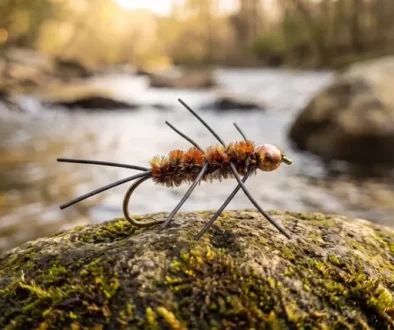
Woolly Bugger (Weighted, Size 1/0–4) — Honestly, you could fish Buggs Island with nothing but a olive or black Woolly Bugger and a popper and be fine. The Bugger imitates everything: a crawfish, a hellgrammite, a minnow, a leech. Strip it along the bottom near structure or swing it through current seams in the upper lake. Rubber legs add pulse and motion — worth the extra tying time.
Clouser Minnow (Size 1/0–4) — The striped bass and crappie catcher. White/chartreuse for stripers and crappie. Olive/white for general bass. This fly catches everything that swims in the lake and should live in every box.
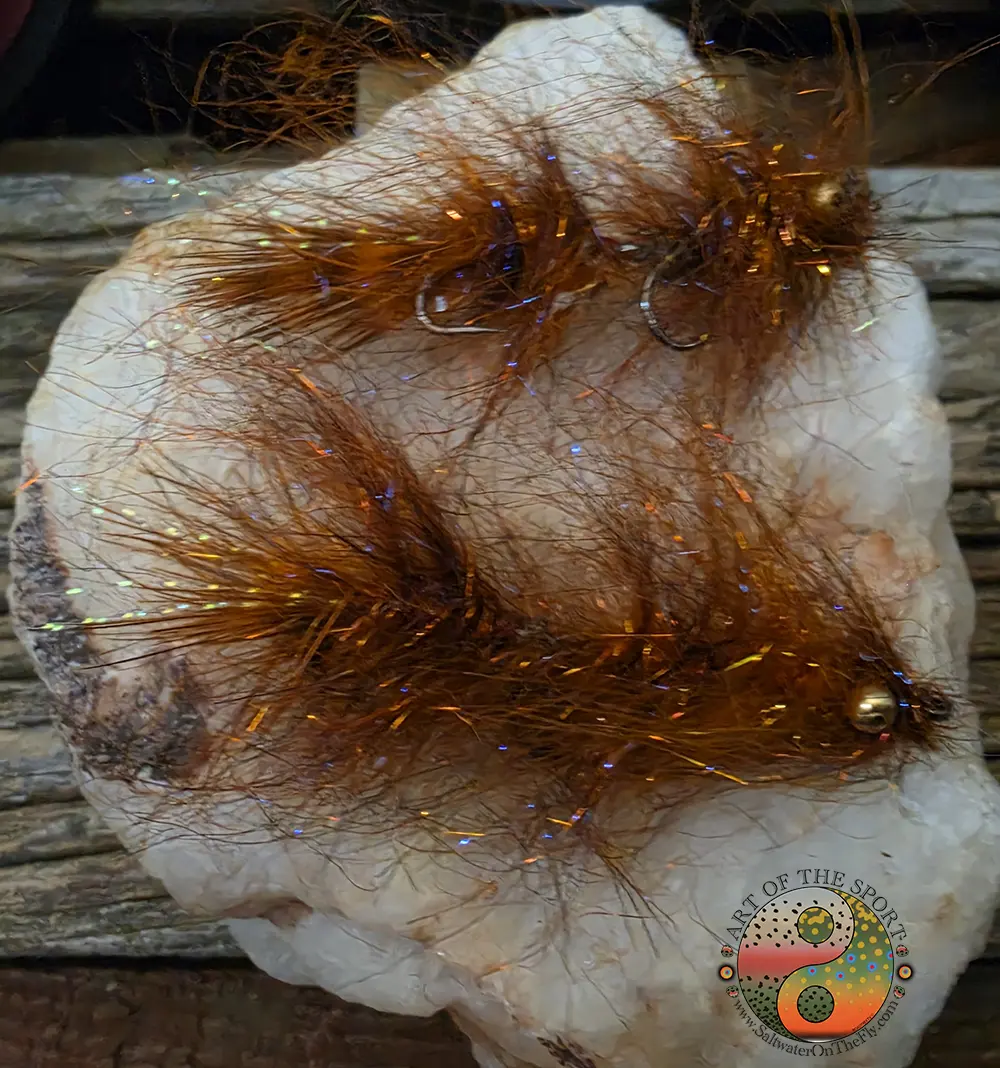
Crayfish Patterns — Buggs Island bass eat crayfish. A good articulated cray pattern crawled along the rocky structure near dam areas and points is a subsurface popper in terms of effectiveness. Burnt orange and olive are your color stops.
Baitfish Streamers (Size 1/0–2/0 Articulated) — For stripers and big largemouth, big articulated streamer patterns in white, chartreuse, or natural shad colors on a sink-tip line. Cast to the edge of deep points and strip aggressively.
What to Leave at Home
Dry flies sized 14 and smaller. Your whole nymph kit. The Parachute Adams. The Elk Hair Caddis. Leave them home. These fish are not interested. Buggs Island largemouth haven’t read Selective Trout and they don’t intend to start.
Gear Setup: This Ain’t Trout Country {#gear-setup}
Rod: 8-weight is the bass fly fishing standard. Heavy enough to throw big bugs and turn a solid fish away from that dock piling, light enough to cast all day without your shoulder filing a formal complaint. If you’re targeting stripers specifically, bump to a 9-weight.
Reel: Doesn’t need to be fancy. Bass aren’t going to scream into your backing. A decent large-arbor reel with a functional drag is all you need.
Line: Weight-forward floating line for all topwater and shallow work (which is most of what you’ll be doing). Add a sinking-tip (Type 3 or Type 6 integrated sink tip) for working structure deeper than 6 feet in summer or targeting stripers sub-surface.
Leader: 7–9-foot tapered leader to 10–15 lb tippet. Don’t overthink this. A straight mono or fluoro leader of 10-pound test tied to a loop-to-loop connection works perfectly fine and costs a fraction of a trout setup. Bass don’t care about your leader diameter.
Tippet: 1x or 0x when fishing big poppers and around heavy cover. You’re not presenting a PMD spinner to a sipping rainbow. You’re throwing a foam mouse pattern at an angry green fish.
Where to Stay: Roughing It to Slightly Less Roughing It {#where-to-stay}
Camping — The Right Way to Do This Trip
Occoneechee State Park (Clarksville, VA) — The flagship option. Right on Buggs Island Lake, this state park offers 11 cabins, two lodges, three yurts, 45 campsites, and boat launch access that’s free for campers. The cabins are properly nice — kitchens, A/C, views of the water. The campground is shaded. It’s a 3.5-hour drive from Northern Virginia and 2 hours from Richmond. Book well in advance for summer weekends. This is the anchor base camp for a Buggs Island fly fishing trip.
Rudds Creek Recreation Area (Corps of Engineers) — 98 sites, electric and primitive, hot showers, flush toilets, its own boat ramp. Open April 1 – October 31. Sits right on the reservoir with easy water access. About 20 minutes from Clarksville. No-frills Army Corps camping: it works, it’s clean enough, and it gets you to the water fast.
Longwood Park (Corps of Engineers) — 66 sites on the Grassy Creek arm of the reservoir. Ten minutes from Clarksville. Forested and shaded. If you’re specifically targeting the Grassy Creek drainage for bass and crappie, this is the spot.
Buffalo Park — Smaller, quieter, about 10 miles west of Clarksville. 21 sites. Both electric and primitive options. This is the one you stay at when the other campgrounds are full and you’ve learned your lesson about booking in advance.
Pro tip: All Army Corps campgrounds require advance reservations through recreation.gov. Walk-up spots exist but disappear fast on weekends, especially from May through Labor Day. Book early or accept your consequences.
Cabins and Vacation Rentals
Cooper’s Landing Inn & Traveler’s Tavern — Six rooms in a historic 1830s inn plus six private cottages. This is the “I want a proper bed and functioning WiFi” option in Clarksville proper. Historic, atmospheric, and well-reviewed.
Vacation rental platforms have a solid selection of lakefront properties around Buggs Island — private docks, screened porches, direct lake access. Particularly if you’re going with a group of 4–6 fly anglers, a lakefront rental house makes financial and logistical sense. Some even include kayaks and canoes.
Bayview Efficiencies — Overlooking the Clarksville Marina. Daily and weekly rentals, right on the water, boat rentals available. For the angler who wants a room without committing to camping infrastructure.
Eat, Drink, and Be Merry in Clarksville {#eat-drink}
Here’s the deal with Clarksville: it’s a small Virginia lake town, not Charleston. Expectations accordingly.
Buggs Island Brewing Company — This is your post-fishing watering hole. Craft beer, decent food, local atmosphere. Within walking distance of the Clarksville Municipal Dock. An excellent spot to debrief on the day’s fishing, consume calories, and tell stories that may or may not involve honest fish sizes.
The local grocery and gas station situation: Gas and groceries are available in Clarksville and Boydton. Stock up before heading to more remote campgrounds — the Army Corps areas are scenic but not convenient for last-minute beer runs.
Self-catering: Honestly, the best food at Buggs Island is whatever you grill at the campsite. The bass you catch are catch-and-release. The catfish you pull out of the reservoir can be kept and eaten, and channel catfish from Buggs Island are legitimately delicious when cooked fresh over a campfire. Make that judgment call yourself.
Sample Itineraries: The 3-Day Buggs Island Blitz {#itineraries}
The Spring Big Bug Trip (Late April – Early May)
Day 1 — Arrive and Scout
- Drive in Thursday afternoon. Set up camp at Occoneechee State Park or your rental.
- Launch the kayak or jonboat in the late afternoon, 5 PM–7 PM. Fish the back of Grassy Creek with a large deer hair popper. Get eyes on water levels and vegetation.
- Camp dinner, gear prep, sleep by 9:30 PM because you’re getting up early.
Day 2 — The Main Event
- On the water by 5:45 AM. Target the flooded willow edges in the back of Bluestone Creek before boat traffic starts. Throw poppers and Dahlberg Divers into every pocket of flooded brush.
- Work main-lake points near the upper end of the lake with a sinking line and Woolly Bugger from 9 AM–11 AM.
- Lunch break. Nap. Serious.
- Evening session 5:30–7:30 PM. Back into the coves. Topwater until dark.
Day 3 — Explore and Depart
- Morning session in Rudds Creek or Nutbush Creek depending on wind direction.
- Pack up, stop at Buggs Island Brewing Co. for lunch.
- Drive home trying to explain to your non-fishing partner why your shirt smells like sunscreen, sweat, and something organic.
The Fall Blitz (Mid-October)
Day 1: Arrive Friday. Fish the mid-lake area between County Line and Eastland in the afternoon. Watch for schooling bass on baitfish. If you find a school, you’re about to have the kind of afternoon that ruins normal fishing for you.
Day 2: Full day. Morning on the upper lake. Afternoon working creek arm points with streamers as water cools. Evening topwater in Grassy Creek.
Day 3: Sunday morning gold. The least-trafficked day on the lake once the weekend warriors leave Saturday night. Hit the back country coves and fish until you have to point the truck toward home.
Hidden Gems (The Instagram Crowd Won’t Find These) {#hidden-gems}
The Upper Staunton River Arm — Most visiting anglers never make it up to the river-lake transition zone where the Staunton River feeds Buggs Island. The character changes up here — more river-like, shallower, more cover. Bass behave differently in the current seams. It’s a kayak-friendly stretch that pays off for anyone willing to run the boat 20 minutes from the main lake.
Goat Island Area in Fall — While everyone is fishing the creek arms in fall, the Goat Island to Clarksville Bridge corridor holds stacked stripers and largemouth as water cools. Throw a big articulated white streamer on a sink-tip and strip hard. The striper fishing in this stretch during October and November is underreported.
The Dan River Above the Lake — Buggs Island doesn’t end at the lake boundary. The Dan River above the reservoir has genuine smallmouth bass populations, and if you bring a 6-weight and a box of crayfish patterns, you can have an entirely different style of fly fishing experience that almost nobody talks about in the Buggs Island context. Two-pound smallmouth on a 6-weight in moving water is objectively more fun per pound than a 4-pound largemouth in slack water, and we’re allowed to say that.
Weekday mornings in June — Counterintuitive given the heat, but the absolute absence of weekend boat traffic during the early morning hours on a Tuesday in June makes the lake feel like a private fishery. The topwater bite is the same as on the weekend. The ski boats are absent. This is the trade.
Staunton River State Park — Not on Buggs Island proper but immediately adjacent and manages significant dark sky designation. If you’re camping nearby, bring a telescope or just your eyes and spend one clear night away from your phone. You’ll see the Milky Way. It’s one of the few places east of the Blue Ridge where that’s still possible.
Budget Tips: How to Not Go Broke Chasing Bass {#budget-tips}
The whole Buggs Island trip can be done remarkably affordably if you don’t make stupid decisions.
- License: Virginia or NC fishing license, around $30–$47 for non-residents depending on which state. Fish lake-wide.
- Camping: Army Corps campgrounds run roughly $20–$35/night depending on site type. Occoneechee State Park cabins range from about $100–$175/night for a cabin sleeping 6. Split that three ways and you’re living like royalty on a budget.
- Boat access: If you don’t own a boat or kayak, Clarksville Water Sports at Occoneechee State Park offers rentals. A kayak rental is the cheapest way to access the creek arms — and honestly, for fly fishing purposes, a kayak or small jon boat is superior to a bass boat anyway.
- Food: Grocery store haul in South Hill or Clarksville. Camp cook. Feed yourself properly for $15/day.
- Gas: It’s Virginia, not Wyoming. You’re not driving remote. Budget accordingly.
Total 3-day budget estimate (solo, camping): $150–$250 all-in, including license, camping, food, and fuel from Richmond. That’s less than a single guided trout trip in Montana. And nobody told you that here.
The Packing List With Attitude {#packing-list}
Fishing Gear (Non-Negotiable)
- 8-weight rod and reel
- Weight-forward floating line + sinking-tip (Type 3 or 6)
- Extra leaders and 1x–2x tippet
- Foam poppers in chartreuse/white, all-black, olive/white (sizes 1/0–2)
- Deer hair bugs, assorted
- Dahlberg Divers
- Woolly Buggers in olive, black, brown, weighted (sizes 1/0–4)
- Clouser Minnows in chartreuse/white, olive/white (sizes 1/0–4)
- Crayfish patterns (burnt orange, olive)
- Articulated streamers for striper duty
- Needle-nose pliers — bass teeth are manageable but hooks in thumbs are not
- Sunglasses (polarized, non-negotiable — helps spot fish, protects eyeballs from errant casts)
- Sun gloves and sun shirt — the Virginia summer sun will cook you
On the Water
- PFD if you’re kayaking — this is a big lake and wind comes up fast
- Dry bag for anything you’d cry about losing
- Anchor or stakeout pole — you’ll need to hold position in the creek arms
- Headlamp for early launches
- Water — a lot of it, especially summer
Skeeter and Sun Defense
- DEET spray, 30–50% — summer at Buggs Island is not the time for “natural” alternatives
- Thermacell for camp evenings
- Permethrin for clothing treatment
- SPF 50+ reef-safe sunscreen because even freshwater anglers need to not get skin cancer
Camp Comfort
- A decent sleeping pad — Army Corps gravel sites are not memory foam
- A headlamp with red mode for pre-dawn launches
- Camp chair positioned facing the water
- Coffee setup: the kind that doesn’t require explaining at 5 AM
What NOT to Pack
- Trout flies smaller than size 8 (they stay home)
- An inflatable kayak that’s not rated for open water
- Optimism about the weekend crowds in July
- Anything white that you care about — the red Virginia clay stains are permanent and immediate
Real Talk: Crowds, Wind, and the Curse of the Pontoon Parade {#real-talk}
Let’s not pretend Buggs Island Lake is a secret. It receives around 4 million visitors per year and sees over 400,000 hours of fishing pressure annually. Anglers spend significant time on this water — and in summer, a significant portion of those visitors are not fishing. They’re on pontoon boats, wake boats, jet skis, and inflatable unicorn floaties.
Summer holiday weekends — Memorial Day, Fourth of July, Labor Day — are essentially a water festival that happens to have some fishing in it. If you’re a fly angler who values calm water and the ability to make a back cast without calculating the proximity of a passing wakeboard boat, avoid these weekends with the same conviction you’d avoid a root canal.
Wind: The main body of Buggs Island Lake can get genuinely nasty when wind picks up. As a fly angler, you have two moves: retreat into a creek arm (which is almost always fishable even in wind) or accept that today is a subsurface streamer day and adjust accordingly. Fighting to throw a 2/0 deer hair bug into a 20-mph headwind is a character-building exercise nobody needs.
Water levels: The Army Corps manages water levels for flood control, hydroelectric power, and water supply — which means the lake level fluctuates and that fluctuation matters to the fly angler. When levels are high (at or near full pool at 300 feet elevation), the banks flood into vegetation and the shallow-water fly fishing is incredible. When levels drop in late summer, that vegetated structure disappears and fish move offshore. Check the Corps water level gauge before planning a spring trip. High water = best topwater opportunities.
Alabama Bass: Already mentioned above, but worth repeating because it’s a real fisheries management problem, not a fishing-forum conspiracy theory. They’re in the lake, primarily through Eastland Creek so far, and they compete aggressively with largemouth. This is the result of illegal introduction and it’s genuinely damaging. Never transport live fish between water bodies. This has been your public service announcement.
Bald Eagles: Not a problem. Just spectacular. The area around Buggs Island itself at the dam is one of the better places in Virginia to observe bald eagles in winter. They apparently don’t find the pontoon boat parade as annoying as the rest of us.
FAQs {#faqs}
Q: Do I need a Virginia license or a North Carolina license? A: Either one is valid lake-wide. Virginia and North Carolina have a reciprocal fishing license agreement for Buggs Island Lake/Kerr Reservoir. Buy whichever is more convenient or cheaper.
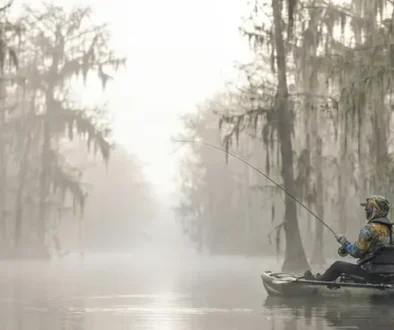
Q: Is a kayak sufficient for fly fishing Buggs Island? A: For creek arm fly fishing — which is genuinely the best fly fishing on this lake — a kayak is ideal. You can access water a bass boat can’t. For covering the main lake or striped bass fishing, a motorized boat is more practical. A small jon boat with a trolling motor is the Goldilocks option.
Q: When is the best time to fish for largemouth on the fly? A: Late April through May for the absolute peak. The post-spawn topwater bite in flooded vegetation is the highlight of the Buggs Island fly fishing calendar. Second place goes to mid-October when fall bass are aggressive and crowds are thin.
Q: Are there fly fishing guides on Buggs Island Lake? A: The guiding infrastructure is more oriented toward conventional bass fishing. Some local guides can accommodate fly anglers on request — call ahead and ask specifically. Alternatively, use this article and your own initiative. The fishing is not technically demanding enough to require a guide once you understand the seasonal patterns.
Q: Can I catch striped bass on the fly at Buggs Island? A: Yes, and it’s a real experience. Spring on the upper lake and in the lower lake near Nutbush Creek and the dam section. Big white/chartreuse streamers on a sink-tip line, stripped fast. The natural striper reproduction makes Buggs Island something genuinely special. Respect the summer mortality issue and don’t harass them when the water is warm.
Q: What about the invasive Alabama bass? Should I keep them? A: There is no bag limit or size restriction on Alabama bass at Buggs Island — Virginia DWR actively wants anglers to keep Alabama bass to reduce their population impact. If you catch one, you’re legally (and ecologically) encouraged to keep it. They’re actually good table fare.
Q: What’s the parking/ramp situation? A: Multiple public boat ramps exist around the lake at campgrounds and recreation areas. Longwood Park, Rudds Creek, Buffalo Park, Occoneechee State Park, and North Bend Park all have ramps. Most are free for campers, with small fees for day users. Launch early on summer weekends to avoid ramp traffic.
Q: Is fly fishing actually viable on a lake this size? A: Yes — emphatically — if you fish smart. Nobody is recommending you stand in the middle of the main lake and try to cover 50,000 acres with a fly rod. Target the creek arms, the flooded vegetation, the shallow points. The lake’s structure fishes small. A kayak fly angler working a creek arm is not at a disadvantage; they’re often at an advantage over bass boats that can’t get into the shallow water without spooking fish.
Final Cast {#final-cast}
Here’s the bottom line on Buggs Island Lake: it’s a legitimately excellent fly fishing destination that operates almost entirely under the radar because the conventional bass fishing crowd dominates the conversation and nobody in the fly fishing media bothers to look east of the Appalachians unless there’s a brown trout involved.
That’s their loss and your gain.
Fifty thousand acres. Eight hundred miles of shoreline. Bass that crush poppers with reckless enthusiasm. A spring bite so good it’s almost unfair. Campground options that won’t break the bank. Close enough to the I-95 corridor to justify a long weekend without heroic travel logistics. And creek arms quiet enough, early enough in the morning, to make you wonder why you ever paid for a guided trip to somewhere fancier.
Get out there before someone else writes the magazine piece and ruins it.
Ready to book your Buggs Island fly fishing trip?
Campground reservations at the Army Corps campgrounds (Rudds Creek, Longwood, Buffalo Park): recreation.gov
Occoneechee State Park cabins, lodges, and campsites: dcr.virginia.gov/state-parks/occoneechee
Virginia Fishing License: dwr.virginia.gov
The best time to plan a fishing trip is three months ago. The second best time is right now.
Into Conventional Tackle Style of Bass Fishing, Learn About Buggs Island Lake Here.
Published by Saltwateronthefly.com — Because the fish don’t care which coast you’re on.