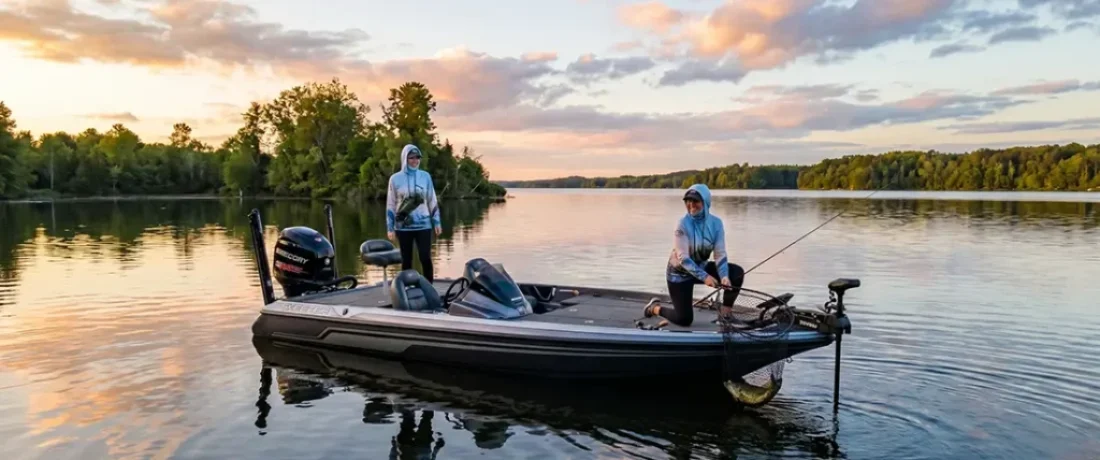
Conventional Tackle Fishing at Pymatuning Reservoir: The Complete No-BS Guide to Bass, Muskie, and Panfish
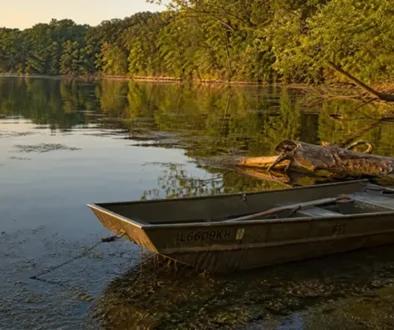
Oh, Pymatuning Reservoir — you beautiful, wind-whipped, weed-choked, 17,088-acre border dispute between Ohio and Pennsylvania. You are not a pristine trout stream. You are a warmwater warzone where largemouth bass blow up lily pad edges like they have a personal vendetta, muskies ghost your lures for a hundred yards just to humiliate you at the boat, and crappie hang in submerged timber so thick you need a crowbar to get your jig out. If you already read our Pymatuning Reservoir Bass Fly Fishing guide and appreciated the artistry of the long rod — good for you. This is the other side of that coin.
This guide is for anglers who want to sling conventional tackle, cover water, catch fish, and go home happy. We’re covering bass, muskie, and — in serious detail — panfish, because panfish at Pymatuning deserve a complete chapter and not just a paragraph at the end that reads “also bluegill exist.” We’re talking rod selection, reel ratios, line choices, lures, jigs, poppers, seasonal windows, and the spots where this reservoir actually produces. Single hooks where it makes sense, catch-and-release where it matters. Let’s get into it.
Table of Contents
Reason Pymatuning Rewards Conventional Tackle Anglers
The reservoir was created in 1934 when the Shenango River was dammed, flooding the ancient Great Pymatuning Swamp along with miles of farmland and old roads. That submerged history — timber, road beds, foundation edges, and irregular bottom structure — is exactly what makes this place a conventional tackle dream. You can probe depth changes, burn lipless crankbaits through milfoil, pitch jigs into timber pockets, and troll bucktails along deep weed edges in ways that simply aren’t available to the fly rod crowd.
The 20 HP motor restriction keeps boat traffic manageable, the reciprocal fishing license agreement means your Ohio or Pennsylvania license covers the entire reservoir when you’re on the water, and the sheer variety of species — largemouth, smallmouth, muskie, crappie, bluegill, yellow perch, white perch, walleye, channel cats, and northern pike — means the odds of a slow day are low if you know what you’re doing.
Bass Fishing at Pymatuning: Setups, Lures, and Where to Be
Understanding the Two Bass Fisheries
Pymatuning holds two distinct bass populations that demand slightly different approaches. Largemouth dominate the northern Ohio end, where shallow bays, lily pad fields, emergent vegetation, and flooded timber create exactly the kind of heavy cover they prefer. The lake averages 10–15 feet in most areas, with weedlines topping out in 3–8 feet of water — prime largemouth territory all season. Smallmouth bass, meanwhile, concentrate along the rocky riprap of the causeway connecting Ohio and Pennsylvania, the gravel drop-offs on the south end, and any hard-bottom structure the lake offers. These are two different fish with two different address books, and your tackle should reflect that.
Rod and Reel Selection for Bass
Primary Largemouth Setup: A 7-foot medium-heavy baitcasting rod is the workhorse for virtually everything you’ll throw at Pymatuning largemouth. It’s stiff enough to drive hooks through thick plastic and pry bass out of lily pad stems, but still has enough tip to load on moderate-distance casts. Pair it with a high-speed baitcaster — 7:1 or 8:1 gear ratio — that lets you pick up slack quickly on hooksets and burn lipless crankbaits on a tight line. Spool with 50-pound braided line for flipping and pitching heavy cover, or drop to 17-pound fluorocarbon when you need to work a crankbait at depth or cast to spooky fish. Budget-friendly choices in the St. Croix Mojo Bass or Abu Garcia Veritas range perform well here. Step up to a Fitzgerald Vursa or Falcon Lowrider if you fish it hard every year.
Finesse Setup: When barometric pressure crashes or the post-front bite goes lockjaw — and it will — keep a 7′-10″ medium spinning rod rigged and ready. A quality 2500-series spinning reel with a smooth drag, spooled with 10-pound fluorocarbon or a 15-pound braid-to-8-pound-fluoro leader, handles Ned rigs, small tubes, and drop shots with the sensitivity you need to feel a two-pound bass breathe on your bait.
Smallmouth Setup: The causeway rocks call for either of the above setups, but lean toward the spinning rod with lighter fluorocarbon when crawfish patterns and tubes are your primary offerings. Smallmouth in clear water are more line-shy than largemouth in pads, and that extra finesse wins you fish.
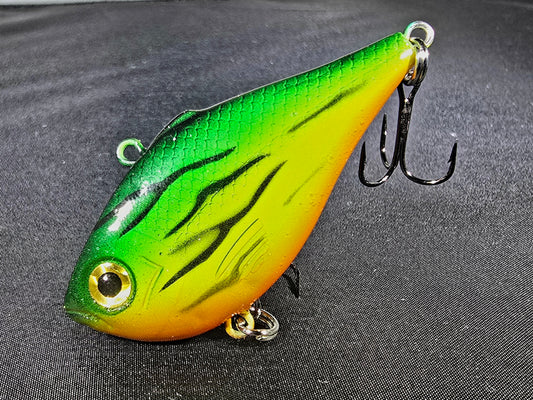
Lipless Fire Tiger Crankbait
Top Lures for Pymatuning Largemouth
Spinnerbaits are underused on Pymatuning and consistently productive. A 3/8- to 1/2-ounce willowleaf-and-Colorado combination in chartreuse-and-white or black covers both dirty-water and clear-water situations. Burn them along the outside edge of timber lines, rip them through sparse milfoil, and slow-roll them along windswept banks in spring. Both largemouth and smallmouth will crush them. Don’t sleep on the double-willow in shad colors from mid-summer onward when baitfish schools are thick.
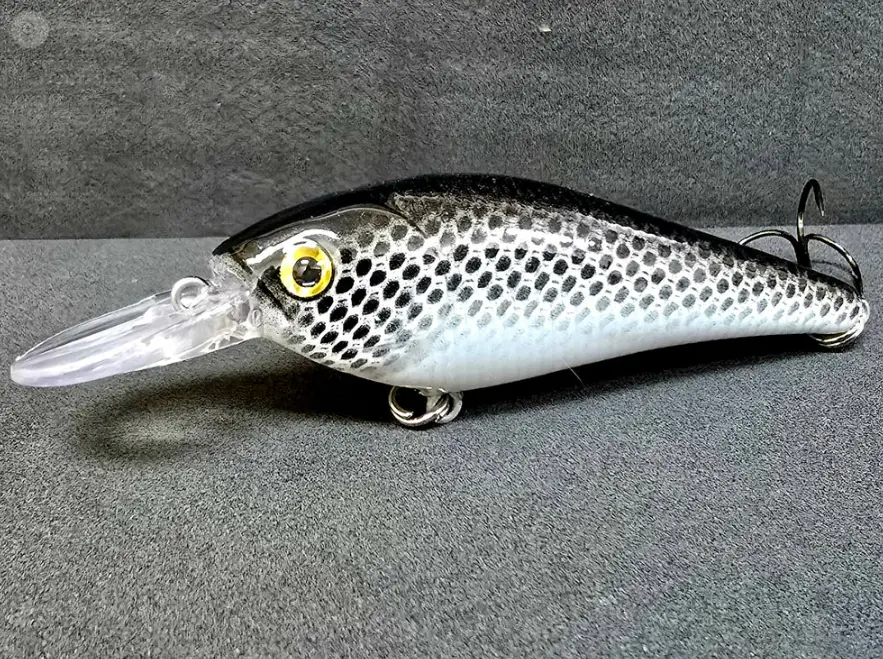
Crankbaits match the structure of the lake exceptionally well. Shallow-diving crankbaits in the 0–6 foot range — Strike King Series 3, Rapala DT-6, or similar — are the right tools for weed edges, timber points, and wind-blown shorelines. When fish move deeper in the summer heat, transition to a Strike King Series 6XD or comparable 10–15 foot diver and methodically work humps and road-bed edges that hold bass off the bottom. Square-bill crankbaits in crawfish colors are exceptional along the causeway rocks, where the deflection off stone triggers reaction strikes from smallmouth that might otherwise ignore a clean-running bait.
Lipless Crankbaits deserve more credit than they typically get here. A 1/2-ounce Rat-L-Trap or Strike King Red Eye Shad — chrome, shad, or crawfish colors — burned through submergent vegetation in fall is one of the most efficient ways to locate active fish on a big piece of water. Let it sink into the grass, rip it free, and hang on. Fall is especially strong for this technique as bass chase shad schools into the backs of bays.
Soft Plastics cover everything the above does not. A 4-inch or 5-inch Senko Texas-rigged on a 3/0 wide-gap hook is the universal closer on Pymatuning — drop it on any visible piece of structure and let bass find it. Wacky-rigged on a size 1 weedless hook, the same bait swims near beds during the spawn with devastating effectiveness. Creature baits like the Zoom Z-Craw or Berkley Havoc Craw work best flipped on a 1/2-ounce tungsten weight into the thick stuff. Green pumpkin and black-and-blue are the colors you’ll reach for 80 percent of the time.
Jigs for Pymatuning Bass
The jig is the most versatile lure in this lake, and if you only packed three types, these three would cover you year-round.
Bladed Jigs (ChatterBaits): A 1/2-ounce War Eagle Screamin’ Eagle or Z-Man/Evergreen CrosseyeZ in chartreuse or green-pumpkin-craw deserves its own dedicated rod. Rip it through milfoil and hydrilla on the northern end, or slow-roll it through flooded timber at lower RPM in cold water. The flash-and-vibration combination triggers reaction bites from fish that have seen every other presentation.
Football Jigs: For smallmouth holding on gravel and rock along the causeway and south-end drops, a 3/4-ounce football head jig with a matching craw trailer dragged slowly along the bottom is the money move. Brown, green pumpkin, or natural crawfish colors. Fish it slow, let it sit, drag it a foot, repeat.
Flipping and Pitching Jigs: A 1/2-ounce Booyah or Strike King Hack Attack flipping jig punches through the lily pad mats and flooded brush on the Ohio end as well as anything on the market. Tip it with a Zoom Super Chunk or Berkley PowerBait Chigger Craw. Black-and-blue for stained water, green pumpkin for anything clearer. This is the setup that wins in heavy cover when everything else gets wrapped up.
Ned Rig and Tube Jigs: When the lake turns difficult — post-front, high pressure, midday summer heat — a 1/4-ounce Ned head tipped with a 2.75-inch ZMan TRD or a 3/8-ounce tube jig on a tube head dragged along gravel is often the only presentation that draws strikes from finicky smallmouth.
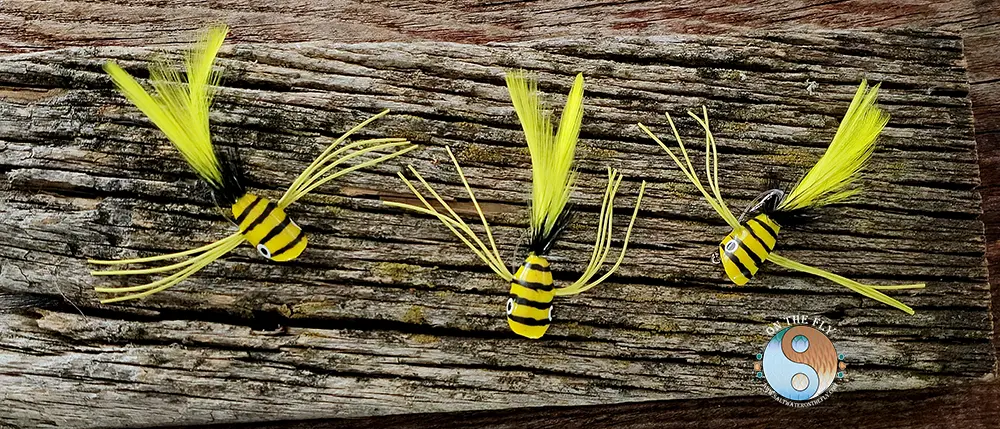
Poppers and Topwater for Bass
This is where Pymatuning shines and where the memory-making happens. Early morning and late evening on the northern bays, with poppers and walk-the-dog baits skating over lily pad edges, is as good as warmwater topwater fishing gets anywhere in the Midwest.
Best Popper Choices: The Rebel Pop-R in 1/4 ounce is a classic for good reason — subtle, splashy, and irresistible to largemouth in low-light conditions. The Arbogast Hula Popper in frog or black-and-yellow adds more commotion. The Boogle Bug in chartreuse works well on windier mornings when you need a bait that pushes more water and stays visible in chop. Work these with a pause-pop-pause cadence along pad edges and over submerged timber, and be patient on the pause — Pymatuning bass sometimes follow for 10 feet before committing.
Walk-the-Dog Baits: On windy mornings or when bass are chasing shad in open water, a Heddon Zara Spook or Lucky Craft Sammy in shad colors covers water faster and triggers schooling fish. Use 12–15 pound monofilament or fluorocarbon on a 7-foot medium-heavy rod so you have enough stretch for solid hooksets on long casts without ripping the bait away from the fish.
Frogs: Over the densest pad mats and floating grass, a 1/2-ounce hollow-body frog — Stanley or LIVETARGET are both solid — is the tool for the job. Walk it across the mat, pause it in any opening, and set hard on a count of two after the blow-up. This is where 50-pound braid and a stiff rod pay for themselves.
Seasonal Topwater Calendar:
- Spring (April–May): Poppers in 2–5 feet along pad edges and points; early-morning windows are best
- Summer (June–August): Frogs on heavy mats at dawn and dusk; walk-the-dog baits over schools at first light
- Fall (September–October): Spooks and lipless on open-water shad schools; popper action stays strong until water temps fall below 60°F
- Winter: Topwater is essentially done; go deep with vertical jigs
Muskie Fishing at Pymatuning: Gear for a Toothy Freight Train
Pymatuning is a legitimate muskie fishery. The reservoir is stocked annually by both Ohio and Pennsylvania, has a 30-inch minimum size limit with a two-fish aggregate, and produces fish into the mid-to-upper 40-inch range on a regular basis. These are not accidental catches. If you’re targeting muskie here, come prepared, because showing up with bass gear is a fast way to lose expensive lures and have a breakdown on the water.
Rod, Reel, and Line for Muskie
This is not a finesse game. You need an 8 to 9-foot extra-heavy muskie-specific casting rod — St. Croix Muskie Avid, Muskie Innovations, or comparable — with a backbone stiff enough to drive 3/0–5/0 hooks through a muskie’s bony jaw and enough length to execute a proper figure-eight at the boat. Pair it with a high-capacity low-profile baitcaster or a dedicated muskie round reel (Abu Garcia Revo Toro, Shimano Tranx 400) spooled with 65–80 pound braided line. You need 100–200 yards of capacity minimum.
Leaders are non-negotiable. Use 12–18 inches of 80–100 pound titanium wire or heavy fluorocarbon leader material. A muskie’s teeth will destroy fluorocarbon in a single strike if you’re running anything lighter. Carry a good pair of long-nosed pliers and a jaw spreader in the boat — these fish bite.
Muskie Lures and Tactics
Bucktails and Inline Spinners are the workhorses of Pymatuning muskie fishing. A 3/4- to 1-ounce Double Cowgirl or Mepps Muskie Killer in black-and-orange, black-and-chartreuse, or white-and-chartreuse covers the most water per cast and keeps your presentation in the strike zone throughout the retrieve. These are especially effective along weed edges in spring and fall. Cast parallel to the weedline and burn it back.
Swimbaits: 8- to 12-inch soft-body swimbaits like the Musky Innovation Bull Dawg or Medusa in shad, perch, or yellow-black are slow-roll baits built for methodical work along deep weed edges and points. Muskie will follow these from considerable distance. Keep the retrieve steady — any speed variation can cause a following fish to turn off.
Crankbaits and Glide Baits: For trolling, large Rapala X-Raps, Mag 10s, and similar long-lipped crankbaits run 8–15 feet and cover expansive structure efficiently. Casting glide baits — Lawson Lures Loco, Savage Gear 3D Glide, or Phantom — are excellent for visible weed-edge fish and suspended fish over flats.
Topwater: Summer evenings on calm water call for oversized prop baits or walk-the-dog lures like the Suick Thriller or Jackall Mikey in 6-inch-plus configurations. The surface strike of a 40-inch muskie is a sound you will not forget.
Hair Jigs: In late fall when water temperatures drop below 50°F and muskie metabolism slows, a 1.5- to 2-ounce deer-hair preacher jig or bucktail jig worked vertically along structure produces fish that won’t chase a faster presentation. Fish it in 12–20 feet along points and road-bed edges.
The Figure-Eight: Learn It, Live It
Roughly a third of all muskie strikes happen at the boat during a figure-eight. This is not a myth. As your lure nears the rod tip, drop it into the water, insert your rod tip 12–18 inches deep, and trace a wide, smooth figure-eight (or oval, some anglers prefer) keeping the bait moving throughout. A following muskie may strike on any segment of that loop. Be ready to set hard. The figure-eight has saved countless casts that would have otherwise gone fishless.
Prime Muskie Locations and Seasons:
- Spring (45–55°F water): Shallow flats on the northern end, 3–6 feet, with slow swimbaits and inline spinners
- Summer: Deep weed edges from 8–15 feet, early morning and evening; troll crankbaits during midday
- Fall: Transition zones between deep and shallow water, especially points and hard-bottom areas adjacent to soft-bottom bays; burn large baits on a figure-eight at every cast
- Top Areas: North of the causeway along weed edges, Tuttle Point, Stockers Island vicinity, and major points where open water meets structure
Panfish Fishing at Pymatuning Reservoir: The Complete Chapter It Deserves
Here’s the part that gets half a paragraph in most Pymatuning fishing guides and then disappears. That’s criminal, because Pymatuning is one of the finest panfish lakes in the entire tri-state region. The crappie fishery alone is worth a dedicated road trip. Throw in exceptional bluegill, quality yellow perch, white perch, shellcrackers (redear sunfish), and occasional white bass mixed in, and you have a slab-factory that rivals bodies of water twice its fame and ten times its tourist traffic.
Crappie at Pymatuning: The Real Trophy
Pymatuning’s crappie population is stocked and self-sustaining in nearly equal measure. Both black crappie and white crappie are present, with black crappie dominating the clearer sections near the causeway and white crappie thickest in the stained northern bays and around submerged timber. Fish in the 10–13 inch range are entirely common. Anything over 14 inches here is a legitimate slab, and Pymatuning produces them with regularity during spring and fall.
Crappie Rod and Reel Setup: A 6.5- to 7-foot ultralight or light spinning rod with a fast tip is the standard — sensitive enough to feel a crappie inhale a jig but with enough backbone to keep control around brush. Mr. Crappie by Wally Marshall, B’n’M Poles, or the St. Croix Panfish series are all excellent choices. Pair with a 1000- or 2500-series spinning reel loaded with 4- to 6-pound monofilament or 6-pound fluorocarbon. Lighter line means more bites; heavier line means more recovered jigs from brush piles. Find your balance.
Crappie Jigs — The Details That Matter: Most anglers know to throw jigs at crappie. Fewer understand why certain jigs work and others don’t, and fewer still know how to match the jig to the presentation.
- Hair Jigs (Marabou): The 1/16-ounce marabou jig — Minski, Cumberland Pro Lures, or hand-tied versions in white, chartreuse, or pink — has caught more Pymatuning crappie than any other lure category. The breathing action of marabou on the fall is exactly what a crappie expects from a dying minnow or nymph. Fish these vertically under a slip bobber set 14–20 inches off bottom when crappie are suspended over brush, or dead-stick them under docks in current-free zones.
- Tube Jigs: A 1.5- to 2-inch tube on a 1/16-ounce tube head in white, chartreuse, or “wonderbread” (white-and-chartreuse flake) gives you a slightly different action — more of a spiral fall than the marabou flutter. Exceptionally good for black crappie holding along rocky structure near the causeway. Fish it on a 1/16-ounce head for shallow water, step up to 1/8-ounce when crappie are holding in 10–14 feet.
- Bobby Garland-Style Soft Plastics: The Bobby Garland Baby Shad in 2 inches, the Strike King Mr. Crappie Slabalicious, and similar body-style baits on light jig heads produce well when crappie are in an active mood. The paddle or boot tail creates vibration that draws fish from a wider area than static jigs.
- Live Minnows: Don’t overlook them. A 1.5- to 2-inch fathead minnow under a slip bobber at the right depth — typically 12–24 inches above any visible brush or cover — is the single most effective crappie presentation on the lake during low-pressure, tough-bite days. Keep a small bait bucket aboard and you’ll never go entirely fishless.
Bluegill at Pymatuning: Quantity, Quality, and Pure Fun
Pymatuning’s bluegill fishery is a feature, not a consolation. The lake consistently produces bluegill in the 7- to 9-inch range, with 10-inch-plus fish taken regularly around prime structure. These are thick-bodied, hard-fighting panfish that bend ultralight rods more than they have any right to.
Bluegill Gear: Drop down to a 5.5- to 6-foot ultralight spinning rod with a 1000-series reel and 4-pound monofilament. Lighter line means better feel, less drag on small baits, and more natural bait action. Some anglers use a simple cane pole or crappie jig pole along docks for stationary bluegill — nothing wrong with it.
Top Bluegill Baits and Presentations:
- Live Bait: A piece of nightcrawler, a small red worm, or a single wax worm on a #6 or #8 Aberdeen hook under a slip float is unbeatable for volume and for putting fish in front of new or younger anglers. Keep the float depth adjusted until you’re hanging the bait 12–18 inches above known cover.
- Small Jigs and Jig Heads: A 1/32-ounce jig head tipped with a 1-inch curly-tail grub in white, yellow, or chartreuse is the go-to artificial for bluegill. The slower the fall, the better. Work it with a gentle twitch-pause retrieve near dock pilings, weed edges, and shallow gravel.
- Crickets: Underutilized on northern lakes but highly effective at Pymatuning during summer. A live cricket under a small bobber over a gravel spawning flat in June will produce bluegill on nearly every cast.
- Small Spinners and Beetlespins: A 1/32-ounce Beetlespin in chartreuse or black-and-yellow retrieved slowly through shallow water is one of the fastest ways to locate concentrations of active bluegill. Use it as a search bait, then slow down when you find fish.
- Panfish Poppers (Conventional): A 1-inch foam popper or a small Rebel Pop-R in panfish size, cast along dock edges and shallow weed flats during calm mornings, produces explosive topwater action from bluegill — especially during the pre-spawn in May. The sound-to-fish ratio is absurd and extremely satisfying.
Spawning Behavior and Location: Bluegill spawn in gravel-bottom shallows from late May through July when water temperatures reach 67–80°F. During the spawn, males create visible circular nests in colonies, often in 1–4 feet of water near dock structure and weed edges. These fish are aggressive and territorial during this window — nearly anything that hits the water triggers a strike. Post-spawn bluegill scatter to weed cover and dock shade in deeper water.
Best Bluegill Locations:
- Dock structures at both state park areas and the marinas
- The spillway area and adjacent shallows (outside any sanctuary boundaries)
- Gravel flats near campgrounds on both the Ohio and Pennsylvania sides
- Weed edges in 3–6 feet throughout the northern bays
- Rocky points near the causeway (smaller populations but bigger fish)
Yellow Perch at Pymatuning: The Underrated Table Fish
Yellow perch do not get enough respect at Pymatuning. The lake holds a solid population, and while the average fish runs 7–9 inches, fish pushing 11–12 inches are caught every season, particularly in fall and early winter. Yellow perch are excellent eating and consistent biters — exactly what you want when bass are ignoring everything.
Perch Gear and Tactics: Stay on the ultralight setup — same rod and reel you’d use for crappie works perfectly. Perch are school fish, so finding one means you’ve found a pile. The most effective technique is a simple two-hook bottom rig with small baitholder hooks (#6 or #8) tipped with nightcrawler pieces or small minnows, dropped vertically to bottom in 10–18 feet of water. Perch live on the bottom and feed actively. Drop, bounce gently, wait for a solid thump.
Small jigs also work — 1/16-ounce tube jigs or grub jigs in perch or chartreuse colors, fished just off the bottom with a lift-drop retrieve. In fall, perch school heavily on hard-bottom areas adjacent to the deeper channel edges, and the bite can be fast and relentless.
Key Perch Locations:
- Hard-bottom and gravel flats in 10–18 feet of water
- The south basin toward the Pennsylvania end
- Open-water schools over depth breaks from 12–20 feet — use electronics to find them
- Ice fishing in winter is particularly strong for perch on Pymatuning; target them over the same hard-bottom structure in 12–16 feet
Redear Sunfish (Shellcrackers) at Pymatuning
Redear sunfish — shellcrackers — are present at Pymatuning in lower numbers than bluegill but grow larger, with fish in the 9- to 11-inch range showing up regularly during spring. They prefer slightly deeper structure than bluegill, typically 4–8 feet, and have a strong preference for snail, crayfish, and invertebrate forage over the typical worm-and-jig combination. Small jigs worked slowly near gravel or mussel-shell bottom, nightcrawler pieces fished tight to bottom, and small weighted nymphs (if you’ve crossed over from the fly fishing article) are the most effective presentations.
White Perch: The Invasive Worth Knowing About
White perch arrived at Pymatuning relatively recently and are considered an invasive species — there is no limit and no closed season on them in either Ohio or Pennsylvania. They are aggressive, school in large numbers, and will eat small jigs, minnows, and crappie-style tube jigs enthusiastically. Fishing for them is good, keeping them is encouraged, and they’re solid table fare. Target them in open-water schools with light jigs and cut bait near the bottom, particularly in fall. They compete directly with yellow perch for food and habitat, so catching them out is a net positive for the fishery.
Panfish at Pymatuning: The Complete Tackle Summary
| Species | Rod | Reel | Line | Primary Bait | Best Season | Best Depth |
|---|---|---|---|---|---|---|
| Black Crappie | 7′ UL spinning | 2500 series | 4–6 lb fluoro | 1/16 oz tube jig | Spring / Fall | 4–12 ft |
| White Crappie | 7′ UL spinning | 2500 series | 4–6 lb mono | Marabou jig + minnow | Spring | 2–6 ft |
| Bluegill | 6′ UL spinning | 1000 series | 4 lb mono | Worm / small jig | Spring / Summer | 1–5 ft |
| Yellow Perch | 6.5′ UL spinning | 2500 series | 4–6 lb mono | Two-hook bottom rig | Fall / Winter | 10–18 ft |
| Redear Sunfish | 6′ UL spinning | 1000 series | 4 lb fluoro | Nightcrawler / snail | Spring | 4–8 ft |
| White Perch | 6.5′ UL spinning | 2500 series | 4–6 lb mono | Small jig / minnow | Fall | 8–15 ft |
A Note on Single Hooks and Catch-and-Release
If you’re fishing Pymatuning for bass and muskie, please consider making the switch from treble hooks to single inline hooks wherever possible. Treble hooks cause significantly more internal injury on deeply hooked fish and make quick, clean releases far more difficult — especially on muskie, which you absolutely should be releasing unless you have a specific and defensible reason to keep one. Most muskie and bass lures can be converted to single hooks without meaningfully affecting hookup rates, and the fish you send back healthy today is the fish that blows up somebody’s topwater next season.
For panfish harvested for the table — crappie, bluegill, yellow perch — keeping a reasonable number is entirely appropriate and actually beneficial to the fishery in most cases, particularly with panfish species that can overpopulate and stunt in large, fertile reservoirs. Know the regulations for Ohio and Pennsylvania, keep what you’ll eat, and release the rest in good shape.
Muskie and Trophy Bass Release Best Practices:
- Keep the fish in the water as much as possible during photo and hook removal
- Use long-nose pliers or jaw spreaders; do not put your fingers near muskie teeth
- Horizontal hold only — never hold a muskie vertically by the jaw; internal organ damage is real
- Revive the fish until it swims away under its own power before releasing
- Avoid releasing fish in direct sun on hot summer days if possible; find shade
Regulations: Ohio, Pennsylvania, and the Reciprocal Agreement
The reciprocal fishing license agreement is one of Pymatuning’s most angler-friendly features. When fishing from a boat on the reservoir, your Ohio or Pennsylvania license covers the entire body of water. Shore fishing requires the license of the state you are physically standing in. Always carry your license on the water.
Key species regulations to verify before your trip:
- Muskie: 30-inch minimum, two-fish aggregate limit; verify current year rules with Ohio or Pennsylvania DNR
- Bass: Size and bag limits vary; check current Ohio Fishing Regulations at wildohio.gov and Pennsylvania Fish and Boat Commission regulations at fishandboat.com
- Walleye: Check statewide walleye regulations; Pymatuning may have special provisions
- Panfish: Generally generous limits; white perch have no limit and no closed season as an invasive species
Regulations change. Post current rules at both Ohio and Pennsylvania DNR sites before each season.
Invasive species: Clean your boat, drain your livewell, and dry your gear between water bodies. Zebra mussels, white perch, and other invasives are active concerns at Pymatuning. It takes five minutes and protects every body of water you visit.
Seasonal Fishing Calendar: When to Be Where
Spring (Late March–May)
Spring at Pymatuning is arguably the strongest season for diversity of species and size of fish. Bass are pre-spawn aggressive and stacked in northern bays. Crappie move shallow in April and May and are as catchable as they’ll be all year. Bluegill begin staging on spawning flats. Muskie emerge from deep winter holding areas and move to shallow flats.
Where to be: Northern Ohio bays, Padanaram access area, Wilson Road Launch, and shallow timber lines. Early morning and evening for bass topwater; midday for panfish in slightly deeper water once the sun warms up.
Summer (June–August)
Bass go to early-morning topwater windows and midday structure fishing. Crappie move deep. Panfish stay active but concentrate near shade — docks, bridges, and dense weed canopy. Muskie troll the deep weed edges.
Where to be: Bass — weed edges at first light, humps and drops by 10 AM. Panfish — docks and shaded cover throughout the day. Muskie — troll the causeway weed edges and major points.
Fall (September–November)
Fall is the best season for big fish across all species. Bass gorge on shad. Crappie re-concentrate on timber. Muskie enter their most aggressive feeding window before turnover. Yellow perch school on hard-bottom flats.
Where to be: Bass — open-water bait schools and transitional weed edges. Crappie — timber and mouths of bays. Muskie — transition zones and any hard-bottom point. Perch — south basin hard-bottom in 12–18 feet.
Winter / Ice (December–March)
Pymatuning can produce quality ice fishing in cold winters. Crappie, yellow perch, and bluegill are the primary targets. Check ice thickness carefully — 4 inches minimum for walking, 6 for ATVs — and always fish with a partner in the early and late ice periods.
Where to be: Crappie — vertically over known submerged brush in 10–15 feet. Perch — hard-bottom flats in 12–18 feet. Bluegill — 4–8 feet near remaining weed structure.
Boat Launches, Access, and Logistics
Multiple access points surround the reservoir on both sides:
Ohio Side:
- Padanaram Road Boat Launch (North end — best access for northern largemouth)
- Wilson Road Launch (Northern Ohio — less pressure, good for kayaks)
- Pymatuning State Park Launch (Ohio) — central access with camping nearby
Pennsylvania Side:
- Pymatuning State Park Boat Launch (Jamestown, PA)
- Linesville area launches — good for southern crappie and perch fishing
The 20 HP motor restriction keeps the lake manageable and makes kayaks and small aluminum boats as competitive as larger vessels. Check current access fees and launch hours with Ohio and Pennsylvania state park systems before your trip.
Camping: Pymatuning State Park on both sides offers camping from primitive to full-hookup RV sites. Book early for summer and spring weekends — this is a popular destination for the region.
Final Word: Pymatuning Is Better Than You’ve Heard
Most anglers in this region know the name but not the fishery. They drove by on the way to Lake Erie or passed the signs on Route 322 without stopping. That’s their mistake and your advantage. Pymatuning Reservoir is a multi-species powerhouse with exceptional access, manageable boat traffic, strong state management from both Ohio and Pennsylvania, and the kind of panfish fishing that makes you lose track of time.
Go for the bass and stay for the crappie. Start with a spinnerbait and end the evening with a popper. Pack single hooks on everything you can convert, release the big ones, and bring a kid if you can. Panfish fishing with a child on a warm May morning at Pymatuning may be the most underrated fishing experience in the entire region.
There are no excuses for not knowing how to fish this lake after reading this guide. Now go find out for yourself.
Tight lines — and don’t forget to check out the fly rod version of this fishery: Pymatuning Reservoir Bass Fly Fishing
Capt. Grumpy | Saltwater on the Fly
saltwateronthefly.com