Conventional Fishing Beaver Lake Arkansas: The Complete Guide to Bass, Panfish, Pike & Musky in the Ozarks
Beaver Lake doesn’t get the national press it deserves. Ask most tournament anglers about the best clear-water bass lakes in the country and they’ll rattle off Sam Rayburn, Guntersville, or Table Rock before they think about this 28,000-acre Ozark gem sitting in the northwest corner of Arkansas. That’s fine. More fish for the people who already know.
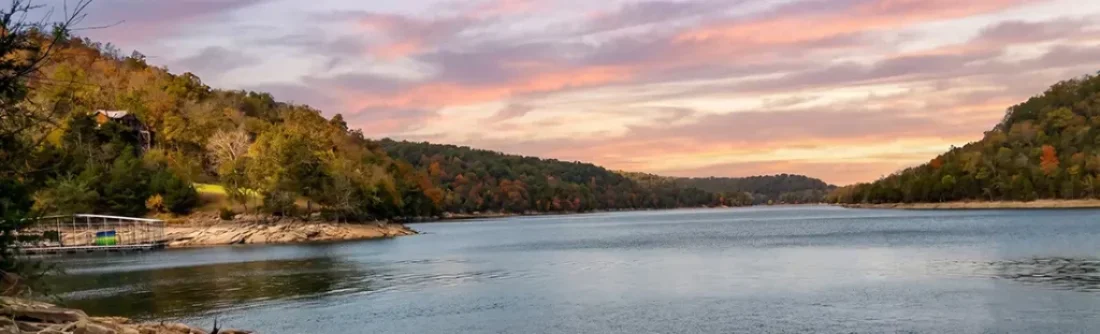
Built by the Army Corps of Engineers in the early 1960s when they dammed the White River near Busch, Beaver Lake covers nearly 487 miles of shoreline through limestone bluffs, flooded timber, rocky points, and creek arms that look more like something out of the Ozark Plateau’s geological history than a man-made reservoir. The clarity here is legendary — on a calm morning in November you can drop a GoPro off a rocky point and watch bass holding 20 feet down. That water clarity is the defining feature of this fishery and it shapes everything about how you fish it.
This guide covers conventional gear fishing at Beaver Lake from top to bottom — largemouth, smallmouth, spotted bass, stripers, and a complete breakdown of one of the finest panfish fisheries in the state. There are also musky in this lake, and if you’re the kind of angler who lives for one big swing at a fish that might not bite for days, Beaver Lake has that too.
Table of Contents
Beaver Lake at a Glance
- Location: Northwest Arkansas, east of Rogers
- Surface Area: Approximately 28,000 acres
- Shoreline: 487 miles
- Primary Drainage: White River
- Maximum Depth: 130+ feet (near the dam)
- Water Clarity: Excellent — often 10 to 20+ feet visibility
- Closest Cities: Rogers, Bentonville, Fayetteville, Eureka Springs
- License Required: Arkansas Game and Fish Commission (AGFC) license required for all anglers 16+
Bass Fishing Beaver Lake: The Crown Jewel
Beaver Lake carries three bass species of genuine note — largemouth, smallmouth, and spotted (Kentucky) bass — plus a striper fishery that regularly produces fish in the 20 to 40-pound class. That’s an embarrassment of riches for any reservoir, and the combination of clear water and complex structure means every one of those species presents differently and rewards anglers who adapt.
Largemouth Bass
Largemouth are the most abundant bass species in Beaver Lake and the backbone of the recreational fishery. They’re present in every major arm of the lake and respond to a wide range of presentations depending on season and water temperature. What makes Beaver Lake largemouth fishing different from a typical Southern reservoir is the water clarity — these fish have seen everything and they live in a visual environment. You have to think carefully about line size and lure color in a way you wouldn’t on a stained or muddy lake.
Spring (March–May): The best largemouth season. Fish move into coves, points, and shallow rocky structure to spawn when water temperatures reach 60°F. Pre-spawn fish stack up in 8 to 15 feet along the first major depth break adjacent to flat spawning areas. A Texas-rigged Senko or a creature bait dragged slowly along these pre-spawn staging areas is deadly. Once fish are on beds and visible in the gin-clear water, a weightless fluke or finesse jig on light fluorocarbon is the move. Post-spawn fish push to dock lines and wood cover in coves — a shallow-running crankbait or a swim jig works well.
Summer (June–August): Clear water + boat pressure + heat = finesse fishing. Largemouth move deeper during the day, suspending near bluffs and around deep timber at the edge of the thermocline (typically 25 to 35 feet in midsummer). A drop shot rigged with a 4-inch straight worm in green pumpkin or June bug color is the summer staple. Deep-diving crankbaits worked along main lake points also produce. Dawn and dusk are a different story — fish slide shallow and topwater lures like the Whopper Plopper, buzzbait, and Zara Spook draw violent surface strikes.
Fall (September–November): Largemouth scatter in fall as shad move into the creek arms and upper lake sections. This is one of the most productive and enjoyable seasons — fish are in the shallows, feeding aggressively before winter, and they’ll hit a wide variety of reaction baits. Lipless crankbaits like the Rat-L-Trap in chrome and red-crawfish worked through the backs of coves where shad are concentrated is a go-to fall pattern. Square-bill crankbaits over shallow rocky points also produce consistently.
Winter (December–February): Slow down everything. Largemouth school on deeper main lake structure and respond to a slow-rolled swimbait or a finesse jig inched along the bottom. Sunny afternoons with stable barometric pressure are the best windows.
Proven Largemouth Lures: Texas-rigged Senko (green pumpkin, black/blue), drop shot worm, shallow-running crankbait, swim jig with paddle tail trailer, buzzbait, Whopper Plopper, lipless crankbait (chrome/red), ned rig.
Smallmouth Bass
If you ask serious bass anglers what makes Beaver Lake special, most will say the smallmouth. The bronzeback population here is exceptional — fish in the 2 to 4-pound class are common, and the lake has produced smallmouth approaching 6 pounds in the right season. They’re concentrated along the rocky main lake structure: bluff walls, rocky points, submerged rubble banks, and ledges with access to deep water.
The White River arm near the dam and the mid-lake rocky points are the core smallmouth zones, but Blue Springs in the upper lake and the prairie Creek area also hold quality fish. The key to Beaver Lake smallmouth is the same as it is on most clear-water impoundments: get down to them. These fish are not shallow-water ambush predators like largemouth — they hold in 10 to 25 feet of water on structure that gives them access to the creek channel or the main lake drop.
Spring Smallmouth: The spawn draws bronzebacks into 3 to 8 feet of water on coarser substrate — gravel, rubble, and hard bottom adjacent to deeper water. Sight fishing to spawning fish with a finesse jig, a dropshot, or a small tube bait is exceptional on Beaver Lake because you can actually see them. Pre-spawn staging fish hold on the first significant ledge outside the spawning flats in 12 to 20 feet — a Ned rig or a football head jig dragged across this structure is one of the most reliable pre-spawn patterns you can use.
Summer Smallmouth: After the spawn, smallmouth slide back to deep main lake structure. Target rocky points that extend into 20 to 35 feet of water with a swimbait on a shaky head, a tube bait, or a bottom-hopping football jig. Main lake bluffs are also key — a swimbait or deep-diving crankbait run along the bluff face at 15 to 25 feet will pull fish. The strike zone can be narrow, so work methodically from shallow to deep on each piece of structure.
Fall Smallmouth: One of the best times of year to target bronzebacks at Beaver Lake. Shad move to main lake points and bluff ends, and smallmouth follow. Topwater fishing at first light can be outstanding in October — a Pop-R or a walking bait over submerged points produces explosive strikes. Follow up with a tube bait or deep-diving crankbait as the day progresses.
Proven Smallmouth Lures: Ned rig (green pumpkin, brown), tube bait (smoke/green flake, brown/orange), football jig (brown/orange), deep-diving crankbait (shad colors), swimbait on shaky head, drop shot (finesse worm in natural colors), topwater walking baits in fall.
Line: 8 to 10-pound fluorocarbon is the standard on Beaver Lake for smallmouth. The clear water demands it.
Spotted Bass (Kentucky Bass)
Spotted bass don’t get the marketing budget that largemouth and smallmouth receive, but on Beaver Lake they’re a legitimate target species and in some areas the most abundant bass you’ll encounter. They tend to hold on steeper, harder structure than largemouth — main lake bluffs, rocky points with quick depth transitions, and the edges of the old river channel. In fall, they school aggressively on shad in open water and can be caught in numbers on anything that looks like a small baitfish.
Spotted bass are typically smaller than the other two species but they fight disproportionately hard for their size and they’re extremely willing biters. A finesse swimbait on a small jighead, a drop shot, or a tube bait fished on main lake structure will produce consistent spotted bass action throughout the warmer months. When you find them schooling on shad in fall, a small spoon or a chrome lipless crankbait worked through the school will generate fast and furious action.
Striped Bass
The Beaver Lake striper fishery is a separate category entirely. These are not the 3 to 5-pound stripers you’re thinking of from a stocked inland lake — Beaver Lake has produced fish in the 40 to 50-pound class, with state records seriously challenged. A 40-pound striper is not a fluke here; it’s a real possibility for any angler who puts in the time and targets them correctly.
Stripers are primarily a main lake species. They follow shad schools through the open water of the central lake and congregate near the dam in winter when shad become lethargic in the cooler water. Winter striper fishing near Beaver Dam is considered some of the best in the state — downlining live shad or large swimbaits on heavy tackle near the thermocline is the standard approach.
In fall, stripers push shad schools to the surface in the main lake — classic schooling behavior that rewards anglers who watch the sky for diving birds and run to breaking fish. A large chrome spoon or a white paddle tail swimbait on a heavy head thrown into the melee will get hammered. Summer stripers bite best at night with the help of submersible lights that draw shad to the surface and the stripers behind them.
Proven Striper Tactics: Live shad on a downline rig (winter/spring), large white or chartreuse swimbaits on heavy jigheads, chrome spoons for schooling fish, surface plugs at night, umbrella rigs for suspended fish in summer.
Rod/Reel: Heavy spinning or baitcasting gear — a 7’6″ to 8′ medium-heavy rod rated for 1 to 3 oz lures paired with a reel spooled with 40 to 65-pound braid is the standard striper setup. Leader: 40 to 60-pound fluorocarbon.
Panfish Fishing Beaver Lake: A Complete Guide
This section deserves more space than it usually gets in Beaver Lake fishing guides, because the panfish fishing here is genuinely outstanding — arguably one of the finest mixed panfish fisheries in the state of Arkansas.
Black and White Crappie: The Premier Panfish
Crappie are the co-headliner at Beaver Lake alongside largemouth bass, and for good reason. The fishery produces fish in the 14 to 16-inch class with regularity, crappie to 3 pounds are caught every season, and creel surveys have shown that over 52% of crappie caught on Beaver Lake measure 10 inches or better. That’s a staggering quality rate for any crappie fishery. The lake is widely considered to be one of the best crappie fisheries in the state of Arkansas, and the angling community here backs that up — the Beaver Lake Fishing Club holds multiple crappie tournaments annually.
Both black and white crappie are present. Historically white crappie dominated the catch, but in recent years black crappie numbers have climbed and now comprise an increasing percentage of the catch. Current regulations set a 15-fish daily limit (black and white crappie combined) with a 10-inch minimum length limit.
Where to Find Crappie on Beaver Lake
Crappie are structure fish first and foremost on this reservoir. Their location follows a predictable seasonal pattern tied to water temperature:
Spring (March–May): Prime time. Crappie move into the shallows to spawn when water temperatures reach 55 to 65°F. Target dock pilings, submerged brush piles in 4 to 10 feet of water, flooded timber in the creek arms, and any man-made fish attractor structure. War Eagle Creek and Indian Creek arms hold excellent spring crappie concentrations. Fish will often be suspended at 3 to 5 feet in 8 to 12 feet of water around brush.
Summer (June–August): As water temperatures rise and the thermocline sets, crappie move deeper. They’ll be found suspended in 15 to 25 feet of water near the edges of bluffs, submerged timber in the old river channel, and around main lake brush piles that have been established in deeper water. A slow vertical presentation with small jigs or minnows is essential for summer crappie. Electronics are your best friend for locating suspended fish — look for marks holding at the depth of the thermocline.
Fall (September–November): Crappie follow shad movements. As shad schools move into the upper lake arms and coves, crappie move with them. Fall crappie suspend near structure at intermediate depths (10 to 18 feet) and can be caught on small shad-imitating jigs worked horizontally through their feeding zone.
Winter (December–February): One of the best seasons to target crappie specifically. Fish move slowly and hold tight to vertical structure — bluff walls, dock pilings, standing timber. They’re catchable all winter on slow-fished jigs and live minnows, and winter crappie tend to be in excellent physical condition. The 10 to 15-foot depth range on sunny afternoons during winter is worth checking before going deeper.
Crappie Techniques and Tackle
Tight-Line Vertical Jigging: The most efficient technique for finding and catching crappie on Beaver Lake. Use a 10 to 12-foot B’n’M or similar crappie rod with 6 to 8-pound monofilament or light fluorocarbon. Vertically drop a 1/16 to 1/8-ounce tube jig or curl-tail grub directly over fish you’ve marked on your sonar. Chartreuse, pink, white, and shad-colored jigs all produce. The key is depth — you need to be within 2 to 3 feet of where the fish are holding.
Spider Rigging: Cover more water by running 4 to 8 rods off the front of the boat in a fan pattern, trolling at 0.5 to 0.8 mph through crappie-holding structure. This technique is exceptionally effective for locating fish in fall when they’re scattered across the upper lake. Use 1/16 to 1/4-ounce jigs depending on wind and current, and vary colors until you find what they want.
Live Minnow Fishing: Hard to beat live minnows for crappie, especially in cold water when fish are less willing to chase. Hook a 1.5 to 2-inch minnow through the back on a 1/0 light-wire hook under a slip float set to the target depth. Cast to dock pilings, brush, and timber edges. This is also the simplest approach for bank fishermen and kids.
Long-Line Trolling: Run jigs on long leads behind the boat at 0.5 mph around main lake points and along the edges of bluff lines. Cover water efficiently to locate fish before switching to vertical techniques to catch them. Chartreuse and white jigs in 1/8-ounce produce well.
Jig Selection by Season:
- Spring spawn: Bright colors — chartreuse, orange, pink, and two-tone combinations.
- Summer deep: Natural shad colors — white, silver, gray with a hint of chartreuse.
- Fall: Match the shad — white and chrome, or whatever the fish tell you.
- Winter: Slow down and go subtle — white, light pink, pale chartreuse in smaller sizes.
Bluegill
Bluegill are naturally occurring and abundant throughout Beaver Lake, particularly in the coves, around dock pilings, and along weedy or brushy shoreline cover. While they don’t reach the trophy sizes of a dedicated bluegill lake in the Deep South, Beaver Lake bluegill are hard biters and important forage for the bass population. They also make for exceptional light-tackle panfish action and are an ideal target for younger or beginning anglers.
Best Bluegill Techniques: Small jigs (1/32 to 1/16 ounce) in red, white, or chartreuse under a small float. Live crickets and red worms on light-wire hooks are deadly. Ultralight spinning gear with 4 to 6-pound monofilament is all you need.
Best Locations: Back ends of coves with dock pilings or brush, rocky shorelines with sparse vegetation, and tributary creek arms in the upper lake where the water is slightly shallower and warmer. Spring and early summer produce the best bluegill action when fish are on beds
Redear Sunfish (Shellcracker)
Redear sunfish — known throughout Arkansas as shellcrackers for their habit of grinding up snails and mollusks with their specialized pharyngeal teeth — are present in Beaver Lake and offer outstanding fishing in late spring and early summer during their spawning period. They tend to be larger than bluegill, and a quality shellcracker pushing 12 inches on a ultralight rod is an absolute blast.
Target redear in slightly deeper water than bluegill during the spawn — they prefer gravel and sandy bottom in 3 to 6 feet of water near deeper access. Live red worms and crickets fished on or very near the bottom are the most effective offerings. Redear are less likely than bluegill to hit artificial lures, though a very small soft-plastic worm or grub worked slowly along the bottom will produce.
Warmouth
Warmouth are a less frequently targeted but fun and aggressive panfish species present in Beaver Lake, typically concentrated in the heavier cover of the upper lake arms — wood, brush, and areas with softer bottom. They’re similar in size and behavior to rock bass but somewhat more sedentary. A small tube bait or curl-tail grub worked around wood structure will produce warmouth, and they often show up as a bonus when targeting crappie or bass in heavy cover.
White Bass
White bass are the overlooked action species of Beaver Lake. In spring they stage massive upstream spawning runs into the creek arms of the lake — War Eagle Creek in particular — and can be caught in impressive numbers on virtually anything that resembles a small baitfish. Inline spinners, small white or chartreuse jigs, and small crankbaits all produce well. A white bass spawn run in late March or April is non-stop action for as long as you want to stay.
In summer and fall, white bass school on shad in open water and can be found by watching for surface activity or working the main lake points at dawn. They’re not as celebrated as their largemouth cousins but they fight well and taste excellent on the table.
Catfish (Bonus Panfish Section)
Channel catfish are present throughout Beaver Lake and provide supplemental action, particularly for bank fishermen and those fishing after dark. Cut bait, chicken liver, and prepared dip baits are the standard offerings fished on the bottom in the deeper coves and along main lake points at night. Flathead catfish are also present and can reach impressive sizes — live bluegill fished on the bottom near woody structure is the trophy flathead approach.
Northern Pike at Beaver Lake
Northern pike are present in Beaver Lake but they occupy a different tier than the resident bass and panfish. They were introduced as a predator control measure and while they exist in the lake, they are not stocked annually and do not maintain the population densities you’d find in a natural pike lake. If you’re targeting pike specifically, expect a challenge — focus on the upper lake arms where vegetation and warmer water are more consistent with their preferred habitat.
For conventional gear anglers targeting pike, large spinnerbaits, swimbaits, and crankbaits worked over grass and weed edges in the creek arms are the starting point. Wire leaders are essential to prevent bite-offs. Pike are a target of opportunity at Beaver Lake rather than a primary fishery.
Musky Fishing Beaver Lake: The Fish of 10,000 Casts
Musky are in Beaver Lake — and this alone separates it from most Arkansas impoundments. They were stocked experimentally and while natural reproduction is possible, it remains limited due to heavy predation on musky fry by other species. Musky at Beaver Lake are catch and release only, and the angling community is asked to report any musky catch to the lake association or a fisheries officer to help track the population.
The potential size at Beaver Lake is estimated at up to 45 inches and 25 pounds based on current data, though actual sizes could exceed those estimates as fish grow. These are meaningful numbers for an Arkansas impoundment.
Musky Habitat on Beaver Lake: Focus on the weed edges, rocky points, and bluff transitions where the lake’s clearer, deeper water gives way to shallower cover. Musky need ambush structure and access to forage. The upper lake sections where weed growth is heavier and the water runs slightly warmer are the best starting point.
Musky Tactics: Think big lures and slow presentations in cold water, more aggressive retrieves in warm water. Large bucktail spinners (double 10 blades), glide baits, large crankbaits in the 6 to 10-inch range, and hard-body jerkbaits are the standard musky arsenal.
Work the edges: cast parallel to weed lines, retrieve crankbaits along bluff transitions, and always execute a figure-8 at boatside before lifting the lure — a significant percentage of musky strikes happen in the last 3 feet of the retrieve. Wire leaders of 90 to 130-pound test are non-negotiable.
Gear for Musky: A dedicated musky rod in the 7’6″ to 9′ range rated for heavy lures — at minimum a medium-heavy fast-action rod with a 300 to 400-size baitcasting reel spooled with 65 to 80-pound braid. These fish are not something you handle with bass gear.
Musky fishing requires patience, persistence, and the willingness to accept a long gap between strikes. The reward is worth every one of those blank hours.
Best Locations for Conventional Fishing at Beaver Lake
Prairie Creek Recreation Area: Public access, bank fishing options, and boat ramp access. Rocky shorelines hold smallmouth and largemouth. Docks and brush in the cove system hold crappie spring through fall.
War Eagle Creek Arm: Upper lake, shallower, and full of timber and brush that concentrates crappie, bass, and white bass during spawning runs. Best spring destination on the lake.
Indian Creek and Rambo Creek Mouths: Shad concentrations near these creek mouths draw bass, white bass, and striper in fall. Launch a boat from the nearest ramp and work the transition zones.
Lost Bridge North and South: Good boat ramp access with proximity to mid-lake structure and bluffs. Excellent for smallmouth and striper fishing.
Starkey Park Area: Main lake access with proximity to deeper points and ledges. Good for striper work in winter and summer drop-shot bass fishing.
Blue Springs (Upper Lake): Rocky structure in a slightly less pressured section of the lake. Consistently good smallmouth action.
Beaver Dam Tailwaters: Just below the dam, the White River resumes — and it offers excellent striper and trout fishing in a completely different environment. Worth including on any Beaver Lake trip.
Fishing Access, Boat Ramps & Facilities
Beaver Lake is managed in part by the U.S. Army Corps of Engineers with multiple developed recreation areas offering boat ramps, campgrounds, and shore fishing access. Major public access points include:
- Prairie Creek Recreation Area (Rogers)
- Lost Bridge North & South (Garfield)
- Starkey Park (Eureka Springs area)
- Dam Site Area (Eureka Springs)
- Rocky Branch Recreation Area
All developed ramps are concrete and suitable for trailered boats. Marinas, boat rentals, bait shops, and full lodging are available throughout the Rogers-Eureka Springs corridor.
Arkansas Fishing License and Regulations
All anglers 16 and older must possess a valid Arkansas fishing license. Purchase through the Arkansas Game and Fish Commission (AGFC) online or at local retailers. Regulations specific to Beaver Lake include:
- Crappie: 15 fish daily limit (black and white combined), 10-inch minimum length.
- Largemouth/Smallmouth/Spotted Bass: Standard Arkansas regulations apply — verify current slot limits and size limits with AGFC before fishing.
- Striped Bass: Size and bag limits apply — verify with AGFC seasonally.
- Musky: Catch and release only. Handle with care and report all catches.
- Catfish: Verify current limits with AGFC.
Regulations are subject to change. Always verify current rules at agfc.com before your trip.
When to Go: Beaver Lake Fishing Calendar Summary
| Season | Best Species | Key Techniques |
|---|---|---|
| Spring (Mar–May) | Largemouth, Smallmouth, Crappie, White Bass | Topwater, Shallow Cranks, Live Minnows, Jigs |
| Summer (June–Aug) | Striper (night), Bass (deep), Catfish | Drop Shot, Deep Crank, Night Lights for Striper |
| Fall (Sept–Nov) | All Bass Species, White Bass, Crappie | Lipless Crank, Topwater, Spider Rig Crappie |
| Winter (Dec–Feb) | Striper, Crappie, Deep Largemouth | Live Shad Downline, Slow Jigs, Finesse Presentations |
Final Word on Beaver Lake
Beaver Lake is a legitimate year-round fishery that rewards anglers who take the time to understand it. The clear water demands more from you — lighter line, more natural presentations, greater attention to approach — but it pays you back with the ability to actually see the fish you’re after, sight-fish to bass on the spawn, and watch a striper or musky materialize out of the deep water behind your lure. That’s a trade most serious anglers will make without hesitation.
The panfish fishing here, particularly the crappie, is among the best in Arkansas and deserves far more attention than it typically receives. Come in April with a crappie rig and a cooler, and you’ll leave with a story that keeps you coming back.
Capt. Grumpy — Outdoors is my life. A rod in my hand, structure on my screen, and clear water I can read. That’s a good day anywhere.
For fly fishing content, travel destinations, and outdoor adventure, visit SaltwaterOnTheFly.com