Guide to Mille Lacs Lake Bass Fly Fishing Minnesota
Mille Lacs Lake Bass Fly Fishing Minnesota is where serious smallmouth enthusiasts end up after they run out of excuses. You have this giant bowl of clear water, waves, rock, and wind, and somewhere in there are smallmouth that make your home river fish look tiny. Mille Lacs Lake Bass Fly Fishing Minnesota is where you go when you are ready to tangle with bronzebacks that feel more like freshwater bonefish than anything else.
If that sounds dramatic, that is because this lake has earned it. Tournament trails noticed long ago. Local guides talk about days where fifty smallmouth hit the net and most of them measure over seventeen inches.
The walleyes may have started the story here, but the bass completely stole the show. It is a destination that demands your best skills. This is the place to test your limits.
Table of Contents
Reason Mille Lacs Turned Into A Smallmouth Freak Show
Picture driving north out of the Twin Cities at sunset, windows cracked, scanning fields for deer as you roll toward Mille Lacs. The lake looks flat from the highway, but once you are on the water it feels huge. Shallow, clear, and loaded with rock, it is basically engineered for smallmouth bass.
For years this place was all about the walleye fish. Resorts were built on them, and people scheduled their summers around chasing them. Then the water got clearer, the walleye numbers dipped, and the smallmouth that were always there finally got their chance to run the place.
Tournament circuits noticed first. The folks at B.A.S.S. brought the Angler of the Year Championship here, and bags from those events turned a lot of heads. You do not bring the best bass anglers in the country to a mediocre lake.
Mille Lacs showed up as a top tier bass fishery on the national stage. Local experts backed that up. Anglers talked about days where they catch and release fifty smallies with an average size over seventeen inches.
For a northern lake with long winters, that is wild. As one long time guide from Mille Lacs put it, this lake is about both numbers and size. It has become a bucket list trip for many.
The Backstory: Walleye Drama And Bass Opportunity
To really understand the reason Mille Lacs fishes so well on the fly, it helps to know what happened here. Clearer water, changing prey, shifting regulations, and hot debates around walleye all opened space for smallmouth to explode. While crowds argued about limits and seasons, bass quietly thrived along the reefs and rock piles.
The lake was historically known as a walleye factory. However, as the ecosystem shifted, the smallmouth population surged. Anglers who wanted action adjusted fast.
Tubes, drop shots, and jerkbaits took over. Boat builders leaned into the hype and told stories of mixed days chasing both walleye and smallmouth on Mille Lacs fishing adventures. The script shifted from walleye only to multi species fun.
If you have spent time on Minnesota water, you know there are other great bass lakes. Leech Lake, Rainy Lake, Kabetogama Lake, and Lake Vermilion all hold great bass water. But few places match Mille Lacs for both trophy potential and numbers of big fish on fly gear.
The Minnesota Department of Natural Resources monitors these changes closely. Their data helps manage the fishery for long-term health. You can find detailed reports on the DNR website regarding population trends.
Planning Your Trip To Mille Lacs
Mille Lacs sits in central Minnesota, roughly two hours north of Minneapolis. That makes it perfect for a long weekend if you are coming from the Twin Cities or an easy add on stop if you are road tripping across the Midwest. Many visiting anglers work it into a bigger loop with lakes like Lake Mille Lacs, Rainy, and Vermilion.
The shore is ringed with resorts, rental cabins, and campgrounds. Long time outfits such as The Red Door Resort give you both a place to stay and a real read on how the fish are acting that week. If you want a classic north country launch boat vibe mixed with fly gear on your days off, this is where you start asking questions.
If you care about practical life stuff too, you are still covered here. Even if you retire near the lake someday, you can look at Allina Health Aetna Medicare Value plans for mille lacs, Medica Prime Solution plans in mille lacs, or Humana Value Plus options in mille lacs. You can fish hard and still think ahead.
It helps to know the local area before you arrive. Use a map to identify posted boundaries and public access points. This preparation saves time on the water.
Best Seasons For Smallmouth On The Fly
Cold water stretches out the growing season and shapes how these bass behave. You do not just show up in August at noon, flog the surface for an hour, and call the lake overrated. Mille Lacs smallmouth follow patterns like any other, you just need to hit the right window.
While ice fishing is popular in winter, the fly window opens as soon as the ice melts. The season dates dictate when you can legally target specific species. Always check when the season concludes Sunday or other specific days.
| Season | Water temp | Fly tactics |
|---|---|---|
| Late May to June | Mid 50s to mid 60s | Spawn and post spawn, shallow rock, streamers and craws. |
| July to August | Upper 60s to low 70s | Topwater early and late, deeper reefs mid day. |
| September to October | Falling through 60s into 50s | Baitfish streamers, big meals near breaks. |
Late May and June can be silly. Bass push shallow onto sand and rock to spawn. They slide along transitions near protected bays and gentle flats.
Sight fishing can be a thing on calm days. This makes a good pair of glasses and slow feet as important as your casting stroke. You might see a bass greater than five pounds cruising the shallows.
July and August feel more like a puzzle. Some fish stick around shallow rock and chase early and late. Many push to reef edges during mid day, resting near boulders and waiting for an easy snack.
Topwater mornings that roll into midday sinking line work are standard here. Fall might be the favorite for a lot of regulars. The crowds thin, leaves turn, and smallmouth get heavy.
As water temps drop, fish group up on prime pieces of structure. Streamers that move like injured baitfish start doing work. You can have shocking days if you stick through the wind and chill.
Gear Setup For Mille Lacs Lake Bass Fly Fishing Minnesota
This is big water with big fish. You do not need saltwater rods, but you also do not want to bring only a soft five weight that lives on small spring creeks. Think lake, chop, and the chance at a seven pound smallmouth, and you get the idea.
Rods And Lines
A fast or medium fast seven or eight weight covers almost everything here. The rod should turn over weighted flies into a stiff breeze and still protect ten to fifteen pound tippet. A backup rod is smart if you are planning several days on the water.
For lines, run at least two setups. A floating line for poppers, bugs, and shallow work. An intermediate or type three sinking line for reefs, breaks, and deeper sand flats.
If you want to geek out more on gear, it is worth reading a good breakdown of modern setups in this guide to fly fishing equipment. That piece runs through rods, lines, and the smaller details that keep a big lake day smooth. Having the right angling equipment makes a difference.
Leaders And Tippet
These fish are not ultra picky about leader diameter. You are dealing with clear water but also rock and hard hits. Nine foot leaders tapered down to ten to twelve pound fluoro are a great start.
For heavier flies or when you are around sharp boulders, step up to fifteen pound. You do not need long, whisper thin trout leaders here. Shorten up a bit for heavy sinking lines so your flies stay near bottom without snagging as much.
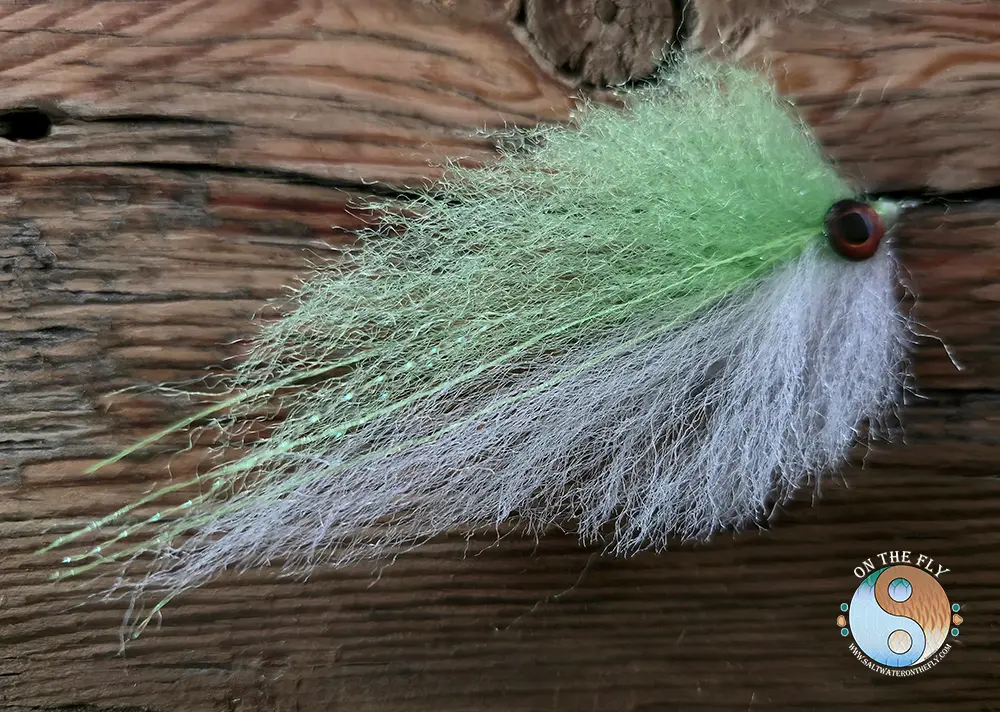
Brief Selection of Flies For Mille Lacs Smallmouth
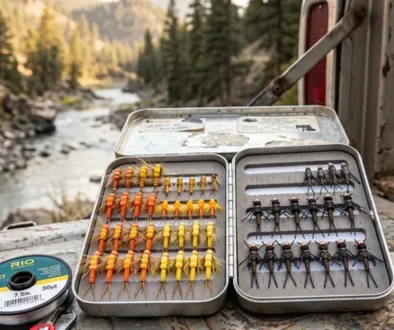
You could show up with one box of good baitfish and crayfish patterns and do just fine. But this lake deserves a fuller spread. Here is a practical list that comes from a lot of days with both good and tough conditions.
- Clouser Minnow in chartreuse and white, or olive and white.
- Weighted Woolly Bugger in black or olive, size 4 to 8.
- Deceiver in perch and shiner colors.
- Foam poppers and divers for low light topwater.
- Crawfish patterns in rusty and orange shades.
- Articulated baitfish flies like Game Changers.
- Sculpin style rabbit strip streamers near the bottom.
On tough days, small dark streamers crawled slowly across rocks can wake up sulky bass. On better days, brighter baitfish stripped with a sharp, broken rhythm can light up the shallows. Think like both a crayfish and a wounded perch and you are close.
Traditional gear folks do well here with jerkbaits, Ned rigs, and soft plastics like Keitech swimbaits. Your flies should mimic that same range of profiles and motions, just with feather and fur. Some patterns even mimic sucker minnows longer than three inches to entice big bites.
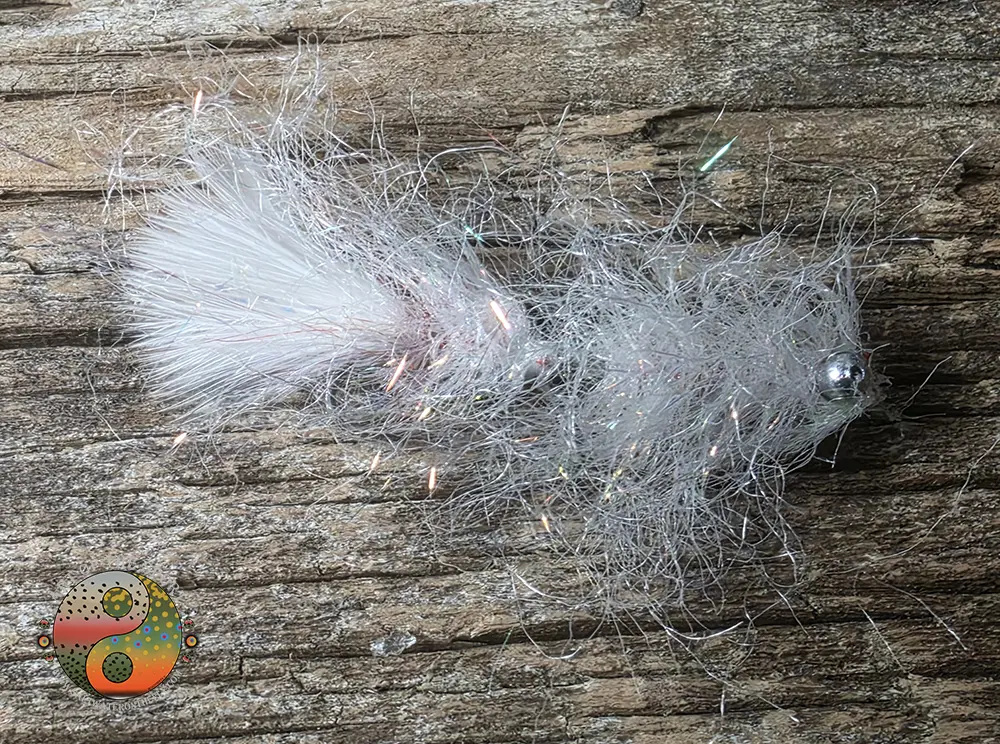
There are times when sucker minnows work best for gear anglers, and fly anglers should mimic that profile. Matching the hatch includes baitfish size. If natural sucker minnows are present, use gray and white streamers.
15 Best Flies for Mille Lacs Lake Smallmouth — And How to Fish Every One
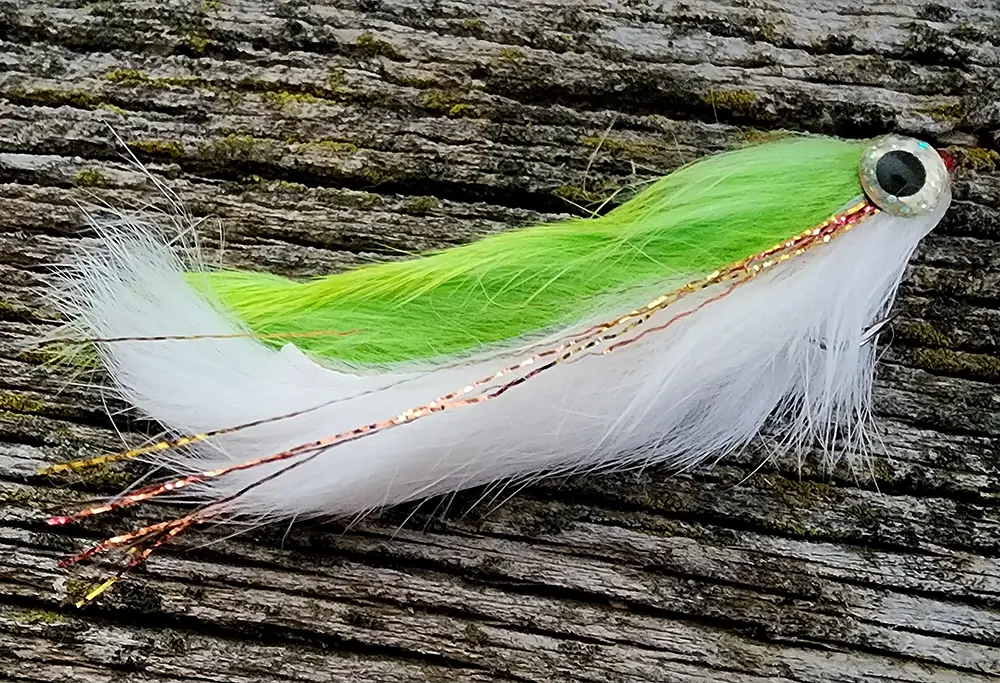
1. Clouser Minnow — Chartreuse/White or Olive/White, Size 1/0–4
The backbone of any Mille Lacs box. Weighted eyes get it down fast over rocky reefs. Strip it with hard two-foot pulls and short pauses, letting it nose-dive on the drop. The drop is where fish eat it. Fish it on a floating or intermediate line along shallow rock flats from late May through June. Size down to a 4 in clear water, size up to a 1/0 when fish are chasing shad and perch in summer.
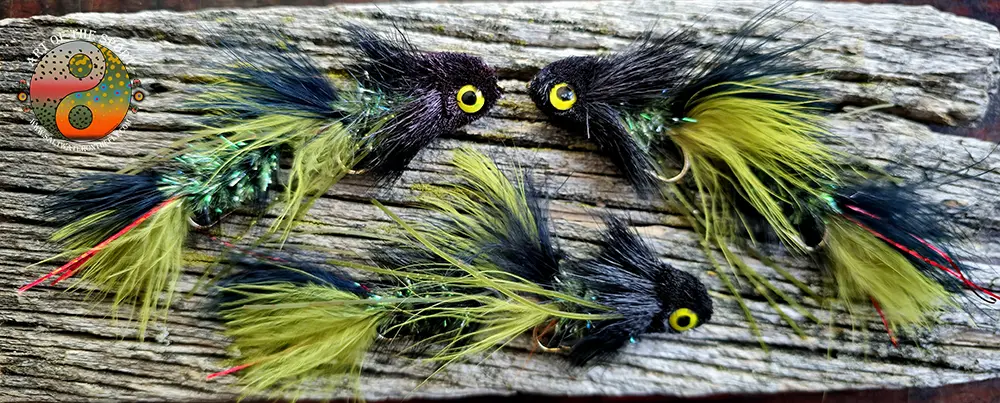
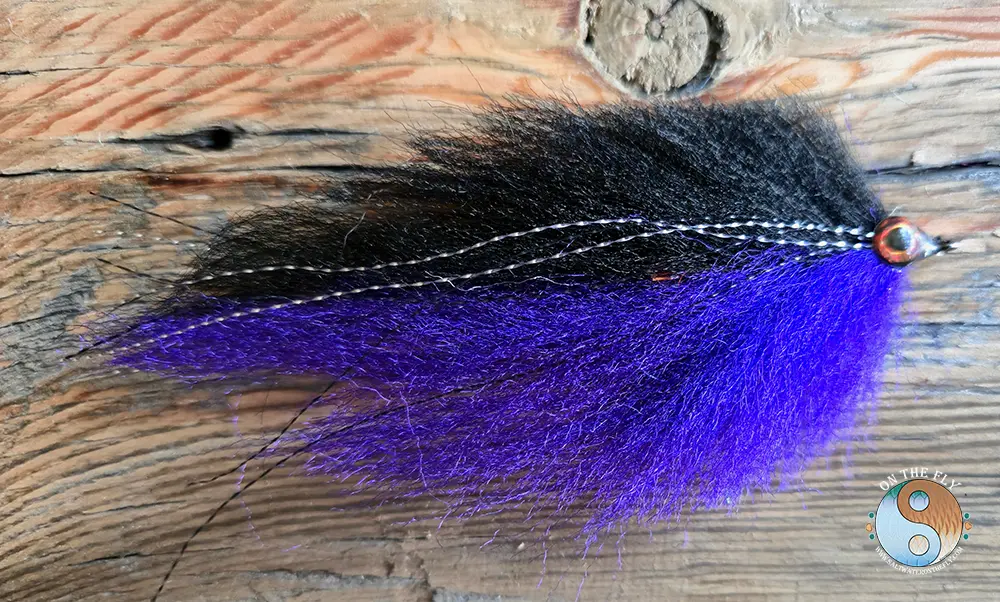
2. Woolly Bugger — Black or Olive, Size 4–8
The fly that never retires. Heavy bead head version gets down in current seams near rocky points. Slow-roll it on a type-3 sinking line along the bottom contour in mid summer. Twitch it, pause, let it settle. Black works in low light and stained water. Olive does work on bright days over sand and gravel. This is your go-to when nothing else makes sense.
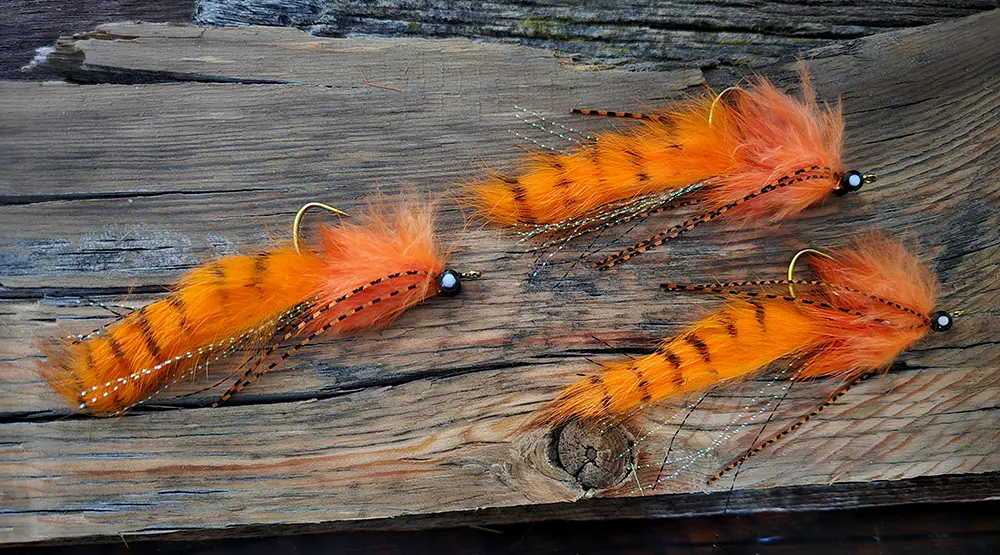
3. Articulated Leech — Crawfish Orange or Black, Size 2–1/0
Mille Lacs leeches are a real food source and smallmouth know it. An articulated rabbit strip leech with a weighted head swims like it has its own heartbeat. Fish it on an intermediate line over sand flats in spring, slow-stripped with long pauses. Let it pulse in place. Fall is prime for this fly near deep breaks — count it down ten to fifteen feet and swim it back at a dead crawl.
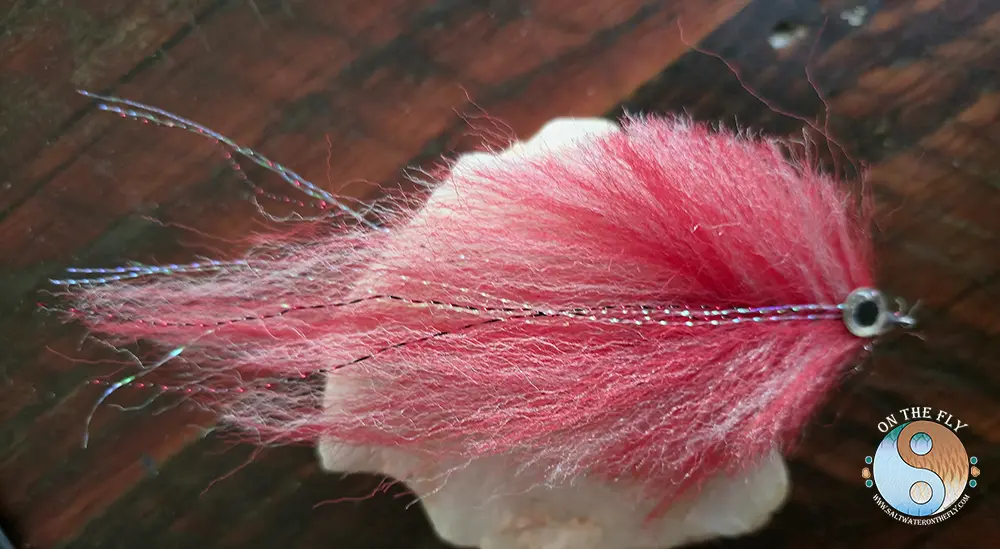
4. Game Changer — Perch or Shiner Colors, 4–5 Inches
Big flies move big fish. The Game Changer’s segmented body undulates on every strip and hangs perfectly on the pause. Match it to yellow perch colors — olive back, yellow sides, orange fins — and you have an exact imitation of one of the lake’s primary forage fish. Fish it on a full intermediate line, cast parallel to reef edges, and strip with an erratic rhythm. When you feel the follow, keep stripping until the grab.
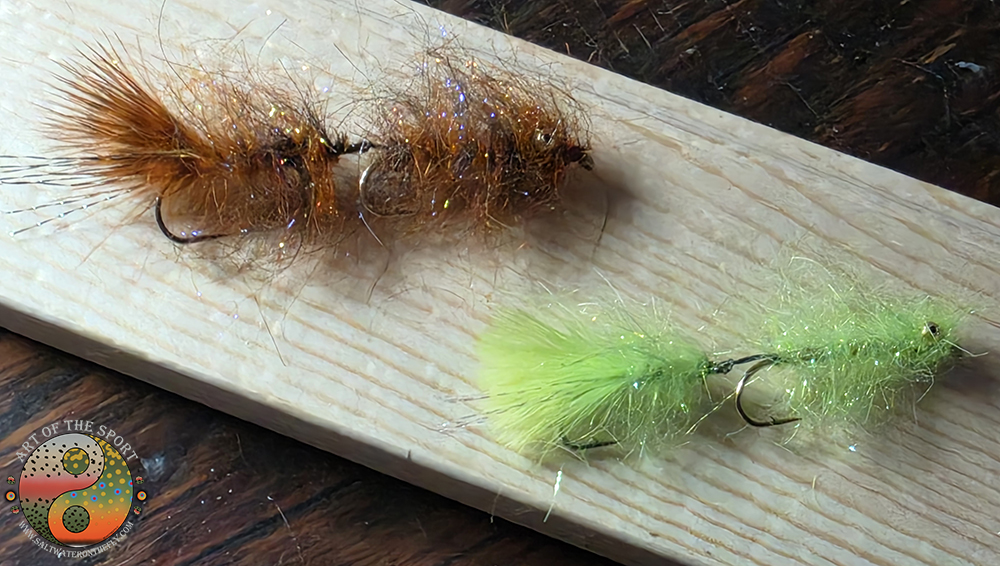
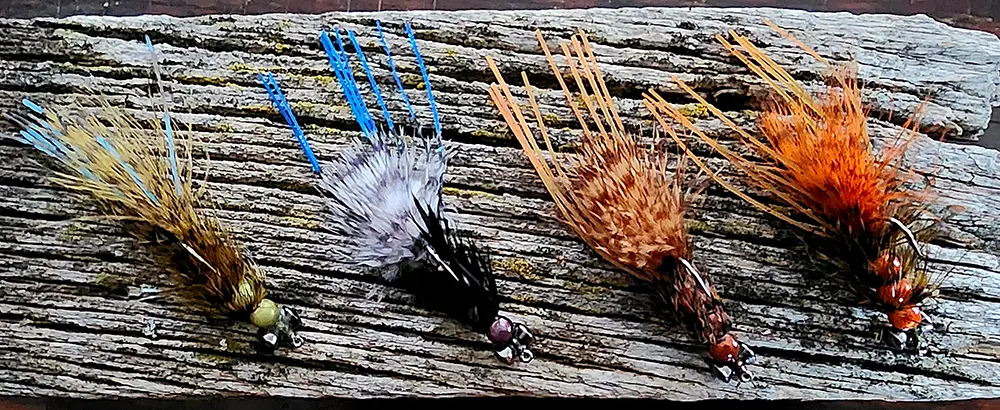
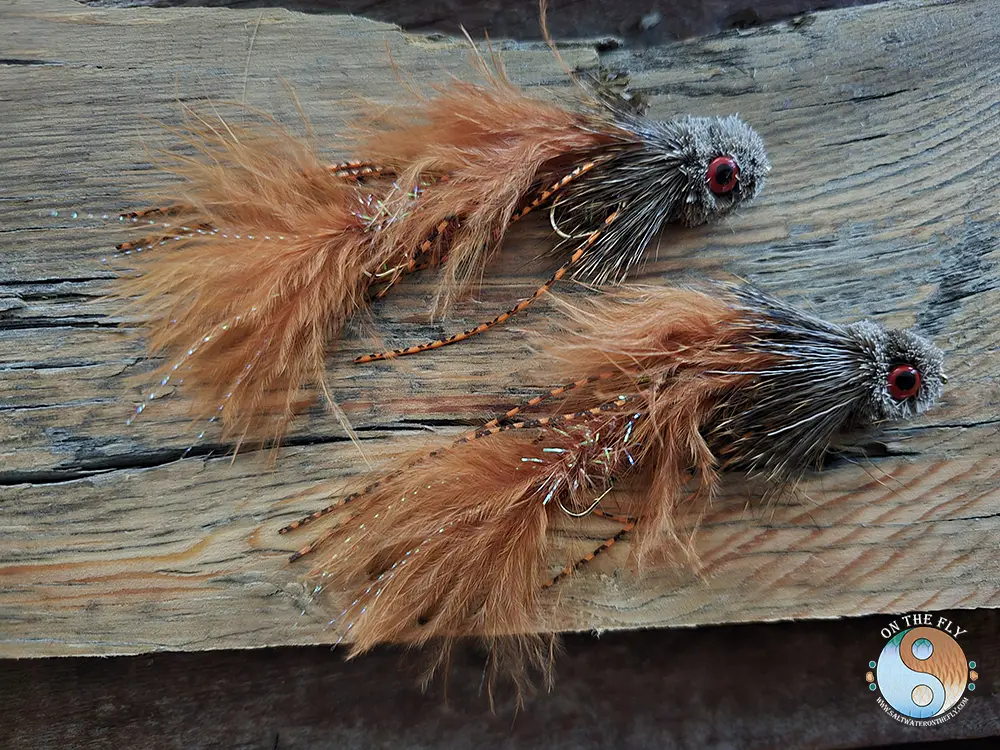
5. Predator Fiber Crayfish — Rusty Orange or Natural Brown, Size 2–6
Crayfish are the protein bar of Mille Lacs. Smallmouth eat them constantly on rocky structure. Fish a weighted Predator Fiber cray on a short leader with a floating line over the shallowest rock you can find. Twitch it in short hops, let it settle on the bottom, then creep it forward. The eat usually happens when it is sitting still. Low-light periods are best — early morning and late evening when crayfish are active.
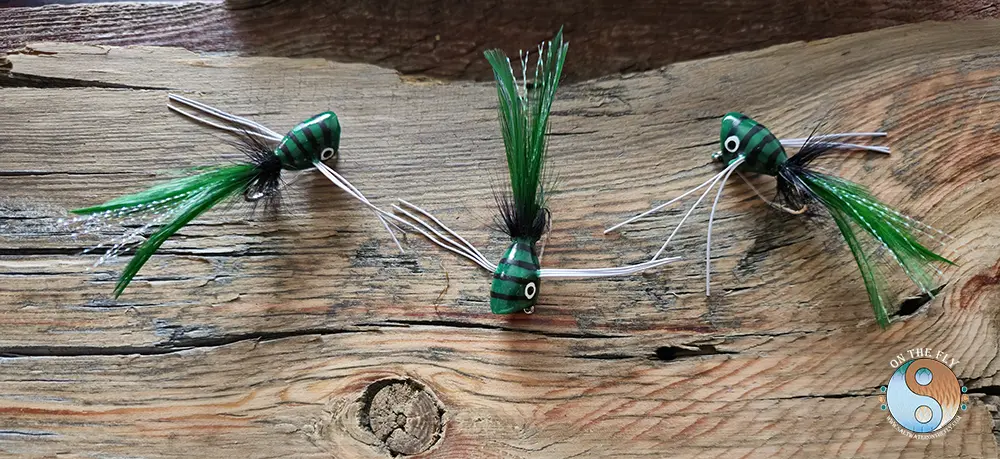
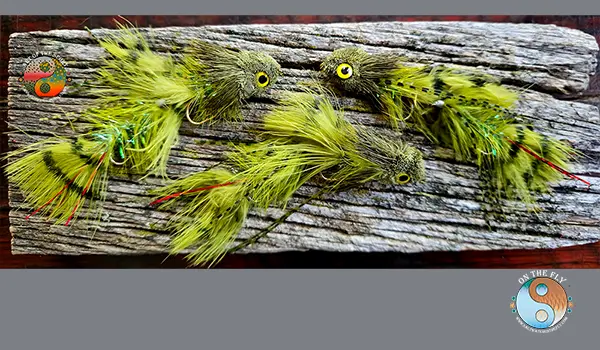
6. Foam Popper — Black, Chartreuse, or Frog Colors, Size 2–4
The fly that makes you forget everything else. On calm summer mornings, poppers over shallow rock produce blowups that make your knees buckle. Throw it close to boulders and along the downwind edges of reefs. Pop it hard twice, let the rings die, pop it once more, then dead-stop. Wait longer than you think you need to. The strike is coming. Use a 9-foot 12-pound leader and strip-set hard.
7. Deer Hair Diver — Black/Olive or Frog Pattern, Size 2–1/0
A diver gives you what a popper can’t — a subsurface dive on the pull that triggers followers who won’t commit to a surface eat. Use it when bass are showing interest in topwater but short-striking. Cast to the same spots you’d throw a popper, pull it under, let it rise, pull it under again. The combination of surface disturbance and diving action covers both feeding zones at once. Works well on overcast days when fish are roaming.
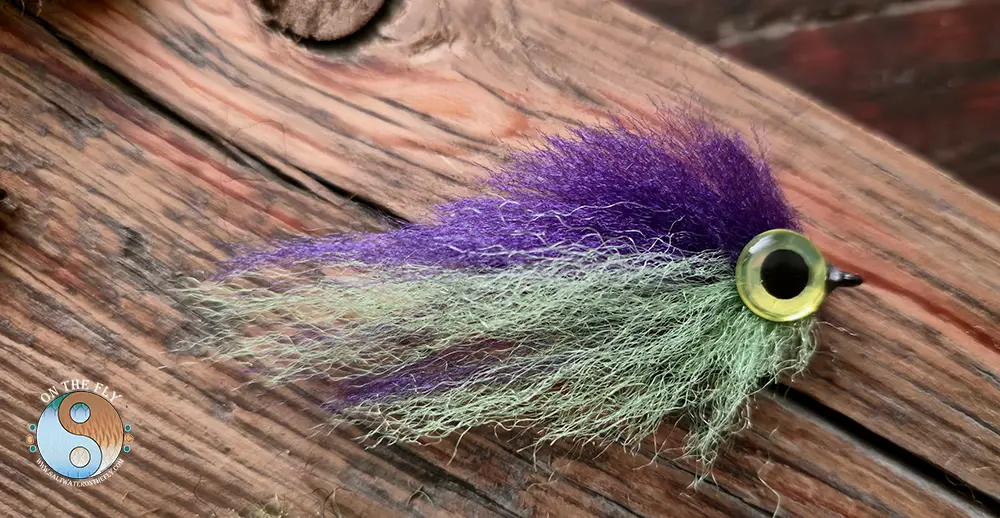
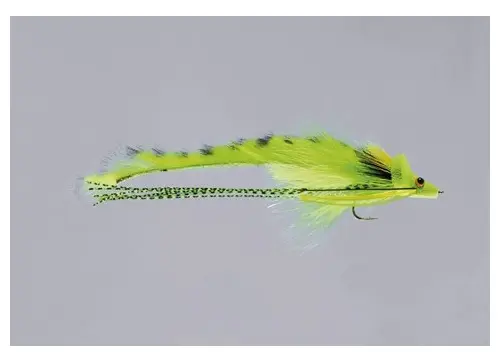
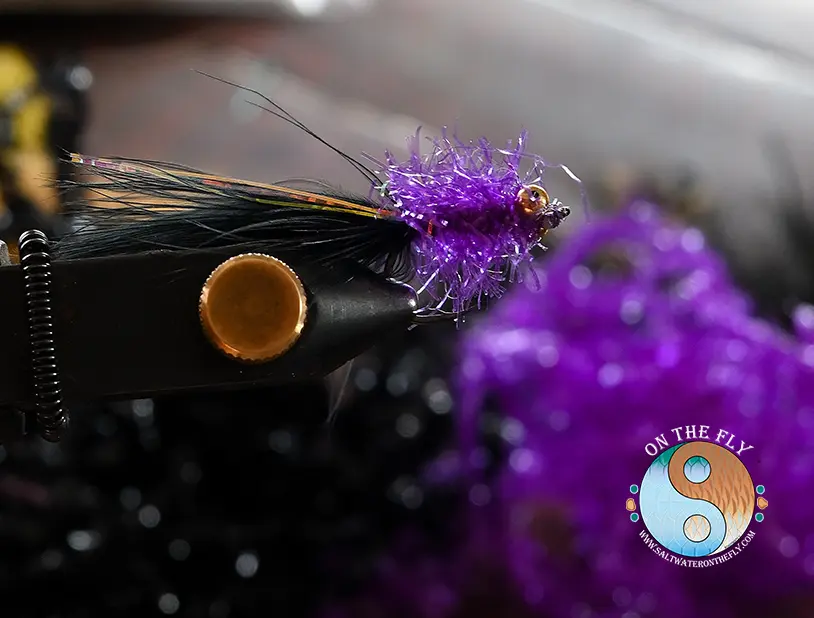

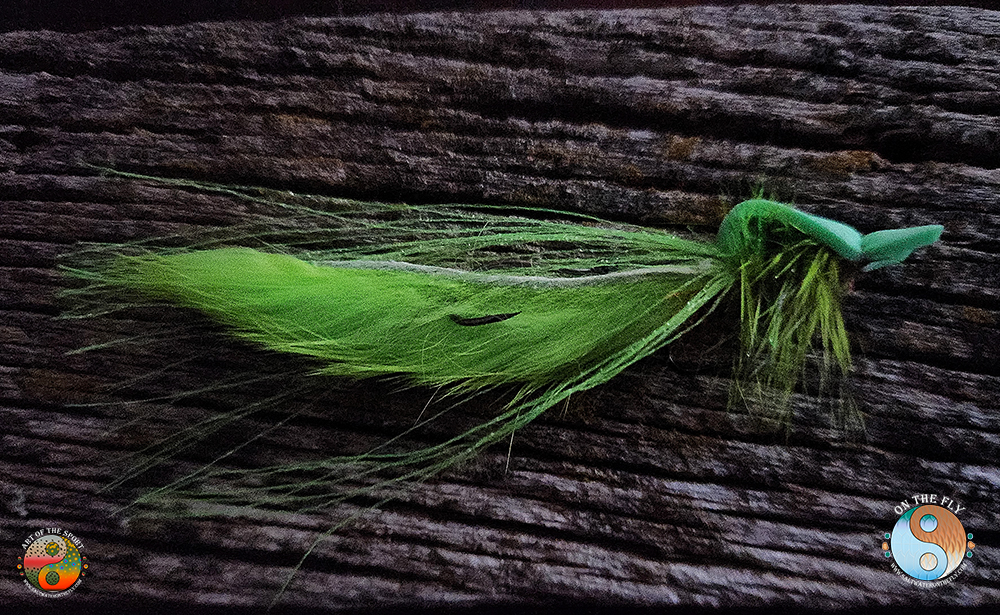
-
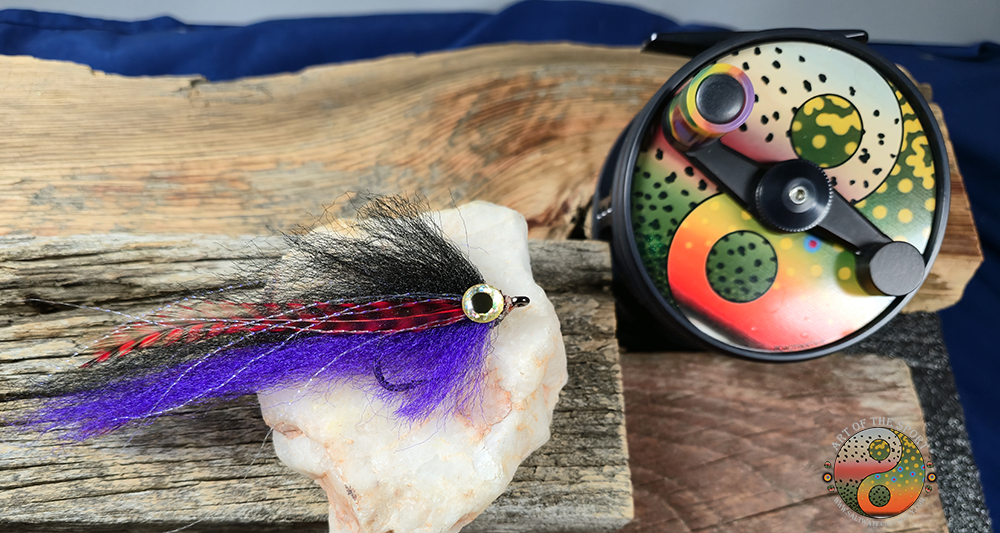
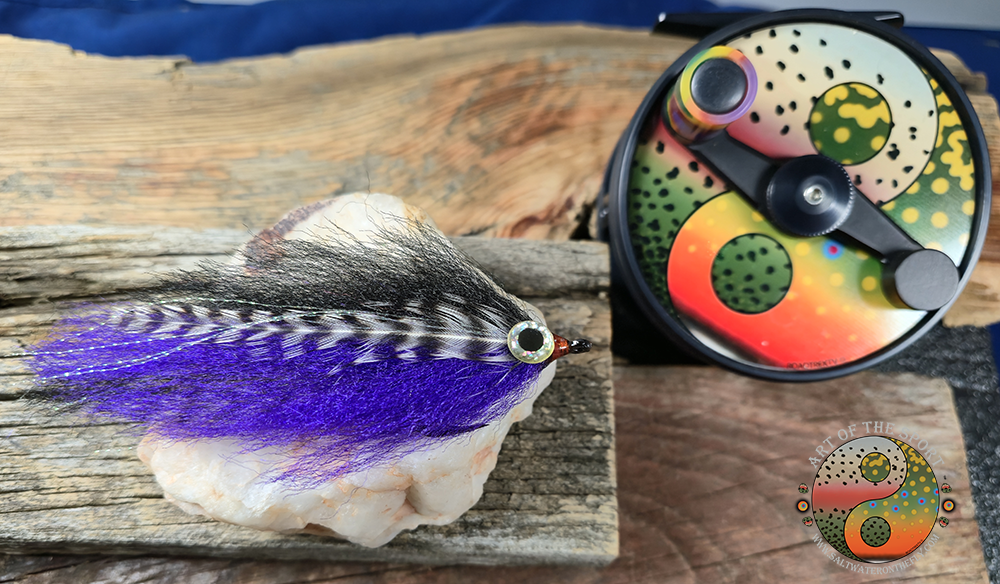
- Mousey Gurgler Late evening or full moon fly pattern
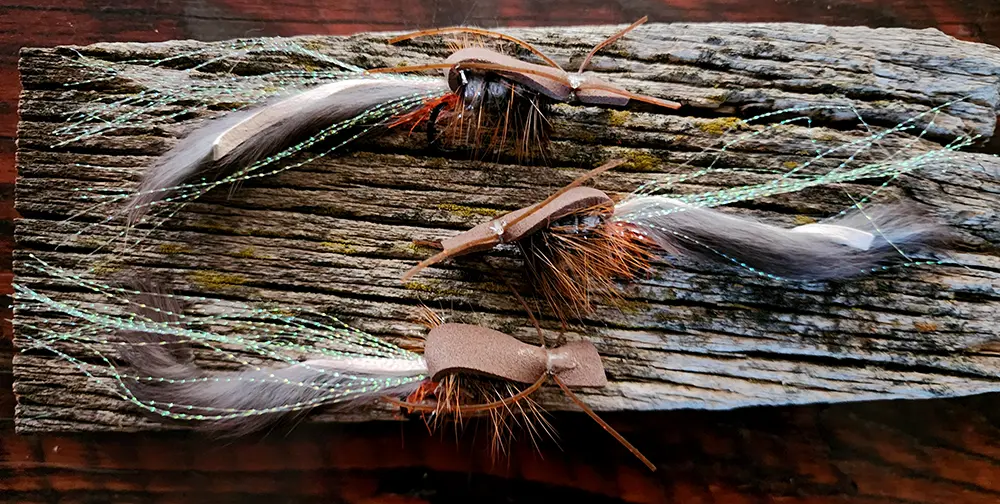


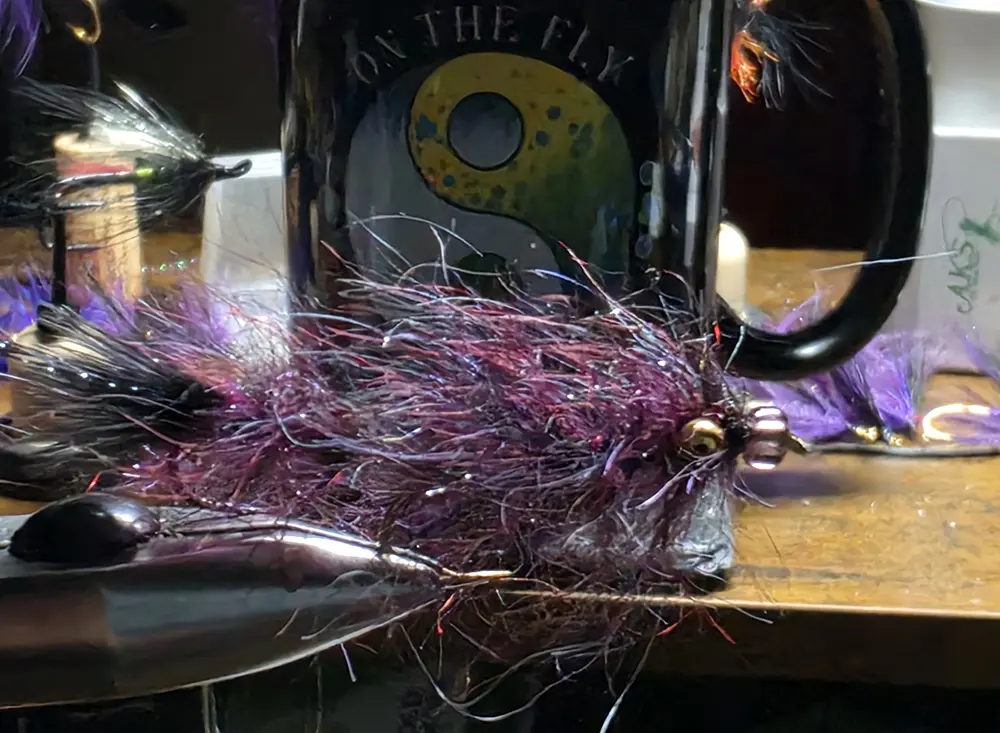
8. Muddler Minnow — Natural, Size 2–6
The Muddler may be a trout fly by origin, but it is a smallmouth killer on Mille Lacs. The deer hair head pushes water, the soft body pulses, and it rides perfectly across the tops of boulders without constantly hanging bottom. Fish it on a floating line with a slow, steady retrieve just below the surface. Works best in low light when bass are up shallow chasing sculpins and small perch.
9. Sculpin Pattern — Olive/Brown with Lead Eyes, Size 2–4
Sculpins live in the rocks on Mille Lacs year-round and big bass know it. A weighted sculpin fished dead slow on a type-3 sinking line is a fall sleeper fly. Work it along the bottom in 8 to 15 feet of water near reef edges. Crawl it. Almost no movement. Let it slide off a rock ledge and drop. Strip, stop, drag it along the bottom, stop again. Patient anglers catch their biggest fish of the year on this technique.
10. Clouser Crayfish — Burnt Orange, Size 4–6
Different from a standard Clouser — this version has rubber legs, a broader profile, and a slower sink rate that mimics a fleeing crayfish perfectly. Fish it on a floating line over gravel and coarse sand in 2 to 5 feet of water. Short two-inch strips with full stops. Work it up-current or into the wind so it travels naturally. June and September are prime months when crayfish are most active and smallmouth are actively hunting bottom.
11. Deceiver — Perch or Shiner, Size 1/0–2
The Deceiver gives you a longer, slimmer profile than a Clouser — and that matters when bass are keyed on emerald shiners or larger baitfish. Strip it fast and erratic on an intermediate line along the surface of offshore reefs. When you see fish busting bait on the surface, a Deceiver stripped through the middle of the melee is devastating. Size up in fall when big females are gorging before winter.
12. Rubber-Legged Hex Nymph — Golden Yellow, Size 4–8
Mille Lacs has serious Hexagenia hatches. During the hatch — typically late June into July — bass gorge on the nymphs just before they emerge. A heavy rubber-legged hex nymph fished on a slow sinking line at dusk, twitched just off the bottom, is one of the most overlooked approaches on the lake. Let it hang and pulse in the current from your drift. Strike when the line simply stops or changes tension.
13. Kwan/Crab-Style Flat Pattern — Olive/Tan, Size 4–2
Sounds like a bonefish fly — fishes like a Mille Lacs winner. A flat, lightly weighted pattern that settles slowly and kicks rubber legs on the drop lands softly and doesn’t spook shallow fish. Use it on calm water when you are sight fishing to individual bass on sand and gravel flats in May. Make a long cast ahead of a cruising fish, let it sink without movement, then give it one short strip when the fish is close. Most eats happen before you move it.
14. Bunny Strip Leech — Crawfish Orange or Chart/Black, Size 1/0–2
The Monster Bush Fur articulated leech’s closest relative in raw effectiveness. The rabbit strip breathes on every heartbeat. Fish this one on a sinking line in July when bass have pushed to deeper reef edges. Long casts, let it get down to 8 to 12 feet, strip it home with an irregular cadence — fast-fast-pause-fast-slow. The pause is where the magic lives. Chartreuse/black combo stands out in low-vis conditions; crawfish orange dominates on clear days over rock.
15. Topwater Gurgler — White, Yellow, or Blue/White, Size 1/0–2
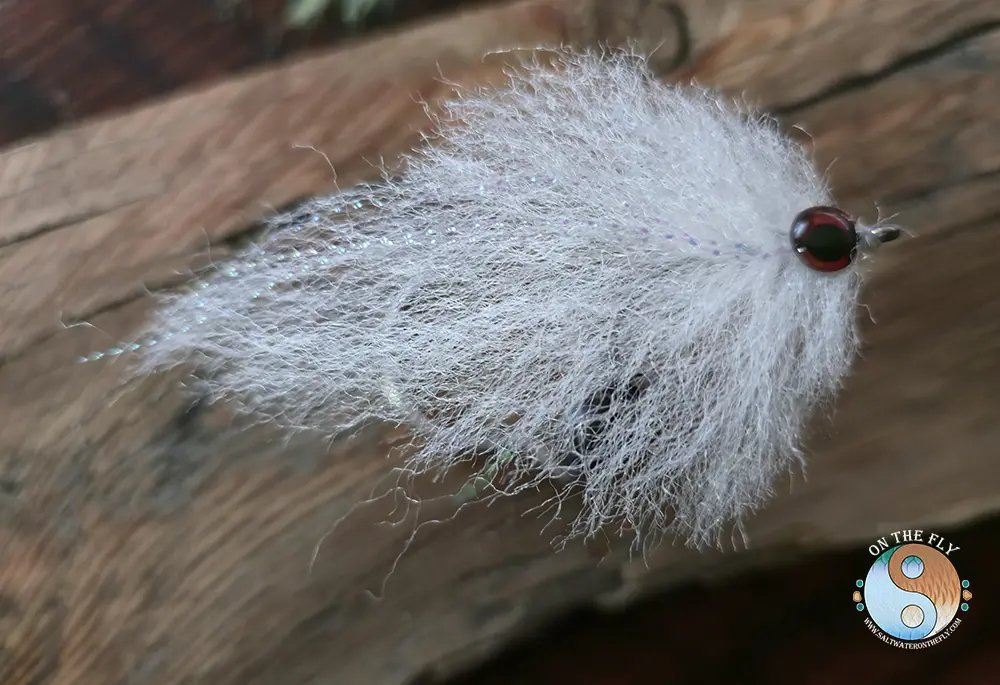
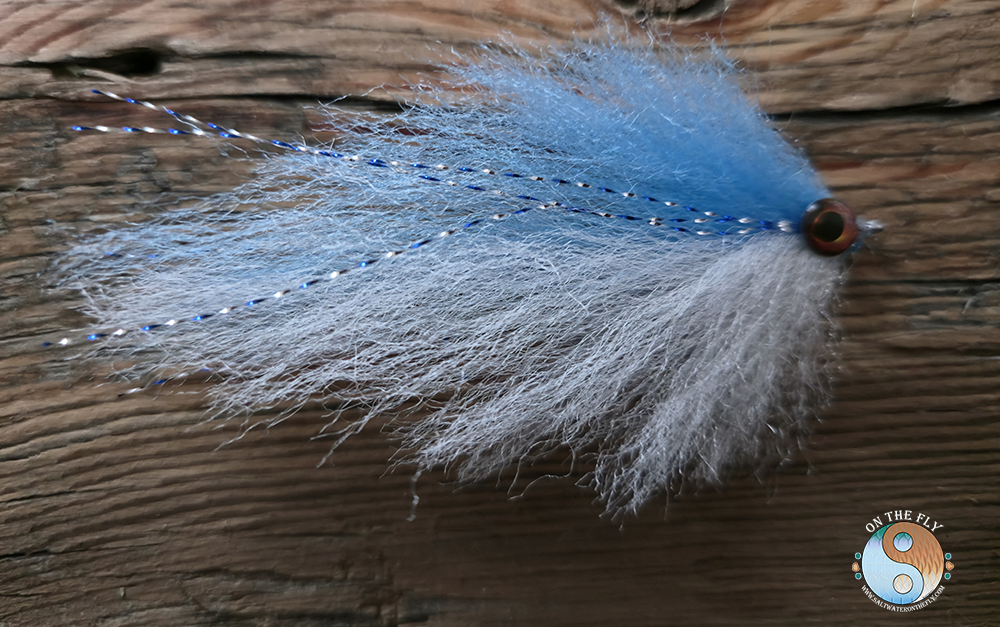
The Gurgler is the underdog topwater that most bass fly boxes don’t carry — but should. Unlike a popper, it stays on the surface during the retrieve and creates a continuous wake and gurgling sound. That long surface presence triggers fish that won’t commit to a single pop. Fish it parallel to rocky shorelines at first light with a slow, steady strip. No pausing needed — keep it moving just fast enough to stay on top. When a Mille Lacs smallmouth eats a Gurgler on a dead calm morning, it is the loudest thing in Minnesota.
A note on approach: Most days on Mille Lacs, depth and retrieve speed matter more than fly color. Get the fly to the right depth first. Vary your strip until fish respond. Change flies only after you have changed both of those variables. The fish will tell you what they want — you just have to slow down and listen.
Finding Fish On A Giant Piece Of Water
The biggest mental block many new visitors hit is the size of the lake. You idle away from shore and everything looks like water and waves. So you need to break Mille Lacs down into pieces, and focus on how smallmouth use structure.
Shallow Rock Reefs
Mille Lacs is littered with shallow rock. Some of it sits just under the surface. Reefs and boulder fields around main lake humps hold bass spring through fall.
Set up your drift along the upwind side so waves push you over the best part of the structure. Cast perpendicular to the reef, count your fly down if you are not on a floater, then strip with quick pauses. Focus on areas where rock meets sand or where you can see isolated big boulders.
Sand And Gravel Flats
Early in the year, broad sand and gravel flats become key spawning and staging grounds. These are perfect for floating lines and slightly weighted flies. Fan cast, move slow, and watch for subtle flashes or wakes.
You will also find yellow perch on some of these flats. Lighten up if you want a bend between bass, or keep the heavier rod in your hands if you expect a tank smallmouth at any cast. Sometimes largemouth bass patrol these areas too.
Some areas are known as mud flats, which can hold different forage. Understanding the bottom composition is vital. You can find fish in water only a few feet deep here.
Breaklines And Deep Edges
During mid summer and late fall, deep breaks shine. Think drops from ten down into twenty feet along offshore structure. That is where intermediate or sinking lines do the heavy lifting.
Pick a contour, line the boat along it, and work methodically. Count your line down before each retrieve so you stay at the same depth. Often the hits all happen within a two foot band in the column.
Understanding Regulations and Lake Rules
Fishing Mille Lacs requires paying attention to the rules. The Minnesota DNR updates regulations often based on population data. You must know the current possession limit for every species you target.
Sometimes the smallmouth harvest ends Sunday on a specific date. Other times, the largemouth harvest ends Sunday. It is your job to know when a specific harvest ends to stay legal.
There are times when night restrictions removed specific barriers to fishing late. However, a night closure might still be in effect for certain species or times of year. Always check if night restrictions apply to your trip.
Specific rules regarding bait are common. You might see rules about artificial lures longer than a certain length. Other times, you cannot use live bait like sucker minnows longer than a set size.
Sometimes restrictions removed previously are reinstated. If you possess angling equipment, you are responsible for knowing these nuances. This includes rules on using artificial lures versus live bait.
Statewide culling rules may differ from specific lake rules here. Live-well sorting and culling rules are strict to protect the resource. Check the bag limit carefully before keeping anything.
Visit the DNR website to read the main content regarding special fishing regulations. You can also view the privacy policy there if you sign up for updates. It is the best way to stay informed about Mille Lacs lake fishing laws.
Boat, Shore, Or Kayak
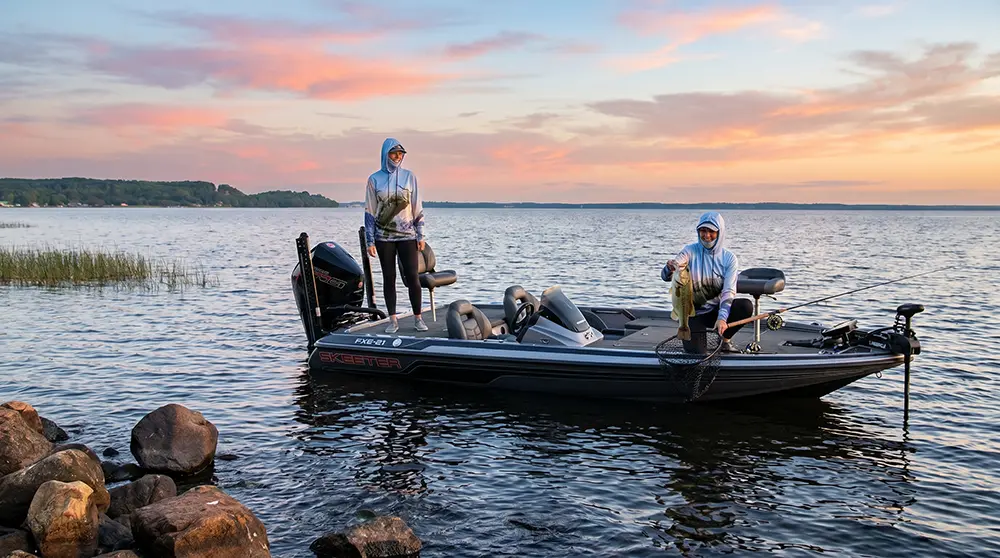
A boat gives you the most freedom here. There are enough launch ramps and marinas to keep access easy from every side. But you do not have to run a fancy rig to find fish.
Wade fishing near rocky points and shore based reefs can work on calm days, especially in spring. A kayak can be a nice middle ground for fly anglers who like to creep quietly along rock lines and bays. Just keep an eye on the forecast and remember this lake can get rough fast when wind builds.
Always respect posted boundaries near tribal lands or private property. If you fish from the mouth upstream of tributaries, different border water regulations might apply. Being aware of where you are is critical.
Ethics, Conservation, And Trophy Fish
Big smallmouth on Mille Lacs grow slowly. Many fish in the twenty inch range are over a decade old. That matters when you are thinking about how you treat them at the net.
Keep fish in the water as much as possible, grip them horizontally, and skip long photo shoots. A quick shot over the side and a gentle release go a long way here. Measure your success in clean releases and solid memories, not in stuffed mounts.
This lake also sits at the center of wider fish management debates and treaty rights. Spend a little time reading different views, including tournament coverage on places such as the Bass Fan pages, and talking to local business owners who live off the water year round. It gives you context for what you see at the ramps and bait shops.
Reason Fly Fishing Mille Lacs Hits Different
You might be wondering why you would bring a fly rod onto a lake loaded with people throwing modern bass gear. The truth is, this is less about purity and more about the way a smallmouth eats a streamer in two feet of clear water over rock. It changes you a little.
Fly tackle lets you make long, gentle presentations over shallow structure with very soft landings. You can swim a baitfish fly over the tops of boulders without constantly ticking bottom. You can feed fish that follow for thirty feet, then surge and crush at your feet.
For some anglers, this is also head space. Plenty of folks pair long days on lakes like Mille Lacs with bigger life choices. They even compare long term money moves to playing the long game with fly fishing and retirement planning, or read pieces on the connection between fly fishing and building a business. Long retrieves give you time to think about more than the next cast.
Practical Tips To Fish Like You Have Been Here Before
You do not need decades of local experience to have a good trip. But a few habits will help you feel less like a rookie from the minute you drop the boat in. Start by watching the wind each day more than the air temperature.
- Fish the windy side of structure when you can still cast and stay safe.
- Look for subtle changes like rock to sand, small inside turns, and isolated boulders.
- Keep a log of water temp, sky cover, and depth each time you find fish.
- Switch flies only after you change depth, angle, and speed.
- Talk to resort owners, guides, and other fly anglers at the dock.
- Carry an extra email address contact for your guide or resort in case of emergency.
Simple notes can turn one good day into a pattern that works across several seasons. This lake rewards people who pay attention. That goes for safety too, since the combination of wind, open water, and rocks can ruin gear in a hurry.
Beyond The Bass: Other Fly Rod Targets On Mille Lacs
Smallmouth get all the press, but they are not the only fish worth chasing here. On any day, you could tie into walleye, pike, or even a muskie while stripping streamers. It helps to be mentally ready when your line suddenly feels heavy instead of punchy.
Walleye respond to slowly crawled Clousers along edges at dawn and dusk. Northern pike cruise weed lines and can be tempted with larger, flashy streamers if you add wire to your leader. You might even encounter a pike greater than thirty inches.
Muskie patrol breaks and open water edges, so upsizing your flies sometimes brings an unreal surprise eat. Mixing species identified in the lake can be smart when bass bite windows shrink. It stretches your casting time and gives you a feel for how the whole system is doing.
You may also see non-game fish while scanning the shallows. In the fall, keep an ear out for ruffed grouse drumming in the nearby woods. The natural resources here are abundant.
Common Questions About Fishing Mille Lacs
Are there largemouth bass in the lake?
Yes, while famous for smallmouth, you can find bass largemouth in weedy bays. They are less common but fun to catch. Finding a bass largemouth bass usually requires targeting rice beds.
What are the border water regulations?
Mille Lacs is an inland lake, so standard state water regulations apply rather than border water regulations. However, always check the specific special fishing regulations for this lake. Rules can change frequently.
Can I use minnows longer than 4 inches?
This depends on current bait bans or allowances. Sometimes minnows longer than a certain size are restricted to prevent invasive species spread. Check the DNR site.
Where can I find info on night restrictions?
The Minnesota DNR website has a search search feature to find current orders. Look for updates on night restrictions removed or added. You can also sign up for their newsletter via email address.
When does the smallmouth harvest ends Sunday?
The catch and release season and harvest season dates vary. Often a harvest ends Sunday in September or October. Verify the dates before you keep any fish.
Conclusion of Mille Lacs Lake Bass Fly Fishing
If you are an adventure traveler or fly angler who loves big water and big personalities, this lake belongs on your short list. Mille Lacs Lake Bass Fly Fishing Minnesota offers a rare mix of numbers, size, access, and raw mood that is hard to find anywhere else in the Midwest. The walleyes might have written the opening chapter, but the smallmouth own the current story.
Show up with solid gear, a flexible plan, and a good attitude about wind and changing weather. Talk with the people who live around Mille Lacs, support long standing local outfits, and fish with respect for the old bass that made the lake famous. You will leave tired, probably a little sunburned, and already planning how soon you can get back.
The lake will humble you some days and reward you wildly on others. That is part of the pull. And it is why Mille Lacs keeps showing up in road trip journals, friend reunions, and long stories shared on the ride home, long after the last fish slides out of your hands and disappears into the clear, rocky water.